

Executive Overview
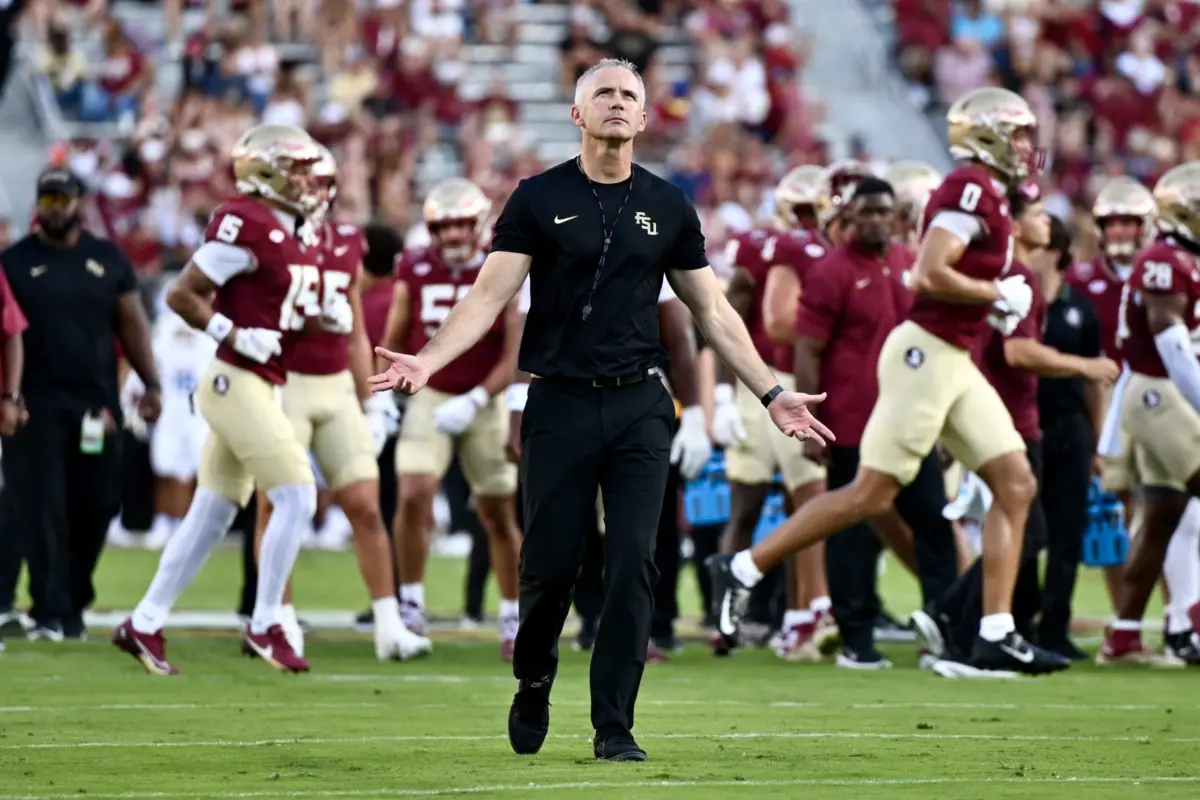
As Florida State University (FSU) stumbles into its much-needed bye week, the program finds itself at a staggering crossroads. Far from the championship aspirations that typically accompany the garnet and gold, the current narrative surrounding the Seminoles is defined by uncertainty, defensive regression, and mounting pressure on head coach Mike Norvell. Through the opening stretch of the season, FSU has surrendered nearly a thousand yards of total offense, yielding an alarming average of 6.6 yards per play. This defensive vulnerability has laid bare structural flaws that threaten to derail not just the current campaign, but the broader momentum of the program.
The timing of this structural introspection could not be more perilous. The upcoming schedule reads like a gauntlet designed to test the absolute breaking point of a struggling roster: four of FSU’s next five opponents reside firmly inside the Associated Press Top 25, beginning with a daunting clash against the 12th-ranked Alabama Crimson Tide. For a fan base accustomed to national prominence, the mood has shifted rapidly from cautious optimism to outright apprehension. Pundits, alumni, and analysts are openly questioning whether Norvell and his coaching staff can course-correct before the season completely unravels.
Yet, the sprawling ecosystem of Florida State athletics extends far beyond the gridiron. While the football program navigates its defensive identity crisis, the broader athletic department continues to showcase elite talent across multiple disciplines. From ACC openers for the powerhouse soccer program and the return of Fall Ball for baseball and softball, to standout professional performances by former Seminoles on national and international stages, FSU remains a central focal point of the collegiate sports landscape. This comprehensive report delves deep into the crisis facing the football program, examines the metrics defining their struggles, captures the broader departmental landscape, and evaluates the high-stakes road ahead.
Detailed Chronology: The Anatomy of a Turbulent Stretch
To understand where Florida State currently stands, one must retrace the sequence of events that transformed early-season optimism into a full-scale crisis. The turbulence has not occurred in a vacuum; it has been compounded by unpredictable game-day anomalies, external media scrutiny, and the grueling physical toll of a high-major schedule.
The friction began early in the season cycle as defensive miscues piled up week after week. Opposing coordinators quickly identified structural soft spots in the FSU secondary and defensive front, exploiting missed assignments and tackling deficiencies. By the time the team reached the threshold of the bye week, the cumulative damage had pushed defensive metrics to historic lows for the modern era of the program.
Compounding the on-field frustrations have been bizarre logistical hurdles. In a recent outing that encapsulated a chaotic stretch for the program, players and fans alike endured a nearly two-hour power delay that suspended momentum and tested the patience of everyone in attendance. Such delays, while external, tend to amplify existing tensions, giving a restless crowd and national media members ample time to dissect every flaw in real-time.
As the operational delays unfolded on television broadcasts, social media and sports talk platforms lit up. Commentators like Clay Travis weighed in heavily on the trajectory of the program, noting that it will now require a significant, almost miraculous effort for Mike Norvell to reestablish enduring goodwill with a historically demanding fan base. In college football, the margin for error is razor-thin, and public sentiment can pivot from supportive to hostile in a matter of quarters.
Amidst the heavy football atmosphere, the athletic community paused to celebrate milestones within the family. Long snapper Alex Nocco observed a belated birthday, a small morale boost in a facility otherwise locked in intensive self-scouting and tactical reconstruction.
Simultaneously, the calendar flipped to mid-October, signaling the traditional dawn of Fall Ball for FSU Baseball—an annual rite of passage that offers fans a glimpse at the next wave of Diamond Noles. Not to be outdone, the FSU Softball program commenced its own fall ball slate weeks ahead of the baseball schedule, highlighting the relentless year-round cycle of elite collegiate athletics in Tallahassee.
Supporting Context & Metrics: Breaking Down the Defensive Collapse
To move past subjective commentary, one must examine the hard data underpinning Florida State’s current struggles. Football games are ultimately won and lost in the trenches and through statistical execution, and the metrics coming out of the first portion of the season paint a troubling picture for the Seminoles’ defensive coordinator and staff.
The Numbers Behind the Bleeding
- Total Yards Surrendered: Approaching 1,000 total yards allowed over a compressed span.
- Yards Per Play: An unsustainable 6.6 yards given up per snap, placing FSU near the bottom tier of Power Four defenses in efficiency metrics.
- Explosive Play Rate: Opposing offenses have routinely broken off plays exceeding 20 yards, exposing severe communication breakdowns in the back end.
Football is a game of leverage, gap integrity, and explosive potential. When a defense surrenders 6.6 yards every time the opponent snaps the ball, it places an impossible burden on the offensive unit to play near-flawless football. FSU’s inability to consistently win first-and-10 has resulted in third-and-manageable situations for opponents, rendering the playbook wide open and neutralizing pass-rush packages.
Standout Bright Spots Amid the Chaos
While the team statistics lean heavily toward the negative, individual evaluations reveal exceptional flashes of talent that offer hope for the future. Analysts tracking specific player developments have drawn high praise for individual contributors. For instance, observations of recent performances have highlighted rare physical specimens within the roster, drawing comparisons to legendary collegiate runners like pre-injury Marcus Lattimore due to a unique blend of size, agility, and balance. Observers noted that watching certain players maneuver in space defies standard expectations for athletes of their stature.
Furthermore, the broader collegiate and professional pipelines continue to validate the elite caliber of athlete cultivated in Tallahassee. In the professional ranks—often referred to as the "Pro Noles"—former standouts are making immediate waves:
- Renardo Green secured his first interception of the season at the professional level, showcasing the ball-tracking skills that made him a standout in garnet and gold.
- Cam Smith delivered a towering offensive highlight, launching his 20th home run an estimated 421 feet out to deep center field, demonstrating elite power translation.
- International representation also shines brightly, as Lottie Woad proudly represented Europe in the prestigious Solheim Cup, carrying the pedigree of FSU Women’s Golf onto the global stage.
Official Statements and Institutional Perspective
The pressure cooker of major college athletics demands accountability, and the leadership at Florida State has navigated the public relations storm with a mixture of pragmatic acknowledgment and steadfast resolve.
When addressing the media during the bye week press conferences, Mike Norvell did not shy away from the defensive shortcomings. "You cannot hide from the tape," an internal program source noted regarding the coaching staff’s approach to the self-scouting period. The emphasis during the bye week has centered heavily on fundamentals: wrapping up in the open field, correcting eye-violation issues in the secondary, and re-establishing physicality at the point of attack.
Athletic department officials have similarly pointed to the holistic strength of FSU sports as a stabilizing force while the flagship football program rights its ship. The launch of ACC play for FSU Soccer against NC State underscored the institutional expectation of excellence across all athletic fronts. Soccer coach-led initiatives and recruiting pipelines continue to bear fruit, drawing national recognition from rival organizations who regularly monitor FSU’s administrative and coaching blueprint.
Recruiting and player acquisition remain foundational pillars of the athletic department’s long-term strategy. The arrival of elite talent like true freshman Missy Odom—who was ranked as a top-30 player nationally out of high school—proves that Florida State’s brand retains its magnetic pull. Odom’s immediate readiness to contribute at the collegiate level highlights the rigorous standards maintained by the coaching staffs, ensuring that the talent pipeline remains robust even as the varsity football team battles through temporary adversity.
Future Outlook: Navigating the Gauntlet
As the calendar advances, the immediate future for Florida State University athletics—and the football program in particular—will be defined by resilience, tactical evolution, and execution under extreme pressure.
The Football Schedule: A Trial by Fire
The reprieve of the bye week will expire quickly, and the Seminoles will emerge to face one of the most demanding stretches in college football. With four of their next five opponents ranked inside the national top 25, there is zero margin for error.
- The Alabama Test: The stretch begins with a high-stakes showdown against 12th-ranked Alabama. Traveling to face a powerhouse of that magnitude requires a defensive transformation nearly overnight. Limiting explosive plays and establishing a ball-control offensive rhythm will be absolute prerequisites for staying competitive.
- Sustaining Momentum in Fall Sports: While football bears the heaviest media spotlight, FSU Soccer must navigate the treacherous waters of the Atlantic Coast Conference, where every match is a postseason-caliber battle. Meanwhile, the baseball and softball programs will utilize their fall schedules to install new tactical wrinkles, integrate fresh faces like Missy Odom, and build chemistry for the spring campaigns.
Conclusion
Florida State University stands at a critical juncture. For the football program, the bye week is not merely a rest period; it is an emergency room triage designed to patch a leaking defense and salvage a season hanging in the balance. The skepticism voiced by analysts and fans is understandable given the statistical realities on the field. Yet, history dictates that elite institutions possess the resources, institutional pride, and athletic talent to rebound.
Whether Mike Norvell and his staff can engineer the necessary turnaround against a brutal top-25 slate will ultimately determine the narrative of the 2026 season. As the broader FSU athletic family—from soccer pitches and diamond fall ball to former Seminoles starring in the pros and on international golf courses—continues to excel, the ultimate barometer of success in Tallahassee remains tied to the gridiron. The answers must be found now, before the crimson tide of the schedule washes away their remaining aspirations.

0 Comments