

Executive Overview
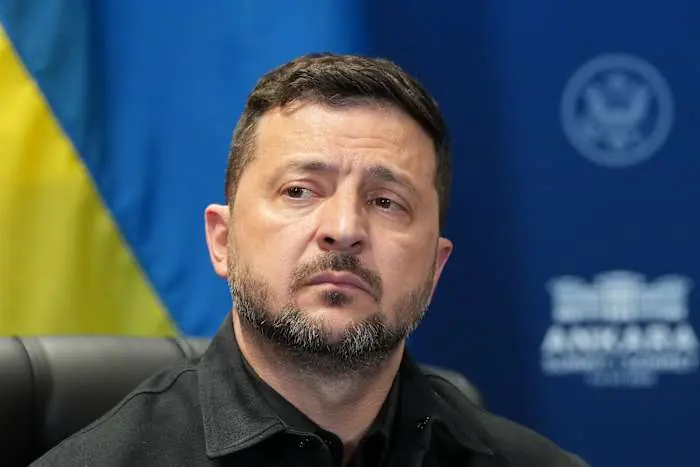
In late August 2026, Ukrainian President Volodymyr Zelenskyy delivered an unprecedentedly candid, two-hour briefing to journalists, laying bare the deep systemic, financial, and geopolitical fractures confronting Kyiv. The transcript of this off-the-record meeting, officially released on Sunday, August 23, 2026, offers a rare, unvarnished window into a wartime presidency navigating a perfect storm: domestic political instability, a critical depletion of air-defense interceptors, a massive budgetary crisis, and a highly sensitive diplomatic misstep involving U.S. President Donald Trump and tech billionaire Elon Musk.
For the first time, Zelenskyy publicly detailed the acrimonious fallout surrounding the dismissal of his highly popular former Defense Minister, Mykhailo Fedorov. Once celebrated as the architect of Ukraine’s drone-warfare revolution and military modernization, Fedorov’s transition from a tech pioneer to a political dissident has sparked widespread protests and calls for snap elections. Zelenskyy framed Fedorov’s recent actions as "misguided," revealing that the former minister rejected four alternative government appointments before taking his grievances to the public.
Beyond domestic political maneuvering, the briefing exposed critical vulnerabilities in Ukraine’s defensive posture. The country faces an acute, worsening shortage of Patriot air-defense missiles, with Western deliveries plummeting by over 60% since 2023, even as Russian ballistic missile production and strikes intensify. Compounding these defensive anxieties is a staggering $27 billion shortfall in the national defense budget, driven by the frontloading of funds originally earmarked for late 2026.
Yet, amid these compounding crises, Zelenskyy projected resilience on the battlefield. He highlighted major tactical successes in the Dnipropetrovsk region—now almost entirely liberated from Russian forces—and outlined a strategic path toward achieving territorial parity by the end of 2026.
Detailed Chronology
The current political and military crisis in Kyiv is the culmination of months of behind-the-scenes friction, strategic miscalculations, and shifting international alliances. To understand the gravity of Zelenskyy’s disclosures, it is necessary to trace the timeline of events that led to this public accounting.
[Early 2026] Defense Ministry briefs Zelenskyy on Starlink deep-strike capabilities.
       │
[July 8, 2026] Zelenskyy meets President Trump at NATO Summit in Ankara; proposes Starlink plan.
       │
[Mid-July 2026] Trump confronts Zelenskyy; Musk denies Starlink authorization, citing escalation risks.
       │
[Late July 2026] Fedorov dismissed as Defense Minister; triggers weeks of mass street protests.
       │
[Mid-August 2026] Fedorov rejects four government offers; releases video calling for national elections.
       │
[August 22, 2026] Zelenskyy holds candid two-hour press briefing; details the $27B budget gap and Patriot shortage.
The Rise and Fall of Mykhailo Fedorov
Mykhailo Fedorov’s tenure as Defense Minister was defined by rapid digitization and the decentralization of military technology. However, tensions had been mounting for months between Fedorov and the traditional military establishment, particularly with former Army Chief Oleksandr Syrskyi.
By mid-2026, these disagreements escalated into a bureaucratic turf war over procurement priorities and command structures. In late July, Zelenskyy dismissed Fedorov, a move that immediately triggered weeks of mass demonstrations in Kyiv. Protesters rallied around Fedorov, vilifying Syrskyi and the newly appointed Defense Minister, Major General Yevhen Khmara.
The political rift widened further in August when Fedorov released a video address calling for national elections—a highly controversial demand given the ongoing martial law. Zelenskyy revealed that during this period of unrest, he personally offered Fedorov four distinct high-level administrative roles to keep him within the government fold. Fedorov rejected them all, cementing his transition from a key ally to a formidable political outsider.
The Starlink and Trump Diplomatic Breakdown
A primary catalyst for Fedorov’s dismissal, and perhaps the most damaging revelation from the briefing, was an intelligence and communication breakdown regarding SpaceX’s Starlink satellite network.
In early 2026, the Ukrainian Defense Ministry informed President Zelenskyy that SpaceX had agreed to lift geographic restrictions, allowing Ukraine to utilize Starlink for deep-strike operations inside Russian territory, subject to political approval from Washington. Armed with this information, Zelenskyy raised the matter directly with U.S. President Donald Trump during their bilateral meeting on the sidelines of the NATO summit in Ankara, Turkey, on July 8, 2026. Zelenskyy assured Trump that Elon Musk had personally confirmed the feasibility of the arrangement.
However, the diplomatic initiative quickly unraveled. In a subsequent meeting, President Trump confronted Zelenskyy, accusing him of deception. Trump stated that he had spoken directly with Musk, who vehemently denied ever authorizing Starlink’s use for offensive operations inside Russia, labeling such a move an unacceptable escalation.
Zelenskyy’s return to his Defense Ministry to demand answers yielded only vague retractions, exposing a profound failure in internal military intelligence. This breakdown of trust with both the White House and the presidency became a decisive factor in Zelenskyy’s decision to restructure his defense leadership.
Supporting Context & Metrics
The challenges confronting Ukraine in late 2026 are highly quantifiable, spanning critical shortages in air defense, massive budgetary deficits, and fluctuating territorial control.
The Patriot Missile Deficit
Ukraine’s ability to defend its skies against Russian ballistic attacks is approaching a critical bottleneck. Despite escalating Russian airstrikes, procurement of Patriot interceptor missiles from Western allies has experienced a steep, multi-year decline.
| Year | Patriot Missiles Received / Projected |
|---|---|
| 2023 | 675 missiles |
| 2025 | 364 missiles |
| 2026 (Projected) | 264 missiles |
This downward trajectory leaves Ukraine severely under-equipped for the upcoming winter. The Ukrainian Air Force has formally requested 360 interceptor missiles to secure key infrastructure, while Zelenskyy is actively lobbying allies for a minimum emergency allocation of 300 missiles.
Compounding this crisis is the reality of Western industrial limitations. Both United States and European manufacturing lines are struggling to scale up production. In response, Kyiv is attempting to negotiate the purchase of 5% to 10% of the United States’ active reserves, offering to purchase the munitions directly rather than relying solely on aid packages. This shortage is particularly alarming given intelligence estimates indicating that Russia’s domestic ballistic missile production capacity could soon surge from its current rate of 600 missiles per year to 1,300 per year.
Patriot Interceptor Missiles Received by Ukraine (2023 vs. 2026 Projection)

2023: ██████████████████████████████ 675 Missiles
2026: ████████████ 264 Missiles (Projected)
      *Deficit of 411 missiles relative to 2023 levels.
The $27 Billion Fiscal Gap
Ukraine’s defense apparatus is grappling with a severe self-inflicted financial crisis. The Defense Ministry is currently facing a $27 billion budget shortfall. According to Zelenskyy, this deficit was created earlier in the year when defense officials accelerated spending, frontloading capital intended for the second half of 2026 to cover immediate procurement demands. This fiscal imbalance threatens payrolls, domestic drone production, and contract maintenance unless plugged by emergency international loans or domestic tax restructurings.
Territorial Dynamics and Battlefield Parity
Despite structural and financial headwinds, Ukrainian forces have achieved notable territorial successes in 2026:
- Dnipropetrovsk Liberation: Ukrainian forces have systematically recaptured almost the entirety of the Dnipropetrovsk region. Currently, only 10 square kilometers and three small villages remain under Russian occupation.
- Territorial Parity Target: Zelenskyy projected that Ukraine could achieve a net-zero territorial balance by the end of 2026. Since January, Russia has seized approximately 990 square kilometers of Ukrainian territory, while Ukrainian counter-operations have successfully liberated 820 square kilometers.
- Strategic Focus: The frontline remains highly volatile, with Russian offensive operations concentrated heavily along the Konstantynivka-Sloviansk-Kramatorsk axis. Moscow continues to insist on a complete Ukrainian withdrawal from the broader Donbas region as a non-negotiable precondition for any peace negotiations.
Official Statements
During the briefing, President Zelenskyy addressed the interlocking political, military, and ethical crises with directness, defending his administration’s integrity while calling for public restraint.
On Mykhailo Fedorov and the Domestic Opposition
Zelenskyy sought to balance personal affection for his former minister with firm condemnation of his recent political maneuvers:
"I really had and still have a very positive attitude toward Mykhailo. We have been through a lot together. But I believe that he himself goes, or is pushed, into the wrong things."
He strongly rebuked the street protesters and political factions attempting to delegitimize active military commanders, specifically defending Army Chief Syrskyi and Defense Minister Khmara:
"Maybe someone doesn’t like Syrskyi for one reason or another. But the slogans ‘Syrskyi is the devil, Khmara is the devil’—listen, this is too much. Do you understand? In principle, you can’t treat the military like this and tolerate it, especially when it was the military that made it possible for any peaceful protests to take place in the Ukrainian capital at all."
On the Starlink Controversy
Zelenskyy recounted the uncomfortable moment when his diplomatic credibility was undermined in front of the U.S. President due to poor internal reporting:
"He [Trump] said that I had supposedly deceived him because Musk had denied Ukraine the use of Starlink on Russian territory. I went back to our Ministry of Defense and they said that maybe it was so."
On the Domestic Corruption Probe
Addressing a high-profile anti-corruption investigation that recently led to the dismissal of a senior presidential aide implicated in money laundering, Zelenskyy emphasized his personal distance from the scandal:
"The heads of anti-corruption agencies have zero questions for me. They understand perfectly well that I am not involved in anything like that. And this is important to me."
Future Outlook
As Ukraine heads into the final quarters of 2026, the decisions made in the coming weeks will shape the country’s defensive capabilities and political stability well into 2027.
Mitigating the Satellite Communications Vulnerability
The Starlink controversy has accelerated Kyiv’s efforts to diversify its satellite communication infrastructure. Recognizing that reliance on a single, privately-held American entity represents a strategic vulnerability, Ukraine is actively preparing alternatives. Chief among these is an integration plan with a European-led secure communications project. This shift has acquired a sense of urgency as Russia and China make rapid progress on their own sovereign, competing satellite constellations, threatening to alter the electronic warfare landscape entirely.
Rebuilding Trust with the Trump Administration
The miscommunication over Starlink highlights the delicate nature of Kyiv’s relations with Washington. With President Trump in the White House, Ukraine’s diplomatic strategy must prioritize transparency and rigorous verification of intelligence before presenting proposals to U.S. officials. Rebuilding this trust is essential if Ukraine hopes to secure the 5% to 10% of U.S. Patriot missile reserves required to survive the winter.
Upcoming Military Operations
Tactically, the Ukrainian military is preparing for the release of results from a highly classified offensive operation currently underway in an undisclosed sector. Zelenskyy indicated that the outcome of this operation, expected by the end of August 2026, will be pivotal in establishing the territorial parity Kyiv seeks before winter conditions set in.
If successful, these operations could provide Ukraine with the leverage needed to resist Moscow’s demands for a unilateral withdrawal from the Donbas, setting a more balanced stage for potential future negotiations. However, achieving this will require navigating the critical gaps in air defense and resolving the $27 billion budget shortfall currently hamstringing the Ministry of Defense.

0 Comments