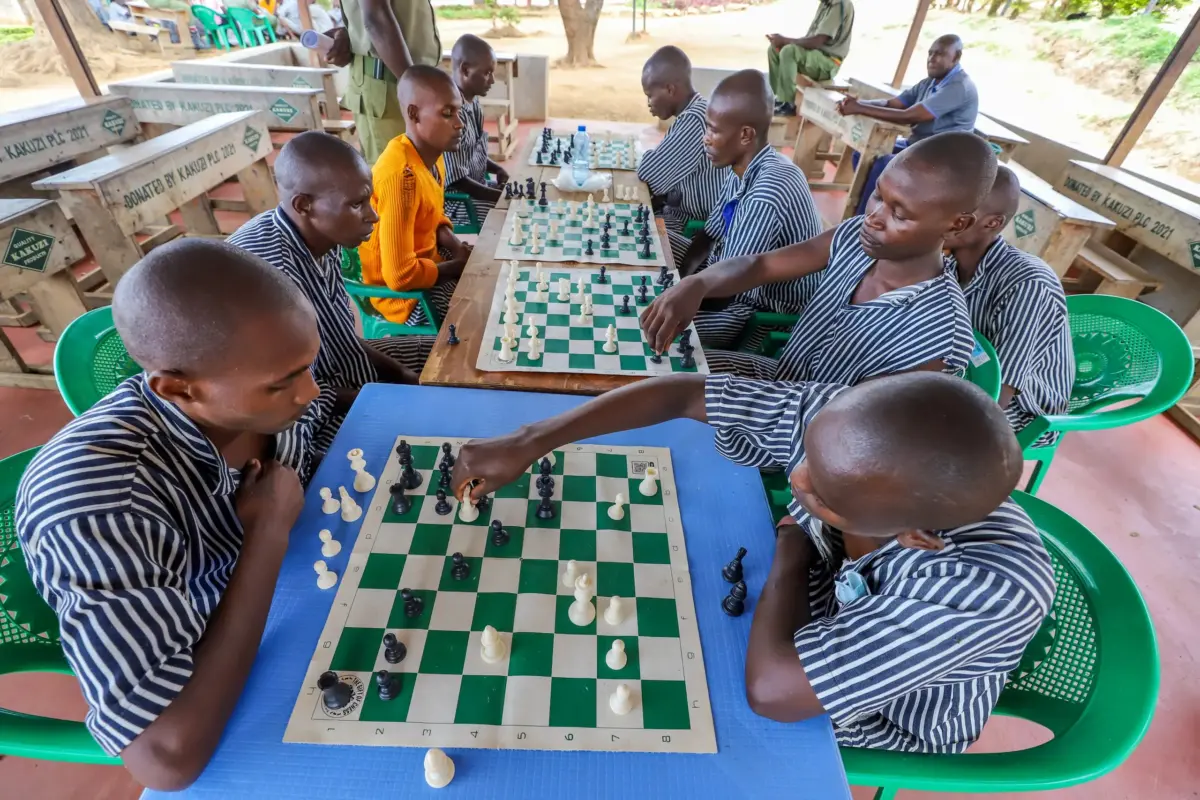
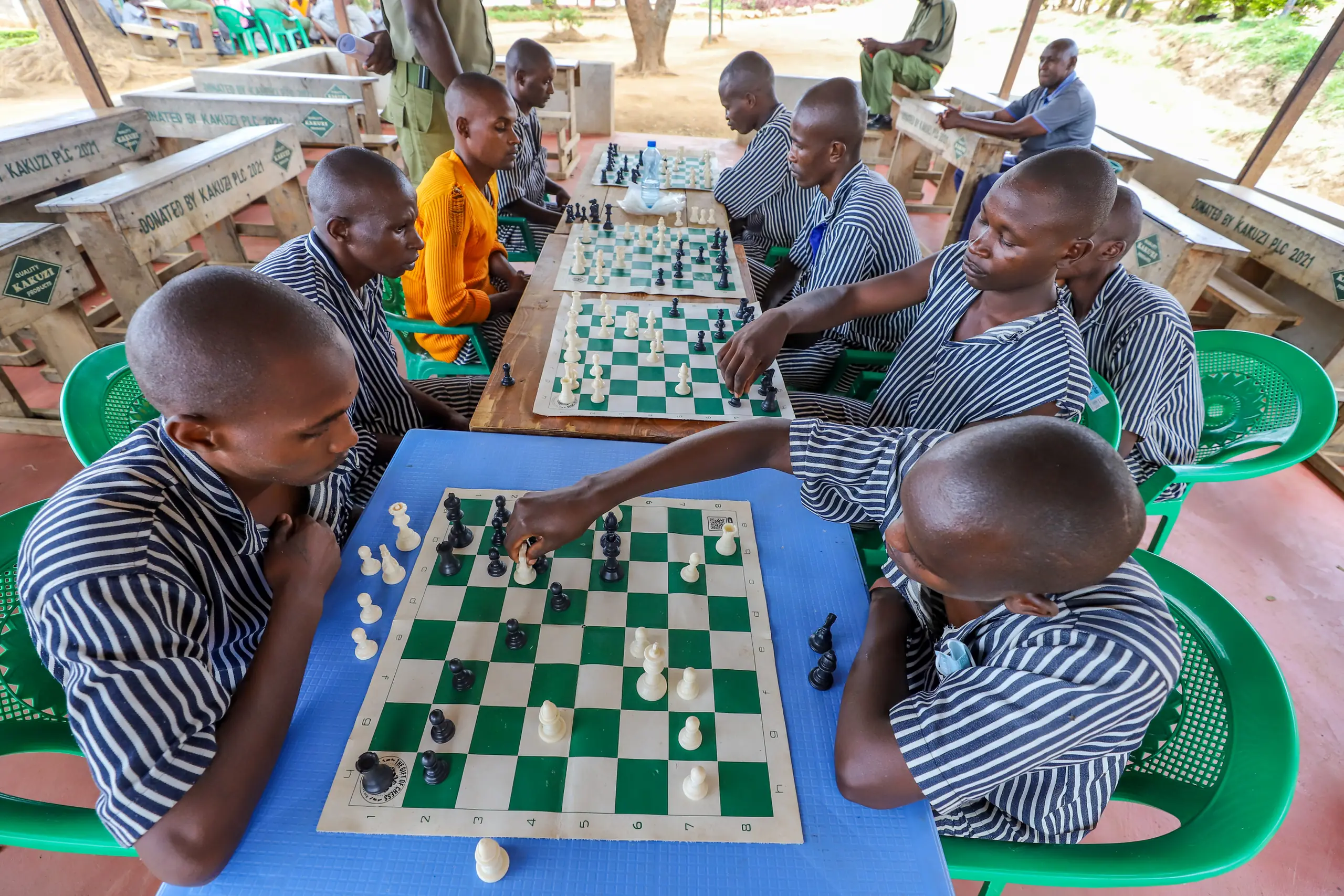
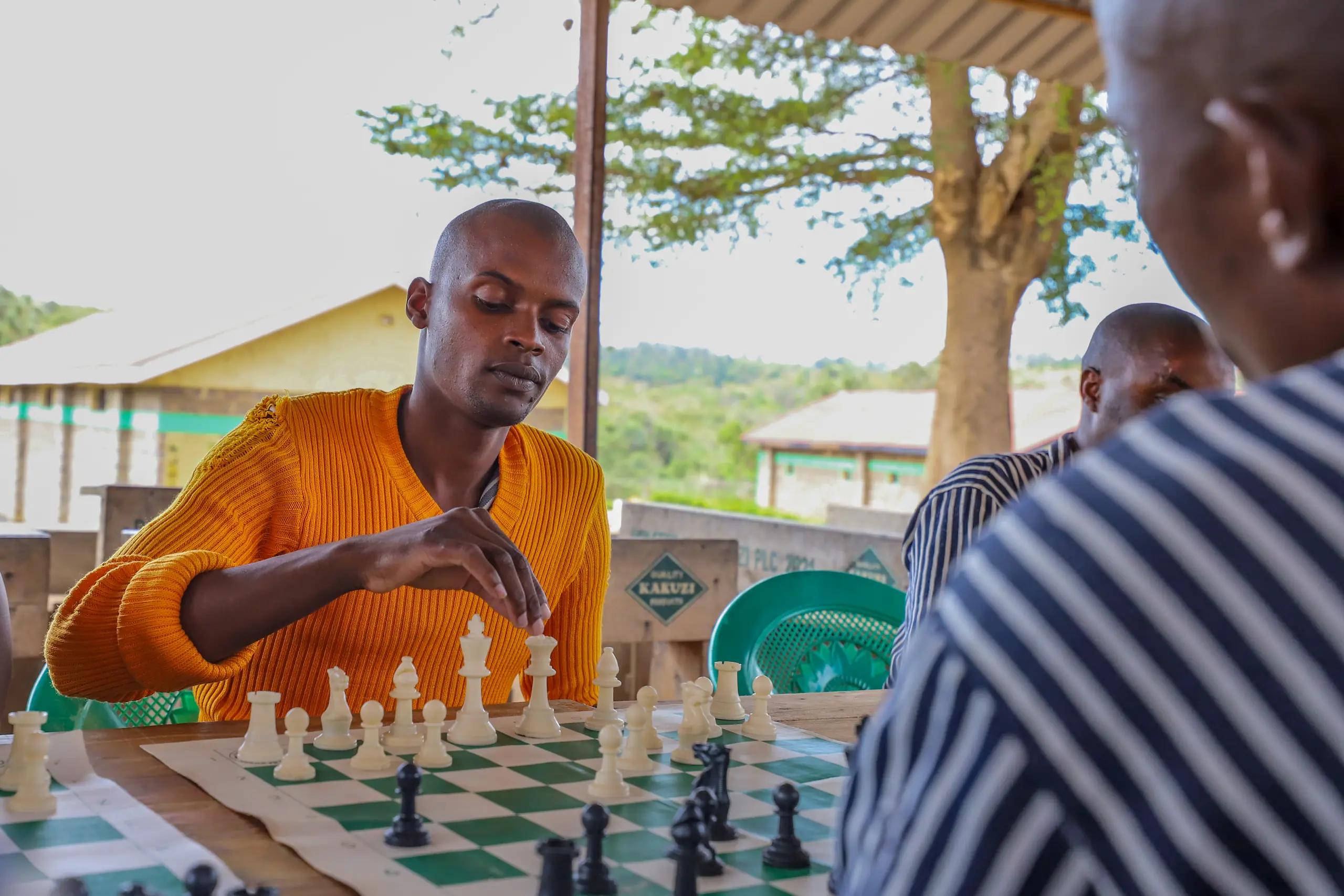
In the quiet courtyards and sun-drenched recreation yards of Kenya’s correctional facilities, a silent revolution is playing out across checkered wooden boards. Far from being a mere pastime to pass long, monotonous sentences, the ancient game of chess has become a cornerstone of modern penal rehabilitation. Across all 134 prisons in Kenya—housing thousands of individuals navigating the complexities of incarceration—inmates are moving rooks, knights, and pawns not just to win matches, but to reconstruct their cognitive faculties, regulate their emotional responses, and reimagine their places in society.
At Maranjau Prison in Murang’a County, the black-and-white stripes of inmate uniforms mirror the contrasting squares of the boards. For men like Brian Gatonye, a 27-year-old serving time for assault, the game has fundamentally altered how he perceives consequence and choice. What began as a novel recreational initiative has evolved into an institutionalized pillar of psychological reform, bridging the profound divide between incarcerated individuals and correctional staff. Supported by international partnerships, governmental backing, and dedicated non-profit organizations, Kenya’s prison chess ecosystem stands as a groundbreaking model of restorative justice in East Africa.
This comprehensive report examines the genesis, implementation, psychological impacts, and future trajectory of chess as an instrument of social and cognitive rehabilitation within the Kenyan penal system.
Detailed Chronology: The Evolution of Chess in Kenyan Corrections
The Early Foundations (Pre-2022)
For decades, recreational activities within Kenyan correctional facilities were largely dominated by physical sports such as football, volleyball, and athletics. While these activities effectively promoted physical health and teamwork, prison administrators recognized a glaring gap in cognitive stimulation and psychological intervention. Traditional indoor games were sparse, and programs targeting critical thinking, impulse control, and long-term planning were severely limited.
Informal chess matches occasionally popped up in isolated facilities, driven by individual inmates who smuggled in homemade boards or taught themselves the rules using scraps of paper. However, these grassroots efforts lacked formal backing, equipment, and structural organization.
Institutional Adoption and Strategic Partnerships (2022–2024)
A major turning point arrived around 2022, when progressive reform-minded prison administrators, recognizing the cognitive benefits observed in correctional facilities globally, sought to formalize chess as an official rehabilitation tool. This vision caught the attention of key domestic and international stakeholders, most notably the International Chess Federation (FIDE), Chess Kenya, and The Gift of Chess—a global nonprofit organization dedicated to distributing chess sets to underserved and marginalized communities.
Through these synergistic partnerships, chess sets began flowing into facilities that had historically lacked basic educational and recreational resources. By equipping every single one of Kenya’s 134 prisons with boards and pieces, the initiative transitioned from an elite novelty into a universal institutional program.
The turning point on the international stage occurred in 2024, when Kenya made history by participating for the first time in FIDE’s Intercontinental Online Chess Championship for Prisoners. This milestone not only validated the inmates’ growing prowess but also connected Kenyan correctional facilities to a global community of incarcerated chess players, instilling a profound sense of dignity, global citizenship, and accomplishment among the participants.
Expansion and Current Status (2026)
By September 2026, the program has scaled exponentially. At facilities like Maranjau Prison—which currently houses approximately 450 inmates under the supervision of Superintendent Humphrey Young—chess is no longer an afterthought. It occupies a central role in daily prison life. Inmates frequently bypass traditional pastimes like soccer to study openings, analyze endgames, and engage in high-stakes mental duels against fellow prisoners and trained prison guards alike.
Supporting Context & Metrics: The Scale of the Program
To fully understand the gravity of chess within Kenya’s penal landscape, one must examine the metrics and institutional frameworks supporting the initiative:
Universal Reach: According to Phylis Ngigi, global outreach director for The Gift of Chess, structured chess programs and equipment are now active in all 134 correctional facilities across the Republic of Kenya.
Facility Demographics: At Maranjau Prison in Murang’a County alone, the population hovers around 450 inmates, many of whom actively participate in organized tournaments and daily tactical sessions.
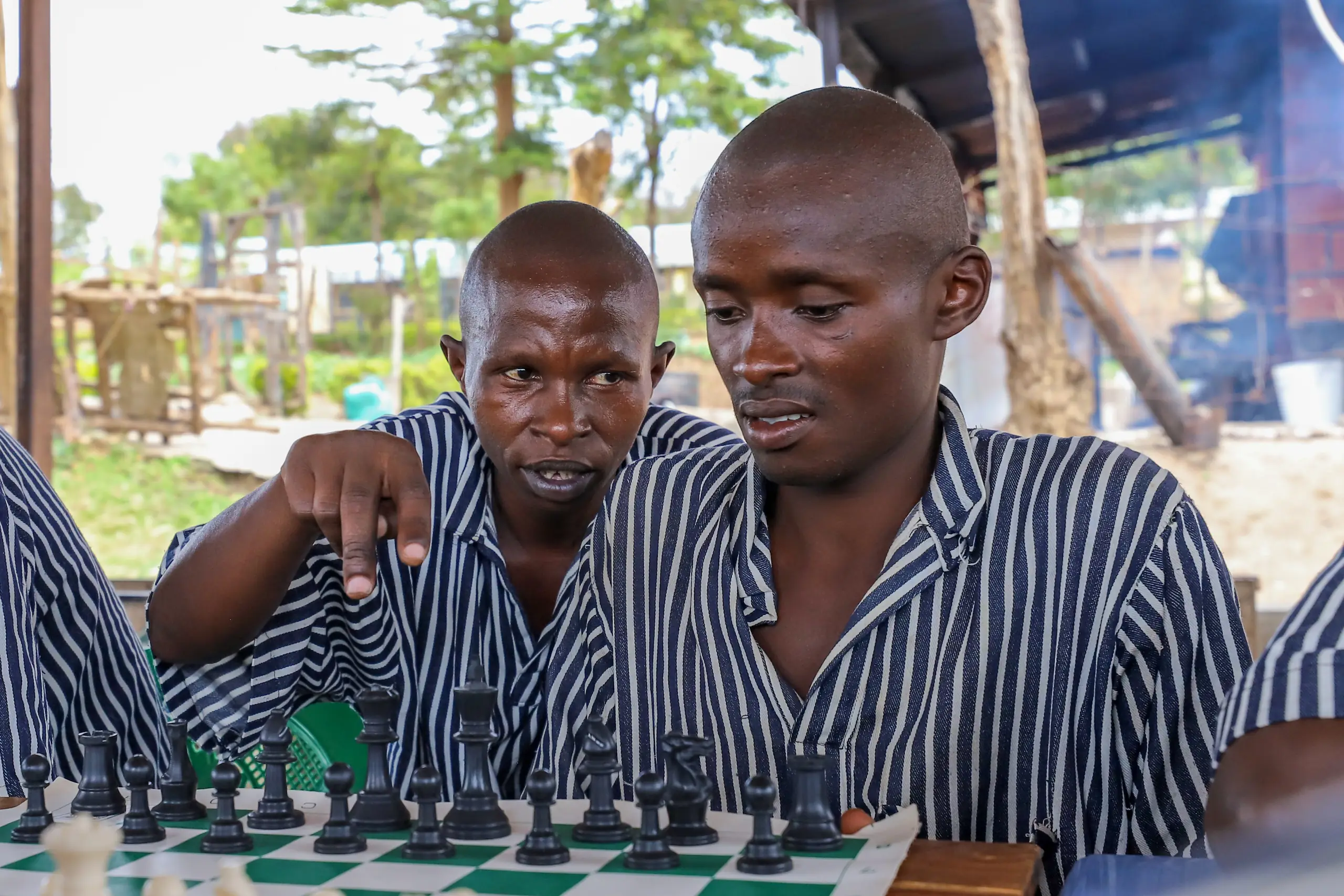
Participant Profiles: The program transcends age and offense categories. Younger inmates, such as 26-year-old Phillip Murage (learning under veteran players like 36-year-old Michael Kihara), sit alongside older, long-term offenders. Even younger dependents residing within the facilities—such as 2-year-old Brian Gatonye (sharing a name with the adult inmate profile)—absorb the visual language of the game early on.
Cross-Institutional Integration: The program is bolstered by auxiliary agricultural and vocational initiatives run by organizations like Resources Oriented Development Initiatives (RODI), creating a multi-faceted rehabilitation ecosystem that targets both manual and intellectual skill sets.
+-----------------------------------------------------------------+
|                   KENYA PRISON CHESS ECOSYSTEM                  |
+-----------------------------------------------------------------+
|  [FIDE & Chess Kenya] ---> Strategic Guidance & Tournaments     |
|  [The Gift of Chess]  ---> Equipment & Global Outreach          |
|  [Government/Prisons] ---> Infrastructure & Guard Training      |
|  [RODI & Nonprofits]  ---> Vocational & Psychosocial Support    |
+-----------------------------------------------------------------+
                                 |
                                 v
        [134 Correctional Facilities Across Kenya]
                     (Cognitive & Social Reform)
Official Statements and Expert Perspectives
The integration of chess into the daily rhythm of Kenyan prisons has garnered high praise from correctional administrators, mental health advocates, and the inmates themselves.
Superintendent Humphrey Young, head of Maranjau Prison, emphasizes the profound behavioral shifts observed since the program’s inception.
"Chess has become one of our integral programs,"Superintendent Young noted during a recent inspection. "Some of the skills chess teaches our offenders as they reintegrate back to society is how they can improve their problem-solving processes, and how they can think around issues that affect them once they’re out."
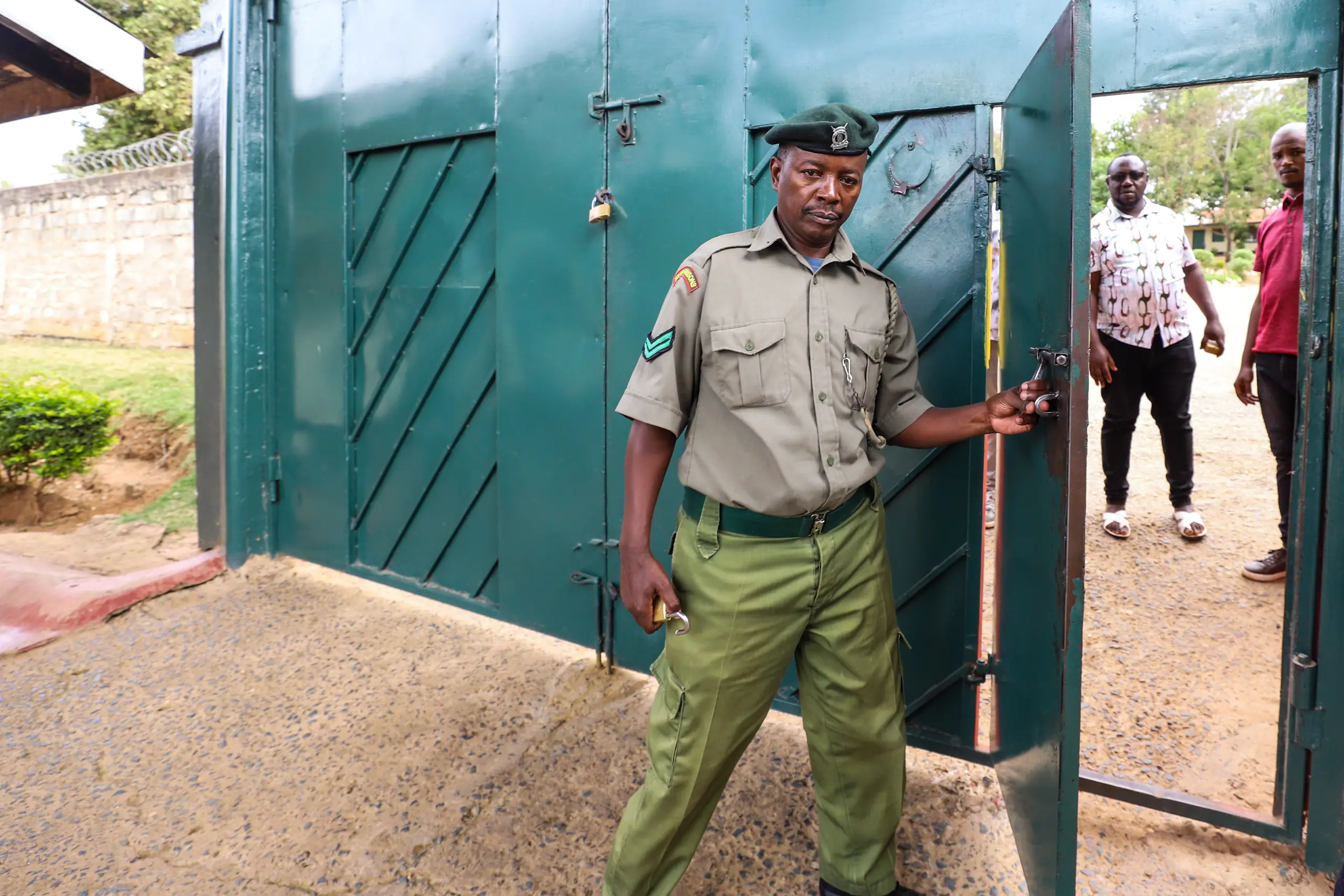
Beyond cognitive restructuring, administrators note that chess serves as a powerful equalizer. Traditionally, the dynamic between prison guards and inmates is strictly hierarchical and defined by security protocols. However, over a chessboard, those rigid boundaries soften. Guards trained as chess coaches sit shoulder-to-shoulder with the individuals they oversee, engaging in intellectual combat that fosters mutual respect and reduces institutional tension.
Monica Njoroge, a project officer at Resources Oriented Development Initiatives who frequently visits Maranjau to oversee agricultural training programs, highlights the psychological discipline the game demands:
"It is a game that trains patience and also having a clear mind in making decisions, being keen on what your next move is and the consequences that will come,"Njoroge observed after watching a tense match in the yard.
For the inmates, the philosophical implications of the game translate directly into personal redemption. Brian Gatonye, reflecting on his remaining months before his scheduled release in November 2027, articulates the internal metamorphosis catalyzed by the game:
"Chess has taught me a lot,"Gatonye explained, adjusting his position over the board. "It has taught me about being calm, choosing my decisions wisely. Before doing an act, I have to think first of what the repercussions are—and then I move."
Edwin Raj Walukaya, a 31-year-old inmate at Maranjau, underscores the psychological sanctuary the game provides within the confines of a correctional facility:
"It is a social game,"Walukaya said. "It gives us friends and occupies our minds."
Future Outlook: Challenges and Long-Term Horizons
While the immediate qualitative feedback from Maranjau Prison and facilities nationwide is overwhelmingly positive, experts and administrators acknowledge that the program faces distinct challenges moving forward.
The Need for Empirical Data
Currently, Kenya’s prison chess initiative lacks rigorous, independent empirical studies tracking recidivism rates among participating inmates versus non-participants. While anecdotal evidence strongly suggests improvements in impulse control and disciplinary records, future academic partnerships will be necessary to quantify the exact correlation between chess mastery and successful societal reintegration.
Scaling Inter-Prison and International Competitions
Building upon Kenya’s historic debut in the 2024 FIDE Intercontinental Online Chess Championship for Prisoners, Chess Kenya and correctional authorities are actively working to expand digital infrastructure within prisons. Providing reliable internet access and secure terminals for online international matches remains a logistical hurdle across remote facilities, but technological upgrades are steadily closing the gap.
Sustaining Post-Release Engagement
Perhaps the most critical frontier for the initiative lies in post-release support. Programs like those at Maranjau effectively prepare inmates to think strategically and maintain emotional composure while inside, but ensuring that these individuals have access to chess clubs, mentorship networks, and employment opportunities upon re-entry into Kenyan society will determine the ultimate success of the rehabilitation model.
As Gatonye looks ahead to his eventual release, his aspirations encapsulate the ultimate promise of the program: "After being released, I hope to continue playing chess. It brings peace inside my mind and heart."
Through simple wooden pieces on checkered boards, Kenya’s correctional system is proving that rehabilitation is not merely about serving time, but about learning how to make the right moves when the game of life resumes on the outside.



0 Comments