
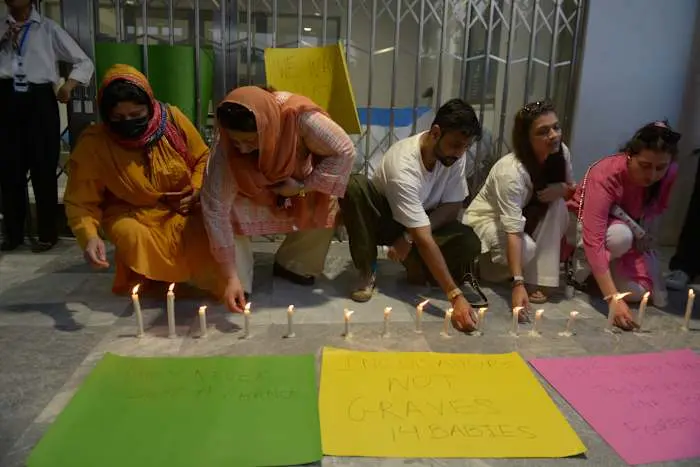

ISLAMABAD, PAKISTAN — In the wake of a devastating hospital fire that claimed the lives of 14 newborn infants at the nation’s premier federal medical facility, Pakistani Prime Minister Shehbaz Sharif has launched an aggressive administrative and legal crackdown. Ordering the immediate suspension of eight high-ranking officials and initiating criminal proceedings, the Prime Minister’s office has signaled that the tragedy will not be swept under the bureaucratic rug.
The catastrophic blaze, which occurred on Wednesday, August 26, 2026, at the Pakistan Institute of Medical Sciences (PIMS) in Islamabad, has ignited nationwide fury, laying bare severe infrastructural deficits, systemic administrative paralysis, and an absolute vacuum of emergency preparedness within the state’s flagship healthcare institution.
Executive Overview
The fire, which was confined to a third-floor neonatal nursery within the Mother and Child Health (MCH) ward at PIMS, escalated with such extreme velocity that medical staff managed to rescue only one of the 15 newborns receiving care in the unit. The remaining 14 infants perished from smoke inhalation and severe burns.
Following the tragedy, Prime Minister Shehbaz Sharif commissioned an emergency investigative committee, headed by retired senior civil servant Shahid Khan, to conduct a rapid inquiry. The committee’s interim report, presented to the Prime Minister, revealed a shocking series of institutional failures: the state-of-the-art neonatal ward completely lacked functioning fire alarms, automated sprinkler systems, or standardized emergency evacuation protocols. Furthermore, key supervisory personnel were absent when the fire broke out, leaving a skeletal staff of junior employees to combat the fast-moving inferno without basic firefighting tools or training.
In response to these findings, Prime Minister Sharif ordered the immediate suspension of eight senior administrative and medical officials, including the executive director of PIMS, and directed federal investigators to initiate criminal negligence proceedings. This administrative purge follows the high-profile dismissal of Federal Health Secretary Aslam Ghauri, the ministry’s top civil servant, immediately after the fire.
As a grieving nation demands accountability, the tragedy has forced a reckoning over public infrastructure safety standards, prompting provincial governments across Pakistan to order emergency audits of healthcare facilities.
Detailed Chronology of the Disaster
The timeline of the disaster, reconstructed by the Shahid Khan inquiry committee and supported by closed-circuit television (CCTV) surveillance footage, paints a grim picture of panic, delayed communication, and structural vulnerability.
[00:00] Fire Ignites in 3rd-Floor Nursery (Skeletal staff present; no automated alarms trigger)
   │
[06:00] Emergency Services Finally Contacted (6-minute delay due to lack of internal protocols)
   │
[21:00] First Responders Arrive at PIMS (15-minute transit time; fire already engulfing ward)
The Outbreak and Initial Response
On the evening of Wednesday, August 26, 2026, fifteen vulnerable newborns were resting in incubators inside the third-floor nursery of the PIMS Mother and Child Health ward. Investigative findings indicate that when the fire ignited, the supervisory staff designated to oversee the night shift were entirely absent from their posts. Instead, the ward was manned by a skeletal crew consisting of two nurses, a female security guard, and a junior house officer.
Without an automated smoke detection or fire alarm system to alert them, the staff only became aware of the fire once smoke and flames had already begun to compromise the room. Because the nursery lacked localized sprinkler systems, the fire, fueled by the oxygen-rich environment typical of neonatal units, spread with devastating speed.
A Heroic Rescue Amidst Chaos
In the frantic moments before the room was entirely consumed by toxic smoke, one nurse exhibited extraordinary bravery. According to the inquiry report, she repeatedly braved the encroaching flames, risking her own life to pull a single newborn infant from an incubator to safety. She was unable to re-enter the room due to the dense, suffocating smoke and intense heat. This rescued infant was the sole survivor of the 15 babies present in the ward.
Recognizing her exceptional valor, Prime Minister Sharif has approved a formal recommendation to bestow upon her the Sitara-i-Khidmat (Star of Service), one of Pakistan’s prestigious civil awards recognizing outstanding public service and bravery.
Fatal Delays in Emergency Mobilization
The inquiry highlighted a critical, six-minute delay between the ignition of the fire and the first call placed to emergency services. Due to a total absence of clear emergency guidelines, the panicked staff attempted to manage the situation internally before seeking outside help.
Once the call was finally placed, it took emergency responders an additional 15 minutes to arrive at the hospital premises. This cumulative 21-minute delay proved fatal. By the time firefighters and rescue teams breached the third-floor ward, the nursery had been completely gutted, and 14 infants had perished.
Supporting Context & Metrics
The tragedy at PIMS is not an isolated incident of bad luck; rather, it is the direct consequence of systemic regulatory failure and chronic underfunding of public health infrastructure in Pakistan.
| Metric / Parameter | Details of Failure at PIMS MCH Ward |
|---|---|
| Active Fire Suppression | Zero functional sprinkler systems installed in the neonatal ward. |
| Early Warning Systems | No localized or centralized smoke detectors or fire alarms. |
| Standard Operating Procedures (SOPs) | Out of 13 hospital SOP subsections, only 2 made passing reference to emergency fire responses. |
| Staffing Levels during Incident | Absent supervisory officers; only 4 junior staff members present for 15 intensive-care infants. |
| Emergency Response Lag | 6-minute delay in placing emergency call; 15-minute responder transit time. |
| Financial Compensation | 5 million PKR (~$18,000 USD) allocated per bereaved family. |
The Vulnerability of Neonatal Units
Neonatal Intensive Care Units (NICUs) and nurseries are uniquely vulnerable to rapid-onset fires. These wards utilize pressurized supplemental oxygen, which acts as a powerful accelerant, turning minor electrical shorts into uncontrollable blazes within seconds. International healthcare standards, such as those set by the National Fire Protection Association (NFPA), mandate that clinical environments containing high oxygen concentrations must be equipped with localized, fast-acting wet-pipe sprinkler systems, smoke barriers, and self-closing fire doors. The PIMS nursery possessed none of these basic safeguards.
A Pattern of Public Safety Failures
This disaster occurs amid heightened public anxiety regarding the enforcement of municipal building codes and public safety standards in Pakistan. Only months prior, in June 2026, a tragic roof collapse at an under-construction tutoring center in the eastern city of Lahore claimed the lives of 14 school-aged children. The Lahore collapse, like the PIMS fire, was attributed to substandard materials, a lack of structural oversight, and municipal corruption. The recurring nature of these preventable mass-casualty events involving children has severely eroded public trust in state institutions.
Official Statements & Accountability
The political fallout from the PIMS fire has been swift, reaching the highest levels of the federal government. During a high-level briefing on Saturday, August 29, 2026, Prime Minister Shehbaz Sharif was presented with the interim findings of the Shahid Khan inquiry, which included a review of a two-minute surveillance video capturing the rapid spread of the fire.
Following the presentation, Sharif expressed deep anger and grief, stating:
"Those guilty of criminal negligence deserve no leniency. The loss of these innocent lives is an unbearable tragedy for the entire nation, and the state will ensure that those who failed in their duty face the full force of the law."
Administrative Suspensions and Prosecutions
To ensure an unbiased and thorough investigation, the Prime Minister ordered the immediate suspension of eight key officials linked to the administration of PIMS and municipal emergency management:
- The Executive Director of PIMS – Suspended for overall administrative failure and lack of facility oversight.
- Two Joint Executive Directors – Suspended for operational negligence and failure to implement safety protocols.
- The Head of the Neonatal Department – Suspended for failing to secure the nursery and ensure adequate night-shift staffing.
- Two Attending Physicians/Doctors – Suspended for unauthorized absence from duty during the incident.
- The Assistant Director for Security at PIMS – Suspended for failing to coordinate an immediate evacuation and emergency response.
- The Head of Emergency Services for the Capital Development Authority (CDA) – Suspended pending an investigation into the 15-minute response delay by city firefighters.
In addition to these suspensions, the federal government has terminated its contract with the private security firm responsible for hospital safety and initiated legal proceedings against the company’s executive leadership for failing to train their on-site personnel in basic emergency evacuation procedures.
Future Outlook & Systemic Reforms
The catastrophic loss of life in Islamabad has served as an urgent wake-up call for healthcare administrators across Pakistan. Whether this tragedy will mark a permanent turning point in the country’s approach to public safety remains to be seen, but initial legislative and administrative movements suggest a shift toward stricter enforcement.
Provincial Mobilization
In Punjab, Pakistan’s most populous province, the provincial government has preemptively ordered an immediate, comprehensive safety audit of all public and private hospitals. Teams of mechanical, electrical, and plumbing (MEP) engineers, alongside civil defense officials, have been deployed to inspect firefighting equipment, emergency exits, and electrical wiring in intensive care units across the province. Similar directives are being demanded by civil society groups in Sindh, Balochistan, and Khyber Pakhtunkhwa.
The Path to Structural Reform
For Pakistan to prevent future tragedies of this nature, independent health policy analysts argue that several structural reforms must be implemented immediately:
- Independent Healthcare Inspectorates: Establishing autonomous regulatory bodies empowered to conduct unannounced safety audits of hospitals, with the authority to shut down non-compliant wards.
- Mandatory Retrofitting: Passing federal legislation requiring all public hospitals, starting with high-risk zones like NICUs and operating theaters, to be retrofitted with international-standard fire suppression systems.
- Rigorous Staff Training: Institutionalizing mandatory, bi-annual fire drills and emergency response certification for all clinical and non-clinical hospital staff.
As the families of the 14 infants begin the painful process of burying their children, the pressure on the Sharif administration to convert its rhetoric of "no leniency" into permanent, institutional reform has never been higher. The upcoming final report from the Shahid Khan committee will likely serve as the blueprint for these crucial legislative changes.

0 Comments