
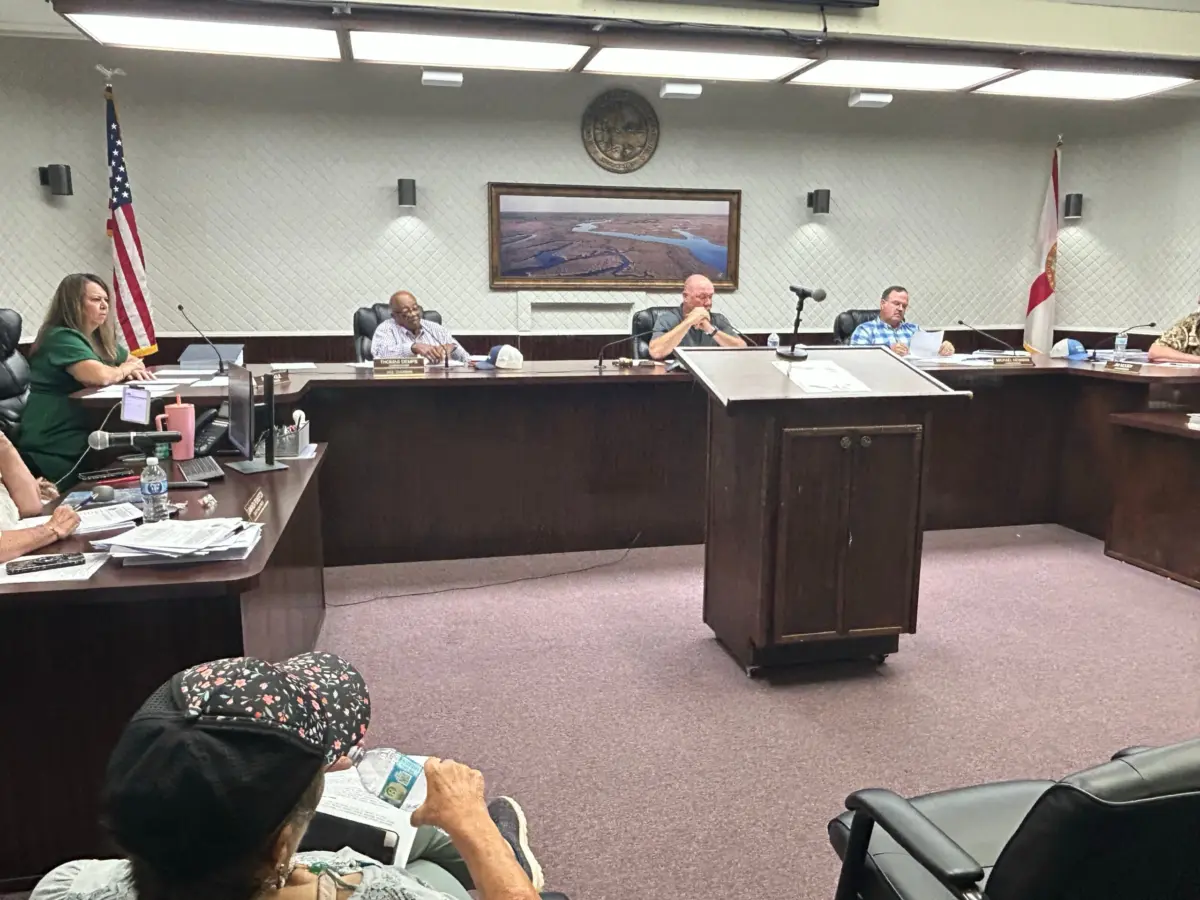

TAYLOR COUNTY, Fla. — As the sprawling digital footprint of the modern economy expands into rural and semi-rural America, local governments increasingly find themselves on the front lines of technological integration. In Taylor County, Florida, the Board of County Commissioners is actively navigating this high-stakes terrain.
During their regularly scheduled meeting on Tuesday, commissioners advanced discussions regarding the potential establishment of data centers within the county lines. Rather than pulling up the drawbridge with a temporary ban—a strategy favored by some officials and heavily debated across the Florida Big Bend region—the board opted for a proactive regulatory path. Commissioners voted to enlist the expertise of North Florida Professional Services, an established regional engineering firm, to overhaul and update the county’s existing land development codes.
This latest policy maneuver follows a deeply attended public workshop held last month, where local stakeholders, industry experts, and concerned residents converged to air grievances, ask probing questions, and debate the merits and drawbacks of heavy technological infrastructure settling in their backyard. While the county currently has no active applications for a data center project on its desk, officials recognize that the rapid proliferation of artificial intelligence, cloud computing, and massive data storage demands makes it a matter of when, not if, developers come knocking.
Executive Overview: Balancing Economic Ambition with Community Preservation
The debate in Taylor County encapsulates a nationwide friction point: how can rural and resource-dependent communities welcome potential economic development without sacrificing their quality of life, natural resources, and community character?
Data centers—the physical backbone of the internet, streaming services, and AI processing—are notoriously resource-intensive. They require immense amounts of electricity to power banks of servers and millions of gallons of water for cooling systems. For a rural Florida county known for its rich timber heritage, coastal access, and quiet communities, the prospect of industrial-scale tech facilities introduces profound systemic questions.
Faced with these realities, the Taylor County commission is attempting a delicate balancing act. On one side are officials advocating for caution, arguing that rushing into unknown territory without guardrails leaves the county vulnerable to incompatible industrial developments. On the other side are leaders who fear that slamming the brakes through a moratorium will signal to the broader commercial market that Taylor County is “closed for business,” potentially pushing vital tax revenue and infrastructure investments to neighboring jurisdictions.
Tuesday’s vote to bring in North Florida Professional Services represents a compromise of sorts: acknowledging the lack of current protections while refusing to slam the door on prospective economic opportunities. Over the coming weeks, engineers and county planners will draft specific, enforceable codes that will dictate where data centers can be built, how much noise and light they can emit, how they will manage their immense resource footprints, and what environmental standards they must meet.
Detailed Chronology: From Public Workshops to Tuesday’s Vote
To understand how Taylor County arrived at its current crossroads, it is necessary to examine the timeline of events that have galvanized local governance over the past two months.
The Catalyst: The August Workshop
The conversation surrounding data centers did not materialize in a vacuum. Recognizing the soaring demand for tech infrastructure across the Southeastern United States, Taylor County leaders scheduled a dedicated public workshop in late August 2026. The session was designed as an educational forum, bringing in outside experts to brief the commission on what data centers actually are, how they operate, and what impacts they typically impose on host communities.
Crucially, the workshop also served as a barometer for public sentiment. Dozens of residents turned out to voice concerns over potential strain on the local electrical grid, potential noise pollution from constant industrial cooling fans, and the unknown impacts on local water tables. At the same time, a subset of attendees and local business advocates urged the commission to look at the broader economic picture, pointing out that multi-million-dollar capital investments could bolster the county tax base and diversify an economy historically reliant on forestry and seasonal tourism.
The Debate at the Tuesday Meeting
Armed with the insights gathered during the August workshop, the Board of County Commissioners reconvened on Tuesday to determine their next legal and administrative steps.
The focal point of the session quickly centered on a motion brought forward by Commissioner Pam Feagle. Recognizing the vulnerability of the county’s current land development code—which contains virtually no mentions or restrictions tailored to massive digital infrastructure—Feagle proposed a formal 12-month moratorium on data center construction and permitting.
“I propose a moratorium for 12 months, only to give time for all of these land development revisions and everything else to be put in place,” Commissioner Feagle argued during the session, emphasizing that the county needed breathing room to craft airtight regulations without the looming pressure of an incoming developer application.
However, Feagle’s motion failed to secure the necessary consensus from her fellow board members.
Commission Chairman Jamie English voiced strong opposition to the moratorium proposal, articulating a viewpoint rooted in economic signaling and procedural readiness.
“I would steer away from a moratorium myself,” Chairman English stated. “That just sends the wrong message from the county. We don’t have a data center coming, and at the end of the day, we don’t have any rules in place on what we would even issue a permit for. I don’t know how we could even issue a permit for something that we don’t even know what we’re issuing it for at this point.”
Following the defeat of the moratorium motion, the commission pivoted to a constructive alternative. Rather than freezing the landscape, they voted to actively shape it. The board formally agreed to contract North Florida Professional Services to assist county staff in drafting comprehensive land development code amendments specifically targeting data center standards.
According to county officials, this engineering and planning overhaul is projected to be a multi-week process, involving rigorous drafting, public notices, and subsequent public hearings before any final code changes are codified into law.
Supporting Context & Metrics: The Looming Footprint of Data Centers
To appreciate the gravity of Taylor County’s regulatory undertaking, one must examine the broader industry trends driving these municipal decisions.
The Resource Demands of Modern Computing
Data centers are no longer simple warehouses housing rows of modest computer servers. In the era of generative artificial intelligence, machine learning, and massive cloud storage networks, modern facilities are sprawling industrial complexes.
- Power Consumption: A single modern hyperscale data center can consume as much electricity as a small city—often ranging from 100 megawatts to upwards of 1 gigawatt of continuous power. For rural electric cooperatives and local utilities, servicing this load requires massive grid upgrades, new substations, and generation capacity.
- Water Usage: Because servers generate immense heat, cooling systems are critical. Evaporative cooling towers can consume hundreds of thousands, or even millions, of gallons of water per day. In regions sensitive to aquifer health, this creates intense scrutiny from environmental advocates and agricultural interests.
- Land and Footprint: Facilities often span tens or hundreds of acres, requiring significant grading, impervious surface additions, and perimeter security fencing, transforming rural vistas into industrial compounds.
The Regional Landscape in Florida’s Big Bend
Taylor County is not alone in grappling with these pressures. Across the Florida Big Bend and North Florida regions, rural counties are increasingly being scouted by tech developers seeking vast tracts of relatively inexpensive land, proximity to major fiber-optic trunk lines, and access to cooling water sources.
As urban and suburban markets in South Florida and Central Florida become saturated and land prices soar, developers are casting their nets wider. Counties that lack specific zoning carve-outs for high-tech industrial parks find themselves vulnerable to ad-hoc development proposals that can overwhelm local infrastructure. By moving quickly to update their land development codes, Taylor County is attempting to shift its posture from reactive to proactive, ensuring that if a developer does arrive, they must play by rules explicitly designed to protect local interests.
Official Statements and Perspectives
The division among Taylor County commissioners highlights a classic municipal dilemma: balancing caution against commercial openness.
-
Commissioner Pam Feagle’s Defense of the Moratorium:
Proponents of the temporary freeze argue that governance without a safety net is an unnecessary gamble. Commissioner Feagle’s push for a 12-month pause was rooted in the desire to secure structural integrity before opening the floodgates. From this perspective, a year-long timeout does not mean saying "no" forever; rather, it means saying "not yet, until we know what we are doing." Supporters of the moratorium contend that drafting rules while a developer is actively shopping around a proposal puts undue pressure on local officials and can lead to rushed, sub-optimal compromises. -
Chairman Jamie English’s View on Economic Signaling:
Conversely, Chairman English and the majority of the board expressed concern that the word "moratorium" carries a chilling effect. In economic development circles, a moratorium can be interpreted as hostility toward growth and innovation. Furthermore, English highlighted a fascinating bureaucratic paradox: because Taylor County currently possesses zero regulations regarding data centers, it cannot technically issue a permit for one anyway. From his perspective, enacting a moratorium to stop something that isn’t currently threatened to arrive—while simultaneously failing to have a legal framework to evaluate any future proposals—makes the moratorium redundant at best and counterproductive at worst. -
The Engineering Imperative:
By bringing in North Florida Professional Services, the commission is signaling that municipal planning is a technical science requiring specialized engineering insight. The firm’s task will not be merely linguistic; they must translate complex industrial engineering metrics—such as decibel limits for cooling fans, stormwater runoff calculations for massive roof surfaces, and electrical grid connectivity requirements—into legally binding local ordinances.
Future Outlook: What’s Next for Taylor County?
The coming weeks will be crucial for the future of technological development in Taylor County. As North Florida Professional Services begins its collaboration with county planners, several milestones lie ahead:
- Code Drafting and Review: Engineers and county staff will spend the next several weeks drafting the specific language to be integrated into the Land Development Code. This will likely include defining what constitutes a data center, establishing permitted zoning districts (such as heavy industrial zones), and setting strict parameters regarding environmental impact, noise mitigation, setbacks from residential areas, and utility coordination.
- Public Hearings and Public Input: Once a draft of the new regulations is finalized, it will not be adopted in secret. State statutes require public advertising and a series of public hearings before the Planning Commission and the Board of County Commissioners. This will give residents another opportunity to review the proposed rules, offer feedback, and demand tighter restrictions if they feel the draft falls short.
- Adoption and Market Positioning: If the commission adopts the updated land development codes, Taylor County will effectively establish a clear "rulebook" for the tech industry. Developers will know precisely what is permitted, what environmental mitigations are mandatory, and what the approval timeline looks like.
Whether this regulatory framework will attract responsible corporate investment or deter speculative ventures remains to be seen. What is certain, however, is that Taylor County is no longer sleepwalking into the digital future. By engaging engineering professionals and aggressively tackling code modernization, the county is laying down the tracks just ahead of the technological train—ensuring that if and when data centers arrive, they will do so strictly on Taylor County’s terms.
For ongoing updates on this story and other developments across the Florida Big Bend, continue to follow WCTV across our digital platforms, including Facebook, Instagram, YouTube, Nextdoor, and X (formerly Twitter). If you have a news tip or notice a correction that needs to be made, please reach out to our newsroom at [email protected].

0 Comments