For half a decade, the modern Philadelphia Phillies have been defined by their high-octane postseason runs, a star-studded clubhouse, and a passionate, ring-hungry fan base. Yet, on the night of October 1, 2026, at Truist Park in Atlanta, that era of boisterous optimism collided with the harsh reality of systemic decline. A 6-2 defeat at the hands of the Atlanta Braves in the deciding Game 3 of the National League Wild Card Series did more than just eliminate the Phillies from the playoffs; it completed a year-by-year regression that has seen the franchise drift further from the ultimate prize each autumn since their 2022 National League pennant.
The defeat exposed the compounding vulnerabilities of a veteran roster that spent its physical and emotional reserves simply trying to qualify for October. Forced to fight until Game 162 of the regular season to secure their postseason ticket, the Phillies entered the Wild Card Series with an exhausted pitching staff, an interim manager navigating a volatile bullpen, and a lineup unable to conjure its signature late-inning magic.
As the Braves celebrated on their home turf, the Phillies’ clubhouse was enveloped in a quiet, analytical somberness. With a core group—comprising Bryce Harper, Kyle Schwarber, J.T. Realmuto, Zack Wheeler, and Aaron Nola—averaging 91 wins per season over the last five years but still lacking a World Series ring, the organization now stands at a critical strategic crossroads. The 2026 campaign, which began with a managerial firing in April and ended with a quiet whimper in October, raises urgent questions about the team’s leadership, roster construction, and the overall longevity of its championship window.
Detailed Chronology
The Decider: How Game 3 Was Lost
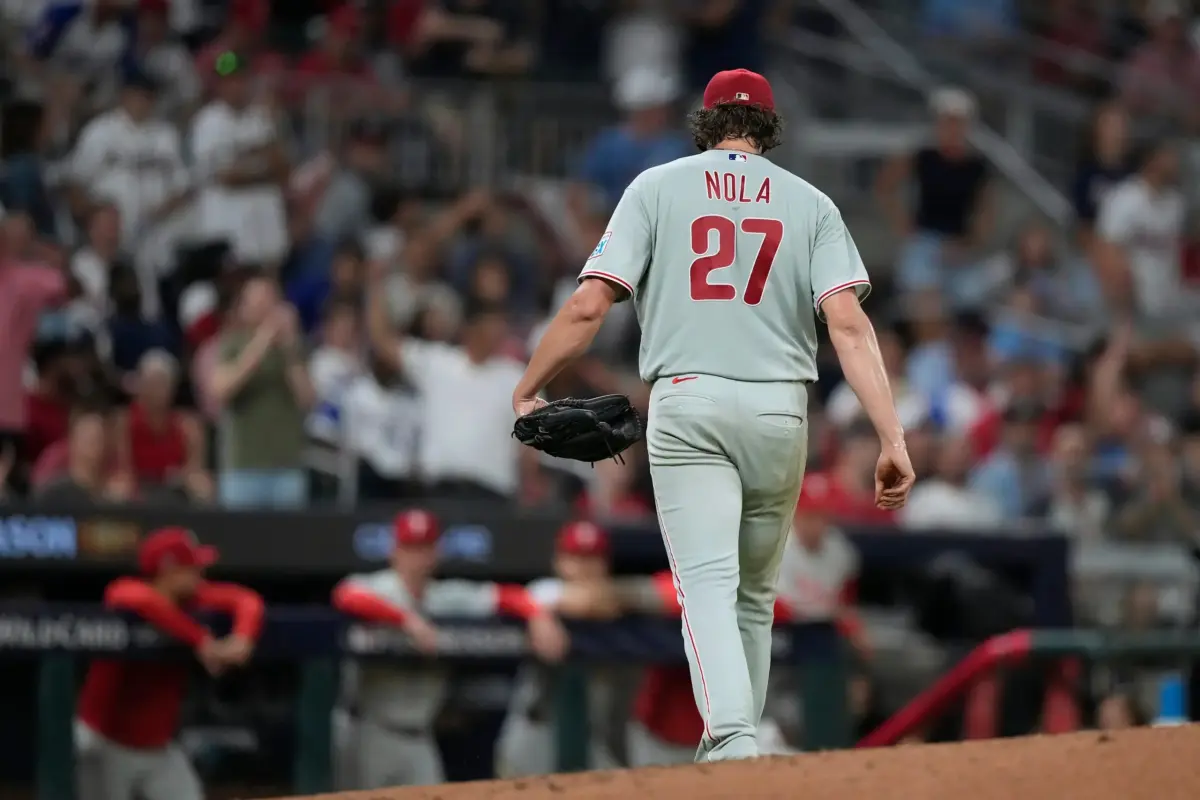
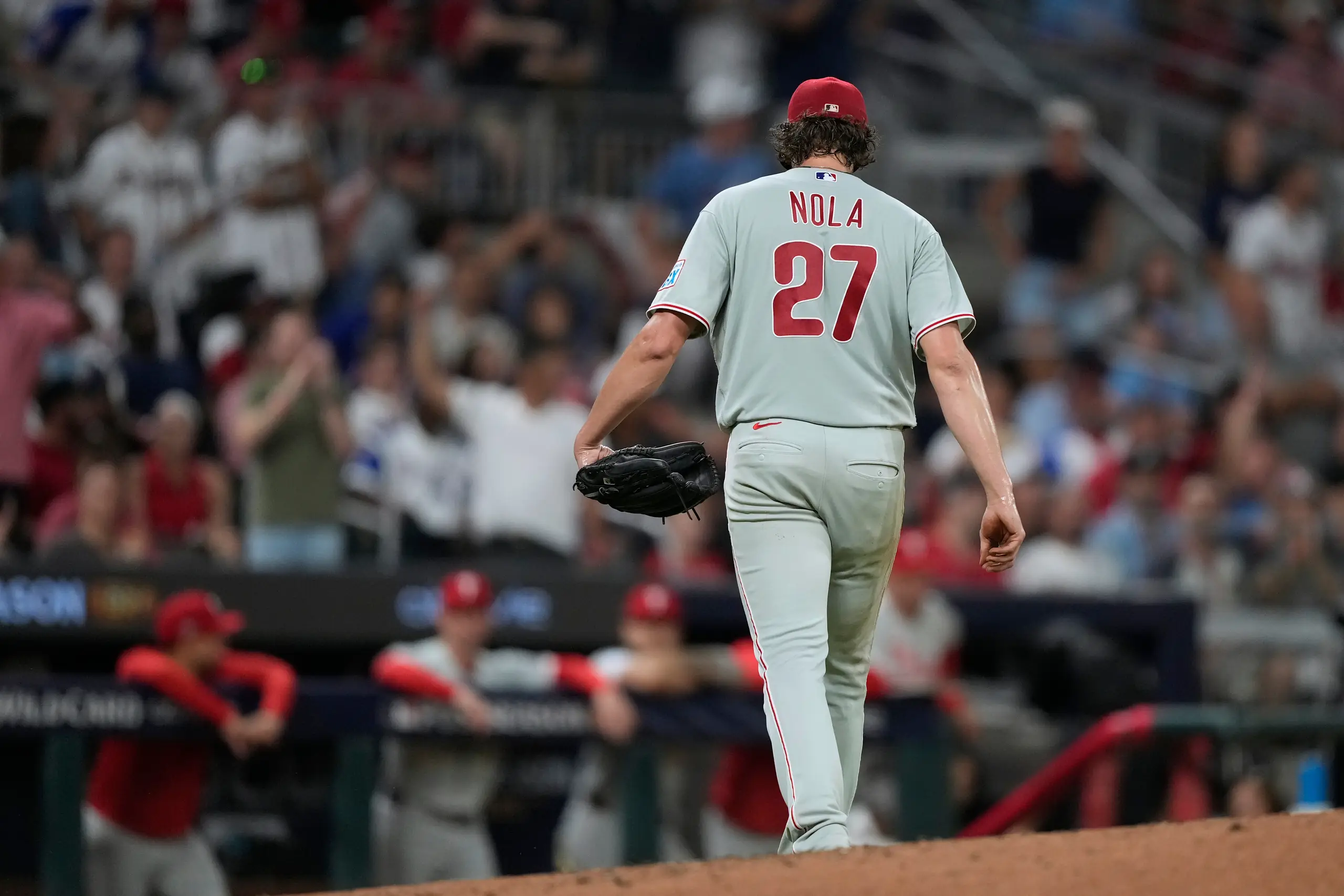
The narrative of Game 3 was written in the very first inning, exposing the physical exhaustion of Philadelphia’s pitching staff. Aaron Nola, the longest-tenured pitcher on the roster and a cornerstone of the franchise’s postseason history, took the mound under immense pressure. He did not have his best command.
GAME 3 LINE SCORE (October 1, 2026 - Truist Park)
--------------------------------------------------
Philadelphia Phillies   2  (6 hits, 1 error)
Atlanta Braves          6  (9 hits, 0 errors)
--------------------------------------------------
WP: Ray Kerr (1-0)  |  LP: Aaron Nola (0-1)
HR: ATL - Michael Harris II (1st Inning, 3-run)
In the bottom of the first, Nola struggled to find the edges of the plate, allowing early baserunners and falling behind in counts. The defining blow came when Atlanta center fielder Michael Harris II caught a hanging breaking ball, driving a three-run home run deep into the right-field seats. The blast energized the Truist Park crowd and put the Phillies in an immediate 3-0 deficit.
Nola’s night did not last much longer. After continuing to struggle with his command in the second inning, interim manager Don Mattingly was forced to pull his starter. It was a premature exit that taxed an already thin Philadelphia bullpen and signaled the beginning of the end.
Conversely, Atlanta’s pitching strategy was a masterclass in modern, high-leverage postseason management. Braves manager Brian Snitker opted for a bullpen game, starting left-hander Ray Kerr as an "opener." Making only his 10th appearance of the season and his first-ever career postseason start, Kerr was spectacular.
Over 3 1/3 innings of work, Kerr baffled the Phillies’ star-studded lineup:
Innings Pitched: 3.1
Runs Allowed: 0
Hits Allowed: 1
Walks: 1
Strikeouts: 4
Kerr’s ability to neutralize left-handed power hitters like Bryce Harper and Kyle Schwarber early in the game prevented the Phillies from building any offensive momentum. When Kerr departed, bulk reliever Grant Holmes entered, continuing to suppress the Philadelphia offense and keeping the Phillies at arm’s length for the remainder of the night.
The 2026 Rollercoaster: From April Firing to September Swoon
To understand the collapse in Atlanta, one must examine the turbulent 162-game journey that preceded it. The 2026 season was plagued by inconsistency and structural volatility from the outset:
April 28: Following a miserable 9-18 start that left the team at the bottom of the NL East, the front office made the difficult decision to fire manager Rob Thomson. Don Mattingly, brought in as the bench coach, was named interim manager.
May 16: Under Mattingly, the Phillies found their footing. The team won eight of its first nine games post-change, finally reaching the .500 mark.
August: A spectacular summer surge, driven by MVP-caliber production from Bryce Harper and dominant starting pitching from Zack Wheeler, put the Phillies in prime position for a postseason berth.
September: The wheels began to wobble. A late-season offensive slump and injuries to key bullpen arms led to a severe September swoon. Instead of resting their starters and lining up their rotation for the Wild Card round, the Phillies were forced to play high-stakes, must-win baseball through the final week of the season.
Game 162: The Phillies finally clinched their wild-card spot on the final day of the regular season, leaving their pitching staff entirely out of alignment for the postseason.
Supporting Context & Metrics
The Law of Diminishing Returns
The Phillies’ exit in the 2026 Wild Card round is not an isolated disappointment, but rather the continuation of a clear downward trend in postseason execution. Since their breakthrough run in 2022, the Phillies have struggled to replicate their deep October runs.
Philadelphia Phillies Postseason Trajectory (2022-2026)

  Year | Round Reached       | Defeated By
  -------------------------------------------------
  2022 | World Series (L)    | Houston Astros (4-2)
  2023 | NLCS (L)            | Arizona Diamondbacks (4-3)
  2024 | NLDS (L)            | New York Mets (3-1)
  2025 | NLDS (L)            | Los Angeles Dodgers (3-1)
  2026 | Wild Card (L)       | Atlanta Braves (2-1)
This steady regression highlights the difficulty of maintaining a championship-caliber roster in the modern MLB. While the Phillies’ core has remained remarkably durable, averaging 91 wins per season over this five-year span, the team has struggled to peak at the right time.
The Cost of the September Chase
The primary tactical disadvantage for the Phillies in the 2026 Wild Card Series was the exhaustion of their pitching rotation. Because Philadelphia was forced to fight for its playoff life until the final day of the regular season, Don Mattingly could not deploy his pitching staff effectively.
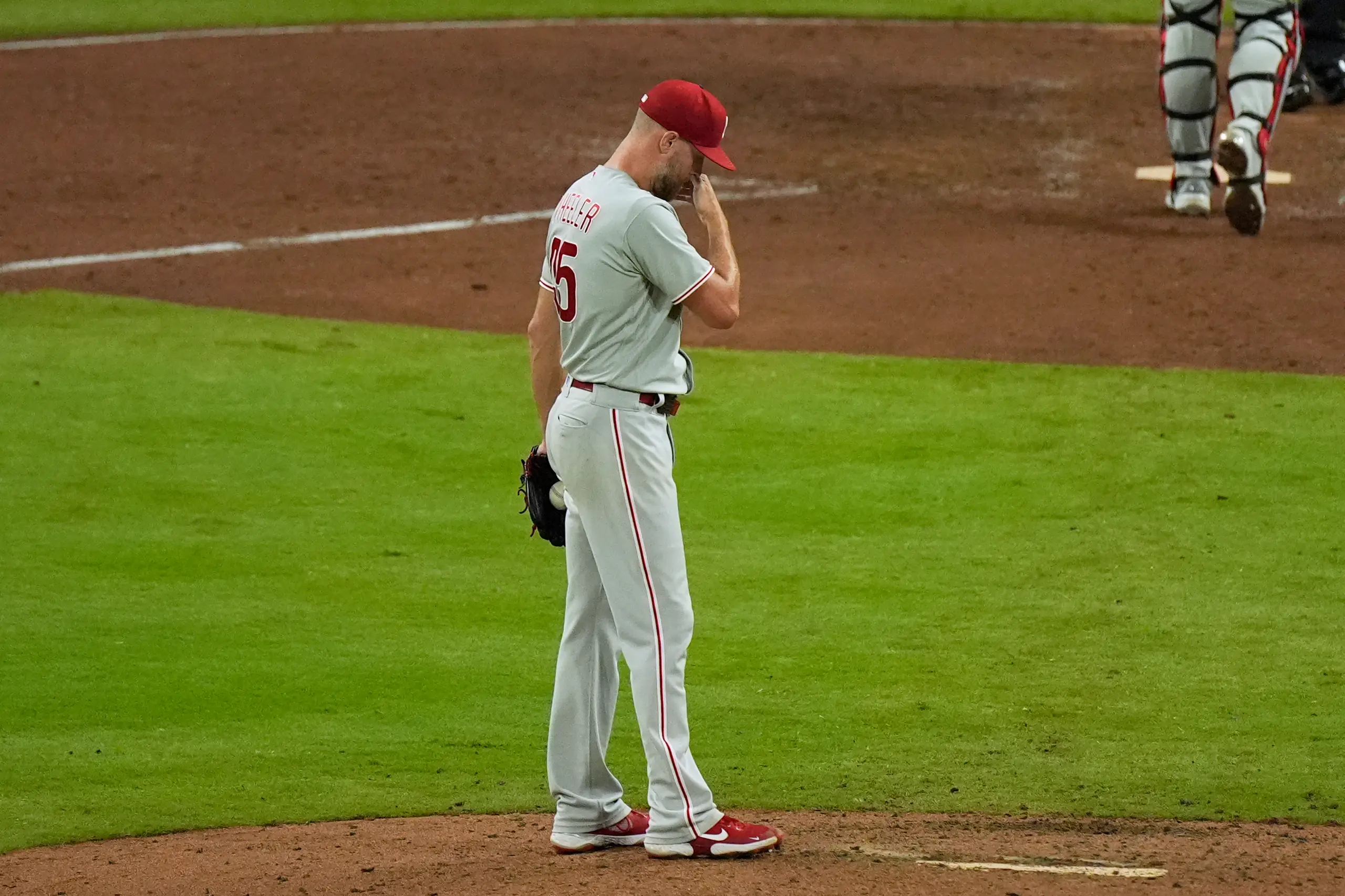
Zack Wheeler, the team’s undisputed ace, was forced to pitch in the final days of September just to secure a postseason berth, making him unavailable for Game 1. This forced the Phillies to rely on depth options early in the series, ultimately leading to Aaron Nola starting Game 3 on short rest. Nola’s early exit in the second inning was a direct consequence of the physical toll of the preceding weeks.
Official Statements
The Players’ Perspective
Inside the visitor’s clubhouse at Truist Park, the mood was quiet and analytical. Bryce Harper, the face of the franchise, offered no excuses for the team’s early exit, focusing instead on the reality of professional expectations.
"You’re here to do business. You’re here to win games, and we didn’t do that. There’s no point in talking about what we could have done or how we could have set things up. The bottom line is we didn’t get the job done when it mattered most."
— Bryce Harper, Phillies First Baseman
Aaron Nola reflected on the close bonds within the clubhouse and the frustration of failing to maximize the potential of a highly talented roster.
"Obviously, we’d love to win a World Series with these guys. We’ve been together quite a while, and we’ve got a good clubhouse, and you know, good characters on this team. We know what type of guys are in here. We know what type of players we have, and what we’re capable of. We just need to find a way to play our best baseball at the right time."
— Aaron Nola, Phillies Pitcher
Zack Wheeler echoed these sentiments, emphasizing the emotional toll of a long season ending so abruptly.
"It is tough. We spent a lot of time together. We see everybody’s ups and downs. We see the good times and bad times people have throughout the season. We’re all brothers here, and we love to compete. So when something like this happens, it’s incredibly tough to swallow."
— Zack Wheeler, Phillies Pitcher
Management and the Managerial Question
Interim manager Don Mattingly, who steadied the ship after Rob Thomson’s firing in April, was realistic about the structural disadvantages his team faced due to their late-season scramble.
"You’d love to be able to set your pitching up and have them be rested and all that kind of stuff. But that’s not the way it went. We had to fight to get ourselves in, and to do what we had to do to get in, we had to do what we had to do basically every game in the series."
— Don Mattingly, Interim Manager
When asked about his future with the organization and whether he expects to return as the permanent manager for the 2027 season, Mattingly was non-committal.
"It’s not the time to talk about it. I’m comfortable with whatever they want to do. Again, I want the best for the Phillies. I loved being in Philly this year. I actually like playing in that environment. It’s a rough environment, but it’s good. Again, I think you let the organization evaluate, talk about what they think moving forward, what they should do, and that dictates a lot of different things."
— Don Mattingly, on his future
Future Outlook & Strategic Crossroads
As the Philadelphia Phillies enter the 2026-2027 offseason, president of baseball operations Dave Dombrowski faces a series of franchise-altering decisions. The window of opportunity for this specific core of players is beginning to narrow, and the front office must decide whether to double down on their veteran stars or begin a strategic retooling.
The Managerial Search
The first order of business for the Phillies’ front office is resolving the managerial situation. Don Mattingly did an admirable job guiding the team to a postseason berth after a disastrous 9-18 start, but the front office must decide if he is the long-term solution to lead this club back to the World Series.
Dombrowski may conduct a thorough external search to find a manager capable of maximizing the team’s analytical profile while maintaining the strong clubhouse chemistry that has defined the team’s recent runs.
Roster Construction and the Aging Curve
The core of the Phillies’ roster is entering its late productiveness window:
Bryce Harper: Will turn 34 years old after the 2026 season.
Kyle Schwarber: Entering his age-34 season, with questions remaining about his defensive versatility and high strikeout rates.
J.T. Realmuto: Will be 36 years old in 2027, playing one of the most physically demanding positions in professional sports.
Zack Wheeler & Aaron Nola: Both pitchers remain elite but carry significant workloads from five consecutive years of deep postseason runs.
The front office must find ways to inject youth and athleticism into the lineup. The Phillies’ farm system, which has graduated key talents in recent years, will need to produce cost-effective, high-impact contributors to complement their high-priced superstars.
Financial Flexibility and the Luxury Tax
Philadelphia has consistently run one of the highest payrolls in Major League Baseball, reflecting owner John Middleton’s commitment to bringing a championship back to the city. However, with multiple long-term, high-value contracts on the books, the Phillies are approaching the upper limits of the competitive balance tax.
Dombrowski will need to be creative in the free-agent and trade markets, identifying value additions rather than simply pursuing the most expensive superstars available. Upgrading the bullpen, securing a reliable middle-of-the-rotation starter, and improving team defense will be the primary objectives of an offseason defined by reflection and transition.
The 2026 Wild Card exit was a sobering reminder that talent alone is not always enough in the volatile landscape of the MLB postseason. For the Phillies, the challenge of the upcoming offseason is not just rebuilding a roster, but restoring the competitive edge that once made them the most feared team in October.



0 Comments