

Executive Overview
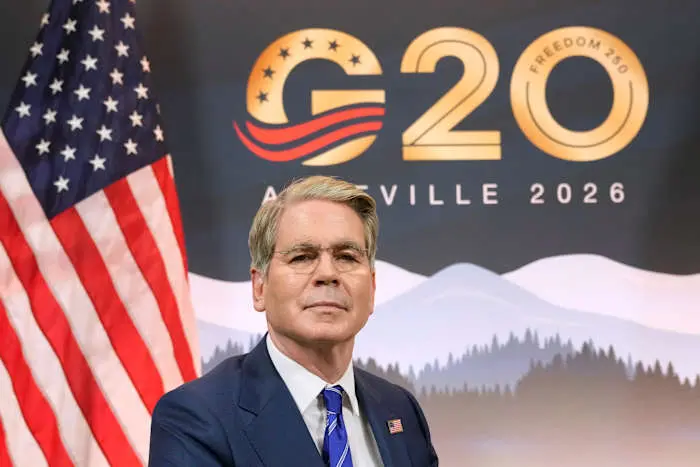
As G20 finance ministers and central bank governors gather in Asheville, North Carolina, for a critical two-day summit commencing Monday, August 31, 2026, U.S. Treasury Secretary Scott Bessent finds himself navigating a complex diplomatic landscape. Hosting the representatives of the world’s largest economies, Bessent is attempting to forge a consensus around a traditional American economic agenda: deregulation, energy independence, and sovereign debt restructuring. However, this domestic growth narrative is increasingly at odds with a highly volatile geopolitical reality characterized by aggressive U.S. unilateralism, escalating trade wars with historic allies, and a prolonged military conflict with Iran that has entered its seventh month.
The backdrop of the Asheville summit highlights the widening gap between Washington’s domestic economic ambitions and its international policy execution. On one hand, the Treasury Department seeks global cooperation to address a mounting "mountain of debt" and to streamline international banking regulations. On the other hand, the United States is actively destabilizing international trade networks through the imposition of severe tariffs on major partners—most notably Canada—while simultaneously prosecuting an unpopular, economically disruptive war against Iran.
With domestic gas prices remaining stubbornly high and global supply chains strained by maritime bottlenecks, Bessent’s task is formidable. He must convince skeptical foreign partners to align with U.S. strategic objectives, particularly the economic isolation of Iran, at a time when Washington’s reliance on unilateral economic penalties and tariff threats has alienated traditional allies. This report examines the geopolitical developments leading up to the summit, analyzes the economic metrics shaping the discussions, evaluates official positions, and projects the likely outcomes of this pivotal diplomatic encounter.
Detailed Chronology
The convergence of economic and geopolitical crises confronting the G20 summit in Asheville is the result of several key developments over the past two years.
[Sept 2024: Hurricane Helene] ➔ [Early 2026: U.S.-Iran Hostilities Begin] ➔ [Mid-2026: Canada Trade Talks Collapse] ➔ [Aug 30, 2026: Fresh Strikes & Bessent Interview] ➔ [Aug 31-Sept 1, 2026: Asheville G20 Summit]The Devastation and Rebuilding of Asheville (September 2024)
In late September 2024, Hurricane Helene swept through the southeastern United States, leaving a trail of historic destruction. Asheville, North Carolina, became the epicenter of the catastrophe. The storm claimed more than 250 lives across several states and inflicted an estimated $80 billion in property and infrastructure damage.
Over the subsequent two years, the rebuilding of Asheville became a major focal point of federal disaster relief and domestic economic policy. By choosing this recovered mountain city as the host venue for the 2026 G20 ministerial meetings, the Treasury Department intended to present Asheville as a symbol of economic resilience and the success of supply-side recovery initiatives.
The Outbreak and Prolongation of the Iran War (February 2026)
In early 2026, long-simmering tensions between the United States and Iran erupted into open military hostilities. What was initially framed by Washington as a brief, targeted campaign to secure maritime corridors and degrade hostile infrastructure quickly evolved into a protracted conflict.
By August 2026, the war crossed the six-month mark. Despite initial hopes of a swift resolution, the conflict has settled into a costly war of attrition, severely disrupting energy shipping lanes in the Persian Gulf and driving up global fuel prices.
The Breakdown of North American Trade Negotiations (Mid-2026)
Simultaneously, the Trump administration pursued an aggressive trade agenda aimed at renegotiating bilateral terms with its closest neighbors. In mid-2026, high-stakes trade negotiations between Washington and Ottawa collapsed.
The breakdown led to the immediate imposition of escalating U.S. tariffs on Canadian goods, prompting swift retaliatory measures from Ottawa. This sudden trade war disrupted integrated North American supply chains, particularly in the automotive, manufacturing, and agricultural sectors, creating deep anxiety among G20 members who view stable U.S.-Canada trade as a cornerstone of global market predictability.
Escalation on the Eve of the Summit (August 30, 2026)
On Sunday, August 30, 2026, just twenty-four hours before the G20 meetings were scheduled to begin, the U.S. military launched a fresh round of airstrikes against targets inside Iran.
On the same day, Treasury Secretary Bessent arrived in Asheville and gave an interview to The Associated Press. In his remarks, Bessent defended the administration’s foreign and economic policies, announced imminent new financial sanctions against Iranian banking institutions, and warned of the administration’s readiness to unleash "financial violence" against state actors and partners that fail to comply with U.S. sanctions regimes.
Supporting Context & Metrics
The policy discussions in Asheville are driven by several critical economic pressures, ranging from energy market volatility to the structural vulnerabilities of global sovereign debt.
The Energy Crisis and the Strait of Hormuz
The six-month war with Iran has significantly impacted global energy markets. The primary geopolitical flashpoint remains the Strait of Hormuz, a vital maritime transit point through which approximately 20% of the world’s petroleum liquid consumption passes.
The ongoing hostilities have resulted in elevated insurance premiums for commercial shipping, forced rerouting of tankers, and intermittent disruptions in oil supply.
+-------------------------------------------------------------------+
|               GLOBAL ENERGY & DEBT INDICATORS (2026)              |
+-------------------------------------------------------------------+
| Global Brent Crude Price Spike    | ~ $95 - $105 per barrel       |
| Average U.S. Retail Gasoline      | ~ $4.20 - $4.50 per gallon    |
| Hurricane Helene Total Damage     | ~ $80 Billion                 |
| Global Debt-to-GDP Ratio          | ~ 330%                        |
| Est. Chinese Import of Iranian Oil| ~ 1.0 - 1.2 Million bpd       |
+-------------------------------------------------------------------+
For domestic consumers, these disruptions have translated into sustained high prices at the pump, hovering between $4.20 and $4.50 per gallon. This persistent inflation has eroded consumer confidence and complicated the Federal Reserve’s monetary policy path, limiting its ability to lower interest rates without risking further inflationary pressures.
The Sino-Iranian Oil Trade
A major challenge to the U.S. strategy of economically isolating Tehran is the continued purchase of Iranian crude oil by the People’s Republic of China. Despite extensive U.S. primary and secondary sanctions, Beijing has maintained its role as Iran’s primary economic lifeline, importing an estimated 1.0 to 1.2 million barrels of Iranian crude per day through independent refiners and alternative payment networks.
This trade bypasses the dollar-dominated clearing system, blunting the impact of Treasury Department sanctions and presenting a major hurdle to Bessent’s objective of forcing an Iranian capitulation.
       [Iran Crude Oil Export]
                 │
                 ▼
     [Alternative Payment Route] ──(Bypasses USD Clearing)──┐
                 │                                          │
                 ▼                                          ▼
   [Independent Chinese Refiners]                  [Tehran Receives Capital]
                 │                                          │
                 ▼                                          ▼
     [Sustained Fuel Supply]                     [Blunted Sanctions Impact]
The Canadian Tariff Impasse
The trade friction with Canada has introduced frictional costs into the North American economy. Following the breakdown of negotiations, the U.S. imposed tariffs ranging from 10% to 25% on critical Canadian imports, including steel, aluminum, and softwood lumber.
Canada’s retaliatory tariffs on American agricultural products and manufactured goods have hit border states particularly hard. Economists estimate that if these tariffs remain in place through the end of 2026, they could shave up to 0.4% off North American GDP growth, compounding the inflationary pressures generated by the energy crisis.
The "Mountain" of Global Sovereign Debt
A central theme of Bessent’s official agenda is addressing the high levels of global sovereign debt. In the wake of the pandemic era, subsequent supply chain shocks, and high-interest-rate environments, global debt has reached unprecedented levels, exceeding 330% of global GDP.
Developing nations are particularly vulnerable, with dozens of low-income countries currently in or at high risk of debt distress. Bessent’s proposed framework focuses on:
- Sovereign debt restructuring models that emphasize bilateral negotiations over multilateral bailouts.
- Supply-side structural reforms, including deregulation of energy sectors, to stimulate natural economic expansion.
- Reforming international banking regulations to ensure private capital plays a larger role in financing infrastructure and development projects, reducing the reliance on sovereign borrowing.
Official Statements and Diplomatic Friction
The rhetoric surrounding the Asheville summit reflects the deep policy divisions between the United States and its international partners.
Treasury Secretary Scott Bessent’s Position
Speaking from Asheville, Secretary Bessent sought to project resolve, framing the administration’s aggressive use of economic leverage as a necessary tool for long-term global stability.
On the issue of Iran, Bessent signaled that the Treasury is prepared to escalate its sanctions regime to unprecedented levels:
"We are prepared to exact financial violence if we have to. The international community must understand that allowing a hostile regime to disrupt global shipping and pursue nuclear capabilities is unacceptable. We are planning to impose sanctions on another major banking institution linked to Iranian transactions, and we expect our allies to join us in isolating Tehran."
When questioned about the potential for secondary sanctions against Chinese entities continuing to purchase Iranian oil, Bessent was uncompromising:
"All options are on the table. Beijing must recognize that its long-term economic interests lie in stable energy corridors, not in subsidizing a destabilizing regime."
However, Bessent rejected the assertion that the administration is hesitant to directly confront China, dismissing it as a "completely false narrative that the media picked up on." He argued that beneath the public friction, Washington and Beijing share fundamental strategic goals:
"The reality is that both the United States and China agree on the critical need to reopen the Strait of Hormuz and prevent Iran from developing a nuclear weapon. We are working toward the same end state, even if our tactical approaches differ."
Regarding his broader G20 economic agenda, Bessent linked Asheville’s reconstruction directly to his policy goals:
"We want the rest of the world to come along with our growth agenda, whether it’s deregulation or energy independence. We want to discuss global imbalances, banking regulations, and sovereign debt restructuring for developing countries. The world has this mountain of debt, and we do have to grow our way out of it."
Diplomatic Pushback and Expert Analysis
Despite Bessent’s confidence, foreign policy experts and international diplomats express deep skepticism regarding the United States’ ability to build a unified front under current conditions.
Daniel Fried, a highly respected former assistant secretary of state for European affairs during the George W. Bush administration, offered a candid assessment of the diplomatic challenges facing the Treasury:
"The administration may find it difficult to rally its usual friends and allies under the circumstances. You cannot easily demand absolute solidarity on national security issues, such as the economic isolation of Iran, while simultaneously imposing aggressive tariffs on your closest trading partners like Canada."
Fried emphasized that diplomatic leverage is built on mutual trust and consistent consultation, elements he suggests have been lacking in recent months:
"If Secretary Bessent and other senior administration officials want international support for their geopolitical objectives, they will need to take greater care in consulting with allies and partners than the U.S. has shown in recent months. Unilateralism has its limits, especially when you require the active cooperation of foreign banking systems to enforce your sanctions."
Several G20 delegates, speaking on the condition of anonymity, indicated that European and Asian allies are highly concerned about the secondary effects of U.S. policy. They argue that the combination of high energy prices, unilateral tariffs, and the threat of secondary sanctions creates an unpredictable environment that stifles investment and complicates global inflation management.
Future Outlook
As the G20 finance ministers begin their closed-door sessions in Asheville, several key issues will determine the medium-term trajectory of the global economy.
                         ┌──► Successful G20 Consensus (Low Probability)
                         │    - Allied alignment on Iran sanctions
                         │    - Compromise on Canadian tariffs
                         │
[Asheville G20 Summit] ──┼──► Continued Diplomatic Impasse (High Probability)
                         │    - Fractured communiqués; unilateral actions
                         │    - Secondary sanctions on Chinese firms
                         │
                         └──► Escalated Trade War (Moderate Probability)
                              - Broader retaliatory tariffs from allies
                              - Prolonged energy market disruption
The G20 Communiqué Dilemma
The immediate test of the summit will be the drafting of the final joint communiqué. Traditionally, these statements require unanimous consent and outline shared economic principles.
Given the deep divisions over the U.S. military campaign in Iran and the ongoing tariff dispute with Canada, observers expect negotiations over the language regarding geopolitical conflicts and trade barriers to be highly contentious. There is a distinct possibility that the summit may conclude without a unified statement, or with a heavily watered-down document that highlights the growing fragmentation within the G20.
The Escalation of Secondary Sanctions
Should the Treasury Department proceed with its promised "financial violence," the next phase of U.S. foreign policy will likely involve secondary sanctions targeting foreign financial institutions that facilitate Iranian oil sales. If Washington blacklists major Chinese banks or shipping firms, it could trigger a significant escalatory cycle.
Beijing has warned that it will defend its state enterprises, raising the prospect of counter-sanctions that could further disrupt bilateral trade and complicate international dollar-clearing operations.
Resolution of the Canadian Tariff Impasse
The economic health of North America depends on a resolution to the U.S.-Canada trade dispute. While the Trump administration has used tariffs as a primary negotiating tool, the domestic political costs of sustained inflation and supply chain bottlenecks may eventually force a return to the negotiating table.
However, until a compromise is reached, the ongoing trade friction will continue to undermine U.S. efforts to present a unified North American economic front at international forums.
Long-Term Structure of Global Trade
The Asheville summit may be remembered as a key moment in the transition from a rules-based multilateral trading system to a more fragmented, transactional model of international relations. As the United States increasingly prioritizes bilateral deals and unilateral economic leverage, other major powers are likely to accelerate their efforts to develop alternative financial infrastructure.
The expansion of non-dollar payment systems, local-currency trade agreements, and regional economic alliances could gradually reduce the efficacy of U.S. financial sanctions, fundamentally altering the global economic balance of power in the decade to come.

0 Comments