

Executive Overview
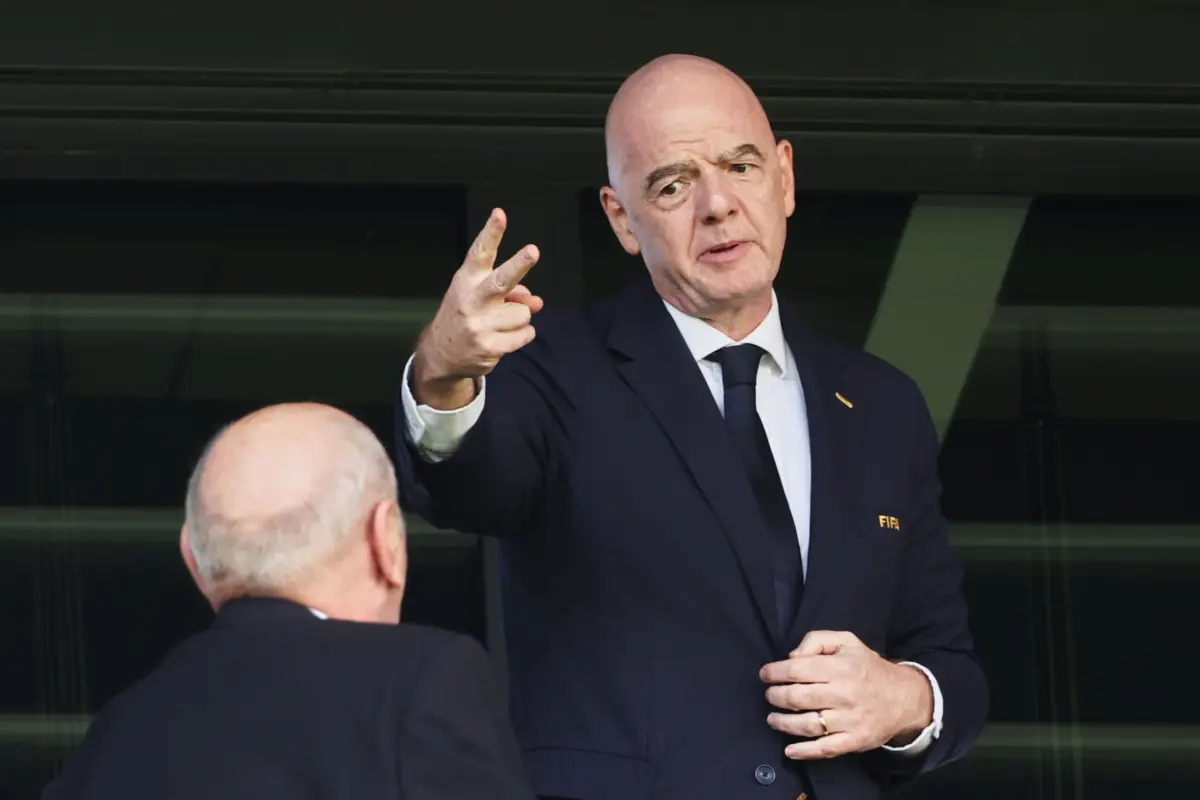
The geopolitical landscape of global football has been thrown into sharp relief as FIFA President Gianni Infantino confirmed his intention to stand for re-election in 2027. This decision, announced officially by world soccer’s governing body, comes at a moment of unprecedented structural vulnerability for the Swiss-Italian administrator. Infantino, who has ruled FIFA since the downfall of Sepp Blatter in 2016, is currently facing a coordinated mutiny led by European football’s governing body, UEFA, alongside several of the sport’s most influential national associations.
At the heart of the crisis is a highly controversial, recently aborted scheme to sell equity stakes in the FIFA World Cup’s commercial and media rights to private investors through a newly proposed commercial subsidiary. The plan, which critics characterized as a short-sighted cash grab designed to secure political patronage, collapsed under intense pressure from European leagues, clubs, and national federations. Despite issuing a rare public apology for "errors" made during the formulation of this commercial venture, FIFA’s leadership remains deeply embattled.
While Infantino’s allies insist his path to a final term running through 2031 remains secure, the withdrawal of support by heavyweight federations—including the English Football Association (FA)—and UEFA’s open threats of tournament boycotts signal a profound schism. The upcoming months will test whether the "one nation, one vote" democratic model of FIFA can shield an incumbent president from the wrath of the very continent that generates the vast majority of the sport’s global wealth.
Detailed Chronology
[April 2026] ------------------> [Sept 5, 2026] --------------> [Nov 18, 2026] -----------> [March 2027]
Infantino announces              Defiant appearance             Deadline for               FIFA Presidential
re-election bid; private         in Poland; UEFA                rival candidates           Vote; potential
equity plan collapses.           boycott threats mount.         to register.               historic schism.
The Genesis of the Commercial Subsidiary Conflict
The seeds of the current crisis were sown in late 2025 and early 2026, when whispered reports began circulating within sports finance circles that FIFA was quietly exploring the securitization of its premier asset: the Men’s World Cup. Desperate to fund an expanded international calendar—including the bloated 48-team World Cup and the newly formatted, 32-team Club World Cup—FIFA leadership drafted plans to spin off its broadcasting, marketing, and digital rights into a private-equity-backed commercial subsidiary.
The proposed entity, tentatively modeled after similar private equity interventions in Spain’s La Liga and France’s Ligue 1, promised an immediate multi-billion-dollar windfall. For Infantino, this capital was critical; it would allow him to increase the "FIFA Forward" development grants distributed to the 211 member associations, thereby solidifying his global voting bloc.
The European Backlash and the Collapse of the Deal
By April 2026, the details of the private equity deal leaked to European leagues and UEFA. The reaction was swift and merciless. European stakeholders, already exhausted by an overcrowded match calendar that they argued threatened player welfare, saw the commercialization of the World Cup as an existential threat to their domestic products and the UEFA Champions League.
UEFA, led by President Aleksander Čeferin, accused FIFA of attempting to privatize the global game. Behind closed doors, European representatives threatened a devastating counter-measure: a total boycott of FIFA competitions, including the World Cup. Facing a catastrophic loss of its most marketable teams and players, FIFA was forced into a humiliating retreat, shelving the private equity proposal and issuing a public apology.
Defiance in Katowice
On Saturday, September 5, 2026, Infantino made his first major public appearance since the collapse of the commercial scheme, attending the opening match of the FIFA Under-20 Women’s World Cup between Poland and Argentina in Katowice.
Surrounded by security and local dignitaries, the FIFA President attempted to project an image of unshakeable calm. When cornered by reporters from Sky News regarding his political future and the calls for his resignation, Infantino deflected.
"There will be a lot to say, but there will be a right place and a right time to say this," Infantino stated. "It’s not today, it’s not here, but here and today, we are enjoying football."
The following day, Sunday, September 6, FIFA officially clarified that Infantino had no intention of stepping aside, confirming he would run in the 2027 election.

Supporting Context & Metrics
To understand the mechanics of Infantino’s enduring grip on power, one must analyze the stark contrast between football’s economic engine and its political voting structure.
The "One Nation, One Vote" Paradox
FIFA operates on a strictly egalitarian voting system where the smallest island nation holds the same electoral weight as Germany, Brazil, or England. This dynamic has historically allowed FIFA presidents to maintain power by catering to the financial needs of developing football nations across Africa, Asia, and Oceania, often at the expense of European consensus.
| Confederation | Member Associations (Votes) | Share of FIFA Congress | Primary Revenue Source | Alignment in 2027 Election |
|---|---|---|---|---|
| UEFA (Europe) | 55 | 26% | Elite Club Leagues, Euros | Strong Opposition / Boycott Threat |
| CAF (Africa) | 54 | 25.6% | FIFA Development Grants | Strongly Pro-Infantino |
| AFC (Asia) | 47 | 22.3% | Domestic Markets, Grants | Mostly Pro-Infantino |
| CONCACAF (N. America) | 41 | 19.4% | TV Rights, Host Revenues | Mixed / Leaning Pro-Infantino |
| OFC (Oceania) | 11 | 5.2% | FIFA Development Grants | Strongly Pro-Infantino |
| CONMEBOL (S. America) | 10 | 4.7% | Copa América, Qualifiers | Divided |
The Financial Stakes of the World Cup
The World Cup is the undisputed economic engine of global football governance. During the four-year cycle leading up to the 2022 World Cup in Qatar, FIFA generated a record $7.5 billion in revenue. For the 2026 cycle—culminating in the expanded tournament in the United States, Canada, and Mexico—projections exceed $11 billion.
The aborted plan to sell stakes in this revenue stream to private equity was estimated to value the commercial subsidiary at upwards of $20 billion. While a short-term cash injection of this magnitude would have allowed Infantino to distribute unprecedented bonuses to member associations, financial analysts warned it would have permanently diluted FIFA’s long-term media revenues by up to 15-20%, mortgaging the future of the sport for immediate political survival.
The 15-Year Loophole
Infantino’s bid for a fourth term relies on a controversial interpretation of FIFA’s term-limit statutes. Introduced in the wake of the 2015 corruption scandals, FIFA rules limit presidents to a maximum of three four-year terms (12 years total).
However, because Infantino first assumed office in February 2016 to complete the final three years of Sepp Blatter’s disgraced term, the FIFA Council ruled that his initial three-year stint did not constitute a "full term." Consequently, his terms are officially counted as:
- First Term: 2019–2023
- Second Term: 2023–2027
- Proposed Third Term: 2027–2031
This legal maneuver effectively allows Infantino to stretch his presidency to 15 years, a duration that European critics argue violates the spirit of the post-reform era.
Official Statements
The escalating rhetoric between Zurich and Nyon (UEFA’s headquarters) reflects a relationship that has deteriorated beyond simple professional disagreement into personal and institutional animosity.
A FIFA spokesperson delivered a terse, uncompromising statement confirming Infantino’s candidacy:
"The FIFA President announced in April that he will stand for re-election in 2027. Of course, nothing has changed. Mr. Infantino will be standing for re-election."
This statement was accompanied by an official, albeit calculated, apology regarding the failed commercial venture:

"FIFA regrets the errors made during the preliminary evaluations of the commercial subsidiary framework. We have listened to our stakeholders and are committed to ensuring these structural missteps do not happen again. Our focus remains on the global development of football."
In stark contrast, UEFA sources have indicated that the apology is viewed as a hollow gesture designed to defuse a crisis without addressing the underlying governance failures. A senior UEFA official, speaking on condition of anonymity, stated:
"The trust is entirely broken. This was not a simple ‘error’; it was an attempt to sell off the heritage of global football without the consent of those who build and sustain it. FIFA under its current leadership has shown a consistent disregard for the domestic game, player health, and democratic consultation. We believe a change at the top is not just desirable, but necessary for the survival of the international game."
The English FA, alongside several Nordic federations, has quietly aligned with this sentiment, indicating that they will actively seek and fund a viable challenger to Infantino ahead of the winter deadline.
Future Outlook
The next three months will determine the trajectory of global football governance for the next decade. The immediate focal point is November 18, 2026, the absolute deadline for member associations to submit nominations for presidential candidates.
                  [ November 18, 2026 ]
                            |
             +--------------+--------------+
             |                             |
    [ No Challenger Emerges ]     [ Challenger Steps Forward ]
             |                             |
    Infantino walks to            Fierce political warfare;
    re-election; UEFA             potential European breakaway/
    boycott threats intensify.    World Cup boycott.
Scenario A: The Uncontested Coronation
If UEFA and its allies fail to unite behind a single, credible candidate by the November deadline, Infantino will run unopposed in March 2027. This outcome, while demonstrating the weakness of the European opposition, will not resolve the underlying crisis. Instead, it is highly likely to accelerate UEFA’s plans for a soft breakaway.
We could see the expansion of the UEFA Nations League to include South American giants like Brazil and Argentina, effectively creating a rival global tournament that would undermine the prestige and commercial viability of FIFA’s expanded World Cup.
Scenario B: The Civil War
Should a high-profile challenger step forward—such as a respected former player or a veteran sports administrator with clean credentials—the sport will enter a phase of intense political warfare. Infantino will use the full weight of FIFA’s developmental budget to secure votes in Africa, Asia, and the Caribbean, while the challenger will rely on Europe’s financial clout and promises of structural reform.
The danger of this scenario is an irreparable schism. If Europe feels its voice is permanently marginalized by the voting block of developing nations, the threat of a World Cup boycott could transition from a negotiating tactic into a reality.
The Broader Implications for the Sport
Ultimately, the battle over Infantino’s presidency is about more than just one man; it is a battle over the soul and commercial structure of the world’s most popular sport. As private equity, sovereign wealth funds, and global media conglomerates continue to circle football’s crown jewels, the tension between traditional governance and aggressive commercialization will only intensify.
Whether Infantino wins his final term or is forced out by a European-led coup, the fundamental question remains: Can a single governing body successfully balance the hyper-commercialized demands of elite European football with the developmental needs of the rest of the world? As the clock ticks toward November 18, the answer seems further away than ever.

0 Comments