

Executive Overview
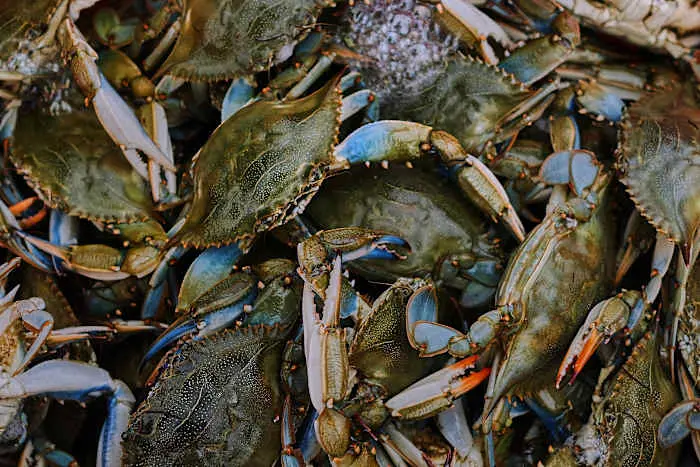
For generations, the shallow, brackish lagoons of the Po River Delta, south of Venice, served as one of Europe’s most lucrative aquaculture hubs. Here, the cultivation of premium Manila clams (Ruditapes philippinarum) and mussels formed the economic backbone of regional communities, generating tens of millions of euros annually. However, in 2023, this delicate ecosystem faced an unprecedented biological shock: an explosive invasion of the Atlantic blue crab (Callinectes sapidus). A voracious predator native to the western Atlantic, the blue crab decimated local shellfish populations, sliced through traditional fishing nets, and pushed the regional fishing industry to the brink of collapse.
Initially, both the Italian government and local fishing cooperatives responded with an aggressive defensive strategy centered on eradication. For two years, millions of kilograms of blue crabs were harvested only to be immediately incinerated at a high financial cost. This approach yielded negligible results against a species with staggering reproductive capabilities.
By mid-2026, a profound paradigm shift had occurred. Recognizing that eradication was an ecological impossibility, the fishing communities of the Veneto and Emilia-Romagna regions pivoted from defense to exploitation. Today, local cooperatives are transforming this invasive threat into a commercial resource. Through international joint ventures, innovative global supply chains stretching to South Asia, and grassroots culinary campaigns, Italian fishermen are attempting to salvage their livelihoods. This investigative report examines the chronology of the invasion, the economic realities of this transition, the scientific factors driving the crisis, and the uncertain future of Italy’s northern Adriatic coast.
                  THE BLUE CRAB CRISIS: A DECADE IN TRANSITION

   1940s                 2023                 2024-2025              2026
   [Arrival] -----------> [Explosion] -------> [Incineration] -------> [Commercialization]
   Ballast water         Drought & heat       €22M eradication       Sri Lanka export
   introduces species    trigger massive      fails; revenues        partnership; local
   to Adriatic Sea.      population boom.     plummet by 75%.        culinary push.
Detailed Chronology
The Silent Arrival and the Environmental Trigger (1940s–2022)
The Atlantic blue crab is not a novel visitor to the Mediterranean basin. Marine biologists trace its initial introduction back to the 1940s, when cargo vessels traversing transatlantic shipping lanes inadvertently discharged the species via ballast water into the Adriatic Sea. For decades, the blue crab remained a marginal, rarely sighted curiosity. Local fishermen in the Po River Delta reported only sporadic catches, as the native ecosystem—characterized by cooler winter water temperatures and stable river flows—kept the predator’s population in check.
The 2023 Ecological Explosion
The equilibrium shattered in the spring and summer of 2023. A combination of extreme weather events, directly linked to global climate change, created a "perfect storm" of environmental conditions:
- Severe Drought: Prolonged drought conditions across northern Italy caused the water levels of the Po River—the country’s longest waterway—to drop to historic lows.
- Saltwater Intrusion: With reduced freshwater outflow, high-salinity seawater from the Adriatic penetrated deep into the river’s delta and inland tributaries.
- Elevated Temperatures: Marine heatwaves pushed water temperatures in the shallow lagoons well above historic averages.
This combination of high salinity and elevated temperatures triggered a massive reproductive spike in the blue crab population. The delta’s shallow, food-rich lagoons, which double as Italy’s primary clam and mussel farms, became highly favorable breeding grounds.
CLIMATE ANOMALIES FLOWCHART:
[Prolonged Regional Drought] ---> [Po River Outflow Drops]
                                          |
                                          v
[Marine Heatwaves] -------------> [Saltwater Intrusion]
        |                                 |
        +----------------+----------------+
                         |
                         v
          [Optimal Spawning Conditions]
                         |
                         v
          [Exponential Blue Crab Explosion]
The Eradication Campaign and Economic Shock (2024–2025)
As the crab population swelled exponentially, the damage to the aquaculture sector was immediate and catastrophic. The crabs used their powerful claws to crush the shells of mature Manila clams and devour juvenile seed clams, effectively wiping out future harvests.
In response, the Italian government appointed a special commissioner to oversee a blue crab emergency. In 2024, a state-funded eradication program was launched. Under this initiative, the government paid the Polesine Fishermen’s Cooperative Consortium and other regional syndicates to catch and incinerate the crabs. Over a two-year period, fishermen harvested and burned nearly 2.3 million kilograms (5 million pounds) of blue crabs.
Despite these efforts, the eradication program failed to dent the population, while the region’s primary economic engine collapsed. By the end of 2025, the Polesine Cooperative saw its annual revenues plunge from historic highs to just €15 million ($17 million)—a devastating 75% decline. The crisis forced hundreds of fishermen out of the industry, with active cooperative membership shrinking from 1,500 to 850.
COOPERATIVE MEMBERSHIP DECLINE (2023 vs. 2026)
==================================================
2023: ██████████████████████████████ 1,500 Members
2026: █████████████████ 850 Members (-43.3%)
==================================================
The Pivot to Global Commercialization (2026)
By early 2026, with government funding for incineration exhausted and the crab population showing no signs of decline, the strategy shifted. Realizing they could not eradicate the predator, the cooperative’s leadership decided to commodify it.
In mid-2026, the Polesine Cooperative established a strategic joint venture with Taprobane Seafoods, a major Sri Lankan seafood processing and export firm. Under this agreement, the daily catch of blue crabs is no longer sent to waste-to-energy plants. Instead, they are collected, steamed, flash-frozen, and shipped to processing facilities in Sri Lanka, where skilled workers extract the meat by hand. This pivot has successfully stabilized the cooperative’s finances, putting it on track to generate €20 million ($23 million) in revenue for 2026, with the majority derived from crab sales.
Supporting Context & Metrics
To understand the scale of this ecological and economic transition, it is necessary to analyze the stark disparities between the traditional mollusk industry and the emerging blue crab market.
The Economics of Clams vs. Crabs
While the commercialization of the blue crab has prevented the total bankruptcy of the Po Delta’s fishing communities, it is not a direct economic replacement for the lucrative Manila clam industry. The price-point differential between the two commodities highlights the ongoing financial strain on local fishermen:
| Fishery Product | Average Market Price per Kilogram | Historical Share of Cooperative Revenue | Current Share of Cooperative Revenue (2026) |
|---|---|---|---|
| Manila Clams | €10.00 ($11.10) | ~90% | ~10% |
| Invasive Blue Crabs | €1.30 ($1.44) | <1% | ~70% |
Because blue crabs command a fraction of the price of clams, fishermen must harvest significantly higher volumes of crabs simply to cover their basic operating costs, such as fuel and boat maintenance.
REVENUE PROFILE SHIFT: POLESINE COOPERATIVE
==================================================
PRE-INVASION REVENUE PROFILE:
  [Clams/Mussels: 90%] [Other: 10%]
  Total Revenue: ~$60M+

2026 REVENUE PROFILE:
  [Blue Crab Sales: 70%] [Clams/Mussels: 10%] [Other: 20%]
  Total Revenue: ~$23M
==================================================
Biological Factors Preventing Eradication
The failure of the 2024–2025 culling program lies in the reproductive biology of Callinectes sapidus. A single mature female blue crab can produce between 2 million and 8 million eggs per spawning event.
Furthermore, the species has shown remarkable adaptability to the geography of the Po River Delta. The delta features shallow lagoons protected by barrier islands, providing warm water, muddy substrates for burrowing, and an abundant food supply of high-protein mollusks.
In contrast, native predators like the Mediterranean green crab (Carcinus aestuarii) are much smaller and have been easily outcompeted and displaced by the larger, more aggressive Atlantic invader.
Official Statements
The Fishing Industry’s Perspective
Paolo Mancin, President of the Polesine Fishermen’s Cooperative Consortium, emphasized the pragmatic necessity of the shift from eradication to commercialization:
"We spent two years fighting an enemy we couldn’t defeat. The financial toll was unsustainable, and our cooperative was facing extinction. We needed to change strategy and create an opportunity from this disaster. While the margins on crab are thin compared to our historic clam harvests, this new export pipeline is keeping our boats in the water and our families fed."
Federico Zago, a second-generation fisherman operating out of the Scardovari Lagoon, expressed cautious optimism while checking his crab traps:
"My income crashed when the crabs arrived. It was heartbreaking to pull up traps filled with broken shells and ruined nets. Today, we are pulling up cages heavy with blue crabs, but now there is a truck waiting at the dock to buy them. Since we are going to have to live with these crabs, I hope they become an opportunity. I hope the market continues to grow."
The Scientific and Regulatory Assessment
Piero Genovesi, a leading invasive species expert at Italy’s Institute for Environmental Protection and Research (ISPRA), warned that biological controls are unlikely to solve the crisis:
"The rapid colonization of the Adriatic by the blue crab is a clear symptom of climate-driven ecosystem destabilization. Elevated sea surface temperatures and altered salinity gradients due to river discharge anomalies have removed the natural barriers that once kept this species in check. While experimental initiatives, such as the release of native octopuses, are scientifically interesting, biological systems cannot easily control an invader with such high reproductive potential once it has established itself."
Enrico Caterino, the Italian government’s extraordinary commissioner for the blue crab emergency, confirmed the policy shift away from taxpayer-funded culling:
"The state-funded eradication and incineration programs were necessary first-aid measures, but they were never viable long-term solutions. The sheer volume of biomass made culling ineffective. Our focus has shifted to supporting the industry’s transition toward commercial processing, regulatory streamlining for export, and encouraging domestic market integration."
Future Outlook
The Supply Chain and the Global Market
The partnership with Taprobane Seafoods represents a temporary solution to a structural challenge: the high cost of manual labor in Europe. Because extracting meat from blue crabs is highly labor-intensive, processing the catch within Italy is currently cost-prohibitive for mass-market products.
THE TRANS-CONTINENTAL BLUE CRAB SUPPLY CHAIN
========================================================================
[Po River Delta]   --> Harvested daily by local cooperative fishermen
       |
[Scardovari Plant] --> Steamed, flash-frozen, and packed into containers
       |
[Ocean Transit]    --> Shipped via maritime freight routes to South Asia
       |
[Sri Lanka]        --> Hand-picked by Taprobane Seafoods specialists
       |
[Global Markets]   --> Packaged as premium crab meat for US, EU, and Asia
========================================================================
By routing the raw product through Sri Lanka, the joint venture can produce competitively priced crab products—such as claw meat, cocktail claws, and lump meat—destined for major consumer markets in North America, Asia, and northern Europe.
However, this trans-continental supply chain faces potential vulnerabilities, including rising shipping costs, geopolitical disruptions in maritime trade routes, and the carbon footprint associated with shipping seafood thousands of miles for processing before re-importing it.
Cultivating the Domestic Italian Palate
In tandem with the global export market, a localized movement is underway to integrate the blue crab into Italy’s culinary culture. This effort faces deep cultural resistance. In Venice and the wider Veneto region, culinary traditions are highly conservative, with a strong preference for the native green crab, locally prized during its soft-shell phase as moeche.
   COMPARING ITALY'S TWO CRAB MARKETS

   Native Green Crab (Moeche)          Invasive Blue Crab
   --------------------------          ------------------
   - Highly prestigious                - Historically maligned
   - Up to €100+/kg in Venice          - Fetches ~€1.30/kg
   - Deeply rooted tradition           - Facing cultural resistance
   - Soft-shell delicacy               - Abundant, hard-shell predator
A few culinary pioneers are trying to change this perception. At the Yogi restaurant in Porto Tolle, owner and chef Stefania Marchesini has designed an all-blue-crab menu. Her dishes include fried crab balls, creamed crab served over traditional polenta, and soft-shell blue crab.
To expand her reach, Marchesini has established a dedicated workshop to process and package vacuum-sealed, ready-to-cook blue crab portions for other restaurants. Despite positive feedback from diners, broader commercial adoption remains slow.
"We are all angry because this crab invaded our seas and threatened our traditional way of life," Marchesini notes. "But we also have to adapt. Once chefs and home cooks understand how to prepare it, they will realize it is an excellent, sweet, and versatile product."
Long-Term Ecological Adaptation
As the Po River Delta adapts to this new normal, scientists and fishermen agree that the ecosystem of the northern Adriatic has been permanently altered. The Manila clam industry is unlikely to return to its pre-2023 peak. Instead, future coastal resource management will likely focus on a hybrid model: protected, netted zones dedicated to intensive clam aquaculture, flanked by open-water zones optimized for blue crab harvesting.
Ultimately, Italy’s blue crab crisis serves as a case study in ecological resilience and economic adaptation. It demonstrates that when climate change permanently alters marine habitats, the survival of coastal communities depends on their ability to transition from fighting the environment to finding a way to work within it.

0 Comments