
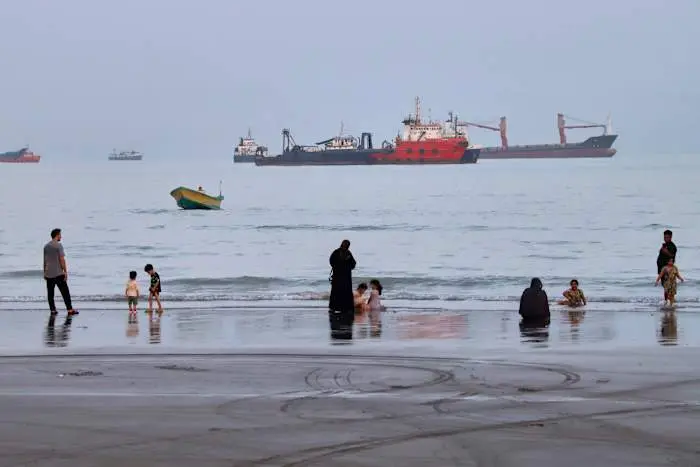

DUBAI, United Arab Emirates — The Iranian rial collapsed to an unprecedented low of more than 2 million to the U.S. dollar on Monday, signaling a devastating acceleration of Iran’s domestic economic crisis. The currency’s freefall coincides with Washington’s preparation of a sweeping new round of secondary sanctions, designed to deliver a coup de grâce to an economy already crippled by months of military conflict, severe inflation, and a highly effective joint U.S. naval blockade.
As the economic vise tightens, Tehran is leveraging its primary strategic asset: its near-total disruption of the Strait of Hormuz. By bringing commercial shipping to a standstill in the world’s most vital energy transit corridor, Iran has triggered a global economic shockwave, transforming a localized conflict into an international war of economic attrition.
Executive Overview
The convergence of military conflict, maritime blockades, and punitive economic diplomacy has pushed the Islamic Republic of Iran to the precipice of financial collapse. On Monday, August 10, 2026, the open-market exchange rate of the Iranian rial breached the psychologically critical threshold of 2,020,000 rials to one U.S. dollar. This historic depreciation represents the market’s verdict on the sustainability of Iran’s war effort, nearly six months after a devastating joint U.S.-Israeli military campaign struck the country on February 28, 2026.
Despite the near-total paralysis of its domestic economy—marked by triple-digit hyperinflation for basic commodities and a projected GDP contraction exceeding 5%—Tehran has refused to capitulate. Instead, the regime has dug in, exploiting its geographical dominance over the Strait of Hormuz. By threatening and attacking commercial vessels, Iran has successfully choked off a waterway that previously carried roughly 20% of the world’s petroleum supply.
Strait of Hormuz Shipping Volatility (2026)
[Pre-February 2026]  ████████████████████ (100% Normal Traffic Flow)
[Post-Strike March]  ████░░░░░░░░░░░░░░░░ (20% Highly Guarded Convoys)
[Current August]     █░░░░░░░░░░░░░░░░░░░ (Under 5% - Near Total Standstill)
This maritime denial strategy has successfully shifted the economic pain outward, driving up global shipping costs, disrupting supply chains, and placing intense political pressure on U.S. President Donald Trump ahead of the crucial upcoming congressional midterm elections. As the standoff enters a critical phase, the conflict has devolved into a high-stakes test of endurance between Washington’s financial hegemony and Tehran’s geographical leverage.
Detailed Chronology
The current crisis is the culmination of a rapid, escalatory spiral that began in early 2026, transforming years of cold war hostility into direct, kinetic confrontation.
2026 Conflict Timeline:
┌─────────────────┐      ┌─────────────────┐      ┌─────────────────┐      ┌─────────────────┐
│   February 28   │ ───> │    June 2026    │ ───> │  Early August   │ ───> │    August 10    │
│  US/Israeli     │      │ Pakistan-Led    │      │  UAE Suspends   │      │ Rial Hits 2M+;  │
│  Airstrikes     │      │ 60-Day Ceasefire│      │  All Trade      │      │ New US Sanctions│
└─────────────────┘      └─────────────────┘      └─────────────────┘      └─────────────────┘
The Catalyst: The February 28 Airstrikes
On February 28, 2026, a series of highly coordinated U.S. and Israeli airstrikes targeted key military installations, air defense networks, and industrial infrastructure across Iran, including facilities near Tehran. The strikes, launched in response to regional provocations and intelligence regarding Iran’s nuclear program, severely damaged the regime’s conventional military capabilities but failed to dislodge its leadership.
In response, Tehran pivoted to asymmetric warfare, utilizing its naval forces, Islamic Revolutionary Guard Corps (IRGC) fast-attack boats, and drone arsenals to target commercial shipping in the Persian Gulf and the Gulf of Oman.
The Maritime Siege and the June Ceasefire
By spring, the United States responded by formalizing a strict naval blockade, aiming to completely cut off Iran’s remaining oil exports and maritime trade. In June, recognizing the threat of a wider global war, Pakistan successfully brokered a temporary 60-day ceasefire. The pause in hostilities offered brief relief to global energy markets, but fundamental disagreements over sanctions relief and maritime access prevented the transition to a permanent peace treaty.
The August Escalation
Following the expiration of the ceasefire in early August, hostilities resumed with renewed intensity. The United Arab Emirates (UAE)—historically Iran’s primary economic safety valve and re-export hub—delivered a major blow to Tehran last week by announcing a total suspension of trade. This sudden economic decoupling, driven by intense diplomatic pressure from Washington, set the stage for Monday’s currency collapse and the impending announcement of secondary U.S. sanctions designed to isolate Iran completely from the global financial system.
Supporting Context & Metrics
The economic toll of the conflict on Iran is staggering, manifesting as a severe cost-of-living crisis for ordinary citizens and a structural collapse of the state’s fiscal capacity.
The Collapse of the Rial
While the Central Bank of Iran maintains an official, heavily subsidized exchange rate of approximately 1,500,000 rials to the dollar, this rate remains inaccessible to the vast majority of businesses and citizens. The open-market rate, which opened at 2,020,000 rials on Monday, represents the true cost of foreign exchange.
The currency’s depreciation curve illustrates the compounding impact of the war:
| Date | Rial per U.S. Dollar (Market Rate) | Key Catalyst |
|---|---|---|
| January 2026 | ~650,000 | Pre-war inflationary pressures |
| March 2026 | 1,200,000 | Immediate aftermath of Feb 28 strikes |
| June 2026 | 1,600,000 | Initiation of Pakistan-brokered ceasefire |
| August 2026 | 2,020,000 | UAE trade cutoff & impending US secondary sanctions |
Hyperinflation of Staple Foods
For the Iranian public, the currency collapse has translated into a desperate struggle for survival. The disruption of agricultural imports, combined with the loss of purchasing power, has triggered hyperinflation in basic food items:
- Rice: Prices have surged by approximately 60% since the outbreak of hostilities in late February.
- Beef and Red Meat: Prices have skyrocketed by over 150%, rendering meat an unattainable luxury for middle- and lower-class families.
- Macroeconomic Outlook: The International Monetary Fund (IMF) has revised its projections for Iran’s economy, forecasting a real GDP contraction of more than 5% for the fiscal year, with some independent analysts predicting double-digit negative growth if the blockade persists through winter.
The Strait of Hormuz Chokepoint
The geopolitical leverage of the Strait of Hormuz cannot be overstated. Measuring just 21 miles wide at its narrowest point, the strait is the transit path for:
- 20-21% of global petroleum liquids consumption.
- More than one-third of the world’s liquefied natural gas (LNG) seaborne trade.
With transit through the strait at a near-complete standstill, global shipping conglomerates have rerouted vessels around the Cape of Good Hope, adding weeks to transit times and dramatically increasing fuel and insurance premiums.
Official Statements
The rhetoric from key stakeholders highlights the deep diplomatic divide, with Washington pursuing a policy of total capitulation and Tehran asserting its willingness to endure and retaliate.
The United States: "Economic Fury"
U.S. Treasury Secretary Scott Bessent outlined the administration’s uncompromising stance in an opinion piece published Sunday in the Financial Times. Bessent defended the administration’s strategy of maximizing economic pain to force a diplomatic surrender:
"President Trump decimated Iran’s economy to a point where the rial has never been weaker and inflation has rarely been higher. The regime’s final refuge now lies in the self-deception of fearful nations that still believe accommodating aggression can secure a durable peace."
Bessent emphasized that the new sanctions scheduled for release on Monday would target any foreign entity, bank, or government attempting to bypass the blockade, effectively forcing global players to choose between trading with Iran or maintaining access to the U.S. financial system.
Iran: "Our Hands Are Not Tied"
In Tehran, Foreign Ministry spokesperson Esmail Baghaei struck a defiant tone during a press briefing on Monday, warning that Washington’s aggressive economic measures would yield severe geopolitical consequences:
"Any escalation of this situation will undoubtedly bring about consequences. Our hands are not tied. If the international community cannot guarantee our right to economic survival and maritime trade, we will ensure that no one enjoys security in these waters."
Baghaei’s comments hint at Iran’s potential to deploy more advanced anti-ship missiles, mines, and loitering munitions to enforce its blockade of the strait.
Regional Intermediaries: Oman and Pakistan
Fearing a catastrophic regional escalation, neighboring states are scrambling to find a diplomatic off-ramp.
- Oman: Muscat is reportedly attempting to broker a compromise based on a "joint management" model for the Strait of Hormuz. Oman’s Foreign Minister is scheduled to arrive in Tehran on Tuesday to present a plan that would allow commercial shipping to resume under joint Omani-Iranian oversight, potentially involving transit fees paid directly to Tehran—a proposal that Washington is highly likely to veto.
- Pakistan: Islamabad, which successfully brokered the June ceasefire, has sent another high-level military and diplomatic delegation to Tehran. Pakistani officials are seeking to revive the 60-day pause before kinetic skirmishes in the Gulf escalate into a broader regional war.
Future Outlook
The current standoff has reached a critical bottleneck, with both Washington and Tehran operating under tight political constraints that limit their room for compromise.
The U.S. Domestic Political Gamble
For President Donald Trump, the blockade of Iran is a double-edged sword. While the policy projects strength to his domestic base, the resulting spike in global energy prices and supply chain bottlenecks present a significant political liability. If energy inflation worsens heading into the November congressional elections, it could alienate swing voters, complicating the administration’s aggressive foreign policy stance.
The Risk of Domestic Unrest in Iran
Within Iran, the psychological toll of the economic collapse is palpable. In downtown Tehran, long lines have formed outside unregulated exchange booths as citizens scramble to convert their rapidly depreciating savings into U.S. dollars.
"There is no hope for a deal and peace," said Sadegh Mahmoudi, a 73-year-old Tehran resident waiting to exchange his remaining life savings.
Potential Scenarios for the Fall of 2026:
┌────────────────────────────────────────────────────────────────────────┐
│ Scenario A: Diplomatic Compromise                                      │
│ Oman brokers a joint-management deal; US eases secondary sanctions in  │
│ exchange for verifiable shipping safety guarantees. (Probability: 30%) │
└────────────────────────────────────────────────────────────────────────┘
┌────────────────────────────────────────────────────────────────────────┐
│ Scenario B: Prolonged Attrition                                        │
│ Iran endures hyperinflation; US maintains blockade; global oil prices  │
│ remain high and volatile through winter. (Probability: 50%)            │
└────────────────────────────────────────────────────────────────────────┘
┌────────────────────────────────────────────────────────────────────────┐
│ Scenario C: Kinetic Escalation                                         │
│ Blockade-busting attempts lead to direct naval clashes between the US  │
│ Navy and IRGC forces, sparking wider regional conflict. (Probability: 20%)│
└────────────────────────────────────────────────────────────────────────┘
Historically, extreme economic pressure has triggered widespread domestic protests in Iran, such as those seen in 2019 and 2022. However, with the country effectively on a war footing and the security apparatus highly mobilized, the regime is likely to suppress any domestic dissent with extreme force, blaming the economic misery on American aggression.
The Geopolitical End State
The coming weeks will determine whether economic coercion can force a political settlement or if it will trigger a wider, more destructive conflict. If the Omani delegation fails to secure a breakthrough on Tuesday, and if Washington’s new secondary sanctions successfully sever Iran’s remaining economic ties with Asia, Tehran may feel it has nothing left to lose. In that scenario, the tactical skirmishes in the Strait of Hormuz could easily expand into a broader regional confrontation, with profound consequences for the global economy.

0 Comments