

Executive Overview
In the upper echelons of classical scholarship and literary translation, few figures occupy a space as visible, fiercely debated, and culturally disruptive as Dr. Emily Wilson. As a professor of classical studies at the University of Pennsylvania, Wilson achieved a rare literary milestone in 2017 when she published her landmark English-language translation of Homer’s The Odyssey. Notably recognized as the first complete English translation of the epic poem by a woman, Wilson’s work captivated a global audience, selling over a million copies and fundamentally reshaping how contemporary readers encounter ancient Greek literature.
Now, in a move that has stunned the literary translation community, Wilson is undertaking a complete retranslation of The Odyssey—not a revised edition, but a wholly new text from the ground up. Sitting roughly halfway through the project, Wilson’s decision breaks virtually every established convention in the translation industry, where full-length retranslations by the same author within a single decade are practically unheard of.
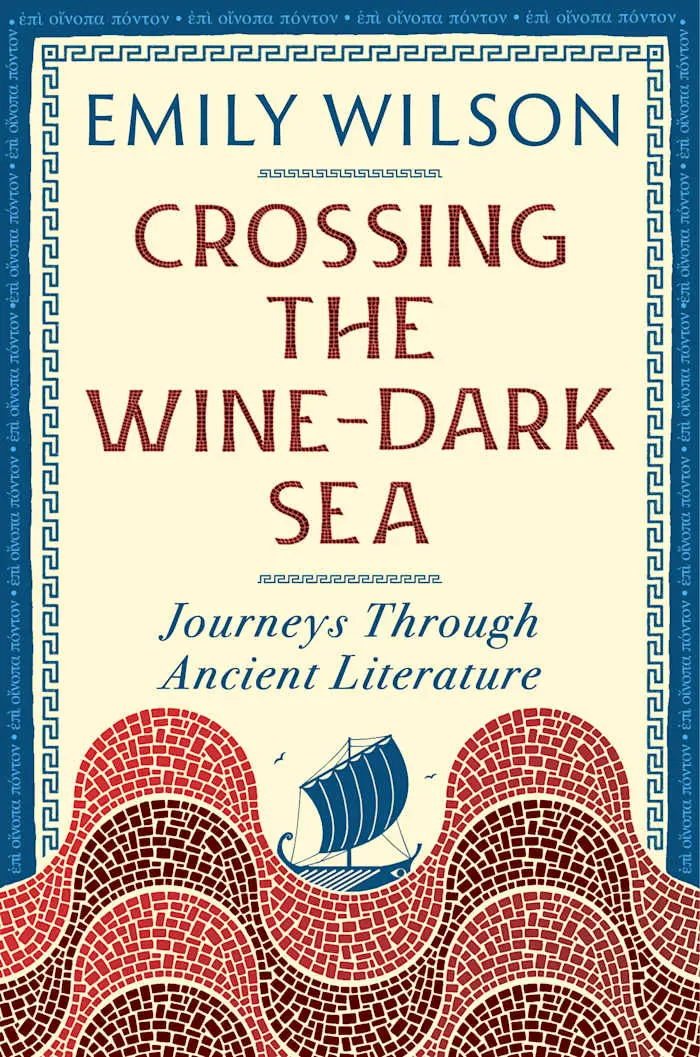
This announcement arrives concurrently with the release of her new essay collection, Crossing the Wine-Dark Sea: Journeys Through Ancient Literature (Liveright), which delves deep into the mechanisms of translation, historical misinterpretations of antiquity, and the continuous dialogue between the ancient world and modern pop culture. Yet, Wilson’s current cultural prominence exists in a crucible of controversy. Her recent public critiques of Christopher Nolan’s blockbuster film adaptation of The Odyssey—which drew inspiration from her 2017 translation—have sparked fierce debates across literary circles, drawing sharp retorts from notable figures like Joyce Carol Oates and landing Wilson squarely at the center of modern cultural discourse.
Detailed Chronology
The 2017 Breakthrough and Cultural Flashpoint
When Liveright published Emily Wilson’s translation of The Odyssey in late 2017, the book immediately upended decades of patriarchal tradition in classical translation. Characterized by its taut, rhythmic pentameter and famous opening line—“Tell me about a complicated man”—Wilson’s translation was lauded by critics for stripping away centuries of romanticized archaic language to deliver a direct, vivid, and highly readable version of Homer’s epic.
However, the book’s modernizing sensibilities also transformed it into a focal point for digital culture wars. Critics from conservative corners decried the translation as unnecessarily "woke," objecting to how Wilson handled issues of gender, power, and servitude. Despite the online friction, the book became an undeniable commercial and critical juggernaut, surpassing one million sales and cementing itself as a staple in high school and university classrooms.
The Nolan Controversy and Critical Backlash
The cultural footprint of Wilson’s 2017 text expanded exponentially when visionary director Christopher Nolan cited her translation as a primary inspiration for his cinematic epic. Yet, the relationship between the classical scholar and the Hollywood auteur quickly soured.
In subsequent interviews with The Associated Press and essays for outlets like the London Review of Books, Wilson did not mince words. She characterized Nolan’s film as grandiose, superficial, and at times incoherent. Her unsparing assessments generated a massive wave of public commentary, drawing strong rebukes from defenders of the film—most notably author Joyce Carol Oates, who publicly criticized Wilson for what she perceived as "haughty superiority." Nolan, addressing the broader friction in an interview with podcaster Zhong Shu, countered by lamenting the rise of "amateur criticism" that lacks an understanding of cinematic language.
The Retranslation Decision and Essay Collection Launch
Amid the cinematic crossfire, Wilson quietly pressed forward with two major literary endeavors. First, she committed to a full, ground-up retranslation of The Odyssey. Recognizing the challenges her pivot would present to educators and publishers, she acknowledged that her decision was "very controversial."
Second, she finalized her new collection of essays, Crossing the Wine-Dark Sea, slated for release on Tuesday with pre-publication praise from literary luminaries such as Salman Rushdie and Madeline Miller. The book features extensive reflections on her past translation work, critiques of canonical predecessors like Robert Fagles, and provocative explorations of modern cultural touchstones, ranging from hip-hop lyrics to the cinematic universes of popular youth fiction.
Supporting Context & Metrics
To fully understand the weight of Wilson’s current undertaking, one must examine the metrics and norms of literary translation. According to Kate Deimling of the American Translators Association, it is entirely normal for translators to issue minor corrections, typographical fixes, or editorial updates in subsequent printings of a successful book. However, embarking on a complete, grassroots retranslation of a foundational text like The Odyssey within a decade of the original publication is virtually unprecedented.
Wilson’s motivations for undertaking this monumental task stem from both artistic maturation and scholarly self-critique. Having spent the intervening years refining her methodology, Wilson identified distinct flaws in her 2017 milestone. Notably, she admitted to overusing the term "slave" throughout the text, noting that the ancient Greek lexicon actually contains nuanced, diverse terminology for various categories of enslaved individuals. Her upcoming edition will be lengthier and meticulously calibrated to reflect the intricate social hierarchies and varied worlds operating within Homer’s poetry.
Furthermore, Crossing the Wine-Dark Sea highlights systemic inaccuracies embedded within popular classical reception. Wilson points out historical blunders such as Robert F. Kennedy’s famous quoting of Aeschylus following the assassination of Rev. Martin Luther King Jr.—a quotation that inadvertently echoed the romanticized and historically flawed translations popularized by author Edith Hamilton. By exposing these generational layers of mistranslation, Wilson’s body of work challenges both academics and the general public to interrogate how and why they consume the ancient world.
Official Statements and Perspectives
The friction surrounding Wilson’s projects has prompted commentary from publishers, translation experts, and Wilson herself:
- Peter Simon, Editor at Liveright Publishing: Noting that Wilson "has poured so much of her life and scholarship into The Odyssey," Simon expressed strong confidence in her trajectory, stating that "her new approach is bound to be thrilling."
- Kate Deimling, American Translators Association: Highlighting the rarity of the endeavor, Deimling remarked, "I can’t really come up with a previous example of this situation… It’s not unheard of for translators to go back and make some corrections or edits in subsequent editions, but that’s not the same as a retranslation."
- Dr. Emily Wilson, on Her Retranslation: "It’s a complete retranslation. It’s not a revision of the old version," Wilson emphasized. Regarding the commercial and academic implications, she added: "I’m very much aware that having two recent editions by the same translator would be a challenge for teachers, and I hope they won’t curse my name."
- Dr. Emily Wilson, on Public Criticism and Stoicism: Reflecting on the intense scrutiny surrounding her work and her public feud with Hollywood criticism, Wilson noted: "The last few weeks have been a clear illustration of how I’m not in control of the reception of my work… I’ve actually think in some ways there’s a useful reminder about the powerlessness that comes with the awareness that ‘I’m going to be misunderstood. I’m going to be misread. People are going to hate me.’ I’ve got to accept that."
Future Outlook
As Emily Wilson sits approximately halfway through her new translation of The Odyssey, the literary world watches with a mixture of anticipation and anxiety. The forthcoming publication will inevitably force universities, high school districts, and independent readers to evaluate whether to stick with the 2017 cultural phenomenon or transition to her updated vision.
Simultaneously, the release of Crossing the Wine-Dark Sea ensures that Wilson will remain a central, polarizing voice in contemporary letters. By fearlessly dismantling romanticized tropes—whether critiquing the ideological underpinnings of Rick Riordan’s Percy Jackson series, drawing parallels between ancient Greek comedy and modern hip-hop anthems like Cardi B and Megan Thee Stallion’s "WAP," or pushing back against blockbuster cinematic interpretations of Homer—Wilson continues to tear down the ivory tower.
Ultimately, Wilson’s willingness to disrupt her own legacy proves that for her, antiquity is not a static museum exhibit frozen in amber, but a living, breathing, and continuously evolving conversation. Whether the academic and literary establishments are fully prepared for her next iteration remains to be seen, but one thing is certain: Emily Wilson has no intention of writing a quiet chapter.

0 Comments