

Executive Overview
As the United States enters the late summer of 2026, the domestic political landscape is undergoing a profound and volatile transformation. The primary catalyst is not a domestic policy dispute, but a grinding, six-month-old military conflict in the Middle East. What President Donald Trump initially signaled would be a swift, multi-week campaign to neutralize Iran’s nuclear capabilities has instead evolved into a protracted, multi-theater war. The geopolitical friction has triggered severe domestic economic ripples, chief among them a punishing surge in energy and consumer prices.
With the 2026 midterm elections rapidly approaching, this military engagement has fundamentally disrupted the strategic calculations of both major political parties. For Republicans, the conflict has complicated the administration’s "America First" non-interventionist narrative, forcing vulnerable incumbents to defend an expensive foreign entanglement while clinging to razor-thin majorities in Congress. For Democrats, the war’s economic fallout has provided a potent political cudgel, allowing them to channel voter frustration over inflation directly at the party in power.
Across critical swing districts in Pennsylvania, North Carolina, California, and Ohio, interviews with voters reveal a deeply fractured electorate. While a committed core of the president’s base remains resolute, a growing segment of independent and moderate voters—wearied by high fuel costs and systemic economic strain—is shifting toward the opposition. The resulting political climate suggests that the war with Iran may well decide the balance of power in Washington this November.
Detailed Chronology
The path to the current military conflict began to accelerate in late 2025, following months of unresolved regional instability in Gaza and Lebanon. Despite initial diplomatic efforts, the regional security architecture deteriorated rapidly, leading to direct military confrontations between U.S.-backed Israeli forces and the Iranian state.
[Late 2025: Regional Instability] ──> [Feb 2026: Conflict Erupts] ──> [April 2026: Mass Protests & Escalation] ──> [Aug 2026: Six-Month Stalemate]- February 2026: The Outbreak of Direct Hostilities
Following a series of escalations in the Persian Gulf and intelligence reports indicating that Tehran was on the verge of acquiring a functional nuclear weapon, the United States, in coordination with Israel, initiated a campaign of targeted airstrikes. President Trump assured the American public that the intervention would be brief, highly targeted, and designed to force Iran back to the negotiating table without committing the U.S. to a prolonged ground campaign. - April 6, 2026: White House Defiance
By early April, the assumption of a rapid victory had vanished. Speaking from the James Brady Press Briefing Room at the White House, President Trump defended the military actions against growing domestic skepticism. He asserted that the administration would "never apologize" for taking decisive action to secure the nation, framing the conflict as an existential necessity to prevent Iranian nuclear hegemony. - April 8, 2026: Public Backlash Mounts
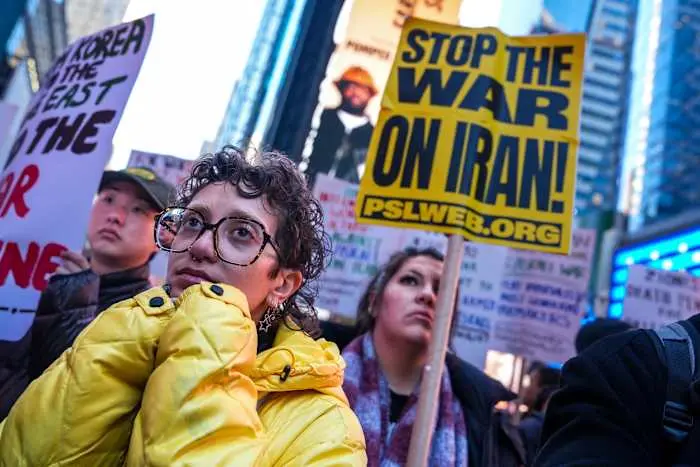
Two days after the president’s press conference, tens of thousands of demonstrators took to the streets in New York and other major American metropolitan areas. The protests, which targeted both the U.S.-Israeli military campaign against Iran and the ongoing regional fallout in Lebanon, signaled a growing anti-war movement. The mobilization highlighted a widening gap between the administration’s foreign policy objectives and public sentiment. - August 2026: The Six-Month Milestone and Economic Stagnation
By late August, the war entered its seventh month with no clear diplomatic resolution in sight. The prolonged closure of key shipping lanes and subsequent disruptions to global energy markets led to a steady rise in domestic fuel prices. The administration attempted to offset these pressures by introducing a sweeping new package of economic sanctions, designed by Treasury officials to further isolate Tehran’s financial sector and pressure the Iranian Rial. However, the domestic economic strain had already settled deeply into the American electorate, setting the stage for a high-stakes midterm campaign.
Supporting Context & Metrics
The domestic political impact of the war is reflected in both macroeconomic data and public opinion polling. The economic reality of the conflict has directly translated into voter discontent, creating a challenging environment for Republican campaigns nationwide.
The AP-NORC Public Opinion Benchmark
A pivotal poll conducted in July 2026 by The Associated Press-NORC Center for Public Affairs Research revealed a significant deficit in public support for the war. The data indicates that a broad majority of the American public views the military campaign as a strategic misstep.
| Demographic Group | Believe the War with Iran is NOT Worth Fighting (%) |
|---|---|
| All U.S. Adults | 67% |
| Democrats | 85% |
| Independents | 71% |
| Republicans | 38% |
The fact that more than one-third of self-identified Republicans disapprove of the military campaign highlights the internal ideological friction currently facing the GOP coalition.
The Real-World Economic Toll
The primary driver of political realignment is the tangible cost of living. Domestic gasoline prices have risen by nearly $1 per gallon compared to the previous year, a direct consequence of the maritime conflict in the Persian Gulf and the disruption of global oil supplies.
- Energy Sector Volatility: The pricing pressure has elevated the cost of logistics, shipping, and agricultural inputs, compounding broader inflationary pressures.
- Consumer Sentiment: In competitive congressional districts, the rising cost of basic goods has shifted voter priorities from abstract foreign policy objectives to daily household budget survival.
Key Electoral Battlegrounds
The political fallout of this economic strain is concentrated in several key congressional districts and statewide contests:
Pennsylvania’s 7th Congressional District (Bethlehem)
In this historically significant industrial corridor, once dominated by Bethlehem Steel, the economic pressure of the war is driving political realignment. Moderate voters who sat out the 2024 presidential election are returning to the active electorate.
Mike Gibbons, a 33-year-old restaurant server in Bethlehem, exemplifies this shift. Having sat out the 2024 election due to frustration with the Biden-Harris administration’s handling of the Gaza conflict and an inability to support Trump, Gibbons now plans to vote straight Democratic.
"The price of gas affects the price of everything, and the price of everything’s up and my pay hasn’t gone up," Gibbons noted. "I’m doing blue no matter who this time." This sentiment poses a direct challenge to incumbent Republican Rep. Ryan Mackenzie, who is currently regarded as one of the cycle’s most vulnerable representatives.
[Voter Frustration: High Gas & Food Prices] ──> [Political Shift: Unaligned Voters Mobilizing] ──> [Electoral Threat: Incumbent Vulnerability]California’s 21st Congressional District (Bakersfield)
In California’s Central Valley, where fuel costs are traditionally higher than the national average, the war has intensified local economic pressures. Fast-food worker Brandon Bane, an independent voter, expressed frustration over balancing rent and groceries amidst rising fuel costs. "It hasn’t been worth it at all," Bane said of the military campaign, indicating his intent to vote for Democratic challenger Randy Villegas over Republican incumbent Rep. David Valadao.
Similarly, Melissa Wegman, a retired Democrat in Bakersfield, described the immediate impact of filling her SUV’s tank: "I have to manage a budget," she remarked, noting that a single fill-up recently cost her $128.
North Carolina Senate Race
In North Carolina, a critical pickup opportunity for Senate Democrats, the agricultural sector is grappling with rising fuel and fertilizer costs. Despite these challenges, some rural voters maintain strong support for the administration. At the State Farmers Market in Raleigh, Lucienda Lowe of Sugarloaf Orchards—whose family has farmed the region since 1846—expressed continued trust in President Trump’s foreign policy.
"There has to be a reason why they’re over there," Lowe said. "They wouldn’t be over there doing that if there wasn’t something more going on than what we’re seeing." Despite rising operating costs, Lowe has kept her apple prices steady, advising fellow business owners to remain resilient: "Suck it up, buttercup."
Official Statements
The White House and Congressional Allies
The Trump administration has maintained a firm stance, framing the military campaign as a necessary national security measure. During press briefings, the president has consistently argued that the long-term threat of a nuclear-armed Iran outweighs immediate economic disruptions.
"We will never apologize for protecting the American people and our allies from a hostile regime," Trump stated. "We did the right thing to prevent a nuclear catastrophe, and we will see this through to a secure conclusion."
In Congress, Republican leadership has worked to block legislative measures aimed at restricting the president’s war powers. While some moderate Republicans have quietly expressed concern over the war’s domestic economic impact, the party has largely unified to present a strong front. GOP strategists have sought to shift the focus back to domestic tax policy and portray the Democratic opposition as soft on national security.
The Democratic Opposition
Democrats have seized on the economic consequences of the conflict to mount a coordinated campaign against vulnerable Republican incumbents. By linking inflation directly to the administration’s foreign policy decisions, Democratic candidates are presenting themselves as the party of economic stability.
In Ohio, Senator Sherrod Brown has centered his re-election campaign on kitchen-table economic issues. In a recent campaign advertisement filmed at a local gas station, Brown spoke directly to working-class concerns:
"The cost of gas is out of control, and we’re the ones paying for it. We need leadership that prioritizes the economic security of American families over open-ended foreign conflicts."
In Maryland, Democratic Senate candidate Angela Alsobrooks has adopted a similar message, speaking to voters in traditionally conservative regions of western Maryland. "We ought to be saying what is obvious, which is our country is heading in the wrong direction," Alsobrooks stated in an interview, arguing that the administration’s military strategy has lacked clear objectives and a viable exit plan.
Future Outlook
As the November midterms approach, the political landscape remains highly sensitive to developments in the Middle East. The election’s outcome will likely hinge on which party successfully defines the narrative surrounding the conflict:
                  ┌───> [GOP Narrative: National Security & Resilience] ───> Electoral Retention
                  │
[U.S.-Iran War] ──┤
                  │
└───> [DEM Narrative: Economic Strain & Inflation] ─────> Electoral Realignment- The Geopolitical Trajectory: If the administration’s recently implemented economic sanctions fail to bring Tehran to the negotiating table, the U.S. may face a prolonged stalemate. Any further escalation in the Persian Gulf could drive global oil prices higher, compounding domestic inflation and strengthening the Democratic message.
- Congressional Balance of Power: If Democrats succeed in capturing either chamber of Congress, they will likely use their committee power to investigate the administration’s war planning, challenge funding allocations, and push for a diplomatic resolution. Conversely, if Republicans retain their majorities, it will be seen as a mandate for the president’s firm foreign policy posture.
- Voter Alienation and the Rise of Disillusionment: Beyond the partisan divide, a significant risk remains that the prolonged conflict will deepen voter apathy, particularly among younger demographics.
In Ashland, Virginia, 26-year-old Evan Mise expressed a sense of political detachment outside a local tattoo parlor. Reflecting on rising fuel prices and their impact on his family’s financial security, Mise remained undecided about his vote. "I feel like our government is pretty corrupt through and through," he said. "It’s kind of just a sit-back-and-watch thing. And I think my generation especially feels helpless."
Whether this widespread disillusionment leads to lower voter turnout or fuels a wave of anti-incumbent voting remains the central question of the 2026 midterm elections. The answer will determine not only the direction of domestic policy for the remainder of the president’s term but also the future of American engagement abroad.

0 Comments