

Executive Overview
For the better part of the last two decades, the automotive landscape has undergone a relentless, utilitarian homogenization. As crossovers, SUVs, and high-riding multi-purpose vehicles steadily consumed market share, the pure, fun-to-drive two-door coupe was systematically squeezed to the margins of the industry. Automakers, pressured by strict emissions regulations, shifting consumer preferences, and tightening profit margins, quietly retired iconic nameplates one by one. The death of the affordable sports coupe seemed all but absolute.
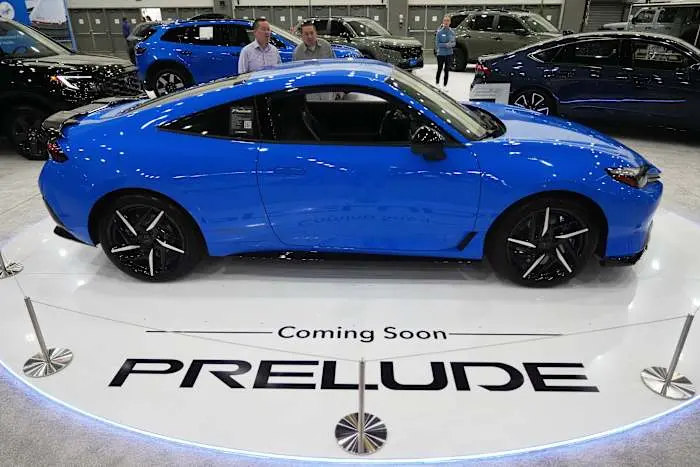
Yet, automotive history has a way of defying predictions. The return of the Honda Prelude after a staggering 26-year hiatus—debuting in production form for the 2026 model year—has injected a potent dose of excitement back into the entry-level performance segment. Rather than reviving the car as a conventional, roaring gasoline-burner, Honda took a calculated gamble: it equipped the new Prelude with a frugal hybrid powertrain, mated it to a specialized suspension and braking architecture, and wrapped it in a sleek, aerodynamic silhouette.
However, entering the market doesn’t mean entering a vacuum. The revived Honda must immediately contend with one of the most celebrated modern benchmarks of affordable sports car engineering: the Toyota GR86. Co-developed with Subaru, the GR86 proudly adheres to the old-school sports car playbook—rear-wheel drive, a low-slung stance, an available manual transmission, a naturally aspirated flat-four engine, and a remarkably accessible price point.
To determine which of these distinct interpretations of the modern two-door reigns supreme, automotive experts at Edmunds subjected both vehicles to rigorous testing across closed-circuit tracks, winding mountain backroads, and congested urban commutes. The resulting clash pits two fundamentally different automotive philosophies against each other: Honda’s forward-thinking, tech-heavy, highly practical daily driver versus Toyota’s traditionalist, engagement-first rear-wheel-drive machine.
While the Toyota GR86 claims victory in raw driving dynamics and initial affordability, the Honda Prelude punches back with superior comfort, practical cargo utility, and astonishing hybrid fuel economy. Ultimately, Edmunds’ comprehensive evaluation crowns the Honda Prelude the narrow overall winner for its sheer everyday liveability—proving that the modern coupe market is far from a one-trick pony.
Detailed Chronology and Comparative Breakdown
To fully understand how these two vehicles arrive at their respective conclusions, one must examine their development ethos, track performance, and daily usability step-by-step. The rivalry is not merely about horsepower figures; it is a tale of trade-offs.
The Driving Experience: Purity vs. Efficiency
When it comes to pure driver engagement, the Toyota GR86 establishes an early and formidable lead. Following the classic sports car formula, the GR86 sends its power exclusively to the rear wheels. Equipped with a manual transmission, Edmunds’ test track data recorded a zero-to-60 mph sprint of 6.0 seconds. While this figure will not shatter drag-racing records, the car’s 228-horsepower, 2.4-liter four-cylinder boxer engine delivers an eager surge of power that rewards high-rpm driving. Whether pulling out of a hairpin turn or accelerating onto a fast-moving highway, the GR86 feels alive in the driver’s hands. (It should be noted that selecting the optional automatic transmission adds roughly a full second to the zero-to-60 time, somewhat dulling its edge).
By contrast, the 2026 Honda Prelude takes a vastly different mechanical route. Under its hood lies a 200-horsepower four-cylinder hybrid powertrain. At Edmunds’ test track, the Prelude covered the zero-to-60 mph metric in 7.2 seconds—more than a full second behind its Toyota rival. More critically, Honda’s hybrid system utilizes an e-CVT-style setup that lacks traditional fixed gears or manual shifting points. While this configuration yields silky-smooth power delivery in heavy urban traffic, it robs the driver of the visceral, mechanical connection found when aggressively rowing through the gears of a manual-equipped GR86.
Yet, when the asphalt begins to curve, both vehicles showcase exceptional engineering. The GR86 has long been lauded for its telepathic steering feel and impeccably balanced chassis, allowing drivers to dance the rear end through corners with predictable, intuitive feedback.
The Prelude, despite its front-wheel-drive architecture—a layout historically less favored by purists—punches well above its weight class. Honda has engineered the Prelude with class-leading front-end grip, a specialized suspension system, and sharp turn-in responses. While it cannot replicate the dynamic throttle-steer adjustability of a rear-wheel-drive platform, it stands as arguably the best-handling front-wheel-drive coupe on the market.
- Driving Experience Winner: Toyota GR86 (for superior powertrain engagement and rear-wheel-drive balance).
Comfort, Cabin Tech, and Everyday Liveability
While the GR86 dominates the twisties, the tables turn dramatically the moment the engine is shut off and the daily grind begins. Here, the Honda Prelude flexes its developmental muscles, leveraging Honda’s mainstream engineering prowess to create a genuinely hospitable cabin environment.
The Prelude’s interior is a masterclass in ergonomic layout, borrowing heavily from the refined architecture of the Honda Civic. The front seats are deeply supportive without being punishingly tight, high-grade materials line the touchpoints, and the control layout is intuitive. Central to the dashboard is a responsive 9-inch touchscreen powered by a Google-based operating system. Navigation is swift, menus are logical, and smartphone integration is thoroughly modern, featuring wireless Apple CarPlay and Android Auto. Furthermore, the Prelude features an adaptive suspension system that dynamically softens dampers during highway commuting, smoothing out potholes and rough tarmac with ease.
Conversely, the Toyota GR86 prioritizes its sporting mission at the direct expense of daily comfort. The cabin is noticeably louder at highway speeds, allowing engine, wind, and tire drone to permeate the interior. The infotainment system feels dated, relying on slower software and tethered, wired-only phone mirroring. Getting in and out of the GR86 requires a conscious physical effort due to its ultra-low ground clearance and heavily bolstered seats. While by no means unbearable, the Toyota’s interior makes it abundantly clear that comfort took a back seat to performance.
- Comfort & Features Winner: Honda Prelude.
Cargo Capacity and Practical Utility
Coupes have historically required heavy compromises in cargo space, forcing owners to pack lightly or leave bulkier items at home. However, the 2026 Honda Prelude shatters this stereotype through clever packaging.
Utilizing a hatchback-style trunk design, the Prelude offers an impressive 15.1 cubic feet of cargo volume. This figure not only eclipses most coupe competitors but rivals many compact sedans, allowing for easy loading of golf clubs, large luggage sets, or weekly grocery hauls.
The Toyota GR86, adhering strictly to traditional proportions, struggles significantly in this category. Its conventional trunk yields a paltry 6.3 cubic feet of space. The opening is shallow and narrow, severely restricting the physical dimensions of cargo that can be loaded. To its credit, the GR86 features folding rear seats that can drop down to swallow a spare set of track wheels and tires—a nod to weekend racers. However, for everyday road trips, shopping excursions, or general errands, the GR86 is severely outmatched.
- Cargo & Practicality Winner: Honda Prelude.
Supporting Context & Metrics
To appreciate the weight of this comparison, one must evaluate the hard performance, efficiency, and financial metrics recorded during testing.
| Metric / Feature | 2026 Honda Prelude | Toyota GR86 (Manual) | Toyota GR86 (Automatic) |
|---|---|---|---|
| Powertrain Type | 2.0L 4-Cylinder Hybrid | 2.4L 4-Cylinder Boxer | 2.4L 4-Cylinder Boxer |
| Horsepower | 200 hp | 228 hp | 228 hp |
| 0-60 mph Time | 7.2 seconds | 6.0 seconds | ~7.0 seconds |
| EPA Fuel Economy (Combined) | 44 mpg (Real-world verified) | 22 mpg | 24 mpg |
| Trunk Cargo Capacity | 15.1 cubic feet | 6.3 cubic feet | 6.3 cubic feet |
| Infotainment Setup | 9-inch touchscreen, Wireless Apple CarPlay/Android Auto | Legacy touchscreen, Wired-only phone mirroring | Legacy touchscreen, Wired-only phone mirroring |
| Starting MSRP (Base) | ~$43,595 (Single fully-loaded trim) | $32,795 (Base Trim) | $32,795 + Auto Surcharge |
| Midgrade Pricing (Premium) | N/A | $35,695 | $35,695 + Auto Surcharge |
Fuel Economy: The Hybrid Advantage
When evaluating operational costs, the disparity between these two vehicles is monumental. The Honda Prelude’s hybrid powertrain achieves an EPA-estimated 44 mpg in combined city and highway driving—a figure that Edmunds testers successfully replicated in real-world driving scenarios. For daily commuters, this efficiency dramatically cuts down monthly fuel expenditures.
The Toyota GR86, utilizing a traditional, naturally aspirated internal combustion engine, earns an EPA estimate of 22 mpg for the manual variant and 24 mpg for the automatic. While acceptable for a sports car, it translates directly to frequent trips to the fuel pump and considerably higher annual operating costs compared to the Honda.
- Fuel Economy Winner: Honda Prelude.
Pricing and Financial Value
This is the arena where the Toyota GR86 stages its most aggressive counter-offensive. The GR86 remains one of the greatest bargains in the modern automotive industry. Starting at $32,795 including destination fees for the base model, it offers rear-wheel-drive thrills at a price point accessible to younger buyers. Stepping up to the midgrade $35,695 Premium trim equips the vehicle with heated front seats, an upgraded audio system, traffic-adaptive cruise control, and blind-spot monitoring.
In contrast, the 2027/2026 Honda Prelude arrives in a single, highly specified trim level priced at $43,595. While it includes premium features that the GR86 lacks—such as standard adaptive dampers, genuine leather upholstery, and sophisticated lane-keeping assistance—it commands a nearly $10,000 premium over an entry-level GR86, and roughly an $8,000 premium over a well-equipped GR86 Premium. For budget-conscious enthusiasts, that price gap is impossible to ignore.
- Pricing & Value Winner: Toyota GR86.
Official Statements and Industry Insights
Automotive analysts and industry stakeholders have closely monitored the rollout of the revived Prelude, viewing it as a litmus test for how legacy manufacturers can inject electrification into enthusiast segments without alienating buyers.
In their comprehensive evaluation for Edmunds, automotive contributor Josh Jacquot noted the unique duality of the matchup:
"The Prelude has a lot going for it. It’s the more comfortable, more efficient and more practical of the two, with tech and cargo space that makes it far easier to live with every day. For these reasons, it edges out the GR86 in Edmunds’ rankings of affordable coupes. Still, the GR86 shouldn’t be dismissed if you’re seeking a more connected driving experience."
Industry observers point out that Honda’s strategy with the Prelude mirrors its broader corporate trajectory: merging electrification with everyday usability. By utilizing a hybrid layout, Honda avoids the prohibitive weight and cost penalties associated with battery-electric sports cars while still delivering stellar fuel economy that satisfies modern regulatory pressures.
Toyota executives, meanwhile, have continually emphasized that the GR86 was built by enthusiasts, for enthusiasts. By maintaining a purist mechanical layout—complete with a low center of gravity, lightweight body panels, and a communicative manual gearbox—Toyota has successfully positioned the GR86 as an irreplaceable gateway drug to high-performance driving culture.
Future Outlook: The Evolution of the Affordable Coupe
The head-to-head battle between the Honda Prelude and the Toyota GR86 highlights a critical crossroads for the automotive industry. As the global fleet inexorably marches toward electrification, traditional sports car formulas are facing an existential crisis.
The Toyota GR86 represents the twilight of an era—a celebration of mechanical purity, raw analog feedback, and internal combustion simplicity. Its long-term future remains tied to how long regulators will permit small-displacement, naturally aspirated sports cars to be produced without severe financial penalties. If and when emissions standards force Toyota’s hand, the GR86 lineage may undergo its own radical reinvention.
Conversely, the Honda Prelude serves as a conceptual blueprint for the future. By proving that a hybrid powertrain can be successfully integrated into a stylish, low-slung two-door body style without sacrificing sharp handling, Honda has carved out a viable path forward for the enthusiast segment. It demonstrates that performance cars do not necessarily need to guzzle fuel to be engaging, nor do they need to be punishingly uncomfortable to deliver dynamic competence.
As these two nameplates battle for supremacy on dealer lots and test tracks, consumers are the ultimate beneficiaries. Whether a driver prioritizes the budget-friendly, rear-wheel-drive mechanical engagement of the Toyota GR86 or the high-tech, ultra-efficient, everyday practicality of the Honda Prelude, the revival of the affordable coupe proves that the segment’s pulse is beating stronger than it has in decades.

0 Comments