

Executive Overview
The dawn of a new college football season is always met with high anticipation, but at the University of Florida (UF), the kickoff of the 2026 season carries an extraordinary level of gravity. As the Florida Gators prepare to host the Florida Atlantic University (FAU) Owls at Ben Hill Griffin Stadium—affectionately known worldwide as "The Swamp"—the campus is experiencing a surge of energy. This game marks more than just the return of Saturday night football; it represents the official debut of head coach Jon Summerall, whose arrival has injected a renewed sense of optimism into a fanbase hungry for a return to national prominence.
However, welcoming nearly 90,000 passionate spectators into the heart of Gainesville presents massive logistical challenges. To manage the immense influx of vehicles and pedestrians, the University of Florida Police Department (UFPD), in coordination with municipal and state agencies, has implemented a comprehensive security and traffic management plan. This blueprint includes multi-phase road closures, altered post-game egress patterns, and strict pedestrian safety protocols.
This investigative report details the logistical, economic, and cultural dynamics surrounding the season opener, analyzing how university officials plan to maintain public safety while preserving the high-energy traditions of the "Gator Nation."
Detailed Chronology: The Countdown to Kickoff
Executing a safe and efficient game day in Gainesville requires a highly synchronized operational schedule. UFPD and campus parking authorities operate on a strict timeline that begins hours before the scheduled 7:45 p.m. kickoff.
+-----------------------------------------------------------------------------------------+
|                                GAME DAY LOGISTICS TIMELINE                              |
+-----------------------------------------------------------------------------------------+
|  12:00 PM (T-7:45 Hours)  | Tailgating sites, RV lots, and campus parking zones open.   |
+---------------------------+-------------------------------------------------------------+
|  2:45 PM  (T-5:00 Hours)  | Phase 1: Closures begin on roads nearest to the stadium.    |
+---------------------------+-------------------------------------------------------------+
|  4:45 PM  (T-3:00 Hours)  | Phase 2: Full lockdown from Gail Lemerand to Buckman Drive. |
+---------------------------+-------------------------------------------------------------+
|  5:30 PM  (T-2:15 Hours)  | "Gator Walk" begins; team arrives at the stadium.           |
+---------------------------+-------------------------------------------------------------+
|  6:00 PM  (T-1:45 Hours)  | Stadium gates open; security screening begins.              |
+---------------------------+-------------------------------------------------------------+
|  7:45 PM  (Kickoff)       | Game begins; in-stadium security protocols fully active.    |
+---------------------------+-------------------------------------------------------------+
|  9:30 PM  (Halftime)      | Synchronized drone light show takes flight over the field.  |
+---------------------------+-------------------------------------------------------------+
|  11:00 PM (Post-Game)     | One-way southbound egress initiated on Gail Lemerand Drive. |
+-----------------------------------------------------------------------------------------+
Morning Preparations and Tailgating Influx
Long before the physical barricades are placed, the campus prepares for the arrival of tens of thousands of tailgaters. RV lots and designated parking areas open early in the morning, drawing fans from across the state of Florida and the wider Southeast. University officials monitor early traffic patterns on major arteries, including Interstate 75, Archer Road, and University Avenue, to identify early bottlenecks.
T-Minus 5 Hours: Phase 1 Traffic Restrictions
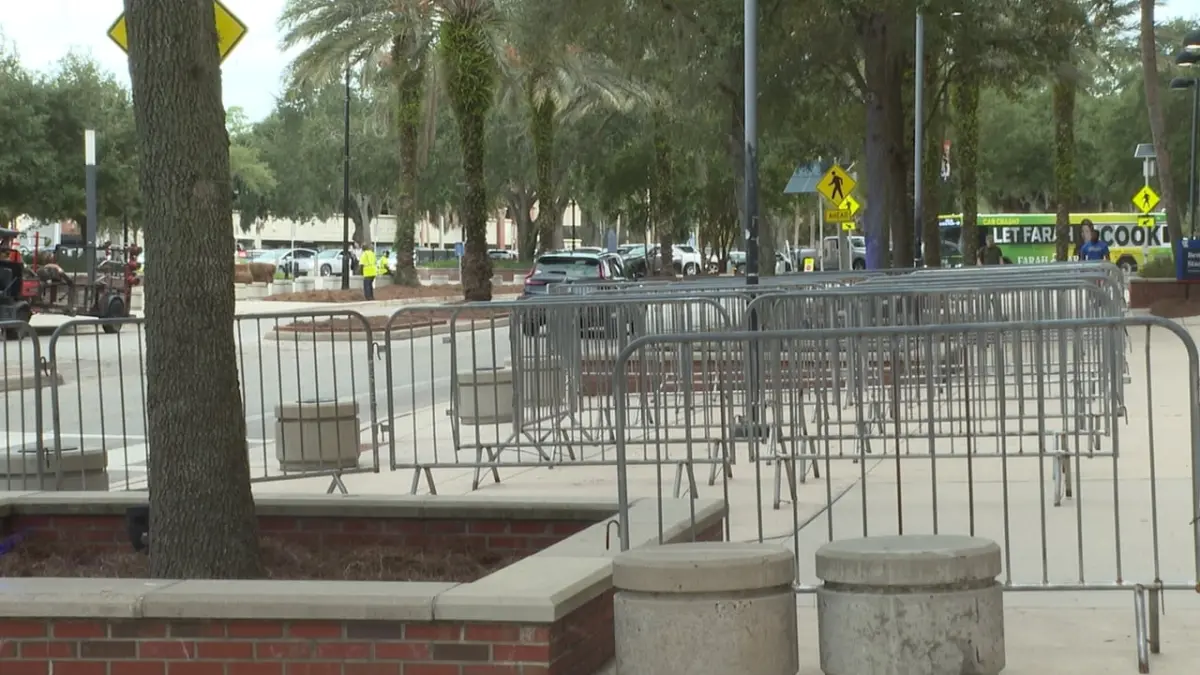
At 2:45 p.m., UFPD initiates the first phase of its traffic management plan. Officers begin shutting down roads immediately adjacent to Ben Hill Griffin Stadium to standard vehicular access. This phase is designed to clear the area of casual weekday traffic and establish a secure perimeter for early-arriving fans.
T-Minus 3 Hours: Phase 2 Hard Closures and "Gator Walk"
At 4:45 p.m., the security perimeter expands into a hard lockdown. The primary corridor stretching from Gail Lemerand Drive to Buckman Drive is closed to all unauthorized vehicular traffic. This closure coincides with one of the university’s most cherished traditions: the "Gator Walk."
During this event, Coach Summerall and the team walk through a dense crowd of cheering fans into the stadium. Securing this pathway requires a heavy, coordinated presence from UFPD officers, private security personnel, and athletic department staff to ensure both player and fan safety.
Kickoff and the In-Game Security Posture
By the time the game begins at 7:45 p.m., the focus of law enforcement shifts from traffic management to in-stadium security and crowd monitoring. Unified command centers, consisting of UFPD, the Gainesville Police Department (GPD), the Alachua County Sheriff’s Office (ACSO), and emergency medical services (EMS), monitor the stadium’s interior and exterior concourses using advanced camera networks.
Post-Game Egress: The Reversal of Flow
Immediately following the game’s conclusion, UFPD activates its egress plan. To expedite the departure of over 85,000 fans, standard traffic laws are temporarily suspended in favor of a strictly controlled, one-way directional flow.
The most significant alteration occurs on Gail Lemerand Drive, where all lanes are redirected south. This design funnels traffic directly toward Archer Road and the nearby exits for Interstate 75, preventing gridlock at critical intersections.
Supporting Context & Metrics: The Logistical and Economic Footprint
To fully understand the scale of a UF game day, it is necessary to examine the underlying metrics. Gainesville, a city with a permanent population of roughly 145,000, experiences a population surge of nearly 60% on game days.
+-------------------------------------------------------------------+
|                     KEY GAME DAY METRICS & DATA                   |
+-------------------------------------------------------------------+
| Stadium Capacity (Ben Hill Griffin Stadium) | 88,548              |
+---------------------------------------------+---------------------+
| Estimated Game Day City Population Surge     | +85,000 to +95,000  |
+---------------------------------------------+---------------------+
| Road Closure Lead Time                      | 5 Hours             |
+---------------------------------------------+---------------------+
| Peak Traffic Egress Directional Lanes       | 100% Southbound on  |
|                                             | Gail Lemerand Dr.   |
+---------------------------------------------+---------------------+
| Economic Impact per Home Game (Est.)        | $10M - $12M         |
+---------------------------------------------+---------------------+
| Local Hotel Occupancy Rate (Game Weekend)   | 95% - 98%           |
+---------------------------------------------+---------------------+
The Infrastructure Challenge
Gainesville’s infrastructure was not originally designed to absorb the sudden influx of nearly 40,000 vehicles. The campus is bordered by major municipal thoroughfares—University Avenue to the north, SW 13th Street to the east, and Archer Road to the south. Because Ben Hill Griffin Stadium is situated in the center of campus, incoming traffic naturally clashes with heavy pedestrian walkways.
This geographic reality makes the five-hour and three-hour closure windows critical. By restricting access to Gail Lemerand Drive, Buckman Drive, and Stadium Road, UFPD creates a pedestrian-only sanctuary that minimizes the risk of vehicle-pedestrian collisions.
Economic Windfall and Hospitality Strain
The economic impact of a home football game is a vital driver for the local economy. According to regional tourism and economic development data, a single home game weekend generates between $10 million and $12 million in economic activity for Alachua County.
- Hospitality and Lodging: Hotels in Gainesville and surrounding areas, such as Alachua and Ocala, report occupancy rates between 95% and 98% on game weekends, with room rates often tripling compared to standard weekdays.
- Food and Beverage: Restaurants, bars, and retail outlets along University Avenue and the Midtown district experience their highest-revenue weekends of the year.
- Local Employment: Game days create temporary employment for thousands of event staff, concession workers, rideshare drivers, and private security personnel.
Official Statements: Safety Protocols and Community Sentiment
Law Enforcement Directives
UFPD leadership has emphasized that preparation, patience, and vigilance are the three pillars of a successful game day. Speaking on the strategic traffic planning, UFPD Captain Trever Henderson highlighted the necessity of the department’s aggressive traffic control measures.
"When you try to leave, the traffic patterns are gonna look a lot different, especially if you’re coming towards Gail Lemerand," Captain Henderson warned. "All lanes on Gail Lemerand Drive will be directed south, routing traffic directly toward Archer Road to expedite stadium departure."
Henderson also urged drivers to adjust their expectations and remain alert for pedestrians who may be distracted by the festive atmosphere.
"We anticipate heavy pedestrian traffic and heavy vehicle traffic surrounding the venue. We strongly urge attendees to arrive early to mitigate congestion and to remain highly vigilant. If you are a resident or visitor not attending the game or tailgating, we highly recommend avoiding the campus area entirely during these hours to bypass significant traffic delays."
Student Optimism and the "Summerall Effect"
On campus, the student body’s mood is characterized by high energy and optimism. The transition to Coach Jon Summerall has sparked renewed excitement among students, who describe his campus presence as approachable, active, and highly energetic.
For senior students, the game is also a sentimental milestone. Sadie Resmondo, a senior preparing for her final year in the student section, shared her thoughts on the game’s significance:
"It’s the first home game of my senior year and one of my last experiences at a football game here," Resmondo said. Expressing confidence in a decisive victory over FAU, she added, "The energy on campus is different this year. There’s a real belief that we are building something special."
Sophomore Olivia Wrigc echoed this sentiment, noting that the community has quickly rallied around the new coaching staff.
In addition to the action on the field, the university’s investment in the fan experience is drawing praise. Junior Presley Howard highlighted one of the night’s most anticipated additions:
"I think it’s gonna be really electric in the swamp tonight," Howard remarked. "We’ve been hearing a lot about the synchronized drone show at halftime. It’s exciting to see the university bring these high-tech elements into our traditional game days."
Junior Ava Bray added that Coach Summerall’s effort to integrate himself into student life has paid dividends.
"He’s been everywhere—active, bubbly, and energetic. It makes the students feel like we are a genuine part of the team’s journey."
Future Outlook: The Evolution of Gator Game Days
As the University of Florida embarks on this new chapter, the intersection of athletics, technology, and public safety will continue to evolve. The season opener against FAU serves as a testing ground for several long-term initiatives.
+-----------------------------------------------------------------------------------------+
|                              FUTURE GAME DAY EVOLUTIONS                                 |
+-----------------------------------------------------------------------------------------+
| Tactical Focus Area     | Implementation Strategy                                       |
+-------------------------+---------------------------------------------------------------+
| Crowd Control Tech      | Real-time crowd density monitoring via smart-city sensors and |
|                         | AI-assisted traffic management systems.                       |
+-------------------------+---------------------------------------------------------------+
| Sustainable Entertainment| Gradual shift from traditional pyrotechnics to eco-friendly,   |
|                         | high-tech synchronized drone light shows.                     |
+-------------------------+---------------------------------------------------------------+
| Stadium Modernization   | Multi-million dollar renovations to Ben Hill Griffin Stadium,  |
|                         | optimizing entry gates and concourse flow.                    |
+-------------------------+---------------------------------------------------------------+
| Multi-Modal Transit     | Expansion of park-and-ride shuttle services to reduce overall |
|                         | campus vehicular volume.                                      |
+-----------------------------------------------------------------------------------------+
The Jon Summerall Era and Program Trajectory
The hiring of Jon Summerall represents a strategic pivot for the Florida Gators. Athletic administration officials are betting that his modern approach to program building, combined with his energetic recruiting style, will return UF to SEC and national championship contention. A convincing performance against FAU is seen as a crucial first step in validating this vision and maintaining the program’s momentum.
Technological Innovations in Fan Experience
The halftime synchronized drone show is more than just entertainment; it represents a shift toward modern, sustainable, and high-tech fan engagement. Traditional fireworks present logistical, environmental, and safety challenges, particularly in densely populated campus settings. Synchronized drone displays offer a highly customizable, visually spectacular alternative that reduces noise pollution and fire hazards while showcasing UF’s status as a top-tier research institution.
Long-Term Traffic and Municipal Adaptation
As Gainesville continues to grow, the current traffic and safety protocols will require ongoing refinement. City planners and UF administrators are exploring smart-city technologies, such as real-time traffic signal synchronization and mobile app integration, to guide drivers to available parking lots more efficiently.
Additionally, there is an ongoing push to expand off-site parking and park-and-ride shuttle services. By encouraging fans to park in satellite lots away from the campus core, officials hope to reduce vehicular density near the stadium, creating a safer, more pedestrian-friendly environment for the Gator Nation.
The season opener against FAU is a complex undertaking that requires months of planning, inter-agency cooperation, and community patience. As the gates of "The Swamp" swing open, the university stands ready to deliver a safe, secure, and memorable experience, signaling a bright future both on and off the field.

0 Comments