

Executive Overview
The fragile boundary separating collegiate athletics from professional sports has suffered another systemic fracture. Following a series of state-level judicial interventions that have bypassed NCAA authority, the nation’s most powerful athletic conferences are moving swiftly to protect what remains of the collegiate model.
At the center of the immediate crisis is Dae’Quan Wright, a former Ole Miss tight end who was recently waived by the NFL’s Cleveland Browns. Following a favorable ruling from a Louisiana state court, Wright’s agent, Drew Rosenhaus, announced plans for his client to return to college football to play for Louisiana State University (LSU) under an unexpected fifth year of eligibility.
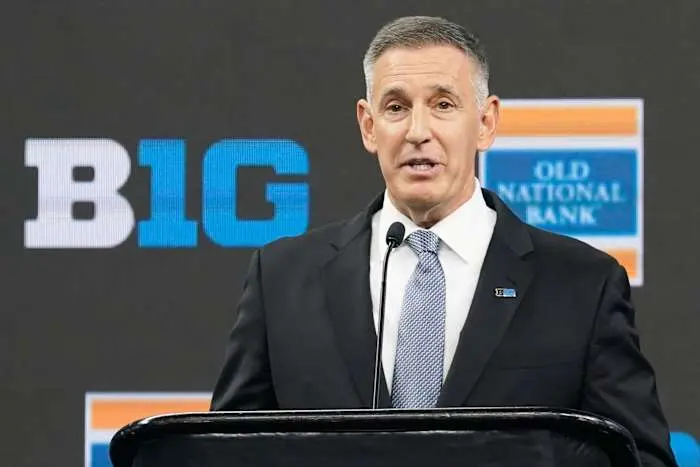
This development has triggered alarm bells across the collegiate landscape. The Big Ten Conference convened an emergency meeting of administrators to discuss player eligibility, with a vote highly anticipated on whether to establish a hard boundary barring former professional signees from returning to compete in the conference. Simultaneously, the Southeastern Conference (SEC) issued a scathing public rebuke of the trend, warning that allowing professional athletes to return to the college ranks will "blur the line between college and professional sports" and erode competitive equity.
As state courts continue to dismantle NCAA regulations piece by piece, college sports finds itself in a regulatory vacuum. Conferences are now forced to act as independent legislative bodies, attempting to erect defensive walls against a tide of litigation that threatens to turn college locker rooms into landing spots for waived professional players.
Detailed Chronology
The current crisis is the result of a rapid succession of legal challenges, regulatory adjustments, and shifting player strategies over the past several months.
[June] NCAA Implements Eligibility Rule Change (Excluding High School Class of 2022)
       │
       ▼
[Summer] Wright & Others File Lawsuit in Louisiana State Court Challenging the Rule
       │
       ▼
[Late Summer] Texas Court Clears Brendan Sorsby (Texas Tech) to Play Despite Gambling Admission
       │
       ▼
[August] Dae’Quan Wright Waived by Cleveland Browns; Agent Drew Rosenhaus Announces LSU Transfer Plan
       │
       ▼
[Late August] SEC Releases Scathing Opposition; Big Ten Schedules Emergency Eligibility Vote
1. The June NCAA Rule Change
In June, the NCAA enacted a pivotal policy change regarding student-athlete eligibility. The rule aimed to finalize the transition away from the extended eligibility windows granted during the COVID-19 pandemic. However, the update explicitly excluded athletes who graduated from high school in the Class of 2022 from being "grandfathered" into certain extended-eligibility provisions. This left a significant cohort of third- and fourth-year players facing the end of their college careers without the option of a fifth season.
2. The Louisiana Lawsuit
In response to the June ruling, a group of college athletes—including then-Ole Miss tight end Dae’Quan Wright—filed a lawsuit in a Louisiana state court. The plaintiffs argued that the NCAA’s distinction arbitrarily penalized the Class of 2022 and restricted their earning potential under modern Name, Image, and Likeness (NIL) frameworks. The state court ruled in favor of the athletes, granting an injunction that effectively restored a fifth year of eligibility to the affected players.
3. The NFL Detour and Waiver Announcement
Armed with the court’s decision, Wright pursued professional opportunities in the interim, signing with the NFL’s Cleveland Browns. When the Browns waived Wright, his representation saw an unprecedented opening. On Monday, prominent sports agent Drew Rosenhaus announced that if Wright cleared NFL waivers, he intended to bypass traditional professional fallback routes (such as NFL practice squads, the UFL, or the CFL) and instead return to the college ranks to play for LSU.
4. The Big Ten’s Preemptive Strike
The announcement sent shockwaves through collegiate front offices. On Tuesday, Big Ten administrators scheduled an emergency meeting to address the loophole. According to sources familiar with the situation, conference leaders discussed implementing a conference-wide policy that would disqualify any athlete who has signed a professional contract or participated in professional training camps from competing in Big Ten athletics, regardless of state court rulings.
Supporting Context & Metrics
The panic sweeping through the Big Ten and SEC is not merely a reaction to a single player; it is a response to a growing pattern of judicial overreach that has rendered the NCAA’s rulebook nearly unenforceable.
The Brendan Sorsby Precedent
The threat of court-mandated eligibility bypasses was demonstrated earlier this summer in Texas. Quarterback Brendan Sorsby was cleared to play for Texas Tech by a Texas state judge despite admitting to sports gambling—an infraction that historically carries a mandatory and lengthy NCAA suspension.
While the court cleared Sorsby, the response from the Big 12 Conference and its member institutions was overwhelmingly negative. Confronted with immense institutional pressure, peer-athlete backlash, and the prospect of playing in a deeply hostile environment, Sorsby ultimately opted not to pursue his return to the field.
| Case Study | Player | Original Infraction / Status | Judicial Intervention | Conference Response | Outcome |
|---|---|---|---|---|---|
| Texas Tech | Brendan Sorsby (QB) | NCAA Gambling Violation | Texas State Judge cleared player to return | Big 12 expressed fierce opposition | Player voluntarily withdrew from playing |
| LSU / Ole Miss | Dae’Quan Wright (TE) | Waived by NFL’s Cleveland Browns | Louisiana Court granted 5th year of eligibility | SEC opposed; Big Ten scheduled emergency ban vote | Pending waiver clearance and conference rulings |
The Legal Vulnerability of Conference Autonomy
The core of the issue lies in the legal doctrine of "voluntary association." Historically, courts have given private organizations like the NCAA and athletic conferences wide latitude to set their own internal rules. However, in the wake of NCAA v. Alston (2021), federal and state courts have increasingly viewed NCAA eligibility restrictions through an antitrust lens, treating them as unlawful restraints of trade.
If a state court in Louisiana rules that an athlete has a right to play, a national athletic association faces immense legal risk if it tries to block them. This has forced individual conferences to consider passing their own localized rules. While a conference-specific ban could also face antitrust challenges, leagues like the Big Ten and SEC believe they are on firmer legal footing than the NCAA because their rules are collectively bargained or agreed upon by a smaller, more cohesive group of elite institutions.
Official Statements
The pushback from collegiate leadership has been swift, unified, and remarkably direct. The public statements reflect an industry that feels it is fighting for its very survival against the total professionalization of the campus environment.
The Southeastern Conference (SEC)
On Monday evening, the SEC released a strongly worded statement expressing its absolute opposition to allowing professional players to return to collegiate rosters:
"College athletes, not professional athletes, have been at the heart of the Southeastern Conference. Individuals who choose to leave college athletics, sign professional playing contracts, and compete professionally should not then be permitted to return to college competition. Allowing that to occur will blur the line between college and professional sports, create significant competitive equity concerns and reduce opportunities for high school and current college athletes."
The SEC concluded its statement with an explicit plea to federal lawmakers, calling on Congress to pass a uniform bill to regulate college sports and protect conferences from state-by-state judicial rulings.
The Big Ten Conference
While Big Ten Commissioner Tony Petitti has not issued an official public decree, the conference’s actions speak volumes. A person familiar with the Big Ten’s internal deliberations, speaking on the condition of anonymity, emphasized that the league’s athletic directors and university presidents are highly aligned on this issue.
"There is a strong consensus that we cannot allow the waiver wire of the NFL to become a feeder system for Big Ten rosters," the source stated. "It destroys the competitive balance, takes opportunities away from developing amateur players, and completely upends roster management for our coaching staffs."
Future Outlook
The intersection of state court rulings, professional sports waivers, and conference-level pushback has pushed college athletics into uncharted territory. Several key developments are expected to unfold in the coming weeks:
1. The Fight Over Conference Autonomy
If the Big Ten votes to bar former professional players, and the SEC follows suit with a formal policy, a major legal showdown is inevitable. An athlete like Dae’Quan Wright, backed by high-profile representation like Drew Rosenhaus, could sue the conferences directly, alleging tortious interference with their ability to earn a living through NIL deals. The courts will have to decide whether an individual athletic conference has the legal right to set higher eligibility standards than those mandated by state courts.
2. Roster Management and Competitive Chaos
If conferences fail to block these players, the logistical consequences for college football programs will be severe:
- The "NFL Drop-Down" Effect: College coaches would have to reserve roster spots and NIL funds late into August, waiting to see which former college stars are cut from NFL 53-man rosters or practice squads.
- Displacement of High School Recruits: As the SEC noted, every roster spot occupied by a 23- or 24-year-old former professional is a spot taken away from an incoming high school recruit or a traditional transfer-portal athlete.
- Locker Room Disparity: The presence of players who have signed NFL contracts, received signing bonuses, and gone through professional training camps could create significant cultural and financial divisions within amateur locker rooms.
3. The Escalating Push for Federal Legislation
The chaos surrounding the Class of 2022 eligibility loop-hole will almost certainly be used by conference commissioners as leverage in Washington, D.C. For years, college sports executives have lobbied Congress for a federal antitrust exemption and a uniform national standard for NIL and eligibility. By framing the current situation as an absurd scenario where NFL players are taking roster spots from 18-year-old college freshmen, college sports leaders hope to finally convince lawmakers to intervene and restore regulatory order to the college game.

0 Comments