
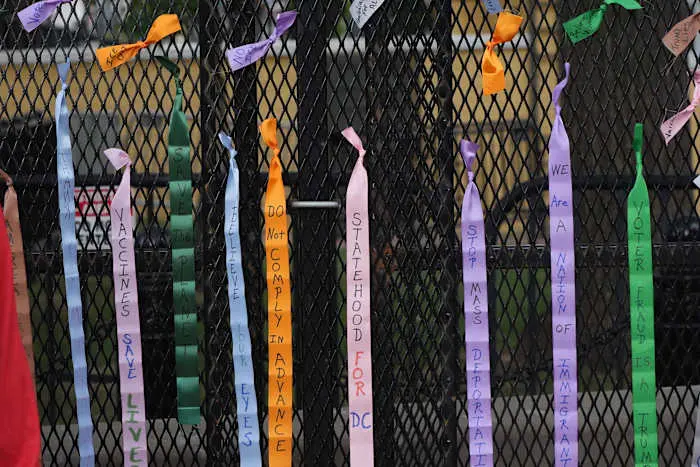

WASHINGTON, D.C. — The physical and aesthetic landscape of the nation’s capital is undergoing its most radical transformation in generations. Under the direct guidance of President Donald Trump, a series of sweeping architectural and security overhauls are moving through the federal government’s regulatory apparatus with unprecedented speed.
On Thursday, a federal planning panel is scheduled to review the latest, and perhaps most controversial, pieces of this executive-led makeover: a proposal to erect a permanent security fence around the historic eight-acre Lafayette Park and plans to construct a massive, state-of-the-art underground visitor screening center.
The proposals arrive at a moment of heightened anxiety over presidential security, following multiple assassination attempts against Trump. However, they also raise profound questions about public access to the "People’s House," the preservation of historic civic spaces, and the shifting dynamics of the federal boards charged with safeguarding Washington’s architectural heritage.
Executive Overview
For over two centuries, Lafayette Park has served as America’s premier public forum—a historic square situated directly north of the White House where citizens, protesters, and tourists have gathered within arm’s reach of the executive mansion. Under a comprehensive 79-page proposal submitted by the administration, this historic accessibility is poised to change permanently.
The National Capital Planning Commission (NCPC) is set to convene on Thursday to conduct its initial review of the Lafayette Park fencing project, alongside plans for a permanent, subterranean White House Visitor Screening Facility. While formal votes are not expected during this initial hearing, the session represents a critical milestone in the administration’s aggressive campaign to harden the White House perimeter.
+----------------------------------------------------------------------------+
|                       PROPOSED WHITE HOUSE COMPLEX ALTERATIONS             |
+----------------------------------------------------------------------------+
|  PROJECT                              | STATUS / TARGET DATE               |
+----------------------------------------------------------------------------+
|  Lafayette Park Permanent Fence       | Under NCPC Review (August 2026)    |
|  Underground Visitor Screening Center | Approved by CFA; Target: July 2028 |
|  East Wing Reconstruction / Ballroom   | Completed & Retroactively Approved |
+----------------------------------------------------------------------------+
The review follows a pattern of rapid, executive-driven structural changes within the President’s neighborhood. Earlier this year, the NCPC retroactively approved the construction of a new White House ballroom—a project initiated after the administration demolished portions of the Executive Mansion’s East Wing without seeking the legally required prior authorization from federal oversight bodies.
With both the NCPC and the U.S. Commission of Fine Arts (CFA) now heavily influenced by presidential appointees and key cabinet allies, the administration faces historically low institutional resistance as it seeks to reshape the symbolic heart of American democracy.
Detailed Chronology
The drive to reshape the White House complex is the culmination of a rapidly escalating series of security crises, political appointments, and unilateral construction initiatives that began in earnest following the 2024 presidential election.
   2024-2025              Spring 2026            April-May 2026           July 2026            August 2026
       |                       |                       |                      |                     |
[Sec. Crises & ]       [East Wing Razed; ]     [Assassination Attempt]    [CFA Approves ]       [NCPC Reviews ]
[Admin Change  ]--->   [Retroactive Appr.]---> [ & Checkpoint Shoot  ]--->[Screening Ctr]--->   [Lafayette Prk]
[  Initiated   ]       [  by NCPC Panel  ]     [   Heighten Alarm    ]    [  Plans Pass ]       [ Fencing Plan]
The Unilateral East Wing Demolition (Spring 2026)
The administration’s approach to capital architecture was made clear in the spring of 2026. Without obtaining prior authorization from the NCPC or the CFA, construction crews razed portions of the White House East Wing to make way for a grand, newly designed presidential ballroom. The move drew sharp rebukes from historic preservationists, who argued the administration had violated federal preservation laws. However, the NCPC ultimately chose to grant retroactive approval to the completed project, signaling a reluctance to clash directly with the executive branch.
Escalating Security Threats (April – May 2026)
The justification for permanent fortification intensified dramatically in the spring of 2026 due to several high-profile security incidents:
- April 2026: While attending a high-profile dinner with Washington journalists, President Trump was the target of a third assassination attempt, following two highly publicized attempts during his 2024 campaign.
- May 2026: U.S. Secret Service officers fatally shot an armed individual who opened fire near a primary White House security checkpoint, placing the entire complex on lockdown and accelerating demands for a hardened physical perimeter.
Regulatory Approvals and Panel Realignments (July – August 2026)
In July 2026, the U.S. Commission of Fine Arts—a body heavily populated by Trump appointees—unanimously approved the architectural designs for the underground visitor screening facility. The CFA also received a preliminary briefing on the Lafayette Park fencing but deferred action, leaving the heavy lifting of public debate to the NCPC’s August meeting.
On the eve of the August 27, 2026 meeting, the leadership of the NCPC transitioned. Mark Paoletta, a staunch conservative ally of the president, assumed the chairmanship of the commission, succeeding former White House Counsel Will Scharf. This leadership transition further consolidated the administration’s influence over the regulatory bodies overseeing the capital’s federal footprint.
Supporting Context & Metrics
The proposed physical interventions represent a departure from decades of temporary, reactionary security measures. For years, the Secret Service has relied on unsightly "bicycle rack" barriers, concrete Jersey barriers, and temporary chain-link fencing to manage crowds and secure the perimeter. The administration argues that replacing these ad-hoc structures with permanent, architecturally integrated barriers will improve both security and visual appeal.
The Lafayette Park Fencing Proposal
Lafayette Park, an 8-acre public commons, has not featured permanent perimeter fencing since the late 19th century. The administration’s 79-page design submission outlines a sophisticated, high-security barrier system:
- Scope: A continuous, heavy-duty metal fence wrapping entirely around the 8-acre perimeter of the park.
- Access Points: Heavy, reinforced gates positioned at the primary northern and southern entrances to control pedestrian flow.
- The Monument Dilemma: The proposal presents two primary design pathways regarding the park’s historic corner monuments (honoring Revolutionary War heroes Marquis de Lafayette, Rochambeau, Von Steuben, and Kosciuszko). Designers must decide whether to encircle the monuments within the high-security zone or construct the fence line inward to leave them accessible to the public sidewalk.
       [ H Street NW ]
+---------------------------+
| [Mon.]             [Mon.] |
|      +-------------+      |
|      |  Lafayette  |      |
|      |    Park     |      |  <-- Proposed Permanent Fence Line
|      |  (8 Acres)  |      |      (Options to include/exclude
|      +-------------+      |       historic corner monuments)
| [Mon.]             [Mon.] |
+---------------------------+
     [ Pennsylvania Ave ]
             ||
     [  White House  ]
The Underground Visitor Screening Facility
The proposed White House Visitor Screening Facility is designed to streamline security while removing unsightly security tents from the historic landscape.
- Target Completion Date: July 2028.
- Design and Location: Originally slated for construction beneath the southern end of Sherman Park (southeast of the White House), the project was relocated to the western edge of the park. This adjustment was made to avoid critical underground municipal utility infrastructure.
- Functional Goal: The subterranean facility will process hundreds of tour groups and official visitors daily, utilizing advanced scanning technology, baggage screening, and biometric verification in a climate-controlled environment, entirely out of public view.
The Political Alignment of the NCPC
The 12-member National Capital Planning Commission, while historically bipartisan and technical in nature, currently features a clear alignment with the sitting administration:
+----------------------------------------------------------------------------+
|                     NCPC COMMISSION KEY MEMBERS (AUGUST 2026)              |
+----------------------------------------------------------------------------+
|  MEMBER                | ROLE / AFFILIATION                                |
+----------------------------------------------------------------------------+
|  Mark Paoletta         | Commission Chairman (Trump Appointee)             |
|  Pete Hegseth          | Secretary of Defense                              |
|  Doug Burgum           | Secretary of the Interior                         |
|  Ed Forst              | Administrator of the General Services Admin.      |
|  Sen. Rand Paul        | Congressional Representative (R-KY)               |
|  Rep. James Comer      | Congressional Representative (R-KY)               |
+----------------------------------------------------------------------------+
With key cabinet secretaries and congressional allies holding voting seats, the commission’s traditional role as an independent check on executive-branch real estate decisions has shifted toward facilitating the administration’s security and development goals.
Official Statements
Proponents and Administration Officials
Spokespersons for the administration and the U.S. Secret Service have framed the proposed modifications as necessary updates to protect the executive branch from modern, asymmetric threats.
"We can no longer secure the executive mansion using twentieth-century tools against twenty-first-century threats. Relying on temporary bicycle racks and concrete blocks is neither secure nor fitting for the residence of the American president. These proposals represent a thoughtful, permanent investment in the security of the White House and the dignity of its surrounding public spaces."
— U.S. Secret Service Security Infrastructure Division
Supporters also emphasize that the underground visitor center will significantly improve the visitor experience, shielding tourists from extreme weather while keeping security operations out of sight.
Opponents, Preservationists, and Civil Liberties Advocates
Conversely, historic preservationists, open-space advocates, and civil rights organizations view the permanent enclosure of Lafayette Park as a troubling retreat from the principles of an open society.
"Lafayette Square has been the stage for the American story—a place where citizens have gathered to petition their government since the administration of Thomas Jefferson. Enclosing this space in a permanent ring of steel sends a message of fear and exclusion. It effectively converts a historic public common into an exclusive, hardened courtyard for the executive branch."
— Coalition for the Preservation of Historic Washington
Critics have also raised concerns about the precedent set by the administration’s prior actions. The unauthorized demolition of the East Wing earlier this year remains a point of contention, with critics arguing that the administration’s "build first, ask permission later" approach undermines federal preservation laws.
Future Outlook
As the NCPC prepares for its Thursday hearing, the immediate focus will be on the technical feasibility and aesthetic impact of the Lafayette Park fence. While no vote is expected this week, the feedback generated during the session will guide the final design submissions.
Given the current political makeup of both the NCPC and the Commission of Fine Arts, observers expect the Lafayette Park fencing proposal to advance through the approval process with relatively few obstacles, despite public pushback.
If approved, construction on the Lafayette Park perimeter could begin as early as mid-2027, running parallel to the construction of the underground screening center, which is on track for a July 2028 opening.
When completed, these projects will represent the most significant physical reorganization of the White House grounds since the Truman reconstruction of the late 1940s. They will leave behind a highly fortified, secure executive enclave—and a permanently altered relationship between the presidency and the public space that surrounds it.

0 Comments