

Executive Overview
As the American political landscape braces for the next era of presidential contestation, California Governor Gavin Newsom is wasting no time laying the groundwork for a potential national campaign. Traversed by an aura of inevitability and fueled by whispers of a 2028 White House bid, Newsom recently completed a high-stakes, multi-state tour across the Deep South—making critical stops in Alabama, North Carolina, and, most importantly, South Carolina, home to the Democratic Party’s inaugural presidential primary.
Yet, as campaign buttons reading “Gavin 2028” circulate at his events and state party powerbrokers openly hint at his national ambitions, Newsom faces a monumental, baked-in political obstacle: his home state. California, long celebrated by its residents for progressive achievement and economic powerhouse status, simultaneously serves as a lightning rod for conservative outrage and a symbol of modern-day liberalism that critics love to detest.
This deep-seated skepticism—frequently dubbed “California Derangement Syndrome” by his allies—raises a critical question for a prospective national ticket: Can a politician inextricably linked to the nation’s most populous and progressive state successfully bridge the cultural divide to capture the White House? As Newsom frames his national messaging around fighting President Donald Trump and countering conservative policies, he must navigate the dual-edged sword of his California record. This report investigates Newsom’s recent southern swing, evaluates his core vulnerabilities and strengths, and assesses the viability of his nascent 2028 presidential strategy.
Detailed Chronology: The Southern Swing and the Unofficial 2028 Campaign Kickoff
Governor Gavin Newsom’s recent travel schedule bore all the hallmarks of a seasoned national presidential campaign. Over several intensive days, the California Democrat maintained a breakneck pace that mirrored, and at times exceeded, the operational tempo of a declared White House contender.
Alabama to South Carolina: The "Take It Back Tour"
Newsom’s journey officially began on a Wednesday in Alabama, framing the trip as part of his ongoing “Take It Back Tour.” The initiative is designed to challenge what he characterizes as an aggressive rollback of civil rights by President Donald Trump and his Republican allies across conservative-leaning states.
Following his opening salvo in Alabama, Newsom shifted the bulk of his operation to South Carolina, hosting a string of public and private engagements. The Palmetto State holds immense strategic value for Democrats, maintaining its privileged position as the party’s opening presidential primary contest on the official calendar. This visit marked Newsom’s third official trip to South Carolina during the midterm cycle, signaling a calculated effort to build early relationships with local party chairs, university leaders, and grassroots activists.
A Whirlwind of Public Forums and Private Strategy
Throughout his South Carolina swing, Newsom made eight major public appearances, complemented by numerous closed-door meetings with regional powerbrokers and potential state campaign directors.
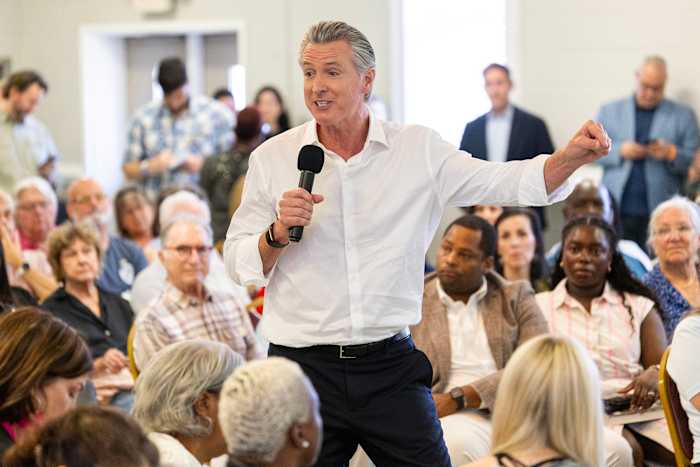
- The Brookland-Lakeview Empowerment Center: In West Columbia, Newsom addressed an energized crowd of supporters, pairing sharp critiques of the Trump administration with appeals for Democratic solidarity.
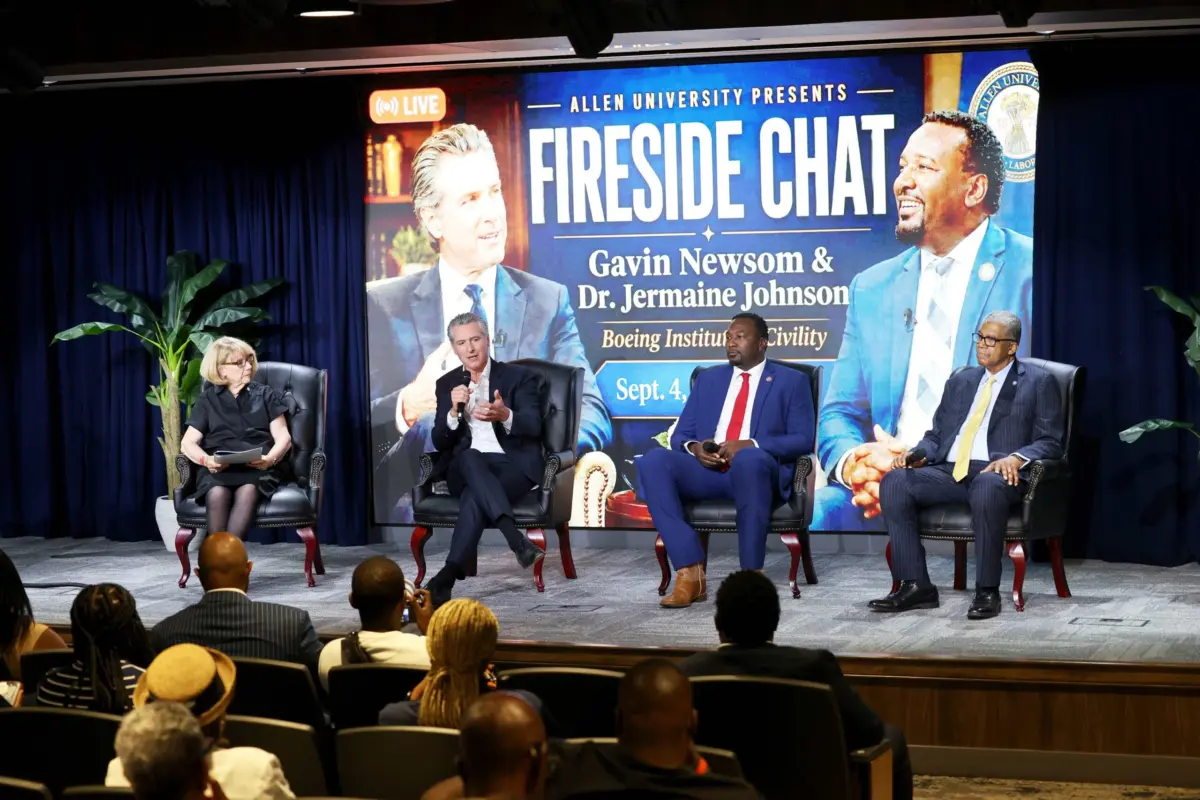
- Allen University: In Columbia, the governor participated in a high-profile "fireside chat," engaging directly with students and community members on economic opportunity, civil rights, and political mobilization.
- Summerville and Aiken: In town halls across Summerville and Aiken, voters packed community venues, openly discussing Newsom’s national prospects even as party leaders officially urged a focus on upcoming midterm elections.
The trip concluded on Saturday with two high-profile stops in North Carolina, cementing a comprehensive tour of the Deep South designed to test his national appeal outside of traditional progressive strongholds.

Supporting Context & Metrics: The California Paradox
To understand Newsom’s path forward, one must confront the paradox of California itself. It is simultaneously an economic juggernaut and a primary political vulnerability—a dynamic that has historically plagued West Coast contenders seeking the presidency.
The Historical Precedent of California Candidates
In the nearly fifty years since former California Governor Ronald Reagan secured the presidency in 1980, the Golden State has produced a long roster of high-profile White House hopefuls who ultimately stumbled on the national stage. From former Governors Pete Wilson and Jerry Brown to billionaire businessman Tom Steyer and, most recently, Vice President Kamala Harris, California executives and leaders have frequently struggled to project broad appeal across the American heartland and the industrial Rust Belt.
Historical California White House Contenders (Post-1980):
---------------------------------------------------------
• Ronald Reagan (Successful - 1980, 1984)
• Pete Wilson (Unsuccessful Primary Bids)
• Jerry Brown (Unsuccessful Primary Bids - 1976, 1992)
• Tom Steyer (Unsuccessful Primary Bid - 2020)
• Kamala Harris (Unsuccessful Primary Bid - 2020)
Newsom’s prospective primary competitors—such as Michigan’s Pete Buttigieg and Pennsylvania’s Governor Josh Shapiro—hail directly from crucial battleground states. Their geographic roots allow them to make immediate, credible arguments regarding their electability among moderate and independent voters in swing regions. By contrast, Newsom bears the weight of an outsized state identity that is frequently weaponized by political opponents.
Economic and Legislative Realities
Despite conservative narratives painting the state as an economic outlier in decline, California remains an economic titan:

- Global Economic Standing: California stands as the nation’s most populous state and boasts the world’s fourth-largest economy.
- Demographic Resilience: Following a pandemic-era population dip, California’s population has returned to a growth trajectory.
- Progressive Legislative Wins: The policies that draw the sharpest rebukes from conservative critics are often the very credentials that endear Newsom to the progressive Democratic base. Under his leadership, California has enacted:
- Expanded healthcare coverage regardless of immigration status.
- Universal free school meals and expanded paid sick leave.
- A $20 minimum wage for fast-food workers.
- Aggressive climate change legislation and strict gun control laws.
- Broad reproductive rights protections, including safe harbors for women traveling from out-of-state for abortion care.
- A state-mandated moratorium on the death penalty.
While these achievements consolidate his standing with the left wing of the party, critics argue that high taxation and regulatory burdens have driven businesses and residents toward lower-cost states, providing ammunition for his political detractors.
Official Statements and Perspectives
Governor Gavin Newsom on His National Future
In an exclusive interview with The Associated Press during his southern tour, Newsom openly addressed the swirling speculation regarding a 2028 White House campaign, leaving the door open to an announcement before the end of the year.
"It’s the right question. Honestly, I don’t know," Newsom told reporters when asked about his timeline. "I think this thing’s happening. I mean, you already feel it, right? There are folks out here—they’re saying they’re already starting to interview state directors. So this thing is going to happen very, very quickly."
Addressing the persistent narrative surrounding his home state, Newsom acknowledged that "California derangement syndrome" is a tangible hurdle, but framed it as an issue of narrative control rather than policy failure. He argued that the California story has predominantly been told on the national stage by political opponents rather than leaders who can point to tangible governance results.

"In a Democratic primary, in particular—we’ve got the receipts, things that the party is arguing for, we’ve delivered across a spectrum of issues," Newsom asserted.
Contrasting Perspectives from the Ground
Voters and local political figures across South Carolina offered a nuanced look at how the California governor is perceived outside his home territory.
- Kirk Bovill (65, Summerville, S.C.): A semi-retired actor and former Los Angeles resident, Bovill noted Newsom’s distinct strengths and weaknesses. "He has strong potential," Bovill said. "The question is how he’s perceived outside of California. People might think he’s too Hollywood… But the one thing he does very well: He doesn’t have a problem standing up to Trump. He’s not intimidated."
- Vera DeVito (78, Summerville, S.C.): Expressing cautious skepticism, DeVito admitted she knew little about Newsom’s policy record beyond his state origin. "It’s going to be hard for him to appeal to the whole country," she observed. "Everybody thinks California is different—especially in the South. They’re not crazy about California." She later added with a chuckle regarding his made-for-TV persona: "He’s a little slick—not a lot of meat. But he’s good looking, which helps."
- CJ Westfall (Dorchester County Republican Chairman): Representing the opposition, Westfall pulled no punches during a protest outside one of Newsom’s events. Labeling him "a far-left extreme Democrat," Westfall stood alongside demonstrators waving signs that read "Wrong Coast" and "Clean Up Your State First," warning, "We don’t want Gavin Newsom to California our South Carolina."
Future Outlook: The Road to 2028
As the American political landscape navigates the immediate challenges of the midterm elections, the shadow primary for the 2028 Democratic presidential nomination is effectively underway. Gavin Newsom’s aggressive outreach to early-voting states like South Carolina demonstrates that he is positioning himself as a formidable contender, willing to run headfirst into conservative territory rather than shy away from his progressive record.
Strategic Challenges Ahead
- Overcoming the "Wrong Coast" Narrative: Newsom must prove he can transcend regional stereotypes. His extensive media footprint—including frequent appearances on Fox News, a high-profile debate against Florida Governor Ron DeSantis, and his role as a top surrogate for national campaigns—proves he is comfortable in hostile media environments. However, convincing moderate voters in the industrial Midwest and the Sun Belt will require careful message calibration.
- Balancing the Base vs. General Election Appeal: While progressive policies on climate, healthcare, and labor play exceptionally well within a Democratic primary electorate, Newsom will need to articulate a broader economic vision that appeals to working-class families outside of coastal metropolitan areas.
- The Anti-Trump Counteroffensive: Newsom’s primary tactical weapon remains his willingness to aggressively confront Donald Trump. By highlighting issues such as Trump’s business dealings, federal immigration actions in major cities, and maneuvers around mail-in voting, Newsom is cementing his role as an unapologetic national fighter for the Democratic party.
Whether Newsom’s calculated gamble pays off will depend heavily on his ability to rewrite the national narrative surrounding California. If he can successfully reframe his home state from a conservative talking point into a laboratory of progressive accomplishment, the California governor just might break the decades-long curse of West Coast presidential hopefuls and emerge as the standard-bearer for the Democratic Party in 2028.

0 Comments