

Executive Overview
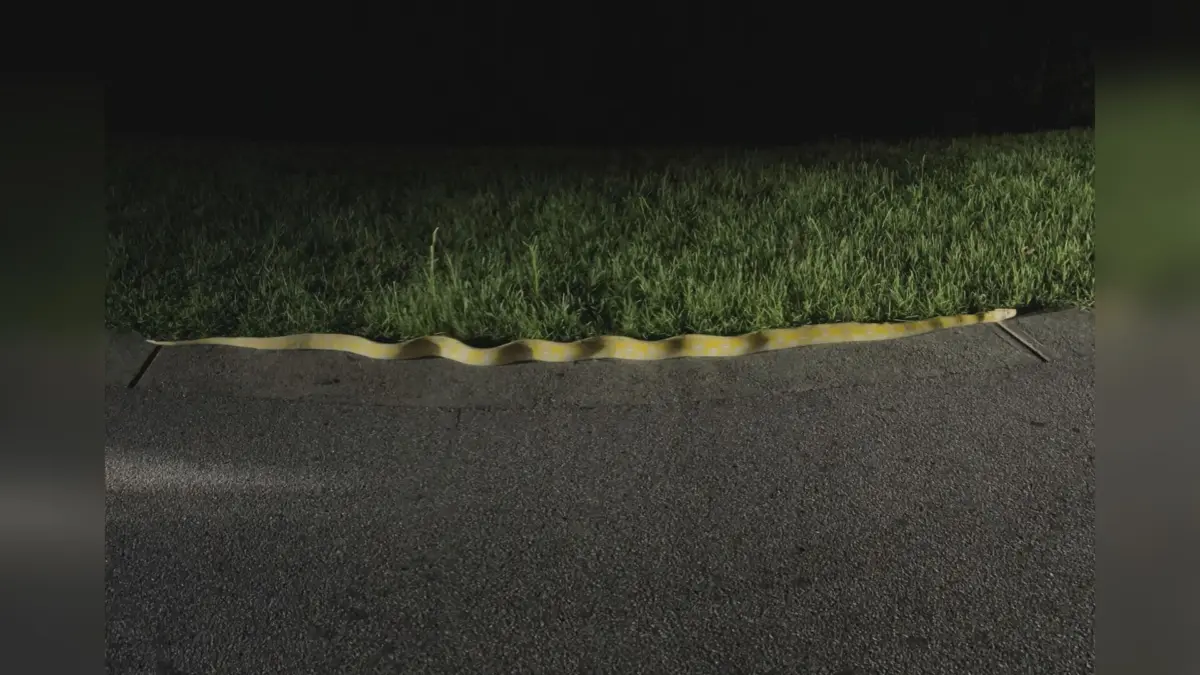
On the evening of Monday, August 17, 2026, a routine drive through the quiet, master-planned community of Market Common in Myrtle Beach, South Carolina, transformed into an encounter with the growing crisis of exotic pet abandonment. A local resident spotted a 10-foot python resting on a public roadway. The discovery, which prompted an immediate response from a specialized local wildlife removal service, has reignited critical discussions regarding the regulation of non-native reptiles, the ecological boundaries of the American Southeast, and the ethical responsibilities of exotic pet ownership.
While the incident concluded without injury to the public or the animal, the presence of a massive, tropical constrictor in a heavily populated suburban neighborhood highlights a persistent issue facing municipal animal control and wildlife agencies across the United States. Unlike South Florida, where invasive Burmese pythons (Python bivittatus) have established breeding populations and devastated native ecosystems, South Carolina’s temperate winter climate serves as a natural barrier to permanent colonization.
However, experts warn that the release of these animals—whether accidental or deliberate—presents immediate localized safety risks and subjects domesticated, cold-blooded pets to slow, agonizing deaths as seasonal temperatures drop.
Detailed Chronology
[Monday, August 17, 2026 - Timeline of Events]

9:00 PM: Tracy Stout spots a large object on the road in Market Common.
   │
9:05 PM: Stout executes a U-turn, identifies the object as a 10-foot python, and contacts "The Snake Chaser."
   │
9:10 PM - 9:30 PM: Stout remains with the snake to monitor its position; the reptile exhibits calm behavior.
   │
9:35 PM: Two technicians from "The Snake Chaser" arrive at the scene.
   │
9:40 PM: Technicians secure the python in a heavy-duty container after a brief struggle.
   │
Post-Incident: The python is transported to a holding facility for health assessments and rehoming coordination.
The incident began at approximately 9:00 p.m. on Monday, August 17, 2026, as Myrtle Beach resident Tracy Stout was driving home through the Market Common neighborhood. Market Common, built on the grounds of the former Myrtle Beach Air Force Base, is a densely populated urban-suburban hub characterized by parks, retail centers, and close-knit residential subdivisions—an environment highly unusual for large apex predators.
As Stout navigated the neighborhood streets, her headlights illuminated a massive, elongated shape resting on the asphalt. Initial skepticism quickly turned to concern.
"When I first saw it, I was like, ‘was that a snake?’" Stout recalled. "Because I’ve seen plenty of snakes around here, but nothing like that, so that’s why I pulled a U-turn because it was big; he was huge."
Recognizing that the animal was not a native species, such as a black rat snake or an eastern kingsnake, Stout suspected it was an escaped or abandoned pet. Rather than contacting local emergency services, which are often unequipped to handle large exotic reptiles without resorting to lethal force, she contacted "The Snake Chaser," a professional regional wildlife removal and reptile rescue service.
The dispatcher instructed Stout to maintain visual contact with the python from a safe distance to ensure it did not slip into the nearby storm drains or thick underbrush before handlers arrived. For nearly half an hour, Stout watched the python, noting that the animal remained remarkably calm and stationary on the warm asphalt, which likely served as a heat source for the ectothermic reptile.
Within thirty minutes, two specialized technicians dispatched by lead wrangler James Sargent arrived on the scene.
"He sent two of his workers, and the snake was really mellow up until that point, until they went to grab him, which I’m sure anything would be," Stout noted.
When the technicians attempted to capture the constrictor, its passive demeanor shifted to defensive posturing. Using professional handling tools and physical restraint techniques, the team safely secured the 10-foot python in a heavy-duty transport container. The animal was extracted from the residential area without injury to the handlers, bystanders, or the snake itself. It was subsequently transferred to a secure facility for health monitoring and eventual rehoming.
Supporting Context & Metrics
The Thermal Threshold: Why South Carolina is Not Florida
The discovery of a 10-foot python in Horry County naturally prompts comparisons to the ecological disaster unfolding in the Florida Everglades. In southern Florida, escaped and released Burmese pythons have decimated populations of native mammals, birds, and even alligators. However, wildlife biologists emphasize that South Carolina’s distinct seasonal climate prevents a similar ecological takeover.
+-----------------------------------------------------------------------------+
|               CLIMATIC COMPARISON & PYTHON SURVIVABILITY                    |
+-----------------------------------------------------------------------------+
|  Metric / Factor      | South Florida (Everglades)  | Coastal South Carolina|
+-----------------------+-----------------------------+-----------------------+
|  Climate Type         | Subtropical / Tropical      | Humid Subtropical     |
+-----------------------+-----------------------------+-----------------------+
|  Average Winter Lows  | 50°F to 60°F (10°C to 15°C) | 35°F to 45°F (1°C to 7°C)
+-----------------------+-----------------------------+-----------------------+
|  Freezing Events      | Extremely Rare              | Annual Occurrence     |
+-----------------------+-----------------------------+-----------------------+
|  Establishment Risk   | High (Established Breeding) | Low to Zero (Lethal)  |
+-----------------------+-----------------------------+-----------------------+
|  Primary Threat       | Long-term Ecological Ruin   | Seasonal Animal Cruelty|
+-----------------------+-----------------------------+-----------------------+
Pythons are ectothermic (cold-blooded) organisms native to the tropical regions of Southeast Asia. They rely entirely on external environmental temperatures to regulate their metabolic processes, including digestion and immune function.
- The Digestional Threshold: When ambient temperatures drop below 60°F (15.5°C), a python’s digestive system slows dramatically. If a large meal remains undigested in its stomach during a cold snap, the food can rot inside the animal, leading to systemic infection and death.
- The Freezing Point: Prolonged exposure to temperatures below 50°F (10°C), or brief exposure to freezing temperatures (32°F / 0°C), induces severe respiratory infections, neurological damage, and ultimately death.
While South Carolina’s hot, humid summers provide a temporary oasis for escaped tropical reptiles, the state’s winter temperatures regularly drop below freezing. Consequently, any released python faces a terminal winter. While this prevents the species from establishing self-sustaining breeding populations in the Palmetto State, it highlights a cruel reality: dumping an exotic reptile in South Carolina is a slow, guaranteed death sentence for the animal.
The Exotic Pet Trap: From Hatchling to Liability
The presence of a 10-foot python in a suburban neighborhood points directly to the systemic issues within the exotic pet trade. Species such as Burmese pythons, reticulated pythons, and African rock pythons are often sold as docile, brightly colored hatchlings measuring less than two feet in length.
        [ Growth Trajectory of Large Constrictors in Captivity ]

  Year 1:  Hatchling (18 - 24 inches) -> Easily housed in standard terrariums.

  Year 3:  Sub-Adult (5 - 7 feet)     -> Requires custom enclosures; rising food costs.

  Year 5+: Adult (10 - 15+ feet)      -> Requires multi-person handling; high liability;
                                         frequently abandoned due to size.
Many buyers are unprepared for the rapid growth rate, long lifespan (often exceeding 20 to 25 years), and substantial dietary demands of these animals. An adult python requires large prey, such as rabbits or chickens, and custom-built, secure enclosures that can cost thousands of dollars.
When a snake reaches a size where it can no longer be safely handled by a single person, unprepared owners often find themselves unable to sell or surrender the animal, as reputable rescues are frequently at maximum capacity. This dynamic leads to "convenience dumping"—releasing the animal into local woods, parks, or neighborhoods in the hope that it will survive or be found by someone else.
Official Statements
The Rescue Perspective
James Sargent, lead technician and owner of "The Snake Chaser," emphasized the rarity of encountering a specimen of this size in Horry County, despite a steady volume of calls involving escaped exotic reptiles.
"We’ve had several calls over the years of pythons and boas, but nothing ever that big. So, it was surprising to see one actually that big. Most people exaggerate, but that woman was right; it was over 10 foot."
— James Sargent, Lead Technician, The Snake Chaser
Sargent also addressed the ethical and environmental implications of the capture, pointing out the absolute certainty of the animal’s demise had it remained in the wild through the autumn.
"They can’t do it here; they already proved they would die over the winter, so we don’t have to worry about them becoming invasive in our area, but it’s still not good to be dumping animals out so they can die during the wintertime, so it’s all around not good."
— James Sargent
The Eyewitness Perspective
For Tracy Stout, the encounter was a mixture of shock and empathy for an animal that was clearly out of its depth in a coastal South Carolina suburb.
"It’s a domesticated pet, I guess, in their eyes, and either it got away on them, and they didn’t mean for it to get out, or it got too big for them to handle which, when I looked at him, I thought I’m not attempting to do anything with him. Which isn’t good for the snake or for here because Florida has that issue."
— Tracy Stout, Market Common Resident
Legal Framework & Future Outlook
South Carolina Wildlife Legislation
The release of non-native wildlife is heavily regulated under South Carolina state law. The South Carolina Department of Natural Resources (SCDNR) maintains strict prohibitions against the introduction of non-native species into local ecosystems.
Under South Carolina Code of Laws Title 50 (Fish, Game, and Watercraft), it is unlawful to intentionally release, place, or cause to be released any non-native wildlife species into the wild within the state. Violations of these statutes can result in misdemeanor charges, carrying significant fines, court costs, and potential jail time. Additionally, the owner could be held civilly liable for any property damage, veterinary bills, or personal injuries caused by an escaped or abandoned animal.
Despite these laws, enforcement remains a significant challenge. Because reptiles are not routinely microchipped or registered in the same manner as dogs or cats, tracing an abandoned snake back to its owner is nearly impossible unless the owner voluntarily steps forward or is reported by someone with direct knowledge of the pet’s existence.
+-----------------------------------------------------------------------------+
|                  REGULATORY PROFILE: SOUTH CAROLINA                         |
+-----------------------------------------------------------------------------+
|  Governing Agency:  South Carolina Department of Natural Resources (SCDNR)  |
|                                                                             |
|  Primary Statute:   SC Code of Laws Title 50                                |
|                                                                             |
|  Key Regulations:                                                           |
|    - Unlawful to release non-native wildlife into the wild.                 |
|    - Restricted importation permits required for designated exotic species. |
|    - Local municipal ordinances may impose stricter bans on large constric- |
|      tors within city limits.                                               |
|                                                                             |
|  Enforcement Gaps:  Lack of mandatory microchipping, registration, or       |
|                     permit tracking for common retail reptile species.      |
+-----------------------------------------------------------------------------+
The Rehoming Process and Public Education
The 10-foot python captured in Market Common will not be euthanized. According to "The Snake Chaser" team, because the animal is a domesticated captive-bred specimen showing no signs of aggressive behavior, it will be transferred to a licensed exotic reptile sanctuary or an educational facility. These institutions utilize large, non-native constrictors to educate the public about the responsibilities of exotic pet ownership and the ecological impacts of invasive species.
To mitigate future incidents, wildlife advocates and herpetological societies recommend several preventative measures:
- Exotic Pet Amnesty Days: Modeled after successful programs in Florida, these events allow pet owners to surrender unwanted exotic animals to qualified rescues and state agencies without penalty, questions, or fees.
- Mandatory Microchipping: Implementing regulations requiring microchips for any reptile capable of exceeding eight feet in length would establish a chain of custody, discouraging abandonment and aiding in the return of legitimately escaped pets.
- Point-of-Sale Education: Requiring pet retailers to provide certified information packets detailing the maximum adult size, dietary costs, and housing requirements of large reptile species before a purchase can be finalized.
The quiet streets of Market Common have returned to normal, but the brief appearance of a tropical giant serves as a vivid reminder of the intersection between human hobby, animal welfare, and the boundaries of local ecosystems.

0 Comments