
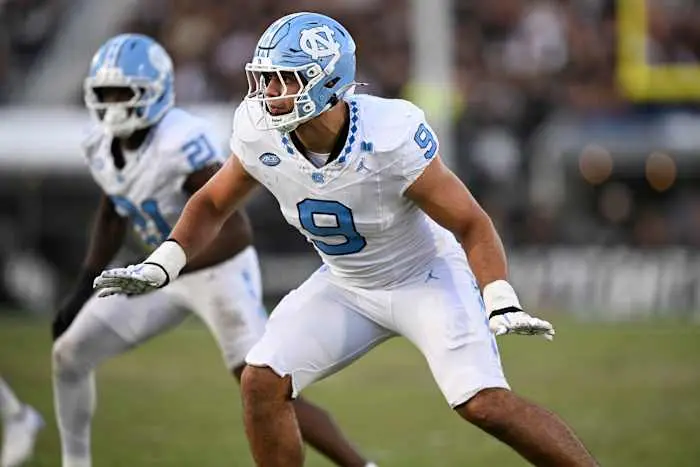

WASHINGTON — When the North Carolina Tar Heels kick off their college football season against Texas Christian University in a high-profile international matchup in Dublin, they will not merely be carrying the pride of Chapel Hill onto the global stage. They will also step onto the turf as members of an increasingly exclusive and controversial club: public universities leaning directly on taxpayer funding to subsidize their athletic juggernauts.
While the state funds are not ostensibly earmarked to write checks directly to star quarterbacks or elite point guards, their destination is clear. By underwriting multi-million-dollar athletic facilities, servicing stadium debts, and absorbing administrative overhead, state legislatures across the country are effectively liberating internal university treasuries. This frees up vital capital that schools can immediately pivot toward player compensation, name, image, and likeness (NIL) collectives, and the escalating operational costs of modern collegiate competition.
This quiet convergence of state governance and big-time college athletics marks a profound evolutionary shift. For decades, the foundational myth of American collegiate sports was self-sustainability—the ideal that football and men’s basketball revenues would fund the broader ecosystem of campus sports without drawing from public coffers. Today, that financial model is fracturing under the weight of landmark legal settlements, conference realignments, and an unprecedented spending race.
As states like North Carolina, Wisconsin, Louisiana, and Connecticut break historical taboos to route tax dollars and creative tax credits toward campus sports, policy experts, fiscal watchdogs, and economists are raising urgent alarms. Rather than solving the structural budget deficits plaguing athletic departments, critics warn that public subsidization risks pouring jet fuel onto an already out-of-control financial fire.
Executive Overview: The Public Subsidy Shift
The financial architecture of NCAA Division I athletics is undergoing its most volatile period since the association’s inception. Driven by a cascade of antitrust lawsuits, federal court rulings, and shifting legislative landscapes, colleges and universities are facing a historic mandate: compensate their athletes directly or lose the ability to attract elite talent.
Last year, a landmark legal settlement formally cracked open the door for higher education institutions to directly pay athletes a baseline sum of roughly $20.5 million annually, layered on top of traditional scholarships and third-party NIL agreements. For the current school year, that cap has escalated to $21.3 million per institution, with automatic escalators programmed for subsequent years.
For cash-strapped mid-major programs and even storied Power Four athletic departments grappling with inflated travel costs, soaring coaches’ salaries, and expensive facility footprints, these figures represent a monumental fiscal hurdle. Over the past four years alone, an Associated Press analysis of the Knight-Newhouse College Athletics Database reveals that athletic operating expenses at public Division I institutions have surged by nearly a third. This staggering growth has comprehensively outpaced revenue generation, leaving a wake of widening departmental deficits.
Enter state legislatures. Facing fierce lobbying from alumni bases, athletic boosters, and university administrators who argue that a struggling football team carries severe economic and cultural penalties for the state, lawmakers are stepping in.
- North Carolina has expanded its sports wagering tax distributions to incorporate its two largest universities, Chapel Hill and N.C. State, projected to net them millions.
- Wisconsin lawmakers successfully approved a $15 million allocation directed at athletic debt and facility costs.
- Louisiana and Connecticut have introduced targeted tax hikes and tax-credit voucher frameworks designed to funnel state-derived capital directly into athletic pipelines.
Far from being isolated incidents, sports business analysts view these maneuvers as the opening salvos of an emerging, high-stakes arms race. Once one state legislature elects to subsidize its flagship athletic programs, competitive pressures quickly ripple across state lines, leaving neighboring lawmakers vulnerable to accusations that they are placing their local universities at an insurmountable disadvantage.
Detailed Chronology: From Amateurism to the Statehouse
To understand how public money found its way into the machinery of Division I athletics, it is necessary to trace the legal and institutional erosion of the amateurism model over the past half-decade.
2021: The NIL Dam Breaks
For nearly a century, NCAA regulations strictly prohibited student-athletes from monetizing their athletic notoriety, branding, or market value. That foundational pillar crumbled in July 2021 under intense judicial scrutiny and preemptive state legislation. Prompted by the Supreme Court’s unanimous NCAA v. Alston ruling—which slammed the NCAA’s amateurism defense under antitrust laws—the association reluctantly permitted athletes to enter into private endorsement and NIL agreements.
2024–2025: Legal Settlements and Direct Institutional Pay
The permissive NIL environment quickly devolved into an unregulated market dominated by deep-pocketed booster collectives. Recognizing that the status quo was legally untenable, the NCAA and major conference commissioners negotiated a sweeping antitrust settlement.
This settlement established a monumental precedent: universities could begin paying players directly out of their own operating budgets, starting at a baseline cap of $20.5 million. The ruling transformed college athletic departments overnight from traditional extracurricular programs into corporate enterprises managing professional-grade payrolls.
Summer 2025: Legislative Intervention Takes Root
Recognizing that compliance with the new financial reality would devastate internal academic and athletic budgets, state capitals began taking legislative matters into their own hands.
- North Carolina (July 2025): Capitalizing on the rollout of online sports wagering, the state legislature amended its state budget to include Chapel Hill and N.C. State in sports betting tax distributions. The revision is projected to deliver $3 million to each school immediately, scaling up to $5.8 million in subsequent cycles.
- Wisconsin (Fall 2025): The state approved a direct allocation of $14.6 million for athletic facility debt service at the University of Wisconsin-Madison, alongside $200,000 distributions for the Milwaukee and Green Bay campuses.
- Louisiana & Connecticut: Louisiana mirrored North Carolina’s strategy by hiking sports wagering taxes to distribute $2.2 million to each of its 11 public universities housing Division I football programs. Meanwhile, Connecticut authorized UConn to issue state tax credit vouchers for half the value of private donations and sponsorships, hauling in $1.7 million in its first four months.
Supporting Context & Metrics: The Numbers Behind the Arms Race
The financial pressures driving universities toward state capitals are underscored by hard data. According to financial disclosures and independent databases, the economics of college sports are operating on an unsustainable trajectory.
+-----------------------------------------------------------------+
|   Key Financial Metrics in Public Division I Athletics          |
+-----------------------------------------------------------------+
| • Operating Expense Growth (Past 4 Years): Up nearly 33%          |
| • Initial Direct Athlete Pay Cap (House Settlement): $20.5M     |
| • Current School Year Athlete Pay Cap: $21.3M                   |
| • Proposed Federal Cap (Protect College Sports Act): Up to $27.5M|
| • Total Potential Compensation Ceiling: Approaching $50M        |
+-----------------------------------------------------------------+
The Federal Catalyst: The Protect College Sports Act
Even as states scramble to patch budget holes, federal lawmakers are weighing legislation that could drive spending to even more dizzying heights. The pending Protect College Sports Act in the U.S. Senate—frequently promoted as a regulatory measure designed to introduce guardrails to college sports—contains provisions that could inadvertently accelerate spending.
The latest iteration of the bill would empower institutions to pay up to an additional $27.5 million annually specifically for roster retention. When combined with baseline direct payments, this could push an individual athletic department’s annual direct player compensation cap close to the $50 million threshold.
While proponents argue that a higher institutional cap might reduce the wild-west nature of third-party NIL collectives, critics point out a glaring omission in the text: the bill contains no enforcement mechanisms or restrictions limiting state appropriations or institutional subsidies.
"Without some restraint on the underlying spending competition, additional public funding could simply finance the next stage of the arms race," warns Daniel McIntosh, faculty director of the sports business program at Arizona State University.
Official Statements & Stakeholder Perspectives
The debate over public subsidization has exposed deep philosophical fractures among legislators, athletic directors, and academic reformers. Proponents argue that state intervention is an economic necessity, while critics decry the diversion of public funds away from core educational missions.
The Legislative Defense: Economic and Cultural Vitality
In Wisconsin, Republican state Representative Alex Dallman emerged as a vocal defender of state assistance after sponsoring the legislation that funneled millions into facility debt relief for the University of Wisconsin-Madison.
Dallman maintains a pragmatic view of the intersection between state success and athletic prominence:
"None of that state funds technically would go toward student athletes. But by covering facility debt, the university can deploy its internal revenues for other things, such as NIL, or just trying to compete. Having a bad football team, having uncompetitive college sports in general, would not be beneficial to our state, both culturally or economically. So we decided as a state we’d help out."
This sentiment is echoed across multiple statehouses. Lawmakers in sports-obsessed regions increasingly view competitive athletic programs as essential marketing tools for state recruitment, tourism, and alumni engagement. From this perspective, a struggling football program is not merely a disappointment for Saturday afternoons; it is an economic drag on the university’s broader brand equity.
The Reformer Critique: Fueling the Fire
Conversely, governance watchdogs and higher-education advocates argue that using taxpayer funds—derived from general citizens or targeted sin taxes like sports wagering—to underwrite billionaire-coach salaries and luxury training facilities is an indefensible misallocation of public trust.
Amy Privette Perko, CEO of the Knight Commission on Intercollegiate Athletics, has repeatedly cautioned that plugging athletic deficits with public capital insulates athletic departments from the economic reality of their own overspending.
"Once one state provides that kind of assistance, schools in competing states can argue that they are being placed at a competitive disadvantage, which could create additional pressure on legislatures to respond," McIntosh reiterates, highlighting the contagious nature of state-level funding initiatives.
As public universities face mounting pressures regarding rising tuition costs, deferred academic building maintenance, and faculty retention, the optics of funneling millions in taxpayer money—either directly or indirectly—into athletics remain deeply controversial.
Future Outlook: Where Does the Line End?
As the college sports landscape braces for the implementation of higher spending caps and further conference consolidation, the trajectory points toward deeper government entanglement in collegiate athletics.
Several critical questions will define the coming years:
- The Domino Effect: Will more state legislatures capitulate to the demands of athletic departments, establishing a permanent baseline of taxpayer-supported subsidies across all major conferences?
- Federal Preemption: Can Congress pass comprehensive antitrust and NIL reform that successfully caps total athletic spending, or will federal intervention merely raise the financial ceiling higher?
- The Academic Backlash: As students and faculty organizations increasingly push back against administrative bloat and athletic prioritization, will public backlash force state lawmakers to scale back their financial commitments?
What remains indisputable is that the traditional boundary separating higher education from big-time sports entertainment has been permanently redrawn. Win or lose on the field, athletic departments are no longer operating as isolated enterprise zones. They are increasingly treated by state governments as vital public infrastructure projects—requiring public capital to survive in a high-stakes, professionalized arena.

0 Comments