

Executive Overview
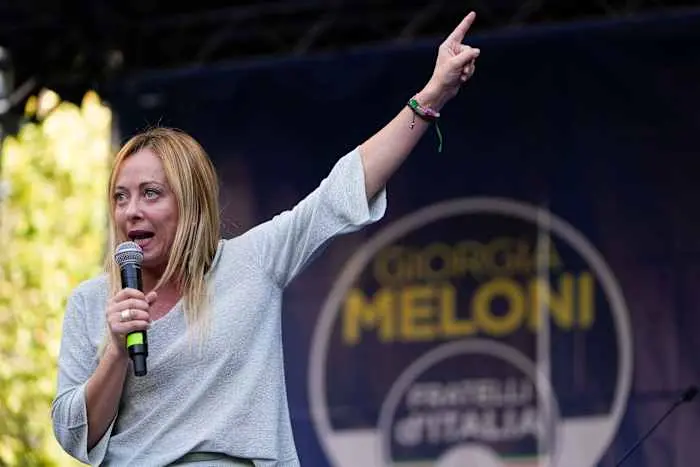
ROME — In a nation where political instability has long been treated as a historical certainty rather than an administrative failure, Italian Prime Minister Giorgia Meloni has achieved what was once considered virtually impossible. Hitting a milestone of 1,413 uninterrupted days in office, Meloni’s conservative administration officially became Italy’s longest-serving unbroken government since the conclusion of the Second World War. By eclipsing the previous post-war record set by the late billionaire media mogul and statesman Silvio Berlusconi between 2001 and 2005, Meloni has fundamentally altered the conversation regarding modern Italian governance.
Yet, this unprecedented period of durability has birthed a profound paradox. Meloni’s survival is no longer attributed to raw political acrobatics or desperate emergency coalitions, but rather to a meticulous, calculated pragmatism. However, as she and her Brothers of Italy party mark this milestone with a massive pre-election rally in the southern economic hub of Bari, a pressing question hangs over the horizon: Is political longevity an inherent testament to transformative success, or is it merely a veneer masking a deficit of deep-seated structural reforms?
When Meloni ascended to the highest office in October 2022 as Italy’s first female prime minister—and the head of the nation’s first government with historical neo-fascist roots—international markets, European institutions, and foreign allies viewed her rise with deep trepidation. Today, she commands formidable international respect, has transformed from a fringe nationalist outsider into an indispensable Western anchor, and stands on the cusp of an electoral cycle due by late 2027. Yet, as she prepares to pitch her record back to the Italian populace, she faces a tightening squeeze: pressure from a disgruntled working class battered by stagnant living costs, and challenges from hard-line elements on her own right flank who accuse her of trading ideological purity for institutional comfort.
Detailed Chronology: From Outsider to the Longest-Haul Premier
The trajectory of Giorgia Meloni’s premiership defies the turbulent history of the Italian Republic, where governments have historically collapsed with clockwork regularity, averaging an administration every roughly 11 months.
The October 2022 Ascent
When Meloni took her oath of office in late 2022, the domestic and international establishments anticipated a swift collision with economic realities and European Union mandates. Leading a right-wing coalition comprising her Brothers of Italy (Fratelli d’Italia), Matteo Salvini’s League, and Silvio Berlusconi’s Forza Italia, Meloni inherited an economy strained by post-pandemic recovery and soaring energy prices following Russia’s full-scale invasion of Ukraine.
Rather than leaning into the disruptive, anti-establishment rhetoric that defined her years in opposition, Meloni executed an immediate pivot. She committed Italy to unwavering support for Kyiv, assured Brussels of her strict adherence to fiscal discipline, and worked tirelessly to soothe anxieties across international financial markets.
Weathering the Storms of 2023–2024
Unlike her predecessors—who frequently fell victim to internal coalition defections, sudden withdrawals of support, and petty parliamentary mutinies—Meloni maintained absolute ironclad control over her majority. While the United Kingdom cycled through prime ministers with dizzying speed and French President Emmanuel Macron navigated chronic legislative paralysis and snap elections, Meloni kept her parliamentary team remarkably intact.
Her diplomatic dexterity became her armor. She forged a pragmatic, transactional rapport with European Commission President Ursula von der Leyen, navigated shifts in Washington with calculated diplomacy, and managed the internal egos of her coalition partners—subduing Salvini’s occasional populist outbursts through sheer executive dominance.
The 2025–2026 Milestones and Record-Breaking Tenure
By April 2025, during a high-stakes visit to the White House to meet with U.S. President Donald Trump, Meloni’s international stature had solidified. By early 2026, her administration crossed the historical threshold of 1,413 days, surpassing Berlusconi’s 2001–2005 record.
Now, with her sights set on achieving a milestone that even Berlusconi failed to secure—an entirely uninterrupted, single-mandate five-year term (avoiding the two-day administrative interruption that plagued Berlusconi’s first term following regional election setbacks)—Meloni stands at the zenith of her political power. Yet, this summit brings its own exposures, as the narrative shifts from how long she can govern to what she has actually built.
Supporting Context & Metrics: The Dual Reality of the Meloni Era
Assessing the legacy of the Meloni administration requires navigating a stark divergence between macroeconomic indicators and the lived realities of ordinary Italian citizens. Supporters and critics look at the exact same data points and draw wildly disparate conclusions.
The Economic and Labor Ledger
The government’s primary defense rests on undeniable numerical improvements in the labor market and public finances. Administration officials point to:
- Job Creation: The addition of over 1.2 million stable jobs since October 2022.
- Unemployment Rates: Overall and youth unemployment figures dropping to historic modern lows, with total unemployment dipping below the 6% threshold.
- Fiscal Discipline: Rigorous management of public debt and budget deficits, preventing punitive actions from European financial watchdogs and earning praise from rating agencies.
- Migration Control: A noticeable, statistically significant decline in unauthorized maritime migrant arrivals, fulfilling a core promise to her nationalist base.
"Duration is not automatically synonymous with results, but these are undeniably important ones," argued Defense Minister Guido Crosetto in an interview with the Associated Press.
The Structural Deficit and Domestic Discontent
Conversely, independent economists, labor leaders, and opposition politicians argue that these metrics conceal deep-seated structural vulnerabilities. Italy continues to grapple with sluggish productivity growth, an acute demographic decline marked by historically low birth rates, and persistent systemic inefficiencies embedded within healthcare, education, and public administration.
Political analyst and pollster Lorenzo Pregliasco underscores this disconnect: "The Meloni government has been certainly stable and long-running, but it hasn’t achieved much in terms of structural reforms."
While Meloni champions her efforts to support wealth creators and boost employment, everyday Italians face the lingering compounding effects of inflation, soaring housing costs, and stagnant real wages. Former Prime Minister Giuseppe Conte, leader of the anti-establishment Five Star Movement, encapsulated the opposition’s sentiment during a rally outside parliament: "The government is celebrating, but Italians are not."
Official Statements and Perspectives
To understand the friction points of modern Italian politics, one must examine the contrasting viewpoints echoing through Rome’s ministries, European capitals, and local piazzas.
-
Defense Minister Guido Crosetto on International Credibility:
"Meloni has reaped a part of what she sowed, because I know few people so determined, so hardworking, so precise, so meticulous, who have sacrificed both their human and private spheres in order to serve the institutions… For this she is now reaping exactly what she deserves in terms of international credibility. She is not reaping the same on the Italian level."
-
International Relations Expert Nathalie Tocci on the Legacy Trap:
"If you have five years in office and not much to show when you go back to voters, it can weigh against you."
-
LUISS University Economics Professor Stefano Manzocchi on Europe’s Perception:
"Italy has somewhat lost its role as Europe’s black sheep."
-
David Del Sarto, a 52-year-old Rome Taxi Driver, on Meloni’s Persona:
"I like Meloni, I like her character because she is authoritative and doesn’t let anyone walk on her."
This public persona—crystallized during her sharp public retort to Donald Trump after he jokingly claimed she had "begged" him for a photo at a G7 summit ("Italy doesn’t beg")—has proven electorally potent. It reassures nationalists that Italy’s sovereignty remains intact while signaling to international partners that Rome remains a reliable, predictable Western ally.
Future Outlook: The Hard-Right Dilemma and the Road to 2027
As Giorgia Meloni looks toward the general elections scheduled for late 2027, her political ecosystem faces a complex evolutionary test.
The Mainstreaming of the European Right
By successfully pairing hardline rhetoric on national identity and border security with unwavering loyalty to NATO, the European Union, and fiscal orthodoxy, Meloni has effectively pioneered a playbook for the modern European hard right. She has demonstrated that nationalist conservative parties can occupy executive power within democratic institutions without provoking immediate systemic or financial crises.
However, this very process of institutional mainstreaming has created a dangerous political vacuum on her right flank.
The Threat from the Hardline Flank
By shedding her most abrasive edges and embracing pragmatic governance, Meloni has alienated purists within the nationalist movement. The emergence of figures like retired army General Roberto Vannacci—who has leveraged his uncompromising stances on immigration, social values, and national identity to launch a rival political movement—poses a tangible threat. Vannacci and similar hard-line critics accuse Meloni of selling out the foundational promises that energized her grassroots base, arguing that she has transformed into an establishment technocrat to appease Brussels and Washington.
If disaffected conservative voters and disillusioned lawmakers defect to these burgeoning right-wing insurgent groups, Meloni’s grand coalition could face severe fragmentation precisely when it needs unity the most.
The Verdict of the Ballot Box
Ultimately, Meloni’s historic longevity will be judged not by the number of days recorded on a calendar, but by whether the average Italian feels tangibly more secure, prosperous, and confident in the nation’s trajectory. Having proved definitively that she can survive in Rome’s treacherous political theater, the final chapter of her premiership will depend entirely on whether she can convince voters that her survival translated into enduring national renewal.

0 Comments