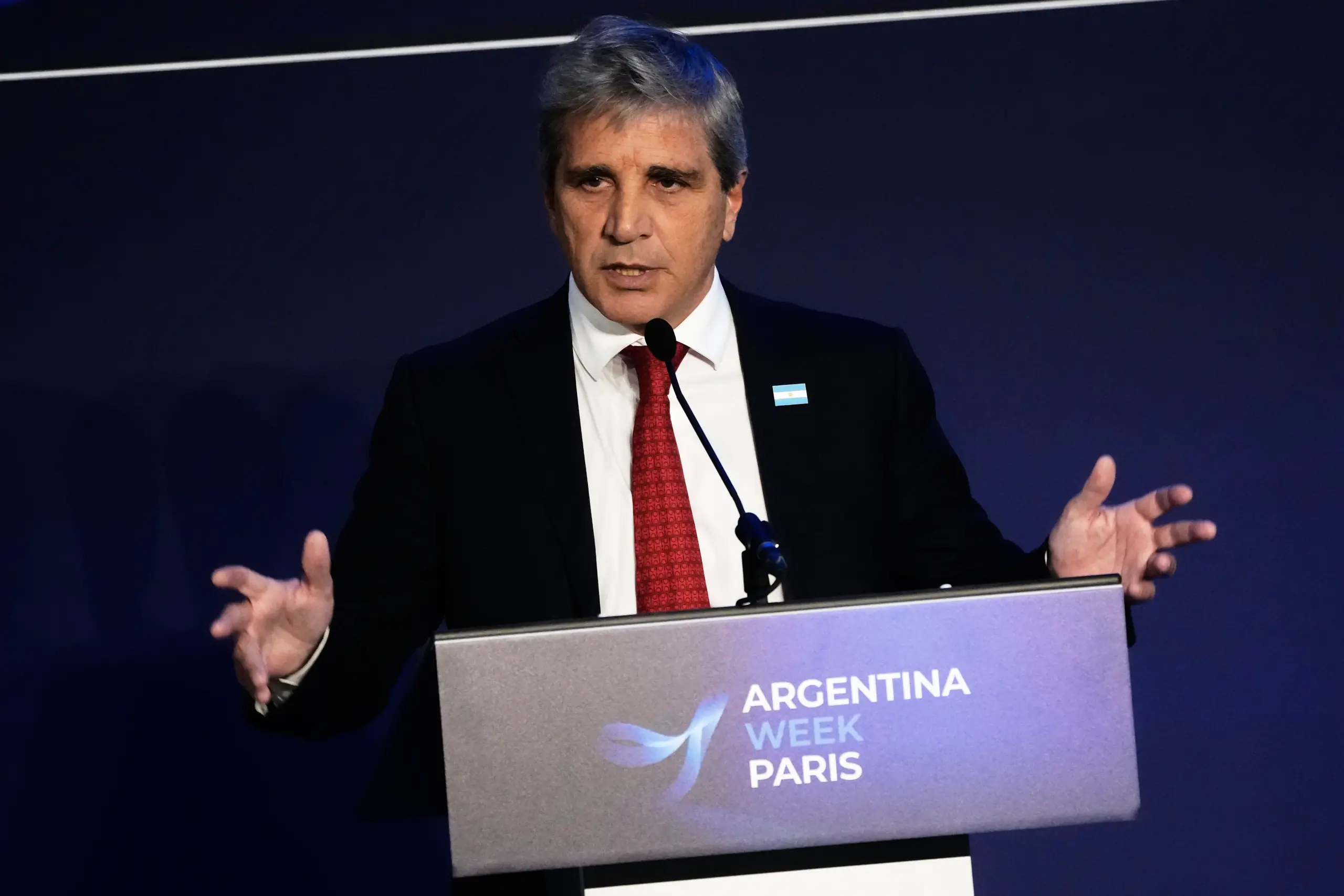
In a move that highlights both the fiscal desperation and the ideological unorthodoxy of his administration, Argentina’s libertarian President Javier Milei has unveiled a controversial "golden passport" program. The initiative, announced by Economy Minister Luis Caputo on October 1, 2026, at the Organisation for Economic Co-operation and Development (OECD) headquarters in Paris, aims to grant full Argentine citizenship to wealthy foreigners in exchange for significant financial contributions or investments in government bonds.
Faced with a looming sovereign debt wall of nearly $25 billion due in 2027, the Milei administration is searching for alternative, non-traditional channels to secure hard currency. By pricing citizenship at a minimum of $350,000 for a direct cash contribution or an $800,000 investment in specialized seven-year sovereign bonds, Buenos Aires hopes to tap into a rapidly growing global market of high-net-worth individuals seeking geopolitical hedges.
This program represents a watershed moment: Argentina is poised to become the first South American G-20 nation to explicitly sell its citizenship. While advising investment consortia estimate the initiative could generate up to $2.5 billion, the policy faces steep hurdles. These range from international regulatory scrutiny and money-laundering concerns raised by global watchdogs to potential diplomatic pushback from nations that currently grant visa-free access to Argentine passport holders.
Detailed Chronology
The genesis of Argentina’s citizenship-by-investment scheme reveals a convergence of elite networking, ideological alignment, and escalating macroeconomic pressure.
[July 2024] Milei attends Sun Valley Conference; tech elites express interest in Argentine citizenship.
       │
       ▼
[April 2025] European Court of Justice rules Malta's golden passport illegal, squeezing global supply.
       │
       ▼
[April 2026] Tech billionaire Peter Thiel establishes a physical foothold in Buenos Aires.
       │
       ▼
[Oct 1, 2026] Economy Minister Luis Caputo officially announces the "Golden Passport" scheme in Paris.
       │
       ▼
[Late 2026] Scheduled launch of applications for the investment migration program.
       │
       ▼
[2027] Argentina faces $25 billion in foreign-currency debt payments; Milei seeks reelection.
The Sun Valley Catalyst (July 2024)
The conceptual foundations of the program were laid during President Milei’s attendance at the exclusive Allen & Company Sun Valley Conference in Idaho. Surrounded by Silicon Valley titans, venture capitalists, and media moguls, Milei pitched his vision of a deregulated, tax-friendly Argentina. According to Economy Minister Caputo, several tech executives expressed a desire to acquire Argentine citizenship as a hedge against rising political polarization and regulatory overreach in the Northern Hemisphere.
The Legislative and Structural Groundwork (2025–2026)
Following the Sun Valley meetings, Milei’s economic team began quiet consultations with elite immigration consultancies and sovereign advisory firms. The domestic environment was simultaneously prepared through the administration’s sweeping deregulation decrees and aggressive fiscal restructuring.
In April 2026, billionaire investor and Palantir co-founder Peter Thiel—a prominent libertarian and advocate of sovereign competition—temporarily relocated his family to Buenos Aires. Public records revealed that an entity linked to Thiel Capital acquired a $13.5 million estate in the exclusive Barrio Parque neighborhood, serving as what industry insiders described as a "proof of concept" for high-profile residency and eventual citizenship.
The Paris Announcement (October 1, 2026)
During "Argentina Week" at the OECD headquarters in Paris, Minister Caputo officially brought the program out of the shadows. Addressing an audience of international investors, Caputo detailed the pricing mechanics and timeline, confirming that the government expects the application portal to go live before the end of 2026.
Supporting Context & Metrics
The Mechanics of the "Golden Passport"
The Argentine program is structured to appeal to two distinct investor profiles: those seeking a direct, transactional path and those willing to lock up capital in exchange for eventual returns.
Pathway Option
Financial Requirement
Structure & Conditions
Direct Contribution
$350,000 (Individual) $500,000 (Family of Four)
Nonrefundable cash payment directly to the Argentine Treasury. Scalable based on dependents.
Sovereign Bond Investment
$800,000 (Base)
Purchase of a newly issued government bond. Must be held for a mandatory 7-year lock-up period.
The Sovereign Debt Wall
The primary driver behind this unconventional policy is Argentina’s precarious balance sheet. The country’s financial isolation—compounded by years of sovereign defaults and volatile inflation—has severely restricted its access to traditional international capital markets.
2027 Maturity Debt Cliff: Argentina must service approximately $25 billion in foreign-currency debt.
Consortium Revenue Projections: Financial advisors estimate the citizenship program could raise $2.5 billion, effectively covering 10% of the upcoming debt wall if target application volumes are met.
The Dollarization Drive: Under Milei’s economic framework, accumulating physical U.S. dollar reserves is vital to stabilizing the domestic economy and paving the way for eventual currency substitution.
Argentine Foreign Debt Wall (2027):  [████████████████████] $25 Billion
Golden Passport Target Revenue:     [██] $2.5 Billion (10% of 2027 Debt)
The Value Proposition of the Argentine Passport
For global elites, the utility of a passport is measured by its "mobility score." Despite Argentina’s domestic economic woes, its passport remains an elite travel document:
Visa-Free Access: Valid for entry into more than 140 countries without a prior visa.
Key Jurisdictions: Includes Europe’s Schengen Area, Latin America, China, and Russia—a rare combination of access that Western passports often lack due to geopolitical friction.
The "Southern Cone" Plan B: Unlike traditional tax havens in the Caribbean, Argentina offers vast geographic scale, agricultural and energy self-sufficiency, and relative isolation from Northern Hemisphere conflicts.
Official Statements
The announcement has sparked intense debate among policymakers, migration experts, and regulatory watchdogs.
Economy Minister Luis Caputo framed the program as a logical extension of Milei’s market-first philosophy, emphasizing security alongside economic opportunity:
"The Argentine passport is highly valued, accepted in more than 140 countries. We are offering a world-class asset to those who believe in our project of freedom. To protect the international standing of Argentine citizenship, our intelligence and financial oversight agencies will implement the most rigorous vetting procedures to verify the identities, clean records, and legitimate funding sources of all applicants."
External experts view the program through the lens of a shifting global market for sovereignty. Kristin Surak, Professor of Political Sociology at the London School of Economics and author of The Golden Passport, noted the unique geopolitical appeal:
"It’s not only the benefits that you get within Argentina. You also get benefits globally in terms of where you can go. For wealthy individuals from countries facing heavy visa restrictions in Asia or the Middle East, Argentina offers an incredibly powerful tool for global mobility and business expansion."
However, industry consultants emphasize that the program’s success depends heavily on the political brand of President Milei. Philippe Amarante, Managing Partner at Henley & Partners, highlighted the symbolic importance of high-profile backers:
"The ‘Peter Thiel in Argentina’ story is a powerful proof of concept. Thiel stands for this idea that independent, wealthy, successful people do have choices around the world. If you provide the right environments, the right habitats, and the right ecosystem, they might choose you. Milei is trying to build that habitat."
Conversely, international regulatory bodies remain deeply skeptical. The Financial Action Task Force (FATF) has repeatedly warned that citizenship-by-investment programs are highly vulnerable to abuse by illicit actors seeking to bypass anti-money laundering (AML) and counter-terrorist financing (CTF) protocols.
Future Outlook
As Argentina prepares to launch the program, its long-term viability remains highly uncertain, balanced between high financial upside and severe geopolitical risks.
The Threat of Visa-Free Revocation
The greatest risk to the Argentine "golden passport" is the potential reaction of foreign governments, particularly the European Union. Historically, when small nations have aggressively sold citizenship, the EU has responded by threatening to revoke visa-free access to the Schengen Zone to prevent "backdoor" entry. If Brussels or other major partners restrict Argentine travelers, the passport’s value proposition will collapse, crippling the program’s fundraising potential.
Domestic Political and Constitutional Hurdles
With Milei facing a crucial reelection campaign in 2027, the program will undoubtedly become a lightning rod for political opposition. Peronist and left-wing factions are likely to frame the policy as a "sale of national sovereignty" to foreign oligarchs, potentially challenging the constitutionality of the program in Argentina’s courts.
Investor Confidence vs. Sovereign Risk
For the program to reach its $2.5 billion target, the Milei administration must convince skeptical millionaires that Argentina is a safe place to park capital. While the $350,000 cash contribution is a sunk cost, the $800,000 bond option requires investors to trust a country with a history of sovereign defaults for seven years.
Ultimately, Argentina’s citizenship-by-investment scheme is a high-stakes experiment in state finance. If successful, it could provide the Milei administration with the critical liquidity needed to avert a debt crisis and cement its libertarian reforms. If it fails, or if it triggers international sanctions, it risks devaluing the Argentine passport for its 46 million born citizens.








0 Comments