
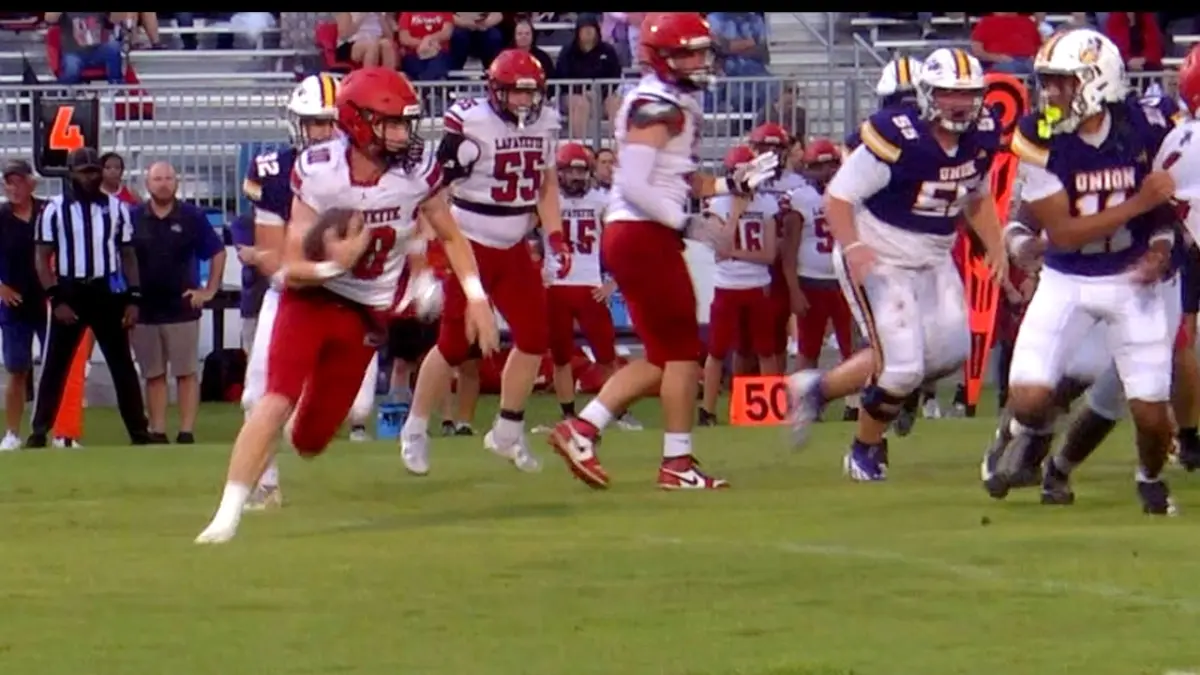

MAYO, Fla. — In the heart of Lafayette County, where the Suwannee River winds and high school football is a community-defining religion, the Lafayette High School Hornets are quietly constructing a new identity. For decades, small-town football programs in North Florida have worn their hearts on their sleeves, often using bitter defeats as loud, public rallying cries. Yet, inside the locker rooms and training facilities of Mayo, a different philosophy has taken root.
Following a devastating conclusion to an otherwise stellar season last year, the Hornets have chosen the path of stoicism. Rather than plastering their failures on bulletin boards or venting to local media, the program is transforming its pain into a quiet, focused energy. Under the steady guidance of Head Coach Marcus Edwards, Lafayette is navigating a massive structural transition—replacing a legendary four-year starting quarterback, shifting their offensive philosophy, and leaning on a culture of grit and earned leadership to return to the postseason conversation.
Executive Overview
The Lafayette Hornets entered the final stretch of their previous campaign looking like an unstoppable force in North Florida class football. Boasting an impressive 9-1 record, the team seemed destined for a deep playoff run, possessing both the offensive firepower and defensive tenacity to challenge for a state title. However, the regular-season finale against Chipley High School shattered those aspirations in dramatic fashion. A shocking 21-20 home defeat not only halted their momentum but left a lingering scar on the program.
Lafayette Hornets: A Program in Transition
┌───────────────────────────────┬────────────────────────────────┐
│ Previous Era (Tywan Era)      │ Current Era (Grit & Ground)    │
├───────────────────────────────┼────────────────────────────────┤
│ • 4-Year Starter at QB        │ • First-Year Starter (Higgy)   │
│ • Pass-Heavy Spread Attack    │ • Run-First, Gritty Identity   │
│ • Highly Dynamic Playmaking   │ • Relying on Line & Physicality│
│ • Out-Talenting Opponents     │ • Grinding Out Tough Yards     │
└───────────────────────────────┴────────────────────────────────┘
Entering the current season, the Hornets face a dual challenge: exorcising the ghosts of last year’s collapse while replacing Tywan Williamson, a four-year starter at quarterback whose dynamic athleticism often masked structural deficiencies. Stepping into the spotlight is Tucker "Higgy" Higginbotham, a first-year starter whose calm demeanor contrasts sharply with his predecessor’s explosive style.
To ease Higginbotham’s transition, Coach Edwards is pivoting the offense toward a physical, run-heavy scheme spearheaded by star running back Trevor Byrd and anchored by a young but massive offensive line. Despite an opening-season 21-7 loss to Union County in the Sunshine State Athletic Association (SSAA) Atlantic opener, the coaching staff and player leadership remain remarkably poised as they prepare for their highly anticipated home opener against Maclay High School.
Detailed Chronology
The Anatomy of a Heartbreak
To understand the current psychological state of the Lafayette football program, one must look back to the final Friday night of the previous regular season. The Hornets had systematically dismantled nine of their ten opponents, displaying a brand of football that was as flashy as it was effective. When Chipley traveled to Mayo, few anticipated a defensive slugfest, let alone an upset.
The 21-20 loss was a masterclass in missed opportunities for the Hornets. Turnovers, untimely penalties, and a failure to execute in the red zone allowed Chipley to escape with a one-point victory, leaving the Lafayette players and coaching staff in a state of profound disbelief.
"The Chipley game last year was kind of one of the hardest ones to swallow," Coach Marcus Edwards admitted, reflecting on the quiet shock that enveloped the locker room that night.
Instead of letting the loss fracture the team’s culture, Edwards and his staff chose to treat the defeat as a silent, internal lesson. There were no dramatic speeches, no public vows of revenge. The coaching staff deliberately avoided turning Chipley into a "boogeyman," choosing instead to focus on internal accountability.
The Offseason of Reinvention
As winter turned to spring, the reality of graduation set in. The departure of Tywan Williamson left a massive void at the quarterback position. Williamson had been the focal point of the Hornets’ offense for nearly half a decade, a player capable of turning broken plays into touchdowns through sheer athletic intuition.
Key Offseason Transitions:
1. Graduation of 4-Year Starting QB Tywan Williamson
2. Installation of Tucker Higginbotham under center
3. Re-engineering of the offensive line around Jack Pearson
4. Elevation of Trevor Byrd to primary offensive centerpiece
Throughout the grueling summer workout schedule, the leadership mantle was passed to a new core of players. Workouts became defined by physical conditioning and the development of a more robust running game. Players like Ryland Wine and Lane O’Steen emerged as tone-setters in the weight room, pushing their teammates through grueling heat to build the stamina required for a more physical brand of football.
The Season Opener and the Road Ahead
The first true test of the post-Williamson era came in the SSAA Atlantic season opener against a highly physical Union County squad. The game exposed the predictable growing pains of a young team adjusting to a new offensive system. Lafayette struggled to find its rhythm early, ultimately falling 21-7.
While the loss was disappointing, the internal reaction in Mayo was vastly different from the panic that might grip other fanbases. The Hornets viewed the contest as a critical diagnostic tool, highlighting areas of necessary improvement upfront before they embark on their home schedule, beginning with a crucial matchup against Maclay.
Supporting Context & Metrics
The Tactical Shift: From Spread to Ground-and-Pound
Under Tywan Williamson, Lafayette operated a spread system that capitalized on spatial advantages and individual matchups. With Tucker Higginbotham taking the snaps, Coach Edwards has recognized the need for a tactical evolution.
"Losing a guy like Tywan Williamson at quarterback, he covered some things up," Edwards explained. "I think for a team, we have to be a better all-around team… I think we’ll rely on the run a little bit more than we did in the previous year."
This shift places an immense responsibility on the shoulders of running back Trevor Byrd and the offensive line. Byrd, described by teammates and coaches alike as a "hard-nosed, gritty" runner, possesses the ideal physical profile to anchor a ball-control offense. Rather than relying on east-west speed, Byrd excels at initiating contact, falling forward, and wearing down opposing defensive fronts over four quarters.
Lafayette Offensive Metrics & Tactical Comparison
┌──────────────────────────────┬──────────────────────────────┐
│ 2023 Offensive Profile       │ 2024 Projected Profile       │
├──────────────────────────────┼──────────────────────────────┤
│ • Pass Play Percentage: 55%  │ • Pass Play Percentage: 35%  │
│ • Run Play Percentage: 45%   │ • Run Play Percentage: 65%   │
│ • Tempo: Ultra-Fast          │ • Tempo: Controlled, Physical│
│ • Key Metric: Yards Per Play │ • Key Metric: Time of Poss.  │
└──────────────────────────────┴──────────────────────────────┘
The Prestige of the Numbers: Edwards’ Captaincy System
One of the most unique aspects of the Lafayette program is how leadership is recognized and rewarded. Coach Edwards does not hold traditional captaincy votes. Instead, leadership is earned through the allocation of specific jersey numbers, a tradition that has become highly prestigious within the locker room.
The Lafayette Jersey Captaincy Hierarchy:
• Number 1: The Ultimate Leader (Typically the "Go-To" Guy) -> Held by Trevor Byrd
• Number 2: The Defensive/Offensive Enforcer -> Key Skill Leader
• Number 51: The Trench Leader -> Anchor of the Offensive/Defensive Line
"Guys that wear number one, number two, and number 51 are captains for us," Edwards stated. "The guy that wears number one is normally our guy."
For the second consecutive year, Trevor Byrd has claimed the coveted number one jersey. The designation is a testament to his work ethic, consistency, and ability to deliver when the program needs it most. "He’s just a tough, hard-nosed, gritty kind of guy; when you need something done, he’ll do it," Edwards added.
Official Statements
The voices coming out of the Lafayette fieldhouse reflect a unified front—one defined by emotional maturity, realistic self-assessment, and an unwavering belief in the team’s developmental trajectory.
The Quarterback’s Perspective
Tucker Higginbotham understands the pressure of succeeding a local legend, but his approach to the position is defined by an almost stoic tranquility:
"I feel I am more calm, and I take everything very calmly, and just have to relax in that position, and everything will go as planned if you just stay calm. The playoffs are what matter, and competition needs to be the same. I feel like just playing competition makes us better in the playoffs."
Higginbotham’s emphasis on schedule strength and playoff readiness suggests a team focused entirely on long-term growth rather than early-season aesthetics.
The Ground Enforcers
For running back Trevor Byrd, the transition to a younger, more physical roster is an opportunity to showcase the team’s resilience:
"It keeps us going, have energy for us, we’ll be good. We got older, we had a young team last year, and I think we are going to be pretty good. Up front, we’ll be young, but we’re going to be tough, we’ll be gritty."
This sentiment is echoed by offensive lineman Jack Pearson, who views his role as a personal bodyguard for Byrd and a facilitator for Higginbotham’s development:
"You know Trevor, he’s coming back, he’s a bigger running back, can move well. Higgy, I think he’ll be dangerous running too; I think that will be good for us. I think we are going to be a gritty football team. We got some pretty flashy guys, I think we’ll have a pretty good year, be strong up front with some bigger and stronger guys. We’ll be good."
Future Outlook
As Lafayette prepares for its home opener against Maclay, the strategic roadmap for the remainder of the season is clear. The Hornets cannot afford to dwell on the season-opening loss to Union County, nor can they allow the tactical adjustments of the post-Williamson era to stall their progress.
Tactical Keys to the Season:
- Establish the Run Early: To protect Higginbotham and allow him to operate out of clean play-action concepts, Byrd must consistently find success between the tackles.
- Develop the Young Line: Pearson must lead a young offensive line through rapid maturation. Their ability to handle sophisticated defensive fronts will dictate the team’s ceiling.
- Maintain Defensive Discipline: With the offense transitioning to a slower, possession-based style, the defense must limit big plays and force opponents into long, sustained drives.
The SSAA Atlantic division remains highly competitive, meaning every conference matchup carries immense postseason implications. If Lafayette can successfully merge their "silent lessons" from the past with their new, physical brand of football, the Hornets will remain a dangerous, bracket-disrupting threat come playoff time. In Mayo, the volume may be turned down, but the ambition remains as loud as ever.

0 Comments