

Executive Overview
In the high-stakes, multi-million-dollar landscape of modern collegiate football, the margin between championship glory and mediocrity is increasingly measured not just in tactical schemes, but in the physiological and psychological preparation of the athletes. At the epicenter of this evolution is Rusty Whitt, a figure whose coaching pedigree is matched only by his extraordinary personal history of military service. Currently serving as a premier director of football performance, Whitt brings over three decades of strength and conditioning expertise to the gridiron. However, what truly distinguishes him from his peers is his background as a former United States Army Special Forces Communication Sergeant—a Green Beret.
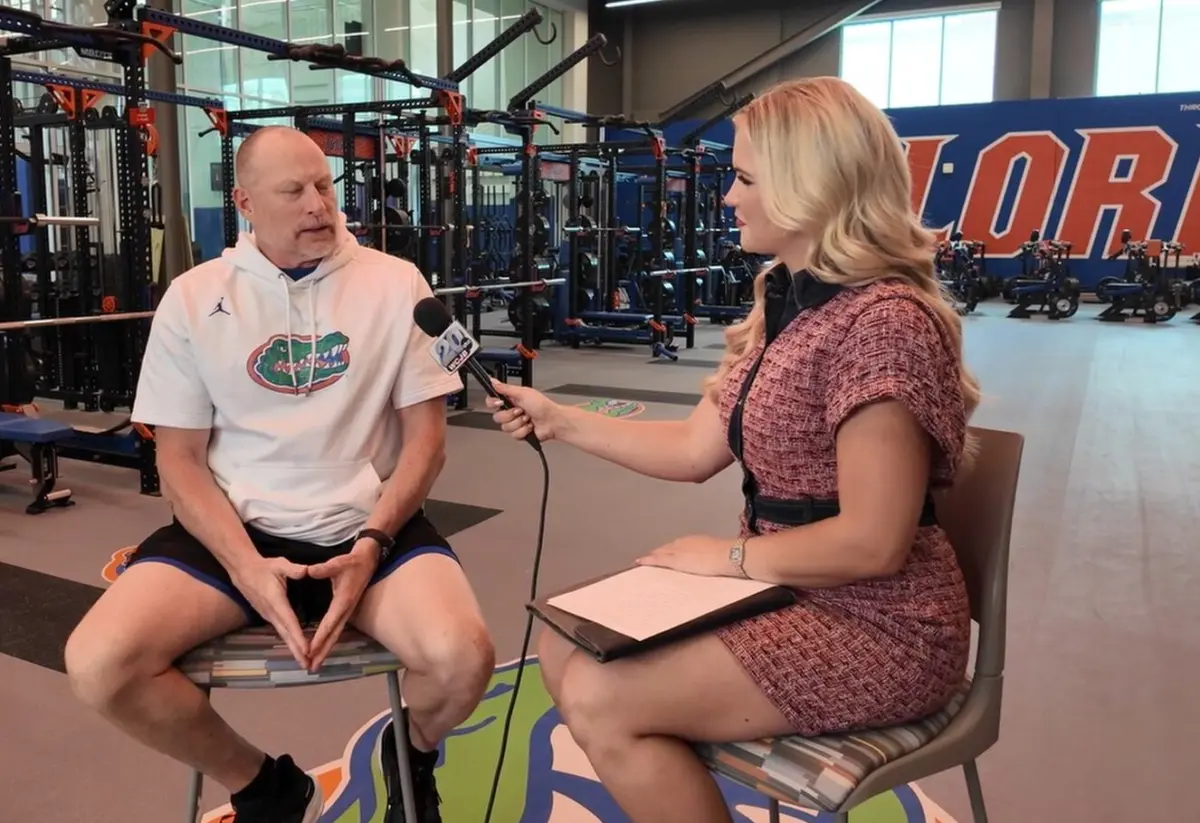
This investigative profile explores the unique intersection of military tactical operations and elite athletic development. By examining Whitt’s journey from the battlefields of Iraq to the elite training facilities of major collegiate programs, this article details how his specialized methodology shapes the physical and mental fortitude of modern athletes. Through his close collaborative relationship with prominent coaches like Jon Sumrall, Whitt has established himself as a transformative force in sports performance. In an exclusive dialogue with TV20’s Olivia Eisenhauer, Whitt shared insights into his coaching philosophy, his transition from military operative to athletic mentor, and the systemic impact of structured discipline on the contemporary student-athlete.
Detailed Chronology
To understand the profound impact of Rusty Whitt’s training philosophy, one must trace a career defined by deliberate pivots, intense physical crucibles, and an unwavering commitment to leadership. His professional trajectory is a rare synthesis of elite athletic coaching and high-risk military operations.
+--------------------------------------------------------------------------+
|                          RUSTY WHITT'S JOURNEY                           |
+--------------------------------------------------------------------------+
|                                                                          |
|  [1994-2003]  EARLY COACHING YEARS                                       |
|               • Starts career in collegiate S&C (Texas, Sam Houston St).  |
|               • Develops foundational athletic performance philosophies. |
|                                                                          |
|  [2003-2009]  MILITARY SERVICE (U.S. ARMY SPECIAL FORCES)                |
|               • Enlists at age 31 post-9/11; earns the coveted Green Beret.|
|               • Deployed to Iraq; masters tactical leadership & survival.|
|                                                                          |
|  [2009-Pres.] RETURN TO THE GRIDIRON & ELITE PERFORMANCE                 |
|               • Re-enters NCAA coaching (UTSA, Texas Tech, Army, Troy).  |
|               • Partners with HC Jon Sumrall; builds championship culture. |
|                                                                          |
+--------------------------------------------------------------------------+
The Formative Years in Strength and Conditioning (1994–2003)
Whitt’s journey began in the mid-1990s, a period when strength and conditioning was transitioning from simple weightlifting instruction to a highly specialized science. Graduating from Abilene Christian University, Whitt cut his teeth as an assistant strength coach at several notable institutions, including the University of Texas under the legendary Madden San Miguel, and Sam Houston State University. During these formative years, Whitt developed a deep understanding of biomechanics, hypertrophy, and cardiovascular periodization. Yet, even as he built a reputation as a rising star in the collegiate ranks, an internal calling began to reshape his destiny.
The Ultimate Crucible: The Green Beret Era (2003–2009)
In the wake of the September 11 terrorist attacks, Whitt felt a profound sense of duty that transcended the football field. In 2003, at the age of 31—an age when most military recruits are considered well past their physical prime—Whitt stepped away from a lucrative and stable coaching career to enlist in the United States Army.
He did not choose an easy path. Whitt volunteered for the Special Forces, undergoing the grueling Special Forces Qualification Course (SFQC). Known for its astronomical attrition rate, the course tests the absolute limits of human endurance, sleep deprivation, and cognitive function under extreme stress. Whitt excelled, earning the coveted Green Beret and serving as a communications sergeant in the 10th Special Forces Group (Airborne) based out of Fort Carson, Colorado.
During his military tenure, Whitt deployed to Iraq in support of Operation Iraqi Freedom. In the combat zone, the theories of leadership, cohesion, and accountability he had previously preached in weight rooms were put to the ultimate test. In battle, a failure in preparation did not mean a missed block or a lost game; it meant the loss of human life. This perspective permanently altered his approach to human performance.
The Return to Collegiate Athletics (2009–Present)
Upon transitioning back to civilian life in 2009, Whitt returned to the collegiate coaching ranks with a completely redefined paradigm of what a strength and conditioning program should be. He served in key leadership roles at:
- Sam Houston State University, where he optimized player durability and physical dominance.
- The University of Texas at San Antonio (UTSA), establishing the physical foundation for a nascent FBS program.
- Texas Tech University, under head coach Kliff Kingsbury, where his intense, military-style conditioning drills gained national attention.
- The United States Military Academy (Army West Point), where his military background perfectly aligned with the academy’s mission of producing combat-ready leaders.
- Troy University, under Head Coach Jon Sumrall, where Whitt’s strength program was credited with transforming the Trojans into one of the most physically punishing teams in the Sun Belt Conference.
Supporting Context & Metrics
The modern collegiate football player is an elite specimen, and Whitt’s training methodologies leverage cutting-edge sports science to maximize their potential. His approach is built upon "Tactical Periodization," a methodology that balances high-intensity physical exertion with calculated recovery metrics.
The Science of the "Whitt Method"
Whitt’s training model goes far beyond standard barbell movements. It incorporates several key elements:
- Stress Inoculation Training (SIT): Drawing directly from Special Forces selection, Whitt designs workouts that simulate high-stress environments. By forcing athletes to solve complex physical and mental problems while fatigued, they are conditioned to remain calm and analytical during the chaotic final minutes of a fourth quarter.
- Decentralized Command in the Weight Room: Whitt empowers position groups to police themselves. Rather than coaches calling out every infraction, veteran players are expected to enforce standards of effort, punctuality, and technique, mimicking the operational detachment structure of Special Forces A-Teams.
- Biomechanical Durability: High injury rates can derail a season. Whitt’s programs place a premium on posterior chain development, rotational core stability, and joint mobility to mitigate non-contact injuries.
| Metric / Category | Traditional S&C Focus | Whitt’s Tactical S&C Focus |
|---|---|---|
| Primary Goal | Maximize absolute strength (1-Rep Max) | Maximize power-to-weight ratio & sustained work capacity |
| Leadership Model | Coach-driven, top-down instruction | Player-led, decentralized command structure |
| Conditioning Philosophy | Linear running and sprint intervals | Multi-directional, load-bearing tactical endurance drills |
| Mental Component | Basic motivational encouragement | Cognitive performance & problem-solving under extreme fatigue |
| Injury Mitigation | General stretching and localized rehab | Comprehensive biomechanical durability and joint prehabilitation |
Official Statements & TV20 Insights
In an exclusive sit-down interview with TV20 sports anchor Olivia Eisenhauer, Rusty Whitt opened up about the philosophy that guides his daily interactions with young athletes and his enduring professional relationship with Head Coach Jon Sumrall.
Reflecting on his transition from the military to the athletic department, Whitt emphasized that the core tenets of leadership remain unchanged:
"In the Special Forces, you learn very quickly that trust is your most valuable currency. You can have the best equipment and the most sophisticated plan, but if the men next to you don’t trust your character and your competence, the mission fails. When I walk into a collegiate weight room, my goal is to build that exact same level of mutual trust. These young men need to know that every drop of sweat we demand from them is designed to make them safer, stronger, and more resilient versions of themselves."
— Rusty Whitt, Director of Football Performance
Whitt also spoke warmly of his synergy with Head Coach Jon Sumrall, a partnership that has yielded highly disciplined and physically dominant football teams:
"Jon [Sumrall] and I share a very clear, uncompromising vision of what football should look like. It’s a game of physical imposition. Working alongside a coach who completely supports the culture of accountability we build in the dark winter months makes all the difference. We don’t just train bodies; we forge minds. Jon understands that, and it’s why our programs develop an identity of being the toughest team on the field, week in and week out."
— Rusty Whitt
Future Outlook
As collegiate athletics navigates an era of unprecedented disruption—marked by the transfer portal, Name, Image, and Likeness (NIL) deals, and shifting conference alignments—the value of a stable, high-character strength and conditioning program has never been higher. While players and coordinators may change from season to season, the director of football performance remains the ultimate anchor of a program’s culture.
For Rusty Whitt, the future is focused on refining the integration of sports science with tactical military training. By utilizing advanced metrics like GPS tracking, heart rate variability (HRV) monitoring, and velocity-based training technology, Whitt is poised to push the boundaries of what is possible in athletic preparation.
His legacy, however, will not be measured solely by wins, losses, or physical metrics. Instead, it will be defined by the hundreds of young men who exit his program equipped with the discipline, resilience, and leadership skills necessary to succeed long after their football careers have ended. In an industry that often prioritizes short-term results, the soldier-coach stands as a powerful reminder that the pursuit of excellence is a lifelong mission.

0 Comments