

Executive Overview
NEW YORK — The year’s most fiercely guarded cinematic secret has finally broken free of its envelope. You Can See Everything, the startling, deeply disquieting documentary helmed by absurdist comedian Nathan Fielder and documentarian Lance Oppenheim, made its official New York Film Festival premiere on Wednesday evening at Lincoln Center’s Alice Tully Hall.
The nearly three-hour feature follows disgraced Theranos founder Elizabeth Holmes through the final 34 days of her freedom before reporting to a federal prison in Texas to serve an 11-year sentence for massive multi-million-dollar wire fraud and conspiracy. Shot entirely in secret over a grueling three-year period, the film shatters the conventional boundaries of non-fiction filmmaking. By blending traditional observational documentary work with Fielder’s signature brand of psychological discomfort, highly stylized dramatic recreations, and uncanny intimacy, the movie captures a surreal coda to one of the most astonishing corporate downfalls in modern Silicon Valley history.
Anticipation for the project has reached a fever pitch since its surprise, no-phones premiere at the Telluride Film Festival on September 6. Devoted cinephiles and Fielder enthusiasts began lining up outside Alice Tully Hall as early as 3 a.m. for a chance to secure a seat at the sold-out 8 p.m. screening. Set for a commercial theatrical release by A24 on October 16, You Can See Everything is already provoking intense industry debate, forcing audiences and critics alike to grapple with dizzying questions regarding truth, performance, cognitive dissonance, and the nature of human accountability.
Detailed Chronology: From Silicon Valley Peaks to the Del Mar Guest House
To understand the sheer audacity of You Can See Everything, one must trace the winding, improbable path that led Elizabeth Holmes—once hailed as the "next Steve Jobs"—from the boardroom to a beachside guest house in Del Mar, California.
The Rise and Collapse of Theranos
Founded in 2003 by a 19-year-old Stanford dropout, Theranos promised to revolutionize the healthcare industry through proprietary blood-testing technology. Holmes and her romantic and business partner, Ramesh "Sunny" Balwani, claimed their revolutionary "Edison" devices could run comprehensive diagnostic panels using only a few drops of blood acquired via a simple finger prick.
Fueled by relentless media hype, visionary marketing, and a board of directors stacked with political heavyweights, Theranos secured nearly $1 billion from high-profile venture capitalists, media moguls, and institutional investors. By 2014, the company’s valuation peaked at a staggering $4.5 billion, and Holmes was a darling of global cover stories.
The house of cards collapsed in October 2015, following a series of explosive investigative reports by John Carreyrou in The Wall Street Journal. The reports revealed that Theranos’s technology was deeply flawed, that the company was secretly relying on commercial, off-the-shelf blood analyzers from traditional manufacturers, and that patient results were dangerously inaccurate.
Federal investigations quickly followed. In 2018, the U.S. Department of Justice formally indicted Holmes and Balwani on multiple counts of wire fraud and conspiracy. Following a lengthy, highly publicized trial, a federal jury convicted Holmes on four felony counts in January 2022. Balwani was subsequently convicted on 12 felony counts and sentenced to nearly 13 years in a Southern California federal prison. In May 2023, Holmes officially surrendered to federal authorities to begin serving her 11-year sentence at a prison camp in Bryan, Texas.
The Final 34 Days
What remained entirely unknown until recently was how Holmes chose to spend her final 34 days of liberty. Seeking out A24 with a proposal to document her transition into federal custody, Holmes—alongside her partner, California hotel heir Billy Evans, and their two young children—extended an open invitation to filmmakers.
Enter Nathan Fielder, celebrated architect of the excruciatingly awkward social experiments Nathan For You and The Rehearsal, and Lance Oppenheim, the visionary young director behind Some Kind of Heaven and the recently released HBO-backed Primetime. Rather than functioning as a standard talking-head documentary, the production placed Fielder directly inside the household as an active, sometimes intrusive observer living in the family’s guest house.
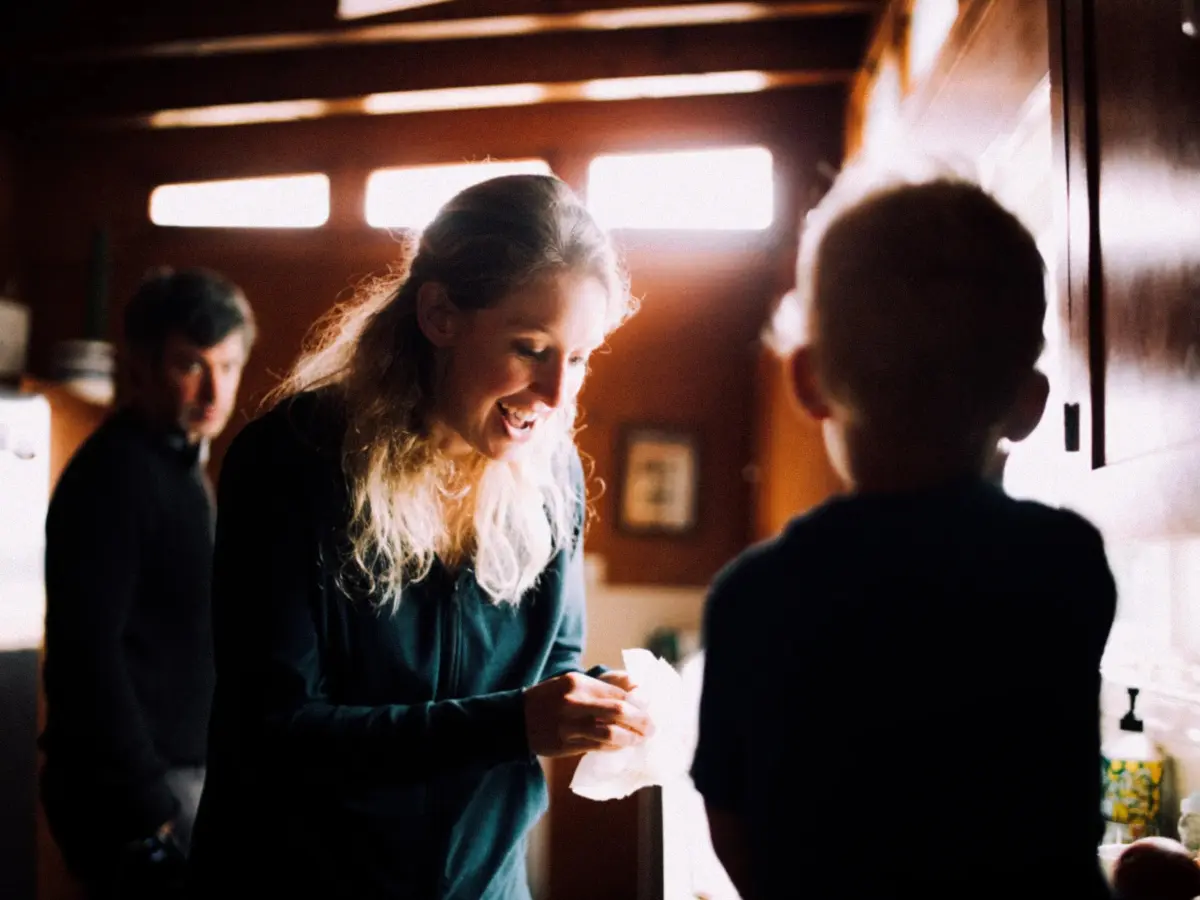
The resulting footage captures the surreal reality of a convicted white-collar criminal preparing for prison while maintaining a domestic routine. Fielder and Oppenheim’s cameras roll from morning until night, capturing Fielder interviewing the couple while sitting on their bed or even lingering in the bathroom. The resulting dynamic is as tense as it is profoundly absurd.
Supporting Context & Metrics: The Anatomy of a Cultural Phenomenon
The production metrics and cultural footprints surrounding You Can See Everything highlight its unprecedented nature in the contemporary media landscape:
- Production Timeline: Shot secretly over a three-year span, encompassing the final month of Holmes’s freedom, her trial aftermath, and the initial adjustments to her prison reality.
- Runtime: A sprawling, nearly three-hour cinematic experience designed to exhaust and immerse the viewer.
- Financial Stakes & Studio Backing: Distributed by A24, the indie powerhouse behind cutting-edge auteur cinema, signaling immense commercial and awards-season confidence following its stealth premiere at Telluride.
- The "Cognitive Dissonance" Factor: Both directors have noted that every crew member experienced psychological whirring while interacting with Holmes. Despite knowing the scale of her deception and her impending federal incarceration, her outward demeanor frequently presented as entirely sincere and warm, creating a profound interpretive paradox for the audience.
Official Statements and Creator Insights
Following the New York Film Festival premiere, Fielder and Oppenheim participated in a candid, deeply reflective Q&A session with the audience, addressing the psychological toll of documenting one of the decade’s most notorious figures.
Nathan Fielder admitted that the experience left him fundamentally altered, noting the bizarre nature of his role during such a high-stakes, tragicomic juncture in modern history:
"I am still struggling to this day to understand what I went through," Fielder told the packed auditorium. "I mean, I cannot tell you how weird it was that we were there. I wouldn’t think I’d be, like, the person that you would want for your final 34 days of freedom. I’m not the most, like, comforting."
Fielder recalled his initial skepticism when he first learned that Holmes and Evans had approached A24 about a potential documentary project. Initially, he doubted whether the interaction would yield anything more than a brief meeting driven by morbid curiosity:
"When I met her, I remember having this weird experience," Fielder explained. "She seems so genuine at times, but then I’m like, [expletive], tracking my thoughts and being like, ‘I know she’s a liar.’ "
Lance Oppenheim, whose directorial work frequently explores the eccentric fringes of human behavior, echoed Fielder’s sentiments regarding the mental exhaustion of working alongside a subject whose historical reality is defined by falsehoods:
"Every person who worked on this movie was going through a similar cognitive dissonance," Oppenheim stated. "We would unpack the day’s events, and no one could agree on seemingly mundane moments that would transpire."
Throughout the film, Fielder moves past simple investigative journalism, utilizing dramatic recreations featuring an A-list Hollywood star alongside other metacinematic flourishes. These formal interventions are not deployed for cheap laughs, but rather as an earnest, albeit dizzying, mechanism to claw past layers of performance and get closer to an elusive emotional truth.
Despite the elaborate stylistic choices, Oppenheim and Fielder stressed that the structural trajectory of the film remained entirely organic:
"As each scene that happens, it’s happening and we’re documenting it. There’s no plan of what’s going to happen next at any point," Fielder emphasized. "This is a path that opened up to us, and we just followed it."
Future Outlook
As You Can See Everything prepares for its wide theatrical rollout via A24 on October 16, the film is poised to dominate cultural discourse throughout the fall. By refusing to offer easy moral comforting or conventional true-crime categorization, Fielder and Oppenheim have constructed a sprawling, multi-layered meditation on the performance of identity, public trust, and the strange theater of American justice.
Whether audiences will embrace this genre-defying hybrid of comedy, investigative documentary, and psychological theater remains to be seen. However, one thing is certain: the cinematic conversation around Elizabeth Holmes has entered an entirely new, deeply surreal chapter—one that will leave viewers questioning not only what they saw on screen, but how they process truth itself.

0 Comments