

Executive Overview
In an era where law enforcement agencies across the United States are rapidly expanding their technological footprints, Putnam County Sheriff H.D. “Gator” DeLoach has taken an unprecedented step in the opposite direction. In a move that has reverberated through both the law enforcement and civil liberties communities, Sheriff DeLoach has ordered the immediate disconnection and systematic removal of all Automated License Plate Reader (ALPR) cameras operating within his jurisdiction.
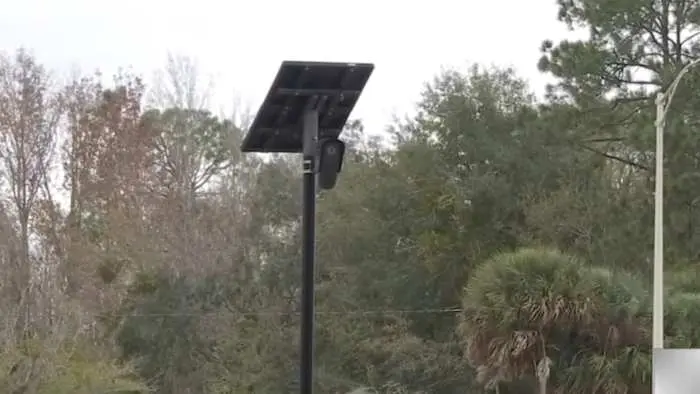
The directive targets all 18 high-tech ALPR cameras positioned along major arterial roadways throughout Putnam County, Florida. Under the Sheriff’s executive order, the cameras were powered down immediately, with a mandate for their physical removal from public rights-of-way within 30 days.
This decision is highly unusual in modern policing. Typically, once surveillance infrastructure is funded, installed, and integrated into daily operations, it becomes a permanent fixture of local law enforcement. Sheriff DeLoach’s decision was not prompted by a failure of the technology, nor was it triggered by an internal scandal or misuse of data by his deputies. Instead, it was driven by a deeper, more systemic concern: the rapid advancement of surveillance technology far outstripping the state and federal legislative frameworks designed to govern it.
By voluntarily dismantling a highly effective investigative tool, the Putnam County Sheriff’s Office has thrust itself into the center of a national debate regarding the boundaries of government surveillance, the commodification of movement data, and the preservation of constitutional privacy rights.
Detailed Chronology
To understand the gravity of Sheriff DeLoach’s decision, it is necessary to examine the lifecycle of the Putnam County ALPR program, from its hopeful inception to its sudden termination.
+-------------------------------------------------------------------+
|                           TIMELINE                                |
+-------------------------------------------------------------------+
|  2022: Program launched with 18 ALPR cameras on major roadways.   |
|                                                                   |
|  2022–2025: Program aids in key arrests, locating missing        |
|  persons, and human trafficking rescues.                          |
|                                                                   |
|  Late 2025: Growing national scrutiny over ALPR vendor data       |
|  sharing and misuse in other jurisdictions.                       |
|                                                                   |
|  2026 (Current): Sheriff DeLoach orders immediate shutdown and   |
|  30-day removal of all cameras, citing a regulatory vacuum.       |
+-------------------------------------------------------------------+
2022: The Dawn of Algorithmic Policing in Putnam County
The Putnam County Sheriff’s Office officially launched its ALPR initiative in 2022. The deployment of 18 specialized cameras was designed to establish an digital perimeter around the county’s key transit corridors. Operating continuously, these cameras scanned the license plates of every passing vehicle, cross-referencing them against national crime databases, active warrants, and Amber or Silver Alert systems.
For the first two years, the program was widely viewed as a modern policing success story. The technology integrated seamlessly into the dispatch and patrol workflow, providing real-time alerts that allowed deputies to intercept stolen vehicles and locate vulnerable individuals before tragedies could occur.
2024–2025: National Shifts and Regulatory Friction
As Putnam County’s cameras quietly gathered data, the broader landscape surrounding ALPR technology began to shift. Nationally, civil rights organizations—such as the American Civil Liberties Union (ACLU) and the Electronic Frontier Foundation (EFF)—stepped up their litigation and public awareness campaigns against mass surveillance.
Reports began to emerge from other states detailing how ALPR data was being accessed without warrants, shared with third-party private entities, and used by out-of-state agencies to track individuals seeking healthcare services. Concerns grew regarding the business models of private ALPR vendors, many of whom retain vast databases of vehicle movement patterns and share them across a decentralized network of law enforcement and commercial subscribers.
2026: The Decision to Pull the Plug
In late winter, Sheriff DeLoach initiated a comprehensive internal review of the ALPR program. Despite the program’s high operational utility, the Sheriff concluded that the lack of clear, statutory guardrails at the state level exposed both his agency and the citizens of Putnam County to unacceptable risks.
On the morning of the announcement, DeLoach issued an executive directive to immediately sever the power and data connections to all 18 cameras. Contractors were given a strict 30-day window to physically uninstall the hardware from utility poles and roadside mounts, bringing a definitive end to the county’s four-year experiment with automated license plate recognition.
Supporting Context & Metrics
The debate over ALPR technology is defined by a stark tension: the measurable utility of automated surveillance versus the harder-to-quantify erosion of individual privacy.
The Case for Utility: What the Technology Achieved
During its active period from 2022 onward, the Putnam County ALPR network compiled a strong track record of operational successes. The technology served as a force multiplier for a sheriff’s office tasked with patrolling a largely rural and geographically expansive county.
- Human Trafficking Interception: In a prominent case, the ALPR network flagged a vehicle associated with an out-of-state abduction. Working in tandem with the Federal Bureau of Investigation (FBI), Putnam County deputies used real-time location data from the cameras to track the suspect’s vehicle, resulting in the rescue of a teenage human trafficking victim and the apprehension of her captors.
- Vulnerable Missing Persons: The system proved highly effective in resolving Silver Alerts. On multiple occasions, the cameras flagged the license plates of elderly motorists suffering from Alzheimer’s disease or early-stage dementia who had driven far from home and become disoriented. By pinpointing their location, deputies were able to intervene and return them safely to their families.
- Violent Crime Resolution: The ALPR network played a key role in tracking homicide suspects fleeing adjacent jurisdictions, allowing deputies to plan high-risk arrests with tactical advantages rather than relying on chance encounters.
| Metric / Aspect | Description |
|---|---|
| Total Cameras Deployed | 18 units on major arterial roadways |
| Active Period | 2022 – 2026 |
| Key Use Cases | Human trafficking rescue, homicide suspect tracking, Silver Alerts |
| Internal Safeguards | Mandatory case numbers for queries, quarterly compliance audits |
| Removal Mandate | Immediate disconnection; 100% physical removal within 30 days |
The Case for Caution: The Regulatory Vacuum
Despite these successes, the systemic vulnerabilities of the technology became increasingly difficult to ignore. ALPRs do not merely scan the plates of suspected criminals; they capture, timestamp, and geolocate millions of innocent drivers. Over time, this data can be compiled to reveal intimate details of a citizen’s life: their place of worship, medical visits, political associations, and personal relationships.
While the Putnam County Sheriff’s Office maintained strict internal policies—including requiring deputies to enter an active case number before querying the database and conducting quarterly audits of search histories—these policies were self-imposed. In Florida, as in many other states, there is a lack of comprehensive state legislation governing:
- Data Retention Limits: How long a law enforcement agency or a private vendor can store the location history of an innocent citizen.
- Third-Party Commercialization: The degree to which private ALPR companies can sell or share compiled data with insurance companies, repossession agents, or private investigators.
- Cross-Jurisdictional Sharing: The rules governing how out-of-state or federal agencies access local data repositories.
It was this lack of a standardized legislative framework that ultimately led Sheriff DeLoach to conclude that the program was unsustainable.
Official Statements
Sheriff DeLoach’s public comments on the matter reflect a measured, philosophical approach to the responsibilities of modern law enforcement. Rather than characterizing the decision as a retreat, he framed it as a necessary defense of constitutional principles.
“Over the past several weeks, legitimate questions have continued to emerge regarding privacy, data sharing, governmental oversight and the future regulation of this technology. I believe the responsible course is to discontinue our program and cancel our contract at this time.”
— Sheriff H.D. "Gator" DeLoach
DeLoach was careful to separate the actions of his deputies from the broader systemic concerns that drove his decision, emphasizing that the shutdown was not a reaction to any local misconduct.
“This was not a decision I made lightly. ALPR technology has proven to be a valuable law-enforcement tool, but I have become increasingly concerned that the technology is advancing faster than the laws and regulations governing its use. Until that framework catches up and provides clearer, more consistent safeguards for both public safety and individual privacy, I believe discontinuing the program is the most responsible course for our agency and the community we serve.”
— Sheriff H.D. "Gator" DeLoach
Acknowledging the trade-offs inherent in his decision, DeLoach pointed out that public safety cannot be pursued at the absolute expense of civil liberties.
“Automated license plate readers are an effective law-enforcement tool, and I’ve seen firsthand how they can help us locate dangerous offenders, recover stolen vehicles, kidnapping victims and solve serious crimes. I also believe, however, that effective law enforcement requires the trust and confidence of the people we serve.”
— Sheriff H.D. "Gator" DeLoach
In defending his personnel, the Sheriff underscored that the agency’s internal protocols were among the strongest in the region, making the decision a critique of the industry and regulatory environment rather than his staff.
“I remain confident that our deputies used this technology lawfully, responsibly and in accordance with some of the strongest safeguards we could put in place. This decision is not an indictment of their work, nor does it mean the technology has no legitimate law-enforcement value. It simply means that when the rules, public expectations and regulatory environment surrounding a technology are changing this rapidly, we should be willing to reevaluate whether continuing to use it is in the best interest of our community.”
— Sheriff H.D. "Gator" DeLoach
DeLoach concluded with a warning about the broader implications of unchecked surveillance, noting that misuse elsewhere had influenced his thinking.
“Public safety matters. So does individual liberty. Neither should be treated casually.”
— Sheriff H.D. "Gator" DeLoach
Future Outlook
The shutdown of Putnam County’s ALPR program could serve as a bellwether for other law enforcement agencies grappling with the ethics of rapid technological adoption.
                  +------------------------------+
                  |    The Path to Realignment   |
                  +------------------------------+
                                 |
                                 v
                  +------------------------------+
                  |  State Legislative Action    |
                  |  (Clear statutory mandates)  |
                  +------------------------------+
                                 |
                                 v
                  +------------------------------+
                  |    Strict Data Governance    |
                  |  (Short retention, no sales) |
                  +------------------------------+
                                 |
                                 v
                  +------------------------------+
                  |     Restored Public Trust    |
                  |  (Controlled, audited use)   |
                  +------------------------------+
The Legislative Challenge in Tallahassee
All eyes now turn to the Florida Legislature. Sheriff DeLoach has made it clear that the ALPR program will remain offline until state lawmakers establish clear, uniform parameters for the technology’s use.
For a legislative solution to be effective, it will likely need to address several key areas:
- Statutory Retention Limits: Establishing a short, statewide maximum retention period (e.g., 30 to 90 days) for data that does not generate a hit against an active investigation, requiring immediate deletion thereafter.
- Prohibitions on Commercial Sharing: Outlawing the sale of government-collected license plate data to private aggregators and commercial entities.
- Mandatory Auditing Standards: Codifying independent, third-party audits of law enforcement access to ALPR databases to ensure compliance and prevent personal or unauthorized queries.
A Potential Shift in Policing Culture?
For years, the trend in law enforcement has been toward the frictionless adoption of new technologies, from body-worn cameras and facial recognition to predictive policing algorithms and drones. Sheriff DeLoach’s decision challenges the assumption that adoption is always a one-way street.
If other sheriffs and police chiefs follow DeLoach’s lead, it could signal a new era of policing—one where agencies demand robust regulatory frameworks before deploying new surveillance tools, rather than attempting to manage the legal and ethical fallout after the fact. Until then, the empty poles along Putnam County’s roadways will stand as a reminder of a community that chose to prioritize individual liberty over the convenience of automated surveillance.

0 Comments