

Executive Overview
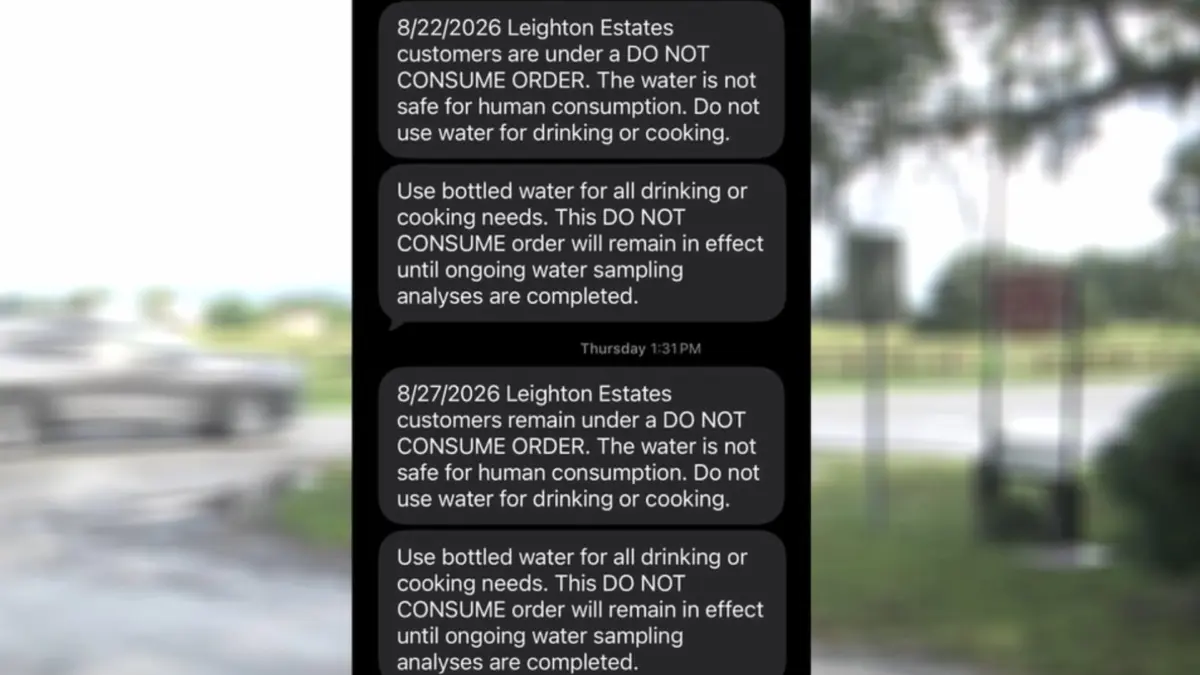
For more than two weeks, the residents of Leighton Estates, a residential subdivision nestled in Ocala, Florida, have been thrust into a public health and logistical crisis. What began as an abrupt water shutoff has deteriorated into a protracted nightmare of contaminated, foul-smelling tap water that utility officials admit is unsafe for human consumption. The crisis, which began in mid-August 2024, has laid bare the vulnerabilities of small, privately owned water systems in rural and suburban Florida, leaving over 100 households struggling to perform basic daily routines.
At the heart of the issue is a "catastrophic equipment failure" involving the subdivision’s primary water well. According to state regulators, the well physically collapsed during a routine maintenance operation, introducing sediment, organic matter, and potentially hazardous contaminants directly into the community’s water supply. While water pressure has since been partially restored, the liquid flowing from residential taps remains highly contaminated, emitting a potent, nauseating odor akin to rotten eggs—a classic indicator of hydrogen sulfide gas and organic decay.
Despite the severity of the situation, residents report a stark lack of communication and accountability from their service provider, Leighton Estates Utilities. Compounding their frustration is a glaring economic disparity: customers of this private utility pay a monthly base rate that is nearly 70% higher than those connected to Marion County’s municipal water system. With the utility’s management headquartered approximately 100 miles away in New Port Richey, residents feel abandoned by a distant corporate entity that continues to bill them for water they cannot safely use.
Detailed Chronology of the Crisis
The water crisis in Leighton Estates did not occur overnight, but its onset was sudden and disruptive for the families living in the Ocala community.
[August 17] Well Collapse during Maintenance -> [Mid-August] Complete Water Shutoff -> [Late August] Pressure Restored (Contaminated/Odorous) -> [Present] Ongoing Boil Water Advisory / No ResolutionAugust 17: The Catastrophic Failure
On August 17, Leighton Estates Utilities initiated what was supposed to be routine maintenance on the community’s primary drinking water well. However, according to investigations later disclosed by the Florida Public Service Commission (PSC), the maintenance operation went disastrously wrong. The structural integrity of the well compromised, resulting in a physical collapse of the well shaft.
This structural failure immediately halted the system’s ability to draw clean water from the aquifer. The immediate consequence for Leighton Estates residents was a complete loss of water pressure. Taps ran dry, toilets could not be flushed, and the community was left without running water during the peak of the Florida summer heat.
The Restoration of Pressure and the Onset of Contamination
Following the initial collapse, utility crews worked to restore basic water pressure to the subdivision. While they succeeded in getting water flowing through the pipes again, the quality of the water was severely compromised. The collapse of the well casing allowed surrounding earth, sediment, and organic matter to breach the filtration barrier, contaminating the distribution system.
When residents turned on their faucets, they were greeted not with clean, potable water, but with a highly turbid, foul-smelling liquid. The smell of rotten eggs—typical of hydrogen sulfide gas released by disturbed subterranean geological layers or bacterial activity—filled kitchens and bathrooms across the neighborhood. A boil-water advisory was issued, warning residents that the water was unsafe to drink, cook with, or use for basic oral hygiene.
The Communication Void and Regulatory Intervention
As days turned into weeks, residents found themselves in an information vacuum. Standard communication channels with Leighton Estates Utilities yielded little to no actionable information regarding when the water would be safe to use.
Frustrated by the utility’s silence, proactive homeowners bypassed the company entirely, contacting the Florida Public Service Commission (PSC) for answers. It was through these regulatory channels that residents finally learned the true scope of the disaster: the well had collapsed, and the remediation process would require extensive engineering work, potentially taking weeks to resolve.
Supporting Context & Metrics
The crisis in Leighton Estates highlights broader systemic issues surrounding investor-owned utilities (IOUs) in Florida, particularly regarding infrastructure resilience, pricing structures, and geographic oversight.
The Cost of Substandard Service
One of the primary sources of outrage among Leighton Estates residents is the financial cost of their water service. Despite receiving unusable, contaminated water, residents are still expected to pay their monthly utility bills, which feature exceptionally high base rates compared to public municipal alternatives.
| Utility Provider | Service Type | Monthly Base Rate (USD) | Relative Cost Difference |
|---|---|---|---|
| Leighton Estates Utilities | Private (Investor-Owned) | $21.75 | Base Rate (~70% Higher) |
| Marion County Utilities | Public (Municipal) | $12.75 | Baseline |
This $9.00 monthly premium yields no visible benefit in infrastructure reliability or customer service. Instead, residents are paying a premium for a fragile system that lacks the redundancies of larger municipal networks.
Demographics and System Scale
According to official filings with the Florida Public Service Commission, Leighton Estates Utilities reported approximately 80 active customer connections in 2022. Local residents estimate that the community has grown, with more than 100 active connections today, serving several hundred individuals, including young children and the elderly.
Small water systems serving fewer than 500 people are notoriously difficult to manage economically. They lack the "economies of scale" enjoyed by county-wide systems, meaning that when a major component like a well collapses, the financial and logistical burden of repair is disproportionately high relative to the utility’s revenue base.
The Tyranny of Distance
A significant factor in the slow emergency response and poor communication is the physical location of the utility’s administrative operations. Leighton Estates Utilities is operated out of New Port Richey, Florida—a city located in Pasco County, nearly 100 miles southwest of Ocala.
[New Port Richey (Admin HQ)] <====== ~100 Miles ======> [Leighton Estates, Ocala (Crisis Site)]This geographic disconnect means there are no local offices, no local technicians permanently stationed in Ocala, and no immediate corporate presence to witness the daily struggles of the residents. For the affected homeowners, the utility is a faceless entity that collects payments from afar while ignoring localized emergencies.
The Human Toll: Daily Life Under Siege
For the families in Leighton Estates, the lack of clean water has degraded their quality of life and disrupted simple daily routines. Janae Coats, a resident of the subdivision, expressed the communal anxiety and disgust regarding the ongoing situation:
"If we are brushing our teeth and stuff with this, at least, you know the bare minimum, like is not even OK. Like doing laundry and stuff… I’ve seen someone else say, ‘I’m scared to do laundry because it smells.’ Your clothes are still going to smell. Why are you cleaning them?"
The olfactory assault of the water is more than just an inconvenience; it is physically sickening. Residents describe having to suppress a gag reflex just from turning on the tap to wash their hands. The persistent rotten egg smell makes showering at home impossible for many, forcing families to seek out alternative facilities at the homes of relatives, local gyms, or community centers.
To survive, residents have had to buy bottled water in bulk for drinking, cooking, and pet care. While some landlords have stepped in to provide limited supplies of bottled water to their tenants, homeowners are largely on their own, absorbing the extra cost of purchasing clean water while still being billed the $21.75 base rate by the utility.
Official Statements and Regulatory Landscape
The regulatory framework governing private water utilities in Florida is complex, involving multiple state agencies, each responsible for different aspects of utility operations.
                  ┌────────────────────────────────────────┐
                  │ Florida Public Service Commission (PSC) │
                  └───────────────────┬────────────────────┘
                                      │ (Rates & Service Territory)
                                      ▼
┌──────────────────────────────────────────────────────────────────────────┐
│                         Leighton Estates Utilities                       │
└─────────────────────────────────────┬────────────────────────────────────┘
                                      │ (Environmental & Safety Compliance)
                                      ▼
               ┌──────────────────────────────────────────────┐
               │ Florida Dept. of Environmental Protection    │
               │                  (FDEP)                      │
└──────────────────────────────────────────────┘- The Florida Public Service Commission (PSC): The PSC regulates the economic aspects of privately owned water and wastewater utilities, including their rates, service territories, and basic service standards. While the PSC has been communicative with residents—providing the initial diagnosis of the collapsed well—it does not directly manage physical repairs.
- The Florida Department of Environmental Protection (FDEP): The FDEP is responsible for ensuring that drinking water meets safe environmental and biological standards. In the event of a well collapse, the FDEP typically mandates strict testing protocols, including bacteriological sampling, before a boil-water notice can be lifted.
- Leighton Estates Utilities: The utility itself has remained quiet. Media outlets, including local station TV20, have repeatedly reached out to the utility’s leadership in New Port Richey requesting a formal repair timeline, an explanation for the maintenance failure, and information on potential billing credits for affected customers. As of this report, the utility has failed to provide a public statement or respond to these inquiries.
Future Outlook and Systemic Reform
The immediate hurdle for Leighton Estates is the physical remediation of the collapsed well. According to preliminary estimates provided by the Public Service Commission, engineering crews may take at least two weeks to stabilize, clear, and repair the well structure, or potentially drill a replacement well if the damage is irreversible. Once physical repairs are complete, the system must undergo days of flushing and rigorous water-quality testing to ensure that harmful bacteria, such as E. coli or coliform, have not colonized the compromised system. Only after consecutive clean tests will the FDEP authorize the lifting of the boil-water advisory.
[Well Repair/Drilling] ──> [System Flushing] ──> [Water Quality Testing (FDEP)] ──> [Boil-Water Advisory Lifted]However, the longer-term concern for residents is systemic. The vulnerability of Leighton Estates’ infrastructure raises critical questions about the future viability of small, private utilities in Marion County:
- Infrastructure Investment: Will Leighton Estates Utilities invest in system redundancies, such as a backup well, to prevent a single point of failure from crippling the community in the future?
- Regulatory Accountability: Will the PSC penalize the utility for its poor communication and operational failure, and will residents receive retroactive credits on their utility bills for the period they were served contaminated water?
- Municipal Acquisition: Many consumer advocates argue that the sustainable solution for communities like Leighton Estates is municipal acquisition. If Marion County Utilities were to acquire the system, residents would benefit from lower base rates ($12.75 vs. $21.75), professional local management, and integration into a larger, more resilient public water grid.
Until these structural issues are addressed, the residents of Leighton Estates remain in limbo, relying on bottled water, showering away from home, and waiting for a distant utility company to restore a basic human necessity.

0 Comments