

Executive Overview
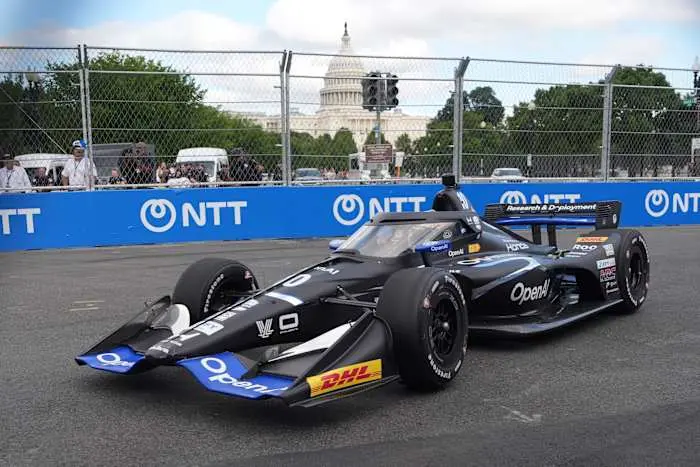
In an unprecedented fusion of motorsport spectacle and national celebration, the streets of Washington, D.C., have been transformed into a high-speed arena for the inaugural Freedom 250 Grand Prix. Staged on Saturday, August 22, 2026, against the backdrop of the United States’ semiquincentennial (250th anniversary) celebrations, the event represents one of the most logistically complex and visually arresting spectacles in modern open-wheel racing history. With the United States Capitol hovering majestically over Turn 1 and the Washington Monument anchoring the horizon, the temporary 1.7-mile street circuit has challenged the world’s premier open-wheel drivers to adapt to a punishing, high-velocity landscape.
While the event was envisioned as a monument to American heritage and civic pride, Saturday’s on-track action quickly shifted the focus from postcard-perfect aesthetics to the brutal, unforgiving realities of street-circuit racing. Championship points leader Alex Palou conquered the bumpy, newly laid track to capture the pole position, navigating severe undulations that threatened to destabilize even the most sophisticated aerodynamic setups.
Beyond the headline NTT IndyCar Series action, the weekend also delivered a potent dose of nostalgia. NASCAR legend Jeff Gordon swept both segments of a historic International Race of Champions (IROC) exhibition, driving a vintage Pontiac Firebird to victory ahead of former Cup Series champion Kurt Busch.
As teams prepare for Sunday’s grueling 147-lap, 250-mile main event, the narrative is defined by extreme physical demands, high humidity, and a track surface that offers high-speed overtaking opportunities at the cost of immense mechanical risk.
                       [Turn 3]
                          |
                          | (Constitution Ave / 3rd St area)
                          |
    [Turn 2]--------------+--------------[Turn 4]
       /
      /
     / (Pennsylvania Ave)                      (6th/7th St)
    /
[Turn 1] (Capitol Backdrop)                 [Turn 5]
    |                                           |
    |                                           | (Independence Ave)
    +---------------------------------------[Turn 6]
             (Maryland Ave / Support Area)

                                               [Turn 7] -> Pit Lane
Detailed Chronology
Morning Practice: Taming the Capital’s Asphalt
The weekend’s competitive track action commenced early Saturday morning under heavy, threatening skies. For the majority of the grid, the practice session was their first opportunity to translate simulator data into real-world performance on the temporary 1.7-mile course.
Almost immediately, the track’s unique topography became the central talking point. Despite extensive preparation by race organizers, the transition zones between downtown avenues presented massive, high-speed bumps.
- 9:00 AM: Green flag for Practice Session 1. Drivers initiated cautious installation laps, immediately reporting severe bottoming-out on the Pennsylvania Avenue straightaway leading into Turn 2.
- 9:45 AM: Speeds began to climb as teams adjusted ride heights and damper settings to cope with the severe vertical loads. Championship leader Alex Palou set the early benchmark, demonstrating an aggressive line through the fast, sweeping corners.
- 10:15 AM: Pato O’Ward, fresh off his victory at Mid-Ohio, adjusted his dampers to mitigate the brutal impacts at the end of the Independence Avenue straight. O’Ward noted that the bumps had effectively become the defining characteristic of the circuit, forcing drivers to constantly alter their racing lines to avoid upsetting the car’s aerodynamic balance.
The Turn 6 Casualty: Foster’s High-Speed Impact
The treacherous nature of the temporary circuit claimed its first major victim late in the morning sessions. IndyCar prospect Louis Foster lost control of his vehicle near the end of the Independence Avenue straightaway.
As Foster approached the braking zone for Turn 6, his car struck a significant undulation at high speed, instantly unloading the front tires and neutralizing his steering input. The vehicle careened nose-first into the concrete barrier, causing substantial structural damage to the front assembly.
[Independence Ave Straight] ---> [Severe Bump] ---> [Tire Grip Loss] ---> [Turn 6 Wall Impact]
                                                                                |
                                                                        (Foster Eliminates
                                                                         Front Suspension)
Though Foster walked away from the wreckage uninjured, the incident served as a stark warning to the rest of the paddock: the margins for error on the D.C. streets are practically nonexistent.
Qualifying: Palou Secures the Historic Pole
By Saturday afternoon, track conditions had evolved, but the underlying volatility remained. The qualifying sessions demanded a delicate balance of aggression and precision.
Alex Palou demonstrated why he leads the championship standings. Utilizing a highly aggressive line that skirted the barriers of Turn 2 and Turn 5, the Chip Ganassi Racing driver posted a blistering, field-leading lap of 56.6145 seconds.
Palou’s setup managed to absorb the worst of the bumps without sacrificing the high-speed stability required for the 90-degree left-hand turns. This performance secured him the pole position for Sunday’s main event, placing him in the optimal position to dictate the pace of the race.
The IROC Showcase: Gordon and Busch Delight the Crowds
Following the conclusion of IndyCar qualifying, the focus shifted to a historic exhibition that bridged the gap between modern open-wheel racing and stock car history. The International Race of Champions (IROC) made its return with a special two-race showcase featuring legendary drivers piloting historic, roaring Pontiac Firebirds.
Four-time NASCAR Cup Series champion Jeff Gordon put on a masterclass, sweeping both races of the Saturday double-header. Gordon delighted the crowd by performing a smoky, celebratory burnout on the hot asphalt of Pennsylvania Avenue.
Kurt Busch secured the runner-up spot in both events. Following the race, Busch expressed childlike wonder at the sheer spectacle of piloting vintage, high-horsepower stock cars past some of the world’s most heavily guarded and historic government buildings.
Supporting Context & Metrics
The 1.7-Mile Street Circuit: An Analytical Breakdown
The Washington, D.C., temporary street course is a unique engineering creation. Designed specifically for the nation’s 250th birthday, the track features a deceptively simple layout: seven turns, with six of them being left-handers.
However, its simplicity is countered by the sheer variety of asphalt types, crown shapes, and utility access covers that line the public roads.
+---------------------------+----------------------------------------------------+
| Metric                    | Value / Details                                    |
+---------------------------+----------------------------------------------------+
| Track Length              | 1.7 Miles (2.73 km)                                |
| Total Turns               | 7 (6 Left, 1 Right)                                |
| Race Distance             | 250 Miles (402.3 km)                               |
| Lap Count                 | 147 Laps                                           |
| Top Practice/Qualy Time   | 56.6145 seconds (Alex Palou)                       |
| Key Passing Zones         | Turn 2 (Pennsylvania Ave) & Turn 5 (7th Street)    |
+---------------------------+----------------------------------------------------+
The Physics of the Bumps
Public roads like Pennsylvania Avenue are routinely repaved to accommodate massive civic events, such as presidential inaugurations. While these surfaces appear smooth to the naked eye or under standard highway speeds, they present a different reality to an IndyCar traveling at speeds exceeding 170 mph.
At these velocities, even a minor crown in the road or a slight elevation change over a pedestrian crosswalk acts as a launchpad. Under-car aerodynamics (ground effects) rely on a consistent, millimeter-tight gap between the car’s underwing and the asphalt to generate downforce.
When a car hits a bump like the ones entering Turn 2 and Turn 6:
- The suspension compresses completely, hitting the bump stops.
- The vehicle’s ride height spikes rapidly, breaking the aerodynamic seal beneath the chassis.
- The sudden loss of downforce, combined with unloaded tires, can cause instantaneous loss of control, as seen in Louis Foster’s qualifying-practice crash.
Comparing Washington to Detroit
Some drivers have drawn comparisons between this layout and the Detroit street circuit. However, Palou pointed out a critical differentiator: lane width.
Unlike the narrow, corridor-like layout of Detroit—where defensive driving can easily neutralize a faster opponent—the wide avenues of downtown Washington offer multiple racing lines. This width is expected to foster aggressive overtaking maneuvers, particularly into the heavy braking zones of Turn 2 and Turn 5.
Official Statements
Alex Palou (NTT IndyCar Series Points Leader & Pole Sitter)
"I didn’t know if it was going to be fun or not to drive. It’s a blast, super fun. Very bumpy, huge bumps heading into Turn 2 and Turn 6. Massive bumps that are going to spice things up.
We are going to try to see if we can get a better balance in the corners, not focus so much on the bumps. They’re not going to disappear. I think if you move a little bit on lanes, it might be a little bit better, but it’s not going to completely go away.
I think there’s going to be a lot of action. I see that just having a wide track, it’s just going to allow us to have more passing than, for example, Detroit. Detroit is so narrow that even if you are so much faster, you can just block so much easier. Here, if you’re not going to have the pace, they’re going to overtake you."
Pato O’Ward (Arrow McLaren Driver & Mid-Ohio Winner)
"We got quite a bit of bumps on the exit of Turn 1, quite a bit of bumps going into 2, the straightaway. I would say that’s taken over a little bit of what the characteristic of what this track is.
It’s going to be physical. Every challenge that a street course usually throws at you. It’s bumpy. You got a bunch of sweat inside of the helmet. You’re bouncing up and down in there. It gets pretty rough, gets pretty aggressive."
Kurt Busch (IROC Runner-Up & Former NASCAR Champion)
"I was like a kid in a candy store. It was like I was in a bowl of M&M’s with all the colors and the banners. ‘Where’s my braking zone? I don’t know—oh, that’s a cool building.’ Racing these classic Firebirds down Pennsylvania Avenue is something I never, in my wildest dreams, thought would be allowed. It’s an incredible tribute to our country’s racing history."
Future Outlook
Sunday’s Race: An Endurance Test in the Capital Humidity
With Sunday’s forecast calling for high humidity and high temperatures, the 147-lap Freedom 250 is shaping up to be one of the most physically demanding races of the 2026 season. Drivers will contend not only with the mechanical violence of the track’s bumps but also with the thermal exhaustion of racing in a concrete-lined urban canyon.
The wide track design guarantees that defensive blocking will be far less effective than at traditional street circuits, forcing teams to rely on raw pace, precise damper tuning, and aggressive pit strategies.
[High Humidity & Heat] + [147 Punishing Laps] + [Severe Track Bumps]
                          |
                          v
           [Extreme Driver Fatigue & Mechanical Stress]
                          |
                          v
          [High Probability of Late-Race Incidents]
The Long-Term Viability of the Washington Grand Prix
While the event has generated spectacular imagery and significant fan engagement, its future remains highly uncertain. Logistical challenges—including shutting down major arterial roads in the heart of the federal government, rerouting public transit, and managing intense security protocols—have led many insiders to speculate that this grand prix may be a "one-and-done" spectacle designed exclusively for the nation’s 250th birthday.
Race chair Bud Denker and local organizers have praised the cooperation of federal and municipal authorities, but the sheer friction of hosting an international motorsport event in a high-security capital zone makes a permanent spot on the IndyCar calendar a daunting proposition.
Regardless of whether the Freedom 250 Grand Prix becomes a recurring fixture or remains a historic, singular tribute, Saturday’s action proved that the intersection of raw motorsport speed and national history has delivered an unforgettable chapter in American racing. All eyes now turn to Sunday’s grid, where Palou looks to cement his championship lead under the watchful gaze of the Capitol dome.

0 Comments