

Executive Overview
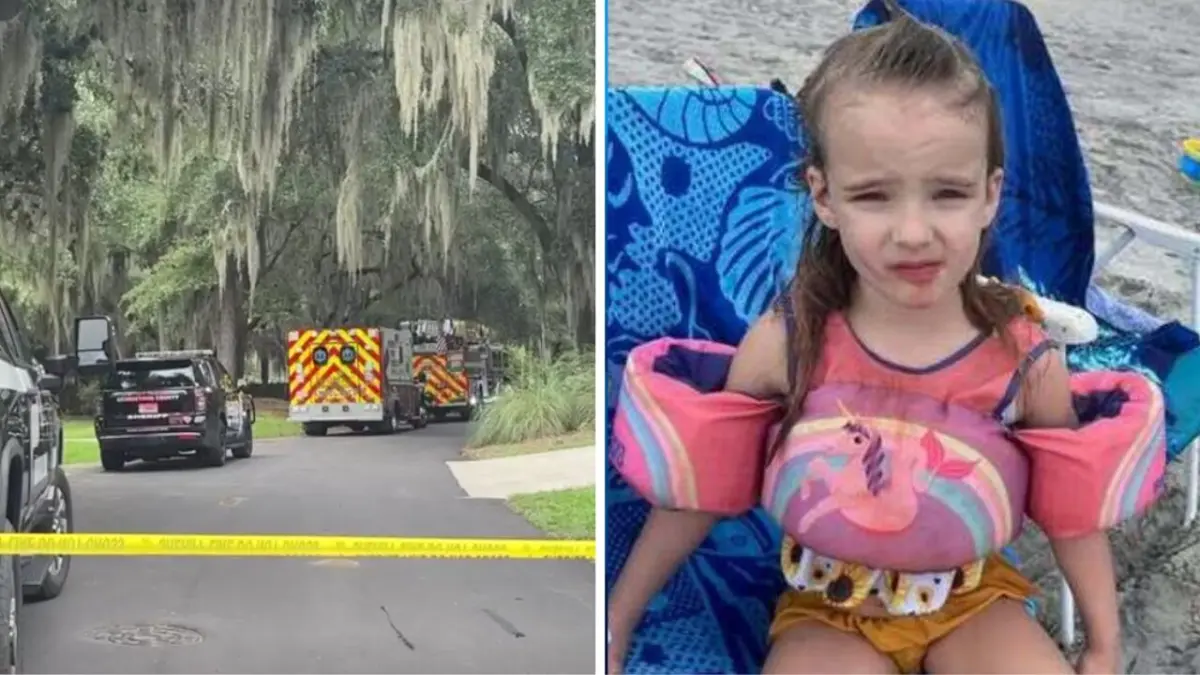
The tragic death of 5-year-old Saylor Hayes—a severely nonverbal and autistic child visiting the South Carolina coast from Washington County, Virginia—has culminated in criminal charges against her parents. John Hayes III and Geordyn Hayes were taken into custody on Tuesday evening, September 1, 2026, in Carter County, Tennessee. According to the Georgetown County Sheriff’s Office, the couple faces charges of unlawfully placing a child at risk and willfully abandoning a child following allegations that they deliberately misled law enforcement and diverted critical search efforts during a frantic multi-agency operation.
The heartbreaking incident began on Sunday, August 30, 2026, when Saylor wandered away from her family’s vacation rental home along Old Waccamaw Drive in the Hagley community near Pawleys Island, South Carolina. What followed was a massive, intensive, 24-hour search involving local, state, and federal agencies, alongside hundreds of civilian volunteers.
Authorities deployed helicopters, drones, K-9 units, and specialized underwater retrieval teams. However, the search was severely compromised from the outset. Investigators revealed that although Saylor was enrolled in the specialized tracking program "Project Lifesaver," her tracking transmitter was left behind in a vehicle back in Virginia. Compounding the tragedy, arrest warrants allege that the parents actively encouraged law enforcement to utilize Project Lifesaver tracking equipment—knowing full well the device was hundreds of miles away—and intentionally steered search crews away from hazardous nearby bodies of water.
Saylor’s body was ultimately recovered from the water on the morning of Monday, August 31, 2026, by the South Carolina Department of Natural Resources (SNDR). As communities in both South Carolina and Virginia reel from the unfolding details of the case, the tragedy has ignited a national conversation regarding parental responsibility, water safety for autistic children, and the critical protocols surrounding electronic wandering-prevention technologies.
Detailed Chronology
Sunday, August 30, 2026: The Disappearance
The timeline of the tragedy unfolded rapidly on a late August weekend in the coastal community of Pawleys Island, South Carolina. The Hayes family, vacationing from Washington County, Virginia, was staying at a rental property situated in the Hagley community along Old Waccamaw Drive—an area characterized by its proximity to marshlands, creeks, and tidal waters.
According to investigative findings and subsequent arrest warrants, 5-year-old Saylor Hayes, who was severely nonverbal, diagnosed with autism, and possessed a known history of elopement (wandering) alongside a dangerous affinity for water, was left unsupervised near a body of water.
At some point during the day, the child wandered away from the property. When family members realized she was missing, local authorities were notified, setting off an immediate emergency response. The Georgetown County Sheriff’s Office (GCSO) launched a preliminary search of the immediate neighborhood, quickly realizing the scale of the crisis given the child’s vulnerable medical profile and the hazardous coastal geography.
The Search Operations: Sunday Night into Monday Morning
As daylight faded on Sunday, the search transformed into a massive, round-the-clock emergency operation. Recognizing the high stakes, law enforcement agencies from across the region mobilized advanced tactical and technological assets:
- Georgetown County Sheriff’s Office: Spearheaded ground searches, neighborhood door-knocks, and coordination of local resources.
- Charleston County Sheriff’s Office: Deployed a specialized helicopter equipped with Project Lifesaver aerial tracking receivers.
- South Carolina Law Enforcement Division (SLED): Provided an additional search helicopter and deployed an advanced underwater drone to scan local creeks and marsh inlets.
- U.S. Coast Guard: Dispatched a water vessel to patrol surrounding tidal waters and shorelines.
- South Carolina Department of Natural Resources (SNDR): Assisted with marine patrols and shoreline sweeps.
- Community Response: Hundreds of local residents mobilized autonomously, guarding docks, illuminating waterways with flashlights, and scouring their own private properties throughout the night.
Despite the formidable deployment of personnel and equipment, search commanders hit an immediate wall. Aerial tracking equipment failed to register any signals, and statements provided by the parents allegedly directed search teams away from the water—the very environment toward which Saylor’s behavioral profile dictated she was most likely to drift.
Monday, August 31, 2026: Discovery and Recovery
The agonizing search came to a devastating end on Monday morning. At approximately 9:45 a.m., marine agents with the South Carolina Department of Natural Resources recovered Saylor Hayes’s body from the water in the immediate vicinity of where she was last seen.
Georgetown County Coroner Chase Ridgeway confirmed that an initial physical examination of the child’s body revealed no visible signs of trauma. Her remains were subsequently transferred to the Medical University of South Carolina (MUSC) in Charleston for a comprehensive forensic autopsy scheduled for Friday morning to definitively establish the medical cause and manner of death.
Tuesday, September 1, 2026: Arrests in Tennessee
Following the recovery of the child’s body, joint investigative efforts between South Carolina authorities and law enforcement in Virginia and Tennessee uncovered alarming discrepancies in the parents’ initial statements.
On Tuesday night, September 1, John Hayes III and Geordyn Hayes were located and apprehended by local authorities in Carter County, Tennessee. The Georgetown County Sheriff’s Office formally charged both parents with unlawfully placing a child at risk and willfully abandoning a child. Extradition proceedings were immediately initiated to return the couple to Georgetown County to face prosecution.
Supporting Context & Metrics
The Mechanics and Failure of Project Lifesaver
A central pillar of the criminal investigation involves the misuse—and deliberate misrepresentation—of a life-saving tracking program.
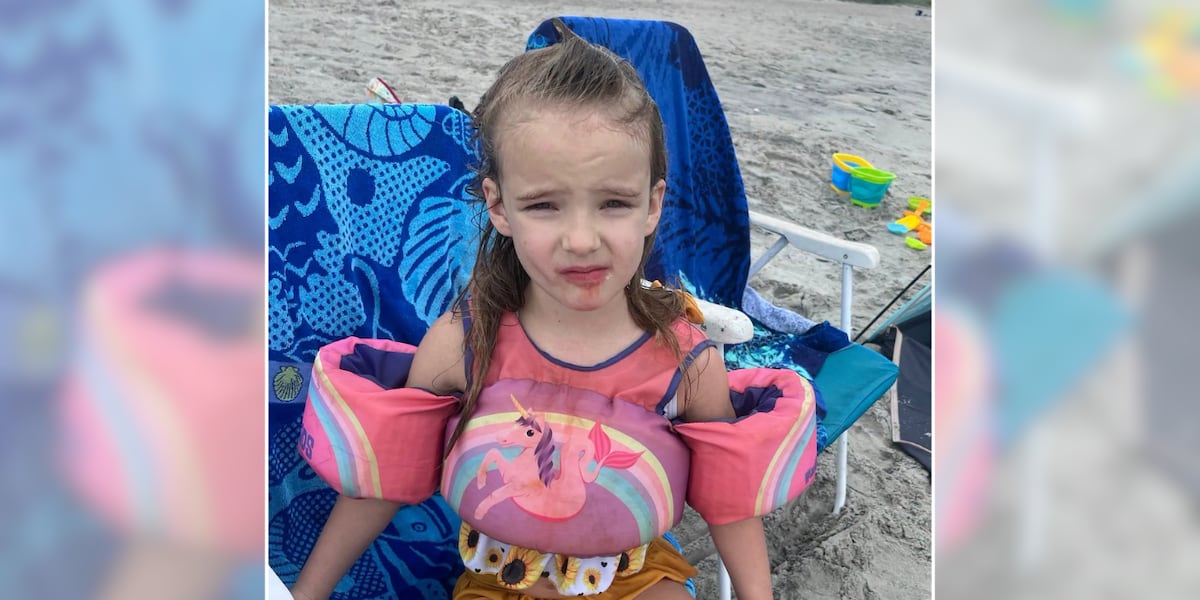
Washington County Sheriff Blake Andis confirmed that Saylor Hayes had been officially enrolled in the agency’s Project Lifesaver program since June 2024. Project Lifesaver is an internationally recognized, structured public safety program designed specifically to protect individuals prone to wandering, such as those with Alzheimer’s, autism, dementia, or other cognitive impairments.
How the Technology Works:
- Transmitter Unit: Enrolled clients wear a small, lightweight radio frequency (RF) transmitter, typically secured around the wrist or ankle.
- Specialized Banding: The transmitter is affixed using a heavy-duty, specialized band engineered for continuous, 24/7 wear. According to program administrators, the band cannot be unclasped, slipped off, or removed by the client; it requires a specialized tool to physically cut the band off.
- Tracking Range: Trained public safety agencies use mobile locator receivers and directional antennas to track the unique radio frequency emitted by the transmitter, capable of locating missing individuals across vast geographic areas, even from aircraft.
The Critical Discrepancy:
During the active search in South Carolina on Sunday night, Georgetown County Sheriff Carter Weaver noted that emergency crews were entirely unable to pick up any tracking signal from the child.
Subsequent investigation by the Washington County Sheriff’s Office in Virginia revealed a shocking truth: Saylor was not wearing her transmitter when she wandered away. Deputies executing checks at the family’s primary residence in Virginia discovered the tracking device sitting inside a vehicle parked on the property.
Despite knowing the device was hundreds of miles away, the arrest warrants allege that John and Geordyn Hayes explicitly encouraged Georgetown County deputies to deploy Project Lifesaver aircraft and tracking gear, knowingly sending search personnel on a futile technological chase while precious time slipped away.
Autopsy and Medical Examination Metrics
While preliminary visual assessments conducted by the Georgetown County Coroner’s Office noted an absence of external trauma, official determination remains pending. Key medical metrics and investigative steps include:
- Autopsy Facility: Medical University of South Carolina (MUSC), Charleston, S.C.
- Scheduled Date: Friday morning following the incident.
- Pending Determinations: Toxicology screens, lung pathology, and forensic evaluations to establish whether death occurred via accidental drowning or other physiological factors.
Official Statements
The gravity of the case has prompted strong, emotionally charged statements from law enforcement leadership across multiple jurisdictions, highlighting institutional outrage over the alleged deception and negligence.
Georgetown County Sheriff Carter Weaver:
"Parents and caregivers have a fundamental responsibility to protect children who cannot protect themselves. When the evidence establishes probable cause to believe that a child has been unlawfully placed in circumstances that endanger that child’s safety, law enforcement has a responsibility to act."
Washington County Sheriff Blake Andis:
"It is important to understand that Project Lifesaver is a voluntary program. A parent, guardian or caregiver is responsible for ensuring the transmitter remains properly secured to the client. The transmitter is attached using a specialized band designed for continuous wear. It cannot simply be unclasped or removed by the client; the band must be physically cut in order to remove the transmitter."
Sheriff Andis further emphasized his absolute confidence in the technology, stating his firm belief that had Saylor been wearing the transmitter as mandated, multi-agency search teams could have located and rescued her within minutes rather than hours.
Gene Saunders, Founder and CEO of Project Lifesaver International:
"It can be used in bathing and in swimming. If they take it off, you’re gonna have the same situation that occurred in this particular search where you don’t have a means of locating them rapidly."
Georgetown County Coroner Chase Ridgeway:
"The cause and manner of death remain undetermined pending the completion of the autopsy and any necessary additional testing."
Future Outlook
As the legal and investigative proceedings progress, several critical developments lie ahead:
- Extradition and Arraignment: John Hayes III and Geordyn Hayes remain in custody in Carter County, Tennessee, awaiting the finalization of extradition paperwork. Once transferred to South Carolina, they will make their initial appearance before a Georgetown County magistrate judge for a bond hearing and formal reading of charges.
- Forensic Autopsy Results: The release of the official autopsy report from the Medical University of South Carolina will provide definitive medical answers regarding the precise cause of death, which will heavily influence the trajectory of the prosecution’s case.
- Grand Jury Indictments: The Georgetown County Solicitor’s Office is expected to present the case to a grand jury to secure formal indictments on the charges of unlawfully placing a child at risk and willful child abandonment. Legal analysts suggest additional charges could be considered depending on the final autopsy findings and the extent of the alleged misdirection.
- Advocacy and Policy Impact: The tragedy has already sparked intense discussions among autism advocacy groups and emergency response agencies regarding mandatory safety audits for families participating in wandering-prevention programs. Experts hope that the heartbreak surrounding Saylor Hayes’s death will reinforce rigorous adherence to safety protocols for vulnerable children, ensuring that life-saving technologies are utilized as intended to prevent future coastal tragedies.

0 Comments