

Executive Overview
A tragic turn of events in the unforgiving wilderness of Death Valley National Park has claimed the life of a 68-year-old French tourist, underscoring the extreme hazards of summer travel in one of the hottest places on Earth. On August 17, 2026, Pierre Michel Formosa and his traveling companion became stranded when their rental vehicle became deeply mired in thick mud on an isolated backcountry road. Faced with isolation and lacking immediate means of communication, the duo attempted to cross the exposed salt flats on foot to find help.
The decision to leave the shelter of their vehicle proved fatal. Amidst ambient afternoon temperatures that soared to a blistering 116°F (46.7°C), Formosa collapsed approximately 1.3 miles into the trek. While his companion successfully navigated the brutal conditions to flag down a passing motorist and alert authorities, emergency search-and-rescue teams ultimately discovered Formosa deceased on the salt flats.
The incident has reignited critical discussions regarding tourist safety, the psychological pressures of wilderness emergencies, and the physiological limits of the human body in extreme heat. National Park Service (NPS) officials and search-and-rescue experts are using the tragedy to reiterate a fundamental survival maxim: when a vehicle becomes disabled in an arid environment, staying with the car is almost always the safest course of action.
Detailed Chronology
The sequence of events that led to the death of Pierre Michel Formosa unfolded rapidly in a remote sector of the 3.4-million-acre national park.
[Monday, August 17, 2026]
 ├─ Morning/Early Afternoon: Vehicle becomes trapped in mud on a remote backcountry road.
 ├─ ~1:00 PM: Formosa and companion begin walking across salt flats in 116°F heat.
 ├─ ~1.3 Miles Out: Formosa collapses; companion continues alone.
 ├─ ~2:00 PM: Companion flags down a driver, arrives at Furnace Creek Visitor Center.
 ├─ 2:13 PM: NPS and Inyo County Sheriff launch search-and-rescue operation.
 └─ Late Afternoon: CHP helicopter locates Formosa's body 1.5 miles from the road; death pronounced.
The Stranding
On the morning of Monday, August 17, Formosa and his companion—both French nationals exploring the American Southwest—were driving through a remote backcountry corridor of Death Valley. While the park is famous for its parched landscapes, rare localized downpours or subterranean water tables can create deceptive patches of thick, clay-heavy mud, particularly on unpaved roads and near the margins of dry lakebeds (playas). The travelers’ vehicle sank into one of these mud traps, rendering it completely immobile.
Isolated, far from cell phone reception, and with no other vehicles in sight, the two men faced a high-stakes decision. Believing their best chance lay in active self-rescue, they abandoned their vehicle and set out on foot across the exposed salt flats, aiming for a primary paved road where they hoped to intercept passing traffic.
The Desperate Trek
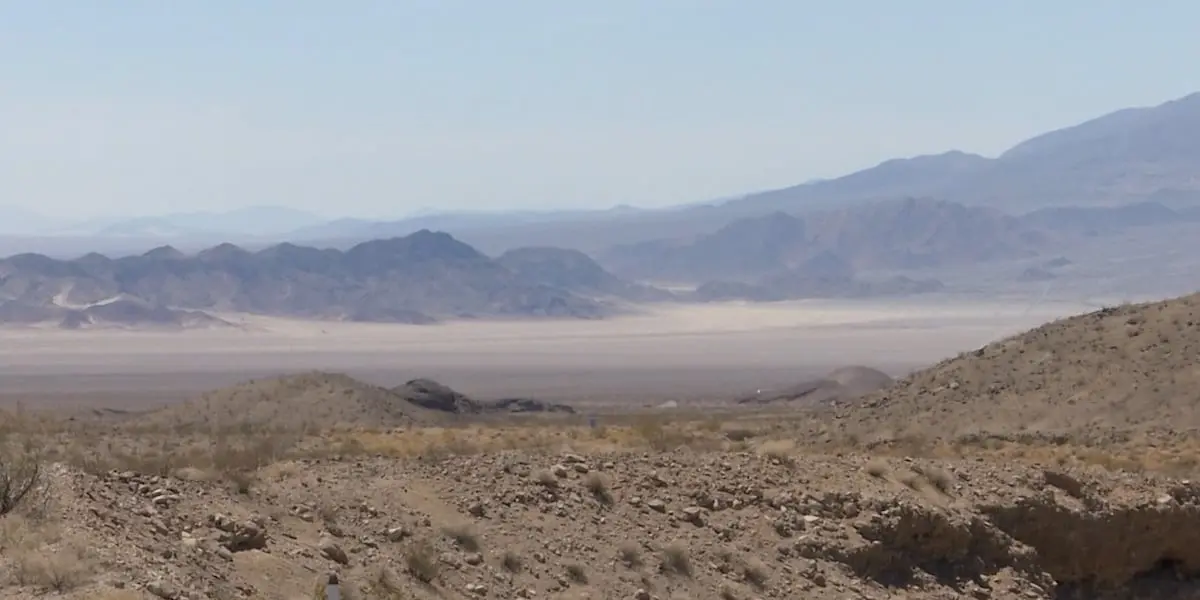
The environment they stepped into was hostile in the extreme. By early afternoon, the temperature in the low-elevation basin had climbed to 116°F (46.7°C). On the open salt flats, there is no shade, no vegetation, and the white ground reflects solar radiation back upward, intensifying the thermal load on the human body.
The pair walked for over an hour, covering approximately 1.3 miles. Under these conditions, the body’s cooling mechanisms fail rapidly without massive water intake. Formosa began showing signs of severe heat illness and was eventually unable to continue. Recognizing the gravity of the situation, his companion left him behind to hasten the search for assistance.
Rescue Mobilization and Discovery
The companion walked at least another quarter-mile before reaching a roadway, where he successfully flagged down a passing driver. The driver transported the exhausted survivor to the Furnace Creek Visitor Center, arriving shortly after 2:00 p.m. to report the emergency.
The response from emergency services was immediate:
- 2:13 p.m.: National Park Service rangers and an Inyo County Sheriff’s deputy officially launched a joint search-and-rescue (SAR) operation.
- Mid-Afternoon: Recognizing the vast terrain and extreme temperatures, the California Highway Patrol (CHP) dispatched a helicopter crew to assist from the air.
- Late Afternoon: The CHP aerial crew spotted Formosa’s motionless body on the salt flats, approximately 1.5 miles from the stranded vehicle.
Ground teams reached the site shortly thereafter. Formosa was pronounced dead at the scene. His companion was treated for severe heat exposure and dehydration but survived.
Supporting Context & Metrics
The Physiology of Heatstroke in Death Valley
To comprehend the speed with which this tragedy occurred, it is necessary to examine the physiological impact of 116°F heat on the human body.
| Temperature Range | Physiological Response & Risks |
|---|---|
| 98.6°F (37°C) | Normal core body temperature; metabolic equilibrium. |
| 100°F – 104°F (37.8°C – 40°C) | Heat Exhaustion: Heavy sweating, rapid pulse, dizziness, headache, nausea. The body is struggling to cool itself via evaporation. |
| 104°F+ (40°C+) | Heatstroke: Sweating may stop entirely. Core temperature spikes. Cognitive decline, confusion, delirium, and loss of coordination occur rapidly. |
| 106°F+ (41.1°C+) | Critical Organ Failure: Brain damage, kidney failure, and cardiovascular collapse. Without immediate cooling, death is imminent. |
In an environment where the ambient temperature exceeds normal body temperature (98.6°F), the body cannot lose heat via radiation or conduction; it relies entirely on the evaporation of sweat. However, in Death Valley’s hyper-arid atmosphere, sweat evaporates almost instantly—often before a person realizes they are sweating. This leads to rapid, unrecognized dehydration.
An adult walking active miles in 116°F heat can lose up to 1.5 liters of water per hour. Without continuous replenishment, blood volume drops, the heart must work exponentially harder to pump blood to the skin and vital organs, and core temperature climbs to lethal levels within hours.
The Geography of the Trap: Backcountry Roads vs. Salt Flats
Death Valley is the largest national park in the contiguous United States, encompassing vast expanses of wilderness. While paved corridors like Highway 190 are regularly traveled, hundreds of miles of backcountry roads are unpaved, unpatrolled, and rarely visited during the summer months.
[Backcountry Road] ──(Vehicle Trapped in Mud)──> [Exposed Salt Flats] ──(No Shade / 116°F)──> [Dehydration & Collapse]The salt flats of Death Valley, particularly those in the Badwater Basin area, are composed of thick crusts of sodium chloride mixed with mud. Walking on this terrain is physically grueling; the crust can be uneven, sharp, and occasionally fragile, breaking underfoot to reveal wet, muddy clay underneath. The reflective nature of the white salt crust increases the solar radiation absorbed by a walker, creating an oven-like effect.
Official Statements
The tragedy has prompted somber reflections and stern warnings from regional authorities.
Mike Reynolds, Superintendent of Death Valley National Park, emphasized the deceptive speed with which the desert environment can turn lethal:
"This is a heartbreaking reminder of how quickly conditions here can turn dangerous. Death Valley is an extraordinary place, but its heat, distances, and remoteness can be dangerous, regardless of experience. We mourn with Mr. Formosa’s family and friends during this incredibly difficult time."
The Inyo County Coroner’s Office has taken custody of the deceased to conduct a formal autopsy. While the preliminary investigation points to extreme hyperthermia and dehydration, the official cause and manner of death will be determined upon completion of the medical examiner’s report.
Future Outlook: Survival Protocols & Park Management
As global temperatures continue to rise, national parks across the American Southwest are seeing an increase in extreme weather events and high-temperature anomalies. This trend has forced a reevaluation of how park services manage visitor safety, tourism marketing, and emergency infrastructure.
The "Stay with Your Vehicle" Directive
Search-and-rescue experts universally agree that the primary error made by Formosa and his companion was leaving their vehicle. In any desert survival scenario, a vehicle is a critical asset:
- Physical Shelter: A vehicle provides a barrier against direct solar radiation and hot winds. Even without air conditioning, sitting inside a shaded car is significantly cooler than walking in direct sunlight over reflective salt flats.
- Visibility: For search-and-rescue teams—especially those operating aerial assets like helicopters—a car is a large, metallic, highly visible target. Spotting a single human being walking across miles of wilderness is akin to finding a needle in a haystack.
- Resource Conservation: Walking accelerates dehydration and heat exhaustion. Staying stationary preserves metabolic energy and reduces water loss.
                  ┌────────────────────────────────────────┐
                  │      IF YOUR VEHICLE GETS STUCK:       │
                  └───────────────────┬────────────────────┘
                                      │
                   ┌──────────────────┴──────────────────┐
                   ▼                                     ▼
     [ STAY WITH THE VEHICLE ]              [ WALK FOR HELP ]
     • Provides shade & shelter             • Extreme physical exertion
     • Highly visible to air rescue         • Rapid dehydration (1.5L/hr)
     • Conserves vital energy               • High risk of disorientation
     • Keeps resources consolidated         • Extremely difficult to spot
                   │                                     │
                   ▼                                     ▼
         ( HIGH SURVIVAL RATE )                 ( EXTREME DANGER / FATAL )
Addressing the "GPS Trap" and Backcountry Preparedness
A recurring issue in modern national park rescues is the reliance on digital navigation apps. Standard GPS mapping algorithms frequently direct drivers onto unmaintained backcountry dirt roads, labeling them as "shortcuts" or viable routes without accounting for seasonal closures, road washouts, or vehicle limitations.
In response to these challenges, park management and safety advocates are pushing for several systemic changes:
- Enhanced Digital Warning Systems: Collaborative efforts with major navigation companies (such as Google Maps and Apple Maps) to flag remote Death Valley roads as closed or hazardous during summer months.
- Increased Physical Signage: Placing highly visible, multilingual warning signs at the entry points of known backcountry routes, warning tourists of the lack of cell service, water, and emergency patrols.
- Pre-Trip Registration: Encouraging backcountry travelers to fill out mandatory or voluntary itineraries with park rangers before venturing off paved roads.
Ultimately, officials stress that no amount of infrastructure can replace personal preparedness. Visitors to arid regions during summer are urged to carry at least one gallon of water per person, per day, along with high-calorie food, physical topographic maps, and a satellite communication device (such as a PLB or Garmin inReach) that functions independently of cellular networks.
The tragic loss of Pierre Michel Formosa serves as a stark, enduring testament to the unforgiving reality of the American desert—a landscape where a single mechanical failure, combined with a misplaced decision, can swiftly lead to a fatal outcome.

0 Comments