

Executive Overview
A devastating collision on a rural highway in Coffey County, Kansas, has left seven people hospitalized and resulted in the death of a draft horse, highlighting the persistent safety hazards that exist on shared agricultural roadways. The incident, which occurred on the evening of Saturday, September 5, 2026, involved a Jeep SUV and a traditional horse-drawn buggy carrying a family of six, including four children.
According to preliminary reports from the Coffey County Sheriff’s Office, the SUV struck the rear of the buggy at highway speeds. The impact caused catastrophic damage to the wooden carriage, ejecting its occupants and inflicting severe injuries. Emergency medical services, including an air ambulance helicopter, were dispatched to the scene to transport the victims to regional trauma centers.
This collision underscores a growing national concern regarding the compatibility of high-speed motor vehicle traffic and slow-moving, non-motorized transport on rural corridors. As law enforcement officials continue their investigation into the exact cause of the crash, the incident has reignited discussions among transportation safety advocates, local authorities, and agricultural communities about infrastructure improvements, motorist education, and safety regulations for horse-drawn vehicles.
Detailed Chronology of the Incident
The Collision on the Highway
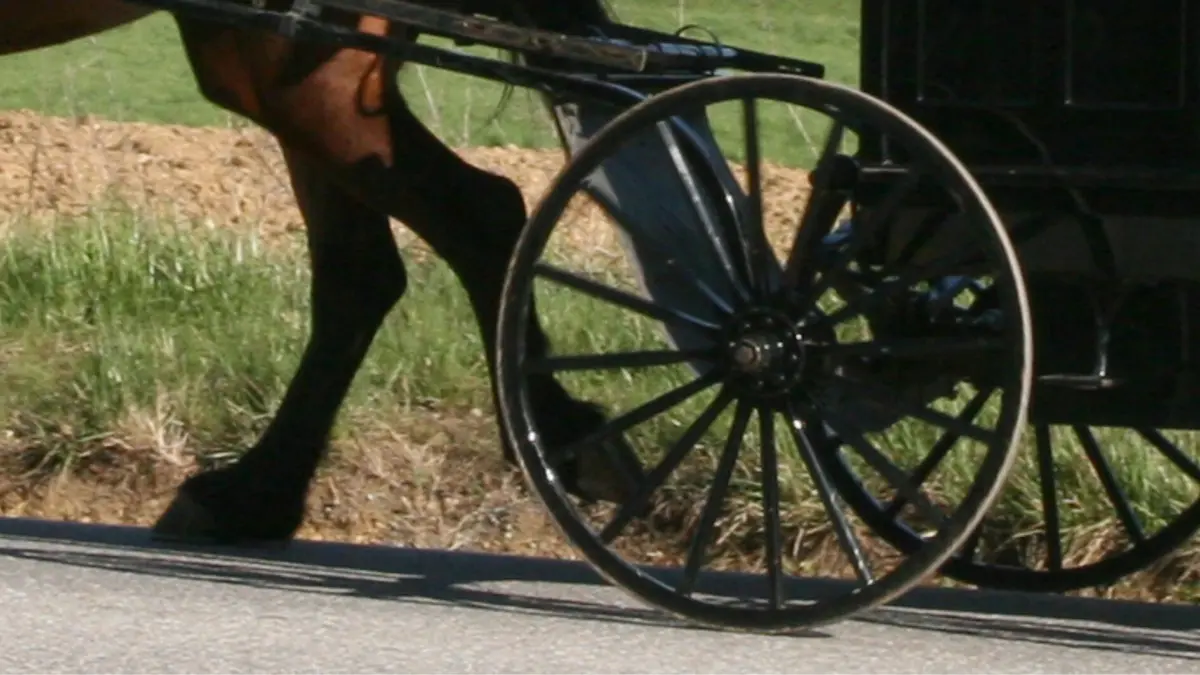
On Saturday evening, a local family consisting of a mother, a father, and their four young children were traveling in a horse-drawn buggy along a highway in Coffey County. The buggy was heading in a designated travel lane, maintaining a typical pace of approximately 5 to 8 miles per hour.
At the same time, a male driver operating a Jeep SUV was traveling in the same direction behind the carriage. As the SUV approached the slow-moving buggy, the driver apparently failed to perceive the carriage in the roadway. Traveling at highway speeds—which typically range from 55 to 65 miles per hour on rural Kansas state routes—the SUV struck the rear of the horse-drawn buggy with immense force.
Immediate Emergency Response
The force of the high-speed impact immediately demolished the wooden structure of the buggy, scattering debris across the roadway and throwing all six occupants from the vehicle. The draft horse pulling the carriage sustained catastrophic injuries from the initial impact and the subsequent wreckage.
Passing motorists and nearby residents alerted emergency services, prompting a multi-agency response. Deputies from the Coffey County Sheriff’s Office, local fire departments, and emergency medical technicians (EMTs) arrived quickly to triage the casualties.
Due to the severity of the mother’s injuries, dispatchers requested an air ambulance. A life-flight helicopter landed directly near the highway to transport her to a level-one trauma center. The father and the four children, all of whom sustained varying degrees of injury, were stabilized at the scene and transported via ground ambulances to nearby regional hospitals. The driver of the Jeep SUV was also transported to a medical facility for evaluation and treatment of injuries sustained in the crash.
| Victim(s) | Transport Method | Injury Status |
|---|---|---|
| Mother (Buggy Occupant) | Air Ambulance (Helicopter) | Traumatic / Critical |
| Father & Four Children | Ground Ambulance | Hospitalized / Under Evaluation |
| Jeep SUV Driver | Ground Ambulance | Hospitalized / Under Evaluation |
| Draft Horse | N/A (Euthanized at Scene) | Fatal Injuries |
The Fate of the Draft Horse
As first responders worked to stabilize the human victims, deputies assessed the condition of the family’s draft horse. The animal had suffered severe, non-survivable trauma to its limbs and torso.
Recognizing the animal’s extreme suffering, and acting under the direct guidance and authorization of the injured family members at the scene, law enforcement officers humanely euthanized the horse. This decision, though tragic, is a standard protocol in rural accidents where veterinary intervention cannot salvage the life of a severely mangled animal.
Supporting Context & Metrics: The Physics of Rural Roadway Collisions
To understand how these devastating accidents occur, it is necessary to examine the physical dynamics of shared rural roads, where high-speed passenger vehicles and slow-moving agricultural or horse-drawn carriages occupy the same lanes.
The Danger of Speed Differentials
The primary contributing factor in rear-end collisions involving horse-drawn buggies is the concept of "speed differential." When a passenger vehicle traveling at 60 mph approaches another car traveling at 50 mph, the closing rate is minimal, allowing the trailing driver ample time to react. However, when a vehicle traveling at 60 mph encounters a buggy traveling at 5 mph, the closing rate is exceptionally high.
- The Math of Reaction Time: At 60 mph, a vehicle travels approximately 88 feet per second. If a motorist rounds a curve or crests a hill and spots a buggy 300 feet ahead, they have just over 3.4 seconds to recognize the hazard, apply the brakes, and bring the vehicle to a complete stop.
- Perception-Reaction Distance: The average driver requires 1.5 seconds simply to perceive a hazard and initiate braking. In that time, the vehicle has already traveled 132 feet, leaving less than 170 feet to stop—a distance insufficient for most vehicles traveling at highway speeds on asphalt.
[SUV: 60 mph (88 ft/s)] -------------------> [Buggy: 5 mph]
Distance: 300 feet
Perception/Reaction Time (1.5s): SUV travels 132 feet before brakes are applied.
Remaining Stopping Distance: 168 feet (Inadequate for complete stop at 60 mph).
Structural Vulnerability of Traditional Carriages
Unlike modern automobiles, which are engineered with crumple zones, steel roll cages, seatbelts, and airbags designed to absorb and dissipate kinetic energy, traditional buggies offer almost no physical protection.
Typically constructed from lightweight wood, fiberglass, and canvas, these carriages disintegrate upon impact with a multi-ton motorized vehicle. The kinetic energy of a 4,000-pound SUV traveling at 60 mph is transferred directly into the carriage and its occupants, leading to severe ejection injuries, traumatic brain injuries, and internal trauma.
Official Statements & Investigative Focus
The Coffey County Sheriff’s Office has launched a comprehensive investigation into the circumstances surrounding the crash. Investigators are focusing on several key variables to determine why the SUV driver failed to see the buggy in time to avoid the collision.
Key Areas of Investigation
- Distracted Driving: Investigators are reviewing the SUV driver’s mobile device records and vehicle telematics to determine if electronic distraction played a role in the seconds leading up to the crash.
- Environmental Conditions: The crash occurred on Saturday evening. Investigators are analyzing the sun’s angle, potential glare, and ambient lighting conditions at the exact time of the collision to determine if visibility was compromised.
- Buggy Visibility and Signage: Under Kansas state law, slow-moving vehicles, including horse-drawn carriages, are typically required to display a reflective Slow-Moving Vehicle (SMV) emblem—a triangular orange sign with a red border—when traveling on public highways. Investigators are examining the wreckage to verify if the buggy was equipped with the required reflective markers, lanterns, or active lighting.
Statement from Local Law Enforcement
While the sheriff’s office has not released the names of the victims or the driver pending the completion of the initial investigation, a representative emphasized the importance of driver vigilance on rural corridors:
"Accidents involving agricultural equipment and horse-drawn carriages are deeply tragic because they are almost entirely preventable. We urge all motorists traveling on our county’s highways to remain fully focused on the road ahead, especially during dawn, dusk, and weekend hours when traditional carriages and farm machinery are most active. A momentary distraction can have lifelong, devastating consequences for an entire family."
Future Outlook: Mitigating Risks on Shared Roadways
The tragedy in Coffey County highlights the urgent need for systemic solutions to protect vulnerable road users in rural agricultural communities. Across the Midwest and Great Plains, states are exploring various legislative, infrastructural, and technological interventions to reduce the frequency of these catastrophic encounters.
1. Infrastructure Enhancements
One of the most effective ways to prevent collisions between high-speed motor vehicles and slow-moving traffic is physical separation.
- Paved Shoulders: Widening highway shoulders and paving them allows buggies and agricultural equipment to travel outside the primary lanes of traffic. Counties in states with high concentrations of horse-drawn vehicles, such as Ohio, Pennsylvania, and Indiana, have successfully reduced collision rates by implementing wider paved shoulders on designated buggy routes.
- Warning Signage: Installing highly visible, solar-powered warning signs with flashing LED lights in areas frequently traversed by horse-drawn carriages can alert motorists to the potential presence of slow-moving traffic ahead.
2. Technological and Visibility Standards
While traditional communities often eschew modern technology, many have adopted safety-specific innovations to protect their families.
- Active LED Lighting: Many communities now utilize battery-powered flashing LED lights (red and amber) mounted to the rear of their buggies, significantly increasing visibility during nighttime hours and inclement weather.
- High-Visibility Reflective Tape: The application of modern retroreflective tape along the contours of the carriage frame ensures that the vehicle remains highly visible when struck by the headlights of approaching cars.
+-----------------------------------------------------------------+
|               HIGHWAY SAFETY MITIGATION STRATEGIES              |
+-----------------------------------+-----------------------------+
| Action Item                       | Target Outcome              |
+-----------------------------------+-----------------------------+
| 8-foot Paved Shoulders            | Physical separation of flow |
| Flashing LED Warning Beacons      | Increased driver awareness  |
| Retroreflective Buggy Outlining   | Enhanced low-light visibility|
| Public Safety Campaigns           | Reduced distracted driving  |
+-----------------------------------+-----------------------------+
3. Public Awareness and Motorist Education
State departments of transportation are increasingly incorporating rural road safety into driver education curriculums. Educating young drivers to anticipate slow-moving vehicles, understand the meaning of the SMV emblem, and practice safe passing maneuvers on two-lane highways is vital to changing motorist behavior.
As the family injured in the Coffey County crash begins what will undoubtedly be a long and challenging road to physical and emotional recovery, local advocates hope that this tragedy will serve as a catalyst for meaningful safety improvements on Kansas roadways, ensuring that all citizens—regardless of their mode of transportation—can travel safely.

0 Comments