
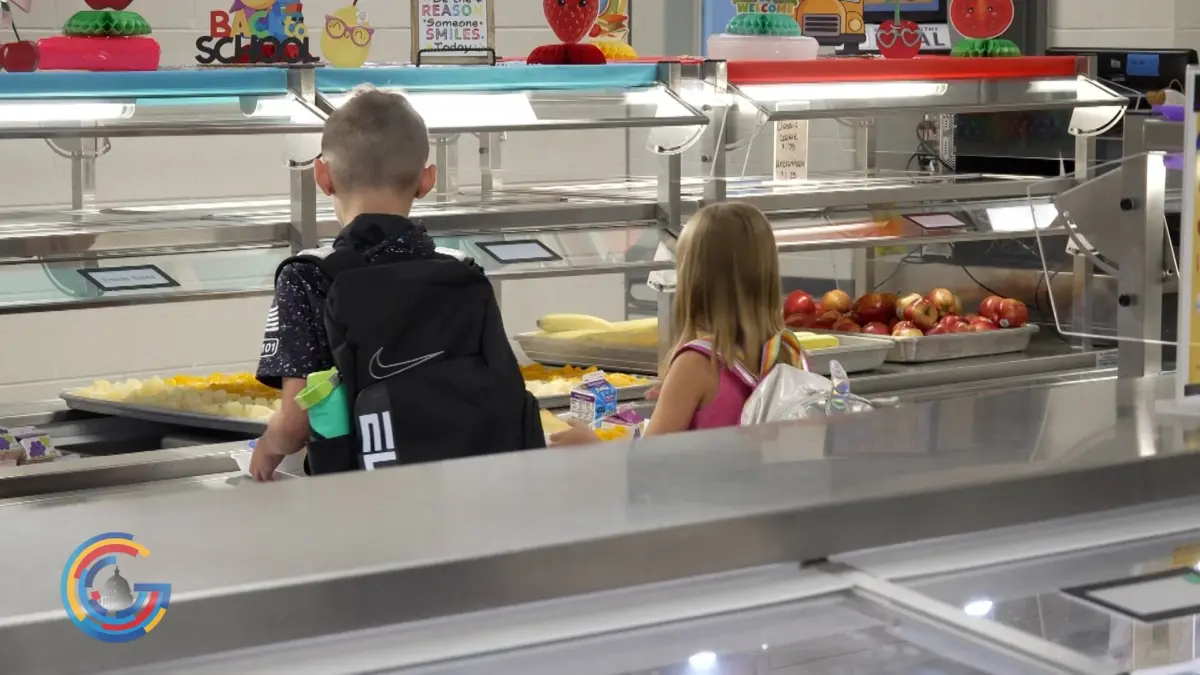

WASHINGTON — As millions of students return to classrooms across the United States for the autumn semester, the institutional school lunch tray is undergoing its most comprehensive modernization in decades. Moving far beyond the stereotypical perception of mystery meats and overly processed starches, the federal government has initiated a sweeping overhaul aimed at redefining what nutritional health means for America’s youth.
In a high-profile joint announcement outside the headquarters of the United States Department of Agriculture (USDA), agency officials unveiled a multi-faceted, heavily funded initiative designed to overhaul school nutrition from the ground up. Entitled "Harvest to Hallways," the program seeks to physically and conceptually shorten the distance between local agricultural producers and the cafeteria lunch plate, prioritizing whole foods, robust infrastructure, and aggressive reductions in ultra-processed ingredients.
The initiative represents a convergence of agricultural policy, public health advocacy, and supply chain reform. Backed by substantial federal investments—including $25 million in targeted farm-to-school grants, $30 million dedicated to lunch improvement research, and an additional $70 million specifically earmarked for cafeteria equipment upgrades—the program addresses structural hurdles that have long plagued institutional feeding programs.
Spearheaded by USDA Secretary Brooke Rollins and bolstered by Health and Human Services (HHS) Secretary Robert F. Kennedy Jr., "Harvest to Hallways" arrives at a critical juncture. With approximately 30 million children relying on school meals daily, the initiative is not merely a dietary suggestion; it is a massive public health intervention designed to combat the rising tide of childhood obesity, metabolic disease, and nutritional deficiency.
Executive Overview
The rollout of "Harvest to Hallways" marks a pivotal policy shift in federal child nutrition programs. For generations, the National School Lunch Program (NSLP) has struggled against economic pressures, logistical bottlenecks, and corporate lobbying that frequently favored cheap, highly processed, shelf-stable foods over fresh, perishable alternatives. The new initiative systematically targets these vulnerabilities through a three-pronged approach: supply chain localization, infrastructure modernization, and rigorous nutritional standards.
At its core, "Harvest to Hallways" seeks to decentralize the procurement process. By injecting $25 million into farm-to-school grants, the USDA is empowering local school districts to bypass massive, consolidated food distributors in favor of regional farmers, growers, and cooperatives. This not only guarantees fresher, more nutrient-dense meals for students but also injects vital capital directly into local agricultural economies.
Simultaneously, the initiative recognizes that schools cannot serve fresh produce if they lack the physical capacity to store and prepare it. Decades of underfunding have left thousands of public school cafeterias operating with obsolete, broken, or entirely non-existent cold storage units, commercial stoves, and food preparation equipment. The newly announced $70 million infrastructure investment directly confronts this deficit, providing districts with the capital assets required to handle whole foods safely and efficiently.
Furthermore, the policy framework is underpinned by a strict nutritional mandate. Under the guidance of the USDA and HHS, participating schools will be heavily incentivized—and eventually required—to phase out ultra-processed foods and drastically reduce refined sugars. This regulatory tightening reflects a growing consensus among federal health officials that dietary habits formed during school-age years have lifelong implications for chronic disease prevention.
Detailed Chronology of the Policy Rollout
The genesis and announcement of the "Harvest to Hallways" initiative followed a fast-tracked, high-stakes trajectory within the federal government, culminating in a major press conference in late August 2026.
Early 2026: Inter-Agency Coalition Building
Recognizing the overlapping jurisdictions of agricultural output and human health, leadership within the USDA and HHS began quietly collaborating on a comprehensive strategy to reform child nutrition. Consultations were held with agricultural extension agents, school nutrition directors, pediatricians, and public health advocates to identify the primary pain points in the existing system. The consensus was clear: schools wanted to serve healthier, locally sourced food, but systemic financial barriers, logistical deadlocks, and outdated kitchen equipment made compliance nearly impossible.
August 24, 2026: Official Program Announcement
The formal unveiling of "Harvest to Hallways" took place on the plaza outside USDA headquarters in Washington, D.C. National correspondent Molly Martinez, reporting for Gray DC, was on the ground as USDA Secretary Brooke Rollins and HHS Secretary Robert F. Kennedy Jr. took to the podium.
Secretary Rollins formally introduced the initiative, breaking down the financial commitments designed to transform the daily operational reality of school cafeterias. Following her remarks, Secretary Kennedy emphasized the moral and public health imperatives of institutional feeding programs, framing school meals as a cornerstone of childhood welfare and development.
Implementation Phase: Fall 2026 and Beyond
With the formal announcement complete, the federal agencies immediately transitioned into the implementation phase. School districts nationwide were given access to application portals for the initial tranche of farm-to-school grants and infrastructure modernization funds. Regional USDA offices began coordinating workshops to help local food producers navigate the regulatory and logistical frameworks required to supply institutional cafeterias, setting the stage for widespread integration during the 2026–2027 academic year.
Supporting Context & Metrics: The Scale of School Nutrition
To understand the profound impact of the "Harvest to Hallways" initiative, one must examine the staggering scale of the American school meal apparatus. According to comprehensive data compiled by the School Nutrition Association (SNA), approximately 30 million children rely on school lunch programs across the United States every single school day.
For many of these students, the institutional cafeteria is not merely a convenience; it is a vital social safety net. Out of the 30 million children utilizing the program:
- Roughly 21 million children are enrolled in free and reduced-price lunch programs.
- For a significant percentage of these students, school breakfast and lunch represent the most nutritionally complete—and in some cases, the only reliable—meals they consume each day.
Given these figures, the nutritional quality of school food is a matter of profound national security and public health. Historically, however, economic pressures forced school districts to rely heavily on low-cost, calorie-dense, ultra-processed commodities. These items, often high in sodium, refined sugars, and trans fats, have been heavily implicated by public health researchers in the skyrocketing rates of childhood obesity, Type 2 diabetes, and early-onset metabolic syndrome.
The financial architecture of "Harvest to Hallways" is strategically designed to disrupt this cycle of reliance on processed commodities:
- $25 Million in Farm-to-School Grants: Dedicated to establishing direct supply lines between local agricultural producers and school kitchens, ensuring that children receive seasonal, locally grown fruits, vegetables, and proteins.
- $30 Million for Lunch Improvement Research: Allocated for scientific study and pilot programs aimed at optimizing meal appeal, reducing food waste, and formulating palatable, low-sugar alternatives that still meet strict federal guidelines.
- $70 Million for Cafeteria Infrastructure: Targeted specifically at upgrading essential kitchen assets, including walk-in refrigerators, industrial freezers, commercial-grade stoves, and food preparation machinery necessary for handling raw, unprocessed ingredients.
Official Statements and Leadership Perspectives
The rollout of "Harvest to Hallways" has drawn significant commentary from key administration officials, who framed the initiative as a long-overdue correction to federal nutritional policies.
During the press briefing outside USDA headquarters, Secretary Brooke Rollins underscored the practical, boots-on-the-ground reality of upgrading institutional kitchens. Addressing the media, Rollins stated:
"The additional $70 million that we are announcing today to upgrade school cafeterias—cold storage, stoves, and other equipment. Seventy million dollars for millions of children. We are removing the roadblocks that have forced our schools to rely on the microwave and the deep fryer, replacing them with the capacity to prepare real, wholesome food."
Rollins emphasized that federal policy must match the operational realities of local school districts, noting that expecting schools to serve fresh, locally sourced produce without adequate refrigeration or cooking facilities was an impossible mandate.
She was joined at the podium by HHS Secretary Robert F. Kennedy Jr., who has long positioned nutritional reform and the elimination of ultra-processed foods as central pillars of his public health advocacy. Kennedy brought a philosophical and humanitarian urgency to the announcement, highlighting the heavy reliance that millions of vulnerable children place on institutional feeding programs:
"For millions of kids, school breakfast and lunch are the most important meals they eat each day. And for many of them, they are the only meals. We have a moral obligation to ensure that the food we provide to our children nourishes their bodies and minds, rather than contributing to chronic disease."
Kennedy’s remarks resonated strongly with public health advocates who argue that modern dietary habits—specifically the pervasive consumption of refined sugars and chemical additives—are directly undermining the cognitive development and academic performance of American youth.
Future Outlook: Challenges and Long-Term Implications
While the introduction of "Harvest to Hallways" has been widely praised by public health organizations, agricultural unions, and parent-teacher associations, food policy experts note that the path to complete institutional reform is fraught with logistical and financial challenges.
Overcoming Supply Chain Hurdles
Transitioning from massive, centralized commodity distributors to localized farm-to-school pipelines requires delicate coordination. Small and medium-sized local farmers often lack the massive inventory, standardized packaging, or commercial distribution networks required to reliably supply entire school districts. The USDA’s $25 million grant program must effectively bridge this gap, helping local agricultural producers scale their operations to meet institutional demands without overwhelming their capacities.
Workforce Development and Kitchen Training
Equipping a school with a new commercial stove or walk-in refrigerator is only half the battle. School nutrition workers, who are frequently underpaid and overworked, must also be trained in the art of scratch-cooking. Preparing fresh vegetables, whole grains, and raw meats requires significantly more labor and culinary skill than simply heating up pre-packaged, frozen meals. Future allocations will likely need to focus on staff training and workforce retention within school cafeteria systems.
Sustaining Long-Term Funding
While the initial injection of $125 million across grants, research, and infrastructure is a monumental step forward, maintaining long-term momentum will require sustained bipartisan support in Congress. As administrations shift and budgetary pressures mount, advocates stress that child nutrition must remain insulated from political volatility.
Conclusion
"Harvest to Hallways" represents a transformative moment for American education and public health. By acknowledging that academic success is inextricably linked to nutritional health, the federal government has laid down a clear marker for the future. As schools begin integrating local produce, phasing out refined sugars, and modernizing their archaic kitchens, the traditional school lunch tray is finally getting the overhaul it has desperately needed for generations—offering millions of children a healthier foundation for the years ahead.

0 Comments