
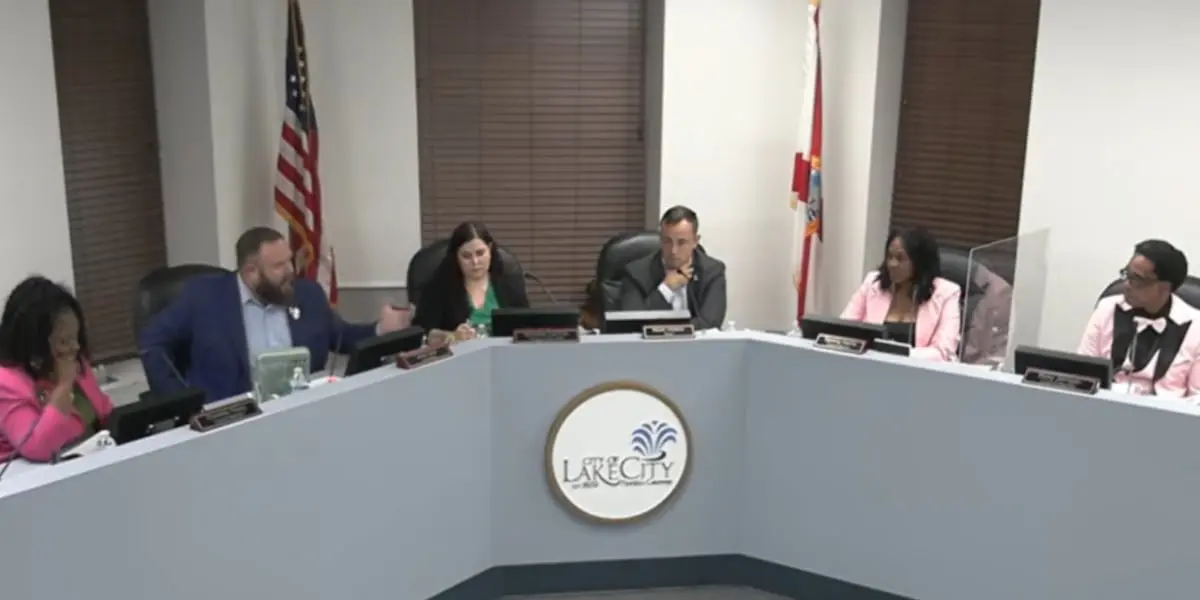

LAKE CITY, Fla. — In a decisive move aimed at preventing a critical lapse in public safety and animal welfare services, the Lake City Council has voted to approve an emergency interlocal agreement with Columbia County. Under the terms of the newly minted six-month contract, county personnel and resources will temporarily assume responsibility for all animal control operations within municipal limits. This transition follows the abrupt termination of the city’s long-standing contract with the local Humane Society, a development that has left municipal leaders scrambling to establish a permanent framework for stray management, rabies control, and animal cruelty investigations.
The decision, finalized during an emergency council session, highlights the growing fiscal and operational pressures facing small-municipality animal services across Florida. With no private contractors or alternative
non-profit agencies stepping forward to bid on the city’s open request for proposals (RFP), the county-wide intervention represents the sole viable buffer against an impending administrative and public health vacuum.
Executive Overview
The governance of domestic animal control in Lake City has entered a period of significant transition. For years, the city relied on a contracted partnership with the Humane Society to manage stray populations, operate sheltering facilities, and enforce local animal control ordinances. However, escalating operational costs, shifting institutional priorities, and structural disagreements over service delivery ultimately led to the termination of this agreement.
Faced with the immediate cessation of services, Lake City administration issued an urgent Request for Proposals (RFP) to identify a successor. When the bidding window closed with zero submissions from alternative private or non-profit entities, the vulnerability of the city’s independent animal control infrastructure became glaringly apparent.
To mitigate the risk of unmanaged stray populations and interrupted public safety enforcement, the Lake City Council voted to approve a temporary, six-month contract with the Columbia County Board of County Commissioners. Under this emergency arrangement, Columbia County Animal Control will expand its jurisdictional footprint to cover municipal Lake City. This transition serves as a temporary stopgap while municipal planners, budget analysts, and regional stakeholders work to design a sustainable, long-term operational model.
Detailed Chronology
The transition of Lake City’s animal control services is the culmination of months of behind-the-scenes administrative friction, budgetary re-evaluations, and urgent legislative maneuvering.
[Early 2026: Contractual Friction]
       │
       ▼
[Mid-2026: Formal Termination of Humane Society Contract]
       │
       ▼
[Late Summer 2026: Failed RFP Cycle (Zero Bids Received)]
       │
       ▼
[September 2026: Emergency Interlocal Negotiations with Columbia County]
       │
       ▼
[October 5, 2026: City Council Votes to Approve 6-Month County Contract]
Phase 1: The Breakdown of the Humane Society Partnership
For several fiscal cycles, the partnership between Lake City and the Humane Society operated under increasing strain. Non-profit animal shelters nationwide have faced unprecedented headwinds, including skyrocketing veterinary costs, labor shortages, and severe shelter overcrowding. In Lake City, these macroeconomic pressures manifested as disputes over the scope of services, response times for non-emergency calls, and the financial compensation required to sustain operations. When negotiations broke down, the contract was formally terminated, setting a hard deadline for the cessation of Humane Society-led municipal enforcement.
Phase 2: The RFP Vacuum
In response to the impending contract termination, Lake City administrators drafted and published an RFP seeking a qualified vendor to assume municipal animal control duties. The scope of work required comprehensive services, including 24/7 emergency response, animal sheltering, quarantine management, and ordinance enforcement.
Despite outreach to regional animal welfare groups and private environmental contractors, the bidding process yielded no proposals. Industry experts point to the high liability, specialized vehicle requirements, and low profit margins of municipal animal control as primary reasons why private entities increasingly avoid these contracts.
Phase 3: The Emergency Interlocal Agreement
Faced with the reality of having no active animal control services, Lake City leadership initiated emergency negotiations with Columbia County administration. Because the county already maintains an active, trained animal control division with established sheltering protocols, expanding their jurisdiction into Lake City was deemed the most logistically feasible solution.
On October 5, 2026, the Lake City Council convened and officially voted to sign the six-month interlocal agreement. Under this contract, the county will receive municipal funding to offset the increased operational costs of patrolling city streets and processing animals captured within city limits.
Supporting Context & Decision-Making Metrics
To understand the gravity of this transition, it is necessary to examine the operational and financial metrics that govern animal control in Columbia County and Lake City.
The True Cost of Municipal Animal Control
Animal control is a highly regulated public health function. In the state of Florida, animal control officers must be certified under state statutes, requiring specialized training in animal behavior, chemical immobilization, and forensic investigation of animal cruelty.
| Operational Cost Center | Estimated Percentage of Municipal Animal Budget | Primary Cost Drivers |
|---|---|---|
| Sheltering & Husbandry | 40% | Food, cleaning agents, kennel maintenance, and liability insurance. |
| Veterinary & Medical Care | 25% | Spay/neuter mandates, rabies vaccinations, emergency triage, and euthanasia drugs. |
| Personnel & Training | 20% | Certified officer salaries, benefits, overtime for emergency night calls, and ongoing training. |
| Fleet & Equipment Maintenance | 15% | Specialized climate-controlled trucks, capture equipment, and fuel. |
The absence of bids for the Lake City contract underscores a broader regional challenge: the cost of providing these services has outpaced the flat-rate funding models historically offered by small municipal governments.
Demographics and Stray Dynamics
Lake City, acting as the county seat of Columbia County, features a dense mix of suburban neighborhoods and commercial corridors that border vast rural expanses. This geography creates unique animal control challenges:
- High At-Large Rates: The transition zones between rural agricultural land and urban neighborhoods frequently experience high rates of abandoned domestic animals.
- Zoonotic Disease Vectors: Managing rabies risks requires active monitoring of interactions between feral animal populations and domestic pets.
- Shelter Capacity Limits: Columbia County’s existing shelter facilities must now absorb the additional volume of animals seized within city limits, raising concerns about space and live-release rates.
Official Statements
The transition has elicited reactions from municipal leaders, county officials, and local animal welfare advocates, highlighting the complex balance between fiscal responsibility and humane animal management.
Lake City Administration Statement:
"Our primary responsibility is the safety and health of Lake City residents. While we valued our historical partnership with the Humane Society, we must adapt to changing economic realities. This six-month agreement with Columbia County ensures that there will be no lapse in coverage. We are incredibly grateful to the County Commission and the county’s animal control team for stepping up to assist the city during this transitional period. Over the next half-year, we will diligently evaluate our options to secure a permanent, financially sustainable, and humane animal control program."
Columbia County Representative Statement:
"Columbia County is prepared to assist our neighbors in Lake City. Our animal control officers are highly trained and ready to extend their coverage areas. However, the public must understand that this is a temporary arrangement. Our existing shelter facilities and staff will be operating at maximum capacity to handle this increased intake. We look forward to working closely with city leadership to help them design a self-sustaining municipal model or negotiate a realistic, long-term joint services agreement."
Local Animal Welfare Advocate Perspective:
"The termination of the Humane Society contract is a wake-up call for our community. Private non-profits cannot be expected to bear the financial burden of municipal public safety mandates without adequate, inflation-adjusted funding. While we are glad the county is stepping in to prevent stray animals from being left without rescue services, we urge both city and county leaders to prioritize humane, no-kill-focused policies and robust spay/neuter funding in whatever permanent solution they design."
Future Outlook
As the six-month clock begins to tick on the temporary county agreement, Lake City officials face a critical decision-making window. City planners have identified three potential long-term pathways forward:
                  ┌──────────────────────────────────────────┐
                  │      Post-Interlocal Pathway Options     │
                  └────────────────────┬─────────────────────┘
                                       │
         ┌─────────────────────────────┼─────────────────────────────┐
         ▼                             ▼                             ▼
┌─────────────────┐           ┌─────────────────┐           ┌─────────────────┐
│ Option A:       │           │ Option B:       │           │ Option C:       │
│ Full Regional   │           │ In-House Agency │           │ Restructured    │
│ Consolidation   │           │ Establishment   │           │ Private Contract│
└─────────────────┘           └─────────────────┘           └─────────────────┘
Option A: Permanent Regional Consolidation
Under this model, Lake City would dissolve its independent animal control ambitions and permanently contract its services to Columbia County through a long-term, multi-year interlocal agreement. This approach offers significant economies of scale, eliminating duplicate administrative roles, pooling shelter resources, and providing a unified dispatch system for residents. However, this would require Lake City to dedicate a permanent, significant portion of its annual tax revenues to the county’s budget.
Option B: Establishing an In-House Municipal Agency
Lake City could choose to purchase its own fleet of animal control vehicles, construct a municipal holding facility, and hire dedicated city employees to run an in-house animal control department. While this gives the City Council total control over policy, enforcement priorities, and sheltering standards, the upfront capital expenditure for facilities and specialized equipment would be substantial, potentially requiring municipal bond issuance or budget cuts in other departments.
Option C: Restructuring the RFP for Private/Non-Profit Bidders
Recognizing that the previous RFP yielded no bids due to financial and operational constraints, city staff could restructure the contract terms. By offering higher monthly retention fees, lowering the liability burden on the contractor, or providing city-owned real estate for sheltering operations, Lake City might entice regional humane societies or private animal welfare firms back to the negotiating table.
Regardless of the path chosen, the next six months will serve as a crucial testing ground. The data gathered during this temporary county-run period—detailing the exact call volumes, shelter intake numbers, and operational bottlenecks within city limits—will provide the empirical foundation Lake City needs to build a stable, humane, and fiscally sound animal control strategy for the future.

0 Comments