

Executive Overview
NEW YORK — For twenty years, the glittering autumn skyline of New York City has served as the backdrop for one of the nation’s most resonant and impactful philanthropic traditions. This fall, the Stand Up for Heroes benefit will mark its momentous two-decade milestone. Scheduled for November 9 at the prestigious David Geffen Hall within the Lincoln Center for the Performing Arts, the milestone anniversary gala promises a characteristically eclectic mix of world-class musical performances and incisive, healing comedy.
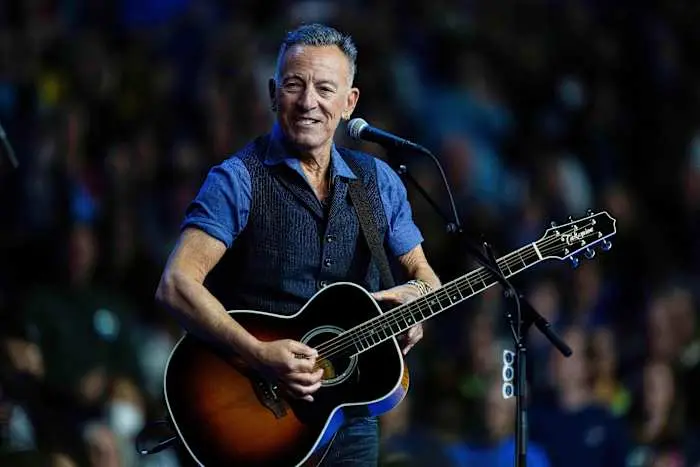
Rock and roll icon Bruce Springsteen, a steadfast champion of the event since its inception, will once again take the stage, joined by a formidable lineup of comedic heavyweights, including Jon Stewart and Hasan Minhaj. Produced jointly by the New York Comedy Festival and the Bob Woodruff Foundation, the star-studded evening directly supports injured veterans, service members, and their military families.
Over the past two decades, Stand Up for Heroes has evolved from a tentative, one-night-only experiment into a cultural powerhouse. To date, the initiative has raised an astounding $117 million—funds that are funneled directly into vital programs addressing the physical, mental, and psychological wounds of modern warfare. As the organization prepares to celebrate its 20th year, the event serves not only as a night of elite entertainment, but as a crucial reminder of the ongoing, long-term commitments required to care for those who bear the invisible and visible scars of service.
Detailed Chronology: From Wartime Tragedy to a Cultural Institution
To understand the profound weight of the upcoming 20th-anniversary gala, one must trace the event back to its origins in the crucible of modern conflict and personal survival.
The Catalyst: Iraq, 2006
The genesis of the Bob Woodruff Foundation—and by extension, Stand Up for Heroes—is inextricably linked to the harrowing experiences of its namesake. In January 2006, ABC News anchor Bob Woodruff was embedded with U.S. troops in Iraq. While traveling in a mechanized vehicle near Taji, just north of Baghdad, a roadside bomb—an improvised explosive device (IED)—detonated near his vehicle.
Woodruff and his cameraman, Doug Vogt, sustained severe traumatic brain injuries (TBIs). The attack left Woodruff in a medically induced coma for 36 days. His survival was nothing short of miraculous, a testament to the rapid response of military medics and the advanced neurological care provided at military medical facilities. However, as Woodruff navigated the grueling, multi-year rehabilitation process, he and his wife, Lee Woodruff, developed an intimate, harrowing understanding of the systemic gaps facing returning service members. They witnessed firsthand the struggles of veterans returning from Iraq and Afghanistan with complex polytrauma, post-traumatic stress disorder (PTSD), and the daunting bureaucratic hurdles of the Department of Veterans Affairs.
The Inception: 2007
Determined to turn personal trauma into collective action, Bob and Lee Woodruff founded the Bob Woodruff Foundation in 2006. The following year, seeking an innovative way to raise awareness and funds, the foundation partnered with the New York Comedy Festival to launch Stand Up for Heroes.
“When we started this way back in 2007, we thought it would just be a one-time concert,” Bob Woodruff reflected in a statement regarding the upcoming anniversary. “But it’s become one of the most meaningful nights of the year.”
That inaugural 2007 event laid the blueprint for what would follow: a high-energy collision of elite comedy and iconic rock music, anchored by raw, unfiltered storytelling from wounded veterans themselves. What was initially conceived as a modest charity gig struck an immediate chord with New Yorkers and the broader entertainment community, transforming into an annual pilgrimage for top-tier talent.
Evolution Over Two Decades
Throughout the 2010s, Stand Up for Heroes expanded its footprint, moving to larger venues and attracting an increasingly illustrious roster of performers. Artists who traditionally occupied massive stadium tours found themselves performing in intimate theatrical settings, united by a singular, unifying cause.
Over the years, the event has welcomed an extraordinary array of talent. Comedy legends such as Jerry Seinfeld, Chris Rock, Jon Stewart, Stephen Colbert, John Mulaney, Ricky Gervais, Jim Gaffigan, Ray Romano, and John Oliver have traded barbs and delivered razor-sharp sets. Meanwhile, musical titans like Bruce Springsteen, John Mayer, Eric Clapton, and the Red Hot Chili Peppers have provided transcendent auditory experiences.
Yet, amidst the star power, the emotional core of the evening has always remained fixed on the veterans. Through deeply personal testimonials, the audience is repeatedly reminded of the human cost of war, bridging the gap between civilian life and military service in a way few other public events manage to achieve.
Supporting Context & Metrics: The Impact of $117 Million
While the star-studded red carpets and viral comedy clips capture the public’s imagination, the true legacy of Stand Up for Heroes lies in its relentless, data-driven philanthropic impact.
Financial Milestones and Resource Allocation
In the non-profit sector, longevity is often measured by fiscal responsibility and tangible outcomes. Over its 19 completed years, Stand Up for Heroes has generated a staggering $117 million.
Unlike general-fund charities where administrative overhead can dilute direct impact, the Bob Woodruff Foundation employs a rigorous, targeted grant-making strategy. The funds raised through the annual gala are channeled into a nationwide network of community-based programs that address the most pressing issues facing veterans today:
- Combating Veteran Suicide and Mental Health Crises: With an estimated 17 to 22 veterans dying by suicide every day, a significant portion of the funds supports mental health initiatives, destigmatizing therapy, and funding innovative clinical trials for PTSD and TBI treatment.
- Economic Stability and Employment: Transitioning from military to civilian life often presents severe employment challenges. Foundation grants support specialized vocational training, entrepreneurship incubators, and direct career placement services for veterans and their spouses.
- Family Support and Caregiver Resurgence: Recognizing that when a soldier is wounded, the entire family bears the burden, the foundation heavily invests in programs supporting military caregivers—providing respite care, mental health counseling, and educational support for military children.
- Housing and Basic Needs: Funding bridges the gap for veterans experiencing acute homelessness or financial instability, ensuring that those who served the nation are never left to fend for themselves on its streets.
The 20th Anniversary Lineup: A Blend of Veterans and Icons
The milestone 20th-anniversary event on November 9 at David Geffen Hall promises to honor this rich tradition by curating a lineup that balances seasoned veterans of the cause with fresh, dynamic voices.
- Bruce Springsteen: The legendary "Boss" has been the heartbeat of Stand Up for Heroes for nearly its entire run. Known for his marathon acoustic sets, humorous and deeply moving auction items (frequently including his own motorcycle or guitar, fetching millions for the cause), Springsteen’s commitment to the military community is deeply woven into his artistic identity.
- Jon Stewart: A longtime advocate for veterans—most notably leading the legislative charge for toxic-exposed veterans via the PACT Act—Stewart brings his trademark righteous indignation and incisive wit to the Lincoln Center stage.
- Hasan Minhaj: The Peabody Award-winning comedian and writer will bring his sharp, culturally resonant observational comedy to the evening.
- The Resilient, Alex Warren, and Josh Johnson: Representing a diverse cross-section of musical and comedic talent, including The Daily Show correspondent Josh Johnson, this group ensures that the 20th anniversary bridges generational divides in entertainment.
Official Statements and Industry Perspectives
The cultural significance of Stand Up for Heroes is perhaps best understood through the voices of those who have shaped its journey over the past two decades.
In reflecting on the milestone, organizers emphasize that the event’s longevity is a direct reflection of the American public’s enduring respect for its service members.
"When Bob Woodruff survived that horrific attack in Iraq, it changed our family’s trajectory forever," said Lee Woodruff, co-founder of the foundation, in a retrospective interview regarding the organization’s work. "We saw the gaps in the system, but more importantly, we saw the incredible resilience of the men and women wearing the uniform. Stand Up for Heroes was our way of building a bridge between a civilian population that often feels disconnected from war and the military families who carry its heaviest burdens. Twenty years later, that bridge is stronger than ever."
Entertainment industry leaders have similarly praised the event for its unique collaborative spirit. Caroline Hirsch, founder of the New York Comedy Festival and co-producer of the event, noted the rare atmosphere generated backstage.
"You don’t often see rock gods, Emmy-winning late-night hosts, and active-duty combat veterans standing side-by-side sharing stories," Hirsch remarked. "There is an absence of ego at Stand Up for Heroes because everyone in that room—from the people in the back row to the headliners on stage—knows that the spotlight belongs entirely to our heroes."
Military officials and veterans advocacy groups have likewise lauded the Bob Woodruff Foundation for its agility. Unlike massive federal bureaucracies, the foundation has consistently demonstrated an ability to pivot rapidly to address emerging crises—whether funding telehealth initiatives during the COVID-19 pandemic or launching localized emergency assistance funds during natural disasters impacting veteran communities.
Future Outlook: The Next Decade of Advocacy
As Stand Up for Heroes celebrates its twentieth anniversary, leadership is already looking toward the horizon. While the milestone of $117 million raised is a monumental achievement, the challenges facing the veteran community continue to evolve.
Addressing the Post-9/11 and Post-Conflict Landscape
With the formal conclusion of America’s prolonged engagements in Iraq and Afghanistan, the nature of veteran care is shifting. The acute, visible wounds of the early 2000s are increasingly being compounded by the chronic, long-term effects of aging veteran populations, toxic exposure (such as burn pits), and the complex psychological toll of prolonged deployments.
The Bob Woodruff Foundation is actively scaling its investments in preventative mental healthcare and long-term brain health research. By partnering with leading medical institutions and technology incubators, future funds raised by events like Stand Up for Heroes are expected to target groundbreaking treatments for traumatic brain injury that could revolutionize care not just for veterans, but for civilians suffering from neurodegenerative conditions as well.
Sustaining Public Engagement
One of the primary challenges identified by event organizers is combatting "compassion fatigue" in a 24-hour news cycle saturated with global crises. With fewer Americans serving in the active-duty military today than at any point since the mandatory draft ended in 1973, the cultural divide between civilian society and the armed forces risks widening.
Events like Stand Up for Heroes serve as vital cultural touchstones, ensuring that the sacrifices of military families remain part of the national consciousness. By pairing heavy-hitting entertainment with poignant storytelling, the event successfully engages demographics that might otherwise remain detached from veteran advocacy.
Looking Ahead to November 9
Tickets for the November 9, 2026, gala at David Geffen Hall are currently available, with high demand expected from loyal donors, corporate partners, and entertainment enthusiasts alike. As the house lights dim in Lincoln Center this autumn, and Bruce Springsteen strikes the opening chords of his acoustic guitar while Jon Stewart takes the microphone, the audience will not just be celebrating an anniversary—they will be renewing a sacred social contract.
For twenty years, Stand Up for Heroes has proven that laughter can be a salve, music can be a rallying cry, and a united community can alter the trajectory of a veteran’s life. As the organization steps into its third decade, that mission remains as urgent, vibrant, and essential as ever.

0 Comments