
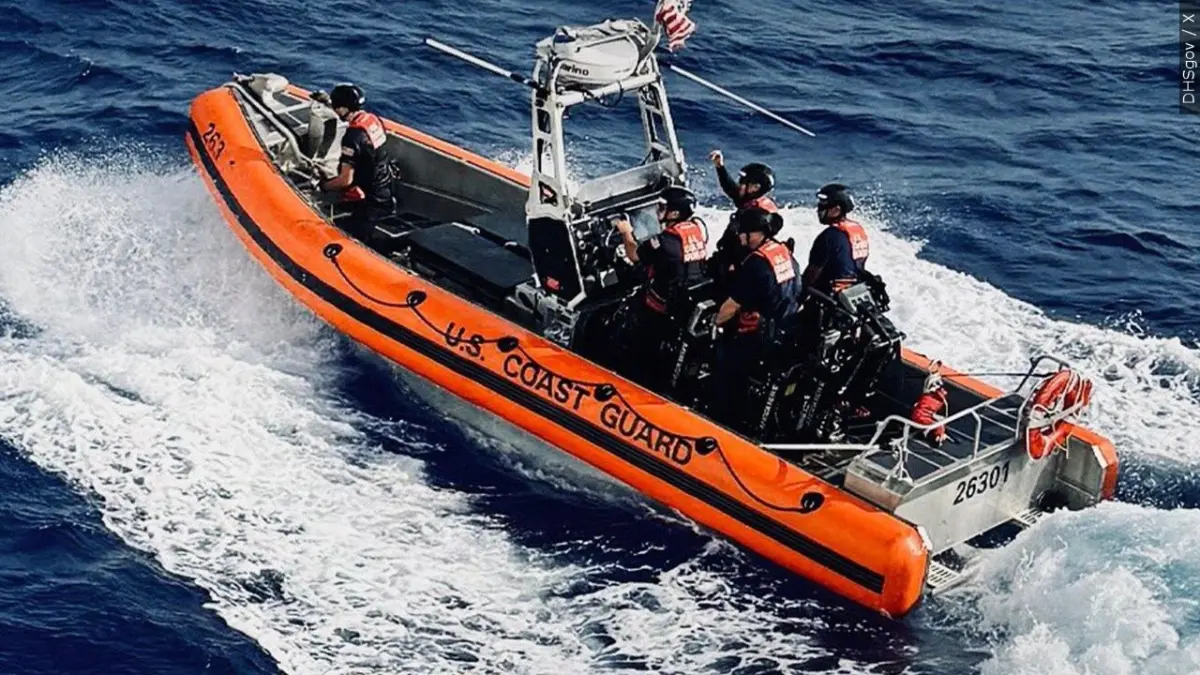

BOSTON & NANTUCKET, MASS. — In the cold waters off the eastern seaboard, a frantic multi-agency search and rescue operation is currently underway. The United States Coast Guard has mobilized surface vessels and long-range aviation assets to scour the Atlantic Ocean after air traffic controllers lost radar and radio contact with an international medical transfer flight bound for Boston, Massachusetts.
The aircraft, a twin-engine Gulfstream G100 business jet carrying six individuals, vanished from tracking systems under circumstances that remain deeply concerning to federal aviation authorities and maritime rescue coordinators. The flight, originating from the British Overseas Territory of Bermuda, was less than an hour from its intended destination when communication abruptly ceased.
As rescue teams battle adverse maritime conditions, aviation safety experts, regulatory bodies, and anxious families await further developments in what has rapidly evolved into a critical mass-rescue incident. Below is a comprehensive investigative breakdown of the ongoing search, the profile of the missing flight, institutional responses, and the broader context surrounding medical transfer aviation along the vital U.S.–Bermuda corridor.
Executive Overview
The incident began to unfold when the Federal Aviation Administration (FAA) notified maritime authorities that a civilian business jet had dropped off secondary and primary radar scopes while operating in regulated airspace over the Atlantic. The aircraft, bearing the tail number CGRJP and identified as a Gulfstream G100 configured for specialized operations, was operating a medical transfer flight.
On board were six occupants, comprising flight crew, medical personnel, and presumably patients or patient escorts, though official confirmations regarding the exact breakdown of passengers remain tightly controlled pending next-of-kin notifications.
The U.S. Coast Guard Northeast command center swiftly acknowledged the emergency, taking to public channels to announce the deployment of search and rescue (SAR) units. Primary search zones have been concentrated in the high-seas area surrounding Nantucket, Massachusetts—a notorious stretch of open ocean known for volatile weather patterns, heavy commercial maritime traffic, and deep-water depths that significantly complicate underwater acoustic localization and recovery operations.
Government and aviation safety analysts are currently examining all possible vectors, including catastrophic mechanical failure, severe weather encounters, rapid depressurization, or sudden structural compromise. While federal agencies have yet to officially rule out any hypotheses, the urgency of the response underscores the high probability of an in-flight emergency followed by an abrupt termination of flight.
Detailed Chronology of Events
Reconstructing the timeline of the final hours, minutes, and seconds of flight CGRJP requires synthesizing data from air navigation service providers, transponder logs, and official Coast Guard communiqués.
Pre-Flight and Departure from Bermuda
Flight CGRJP underwent standard pre-departure inspections at L.F. Wade International Airport (BDA) in Hamilton, Bermuda. The island serves as a critical strategic hub in the western Atlantic, frequently utilized for logistical support, fueling stops, and urgent medical evacuations (MEDEVACs) for patients requiring specialized tertiary care facilities located along the U.S. Northeast corridor, particularly in medical hubs like Boston.
According to flight dispatch data, the Gulfstream G100 taxied and departed under VFR (Visual Flight Rules) transitioning seamlessly to IFR (Instrument Flight Rules) for the transoceanic leg toward Logan International Airport (BOS) or a designated regional medical aviation receiver facility. Six souls were confirmed onboard prior to takeoff. The flight plan indicated a standard cruising altitude within the mid-to-high flight levels, routing the aircraft northwest toward the New England coastline.
En Route Progress and Loss of Signal
The initial phase of the flight proceeded without reported incident. Standard radio check-ins with oceanic control centers were handled routinely. However, as the aircraft transitioned from oceanic airspace into domestic radar control overseen by the FAA’s Boston Air Route Traffic Control Center (ZBW), anomalies began to manifest.
Approximately 45 to 60 minutes prior to its scheduled arrival window, primary radar returns degraded while secondary transponder interrogation yielded no replies. Attempts by air traffic controllers on multiple emergency frequencies (such as 121.5 MHz) to raise the flight deck met with silence. Automated emergency locator transmitter (ELT) signals, which typically trigger upon sudden deceleration or water impact, were evaluated by mission control centers, prompting an immediate escalation from an overdue aircraft alert to a confirmed missing aircraft emergency.
The Coast Guard Mobilization
Upon receiving the distress notification from the FAA, the U.S. Coast Guard Northeast sector initiated a coordinated emergency response protocol. Command posts at District 1 headquarters in Boston established direct liaison with military, federal, state, and local entities.
Search and rescue controllers calculated drift vectors accounting for prevailing surface winds, sea state, and current velocities in the region east and south of Nantucket. By utilizing historical meteorological data combined with real-time satellite buoy feeds, the Coast Guard established a high-probability containment box, deploying both high-endurance cutter assets and specialized rotary- and fixed-wing aircraft equipped with advanced thermal imaging and surface-search radar systems.
Supporting Context & Metrics
To fully understand the gravity and operational complexity of the search for flight CGRJP, it is essential to examine the technical specifications of the aircraft involved, the rigorous nature of medical transfer aviation, and the geographic hurdles presented by the Nantucket search area.
The Aircraft: Gulfstream G100
The Gulfstream G100 (originally designed and manufactured as the IAI Astra) is a twin-engine, high-performance business jet renowned for its transcontinental range, speed, and versatility.
- Powerplant: Powered by two Honeywell TFE731-40R turbofan engines, each capable of producing roughly 4,250 pounds of thrust.
- Performance: It boasts a maximum operating speed of Mach 0.85 and a service ceiling of 45,000 feet, making it a preferred platform for executive transport and specialized configurations, including air ambulance and organ/medical transport roles.
- Capacity: Typically configured to seat between six and nine passengers in a standard executive layout, the cabin can be modified to accommodate stretcher systems, critical care life-support units, medical teams, and flight crews.
Given its robust engineering and stringent FAA certification pedigree, unexpected structural or mechanical failures in-flight are statistically rare for the G100 series, heightening the mystery surrounding its sudden disappearance.
The Challenges of Atlantic Search and Rescue Near Nantucket
The search zone surrounding Nantucket Island is characterized by several punishing environmental factors:
- Bathymetry: The ocean floor off Nantucket drops steeply from relatively shallow shoals into the deep abyssal plain of the Atlantic, creating severe challenges for sonar mapping and submersible operations if the wreckage has sunk to significant depths.
- Oceanographic Currents: The convergence of the Gulf Stream and cooler Labrador Current off the New England coast generates unpredictable, high-velocity surface currents and complex subsurface eddies. Debris fields can drift dozens of miles within a matter of hours, complicating the backward extrapolation of crash sites.
- Maritime Traffic: The approaches to Boston harbor and the New England coast represent some of the busiest commercial shipping lanes in North America, requiring search assets to continuously coordinate with maritime traffic to prevent secondary navigation hazards.
The Vital Role of Medical Transfer Flights
Medical transfer flights operate under immense time pressure, often bridging the gap between isolated island territories like Bermuda and world-class medical centers on the U.S. mainland. These missions frequently involve critically ill patients, specialized transplant teams, or advanced life-support equipment. Operating across open ocean environments introduces unique physiological and mechanical risk factors, requiring flight crews to maintain rigorous adherence to safety protocols even when executing time-critical missions.
Official Statements and Institutional Responses
As the search operation intensifies, key government and regulatory bodies have released preliminary statements outlining their ongoing roles and commitments.
U.S. Coast Guard Northeast Command
In an official statement released via their verified public communications channels, the U.S. Coast Guard Northeast division emphasized the comprehensive nature of the ongoing operation:
"The U.S. Coast Guard has launched an active search and rescue operation following notification from the FAA that contact has been lost with a Gulfstream G100 jet, tail number CGRJP, traveling from Bermuda to Boston. Our primary focus is the preservation of life. We have deployed surface cutters and long-range air crews to the operational area surrounding Nantucket. We are utilizing all available technological and tactical resources to locate the aircraft and its six occupants."
Search coordinators have noted that operations will continue uninterrupted through day and night cycles, utilizing night-vision capabilities and surface radar sweeps to maximize coverage of the designated sector.
Federal Aviation Administration (FAA)
The FAA confirmed that it is cooperating fully with the U.S. Coast Guard, the National Transportation Safety Board (NTSB), and international civil aviation authorities. An FAA spokesperson noted that air traffic control logs, radar track data, and radio transcripts have been secured and impounded for investigative analysis. Once search and rescue phases transition or conclude, the NTSB is expected to take the lead role in determining the probable cause of the incident.
Local Media and Regional Impact
Local outlets, including WFXT Boston, have provided continuous coverage of the unfolding crisis, emphasizing the human element of the tragedy. Medical facilities in the Boston area have been placed on standby to receive patients or support families, though local authorities have refrained from releasing the identities of the six individuals onboard until comprehensive notifications can be completed by consular and military authorities.
Future Outlook & Investigative Roadmap
Looking ahead, the trajectory of this developing story will depend heavily on the progress of the maritime search teams currently operating off the coast of Nantucket.
- Search and Rescue Transition Phase: Under standard international SAR protocols, the active search and rescue phase will continue as long as a reasonable probability of survival remains. If physical evidence or wreckage is recovered, or if environmental factors extinguish survival windows, operations will pivot from rescue to recovery.
- Wreckage Localization and Recovery: Should the aircraft be located underwater, specialized salvage teams equipped with side-scan sonar, remotely operated vehicles (ROVs), and deep-water recovery vessels will be required to retrieve major structural components, engines, and the critical flight data and cockpit voice recorders (the "black boxes").
- Formal NTSB and International Investigation: The National Transportation Safety Board, alongside representatives from aircraft manufacturers and Bermuda civil aviation authorities, will launch a formal, multi-disciplinary investigation. This probe will scrutinize maintenance records, pilot qualifications, meteorological data, air traffic control communications, and metallurgical evidence to piece together the final moments of flight CGRJP.
As the international community watches and waits, the immediate priority remains singular and unyielding: the exhaustive deployment of assets to locate the missing aircraft and bring resolution to the families of the six individuals aboard. Further updates will be provided as official agencies release verified information.

0 Comments