

Executive Overview
For decades, the physical toll of American football has been measured in torn ligaments, broken bones, and surgical scars. However, a far more insidious legacy of the sport operates entirely in the shadows: chronic traumatic encephalopathy (CTE). A degenerative brain disease definitively linked to repetitive head impacts—such as the sub-concussive hits routinely sustained in contact sports and military combat—CTE has cast a long, dark shadow over football at every level, from youth leagues to the National Football League.
To date, the medical community’s greatest hurdle in combating CTE has been a frustrating diagnostic limitation: the disease can only be definitively diagnosed posthumously, through the microscopic examination of brain tissue after death. This grim reality leaves living athletes, veterans, and their families trapped in a psychological limbo, unable to distinguish between normal aging, standard cognitive decline, and the relentless progression of CTE.
Now, a pioneering multi-institution clinical study is striving to change that narrative once and for all. Backed by a $15 million grant awarded in 2025 by the National Institutes of Health (NIH), researchers across the United States are working tirelessly to map out live biological markers that can differentiate CTE from other neurodegenerative conditions like Alzheimer’s disease.
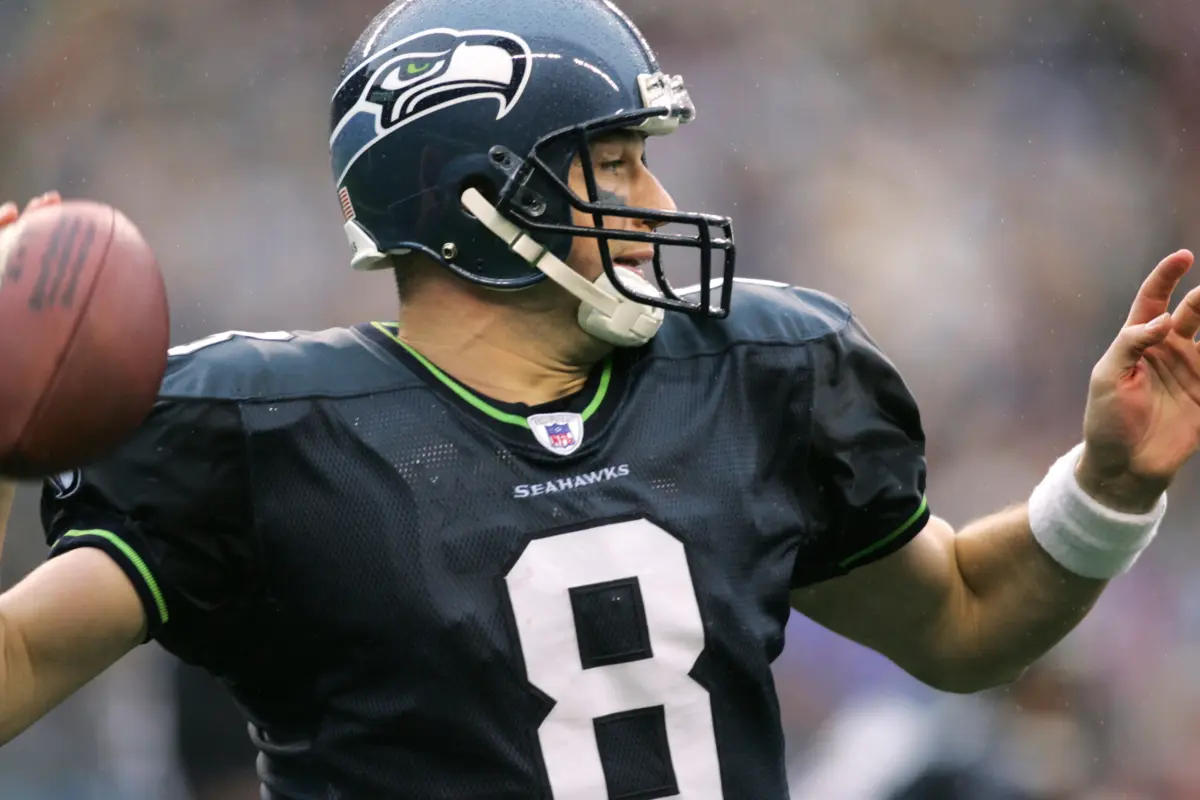
At the forefront of this effort are high-profile volunteers, including former three-time Pro Bowl quarterback Matt Hasselbeck, alongside former Division III linebacker Bryan Savage. By undergoing rigorous cognitive testing, advanced neuroimaging, and biomarker extraction while still enjoying healthy middle adulthood, these men—and dozens of others participating across specialized study sites in Boston, Phoenix, California, Texas, and Florida—are stepping up to the plate. Their goal is not merely to understand their own neurological health, but to build a diagnostic bridge that could finally allow doctors to detect, track, and ultimately treat CTE in the living.
Detailed Chronology: The Evolution of Football’s Head Trauma Crisis
To understand the urgency of the current clinical research, one must trace the timeline of how head injuries have been perceived, managed, and studied in American football over the past several decades.
Pre-Collegiate and Early Years (Pre-1998)
Long before reaching the professional ranks, athletes accumulate a lifetime of sub-concussive blows. Matt Hasselbeck’s personal medical history reflects this reality. Growing up in an active household with a childhood full of sports, Hasselbeck sustained three concussions before even beginning his college career: one playing football, another on the basketball court, and a third from an accidental fall while ice skating. At the time, youth and high school sports infrastructure offered virtually zero oversight regarding head impacts, treating concussions as minor "bell-ringers" rather than traumatic brain injuries.
The College and NFL Era (1998–2015)
Hasselbeck’s career spanned an era of immense physical evolution within the sport. Playing four years at Boston College before embarking on a 17-year NFL career with the Green Bay Packers, Seattle Seahawks, Tennessee Titans, and Indianapolis Colts, Hasselbeck experienced firsthand a culture deeply rooted in athletic toughness.
During the late 1990s and early 2000s, the unwritten code of the professional locker room demanded silence in the face of pain. When asked by trainers or coaches how they felt after taking a devastating helmet-to-helmet hit, the only socially acceptable response for a player protecting his roster spot was, "I’m good." Consequently, numerous concussions went entirely undetected and untreated.
However, the cultural landscape began shifting dramatically during the latter half of Hasselbeck’s career. By the mid-2010s, mounting public pressure, independent neurological spotters, and evolving league protocols fostered an environment where players felt increasingly empowered to report symptoms honestly. Hasselbeck, who actively collaborated with both the league and the NFL Players Association (NFLPA) during his career, takes immense pride in this cultural transformation, continually advocating for rule changes designed to make the game safer.
Post-Career Realization and the Path to Research (2016–Present)
Following his retirement from professional football, Hasselbeck transitioned into broadcasting and family life, safely navigating his 50s alongside his wife and three children. Yet, the stark realities of CTE remained impossible to ignore. High-profile diagnoses of deceased football legends—such as Hall of Fame linebacker Junior Seau, iconic quarterback Ken Stabler, and former New England Patriots tight end Aaron Hernandez—revealed the horrifying extent of neurodegeneration linked to gridiron trauma.
Recognizing that quarterbacks often avoided the catastrophic, repetitive collisions absorbed by interior linemen, linebackers, and special teams players, Hasselbeck felt a profound sense of camaraderie. Knowing his former teammates "had his back" on the field, he volunteered to have his back in the medical arena. In July 2026, Hasselbeck checked into Boston University for a comprehensive, two-day evaluation, joining a select cohort of living athletes attempting to rewrite the future of sports medicine.
Supporting Context & Metrics: The Science of CTE vs. Alzheimer’s
The scientific challenge facing researchers is immense. While Alzheimer’s disease and CTE share numerous clinical symptoms—including memory loss, depression, executive dysfunction, and volatile mood swings—they are fundamentally distinct neurological pathologies driven by different underlying proteins.
Why Early Detection Has Eluded Medicine
According to Dr. Michael Alosco, co-director of clinical research at the Boston University CTE Center and principal investigator for the Boston study site, the primary reason Alzheimer’s research is decades ahead of CTE research boils down to sheer volume and historical data collection.
+------------------------+----------------------------------------------------+----------------------------------------------------+
| Feature                | Alzheimer's Disease                                | Chronic Traumatic Encephalopathy (CTE)             |
+------------------------+----------------------------------------------------+----------------------------------------------------+
| Primary Trigger        | Age-related genetic and environmental factors      | Repetitive head impacts (blast waves, concussions) |
| Core Pathology         | Amyloid plaques and tau tangles                    | Hyperphosphorylated tau aggregates around vessels  |
| Diagnostic Status      | Detectable in living patients via PET/Blood tests  | Definitive diagnosis currently restricted to autopsy |
| Research Timeline      | Decades of heavily funded global study             | Relatively new field requiring active live cohorts |
+------------------------+----------------------------------------------------+----------------------------------------------------+
As Dr. Alosco notes, researchers initially attempted to apply established Alzheimer’s diagnostic frameworks to CTE, only to discover they failed to yield accurate results. Because the specific tau protein configurations in CTE differ from those in Alzheimer’s, scientists must discover and isolate biomarkers unique to mechanical brain trauma.
The Multi-Site National Study Framework
The ongoing initiative—sponsored by a substantial $15 million grant awarded by the National Institutes of Health in 2025—is designed to bridge this data gap. The study actively recruits two distinct demographic profiles:
- At-Risk Athletes: Individuals with a documented history of competitive contact or collision sports at the collegiate or professional level.
- Control Cohorts: Individuals diagnosed with Alzheimer’s disease who have no history of contact sports or repetitive head impacts.
By comparing neuroimaging, blood biomarkers, and cognitive test results between these groups, investigators aim to map the exact discrepancies separating the two diseases.

Alongside Boston, regional research hubs have been established across the country. Dr. Nicholas Ashton, principal investigator at the Arizona study site in Phoenix, notes that approximately 10 patients have already completed evaluations locally. Like his peers, Ashton emphasizes that every additional participant brings science one step closer to precision diagnostics. Once accurate live diagnosis is achieved, therapeutic drug trials can finally be deployed—mirroring the explosive treatment breakthroughs witnessed in modern Alzheimer’s research.
Official Statements & Participant Perspectives
The human element of this scientific crusade is best captured through the words of the researchers and volunteers driving the initiative forward.
Matt Hasselbeck reflected candidly on his experience undergoing two days of intensive physical and mental evaluations at Boston University:
"They need guys like me — they need people who are feeling good to step up to the plate and volunteer," Hasselbeck said. "I played quarterback, so I didn’t take some of the hits that a lot of my teammates took. But the guys who were blocking for me, or playing special teams, or trying to get the ball back for me on defense, I wanted to do something. They had my back, so in a way I’d like to have their back."
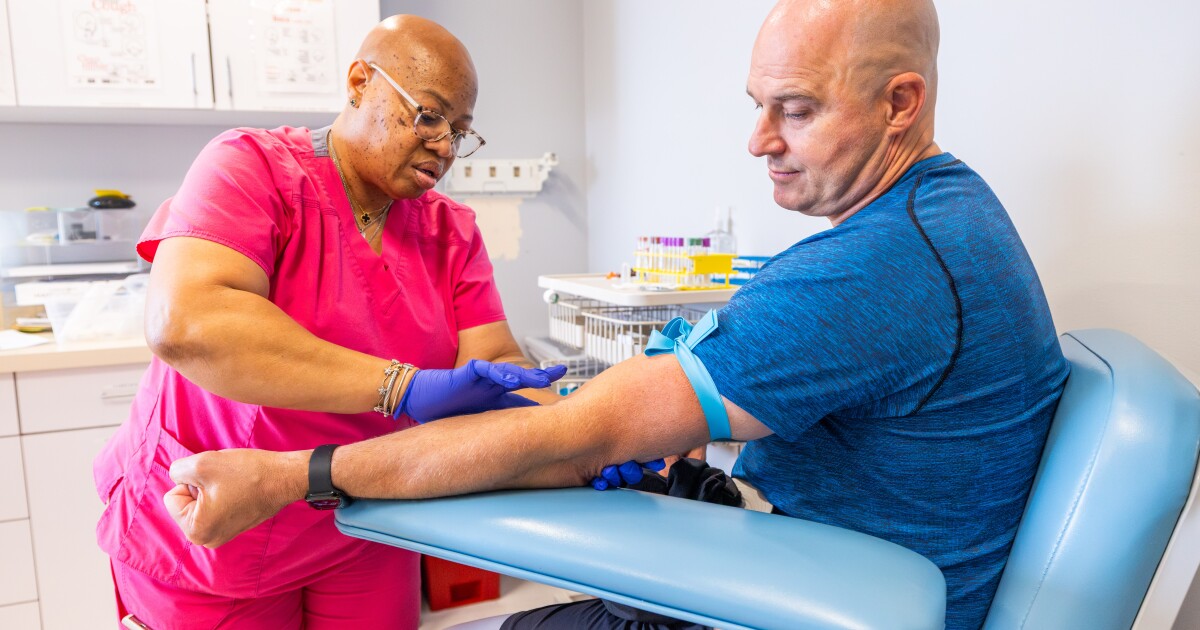
Describing the rigorous battery of examinations—which included counting backward from 100 by sevens, reciting the alphabet backward, drawing blood, undergoing a brain MRI, and receiving a positron emission tomography (PET) scan utilizing a safe radioactive tracer—Hasselbeck admitted the process was deeply humbling:
"I’ve got a healthy respect for people who are dealing with serious brain trauma, whether it’s tumors or cancer," Hasselbeck noted. "I walked in there feeling completely healthy and you still get a little anxious when you’re doing a brain scan, an MRI. You come out and you’re looking at your brain."
Beyond his participation in live biomarker studies, Hasselbeck has taken the ultimate step in scientific commitment: pledging to donate his brain for post-mortem research.
This sentiment is shared by non-professional athletes who carry the physical scars of amateur gridiron play. Bryan Savage, a 56-year-old former linebacker at NCAA Division III Union College in Schenectady, New York, traveled to Boston to participate in the study and has likewise committed to post-mortem brain donation. Savage, who has battled depression and ADHD in recent years, voiced the psychological ambiguity shared by aging football alumni:
"I was interested because of some of the things that I’ve gone through physically and mentally," Savage said. "You wonder if it’s just getting older, a midlife crisis or if it’s related to any brain trauma I might have had playing football. I’ll talk to some of my former friends and they’re going through a lot of the same things. They’ll say — ‘Why do I feel like this? I’ve never been depressed. Things that I used to be passionate about I don’t care about anymore.’"
Following his screening, Savage expressed profound relief upon learning his brain scans appeared normal for a man in his mid-50s, prompting him to actively encourage his former college teammates to step forward and join the research registry.
Future Outlook: A New Era for Neurological Health
The roadmap for CTE research is entering a decisive phase. For years, the conversation surrounding football and head trauma was mired in controversy, litigation, and defensive posturing. Today, fueled by institutional funding from the NIH and the unselfish participation of high-profile icons and everyday athletes alike, the medical community is shifting from passive observation to aggressive discovery.
Dr. Michael Alosco remains decidedly optimistic about what lies ahead:
"I’m really hopeful about detecting CTE — I don’t think that’s too distant. Once we can accurately diagnose, that’s when we can start some treatment trials."
For former players like Matt Hasselbeck and Bryan Savage, the ultimate victory will not be measured on the scoreboard, but in the preservation of cognitive health for future generations. By transforming their own neurological profiles into open books for science, these pioneers are ensuring that the invisible wounds of America’s favorite game will no longer remain hidden in the dark.

0 Comments