

Executive Overview
The history of the National Football League is often written by its superstars—the Hall of Fame quarterbacks, the record-breaking running backs, and the iconic coaches whose names adorn championship trophies. Yet, the true foundation of the league’s golden eras rests upon the shoulders of its role players, the unsung contributors who stepped into the spotlight at critical moments to facilitate greatness.
On August 16, Barry Pearson, a former NFL wide receiver who played for both the Pittsburgh Steelers and the Kansas City Chiefs, passed away at the age of 76. While his name may not occupy the same immediate space in the public consciousness as Terry Bradshaw or Franco Harris, Pearson occupies a permanent, highly unique position in professional football lore.
Signed by the Pittsburgh Steelers as an undrafted free agent in 1972, Pearson was on the field for what is widely considered the most famous play in NFL history: the "Immaculate Reception." Remarkably, this historic moment occurred during his very first active career play in the NFL. Under the legendary guidance of Head Coach Chuck Noll, Pearson was inserted into a high-stakes, season-defining playoff game because of his reputation for reliable route-running and "steady hands."
Following his tenure in Pittsburgh, Pearson transitioned to the Kansas City Chiefs, where he served as a dependable offensive weapon during a transitional period for the franchise, before a severe knee injury prematurely ended his career in 1976.
This investigative retrospective examines the life and career of Barry Pearson. By analyzing the tactical decisions behind his historic NFL debut, evaluating his career metrics within the context of 1970s football, and reflecting on his post-athletic life of profound contentment, we uncover the story of a man who was not merely a bystander to history, but an essential component of its creation.
Detailed Chronology
[1968-1971] Collegiate Career at Northwestern University
       │
[1972] Signed as Undrafted Free Agent by Pittsburgh Steelers
       │
[Dec 23, 1972] Activated for AFC Divisional Playoff; Debut on "Immaculate Reception" Play
       │
[1973] Contributed to Steelers' Offensive Depth
       │
[1974] Traded to Kansas City Chiefs; Recorded 31 Receptions, 417 Yards, 2 TDs
       │
[1975] Career-Best Season with Chiefs: 34 Receptions, 475 Yards, 2 TDs
       │
[1976] Sustained Career-Ending Knee Injury; Retired from NFL
       │
[Aug 16] Passed Away at Age 76
From Evanston to the Steel City (1968–1972)
Barry Pearson’s journey to professional football began at Northwestern University, where he played collegiate football for the Wildcats. During an era when collegiate offenses were heavily run-oriented, Pearson distinguished himself as a precise route-runner with exceptional catching ability. Despite his collegiate productivity, the 1972 NFL Draft passed without Pearson’s name being called.
Undeterred, Pearson signed as an undrafted free agent with the Pittsburgh Steelers in the spring of 1972. At the time, Head Coach Chuck Noll was systematically dismantling the Steelers’ historic culture of losing, building a roster based on discipline, physical toughness, and execution. Pearson’s work ethic during training camp impressed the coaching staff, earning him a spot on the taxi squad (the precursor to the modern practice squad), where he spent the vast majority of his rookie season sharpening his skills against one of the most formidable defensive backfields in football history.
December 23, 1972: A Debut in the Crucible of the Playoffs
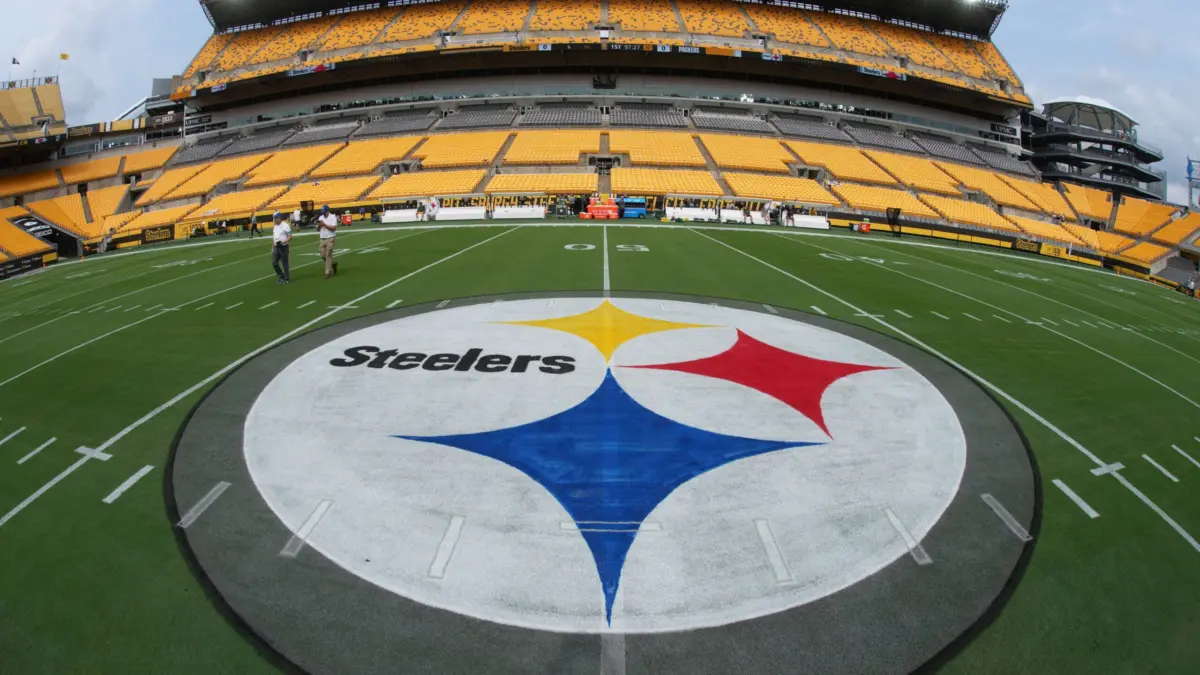
As the 1972 regular season concluded, the Steelers prepared to face the Oakland Raiders in the AFC Divisional Playoff game at Three Rivers Stadium. With injuries taking a toll on the receiving corps, Chuck Noll made the bold decision to activate the rookie Pearson for the contest.
With 22 seconds remaining in the fourth quarter and the Steelers trailing 7-6, Pittsburgh faced a desperate fourth-and-10 situation from their own 40-yard line. Noll gathered his offense on the sideline. Seeking a receiver who could be trusted to run an exact route and secure a difficult catch under immense pressure, Noll inserted Pearson into the lineup.
According to team archives, Noll specifically designed the personnel package for the play—which would become the "Immaculate Reception"—with Pearson in mind, remarking to his staff and players that "Barry’s steady hands would do the trick."
On the ensuing play, Terry Bradshaw dropped back, avoided a fierce Raiders pass rush, and launched a desperation pass downfield toward fullback John "Frenchy" Fuqua. The ball collided with either Fuqua or Raiders defensive back Jack Tatum, ricocheting backward. Franco Harris miraculously scooped the ball inches above the turf and ran it into the end zone for the game-winning touchdown. Pearson, running his designated route downfield, had a front-row seat to the miracle, marking his first official second on an NFL field.
The Kansas City Years and Premature Retirement (1974–1976)
Following the 1973 season, during which he contributed primarily as a depth receiver and special teams player, Pearson was traded to the Kansas City Chiefs. The Chiefs were entering a transitional phase, moving away from the aging roster that had won Super Bowl IV.
In Kansas City, Pearson found a coaching staff eager to utilize his reliable hands. He quickly integrated into the offense, becoming a favorite target of legendary quarterback Len Dawson and his successor, Mike Livingston. Over the 1974 and 1975 seasons, Pearson established himself as a highly reliable possession receiver, consistently moving the chains on third down.
However, the physical toll of 1970s professional football was immense. In 1976, during his third season with the Chiefs, Pearson suffered a devastating knee injury. In an era before modern arthroscopic surgery and advanced ligament reconstruction, such an injury was frequently a career-ending diagnosis. Confronted with the realities of the medical technology of the time, Pearson chose to retire from the NFL at the age of 28.
Supporting Context & Historical Metrics
To fully appreciate Barry Pearson’s career, one must analyze the stark contrast between the pass-heavy schemes of the modern NFL and the run-dominated, highly physical environment of the 1970s.
During Pearson’s active years, defensive backs were permitted to initiate heavy physical contact with wide receivers downfield, and the rules governing quarterback protection were virtually non-existent. Consequently, a wide receiver’s statistics from this era must be viewed through a different analytical lens.
Career Statistical Breakdown
| Year | Team | Games Played | Receptions | Receiving Yards | Average Yards Per Catch | Touchdowns |
|---|---|---|---|---|---|---|
| 1972 | Pittsburgh Steelers | 1 (Postseason) | 0 | 0 | 0.0 | 0 |
| 1973 | Pittsburgh Steelers | 6 | 0 | 0 | 0.0 | 0 |
| 1974 | Kansas City Chiefs | 14 | 31 | 417 | 13.5 | 2 |
| 1975 | Kansas City Chiefs | 14 | 34 | 475 | 14.0 | 2 |
| 1976 | Kansas City Chiefs | 10 | 13 | 148 | 11.4 | 0 |
| Total | NFL Career | 45 | 78 | 1,040 | 13.3 | 4 |
Tactical Analysis of the "Immaculate Reception" Alignment
The decision by Chuck Noll to insert an undrafted rookie who had not played a single regular-season snap into a season-defining playoff game remains one of the most intriguing coaching decisions in NFL history.
The play, officially designated in the Steelers’ playbook as "66 Circle Option," required precise spacing. Pearson was deployed to clear out the deep safety, a assignment that required him to run a demanding vertical route to force the defensive backfield to retreat, thereby opening up the intermediate passing lanes for Fuqua and rookie receiver Ernie Pough.
Had Pearson run an imprecise route or failed to draw the attention of the secondary, the space required for Franco Harris to advance down the sideline after securing the deflected ball would likely have been occupied by Raiders defenders.
Official Statements and Tributes
Following the announcement of Pearson’s passing on August 16, figures from across the professional football community expressed their condolences, highlighting his character, reliability, and the quiet dignity with which he carried his unique place in NFL history.
The Pittsburgh Steelers Organization
In an official retrospective, the Steelers recalled the confidence that Chuck Noll had in the young receiver:
"Barry Pearson’s connection to this franchise is forever secured by one of the most iconic moments in sports history. To be trusted by Coach Noll to execute in that exact moment speaks volumes about Barry’s preparation, character, and talent. We extend our deepest condolences to his family and loved ones."
Family and Personal Legacy
While sports historians remember Pearson for his exploits on the gridiron, his family remembered him as a man of profound contentment who transitioned away from the limelight of professional sports without regret.
According to his obituary published by Weinstein Mortuary, Pearson lived a life characterized by gratitude and love for those around him:
"He always said to his family that he had had the best life and would not have changed a thing. He loved the life he lived and everyone in it."
Pearson’s enduring personal legacy is further illustrated by his 54-year marriage to his wife, with whom he raised their daughter. His ability to build a stable, loving family life after the sudden and injury-forced end of his athletic career stands as a testament to his resilience and grounded perspective on life.
Future Outlook & Historical Legacy
The passing of Barry Pearson is part of a larger, inevitable transition taking place within the NFL community. The generation of athletes who built the modern league during the boom of the 1970s is aging, and with their departure, first-hand accounts of these legendary moments are becoming increasingly rare.
Preserving the Unsung Narrative
Sports historians and researchers are increasingly focusing on players like Pearson to understand the cultural and operational realities of the historical NFL. While superstars dominate the highlight reels, the operational success of historical dynasties like the 1970s Steelers depended heavily on the depth of their rosters.
Pearson’s career serves as a case study in the importance of roster depth and the high standards of preparation enforced by legendary coaches like Chuck Noll. The fact that an undrafted rookie taxi-squad player could step onto the field and flawlessly execute his assignment in a high-pressure playoff game highlights the meticulous teaching methods that defined the era.
A Blueprint for Post-Career Transition
In the modern sports landscape, where retired athletes frequently struggle with identity crises, financial instability, and physical deterioration, Barry Pearson’s post-NFL life offers an inspiring counter-narrative.
Despite having his career cut short by a severe knee injury at the age of 28, Pearson did not harbor bitterness toward the sport or the circumstances of his departure. His frequent declarations to his family that he "had the best life and would not have changed a thing" stand as a powerful blueprint for modern athletes navigating the difficult transition from the arena to private life.
Barry Pearson’s legacy is not merely that of a man who happened to be on the field for the "Immaculate Reception." Instead, his legacy is that of a dedicated professional who answered the call when his name was unexpectedly chosen, executed his duty with quiet excellence, and went on to live a life defined by love, family, and complete contentment.

0 Comments