
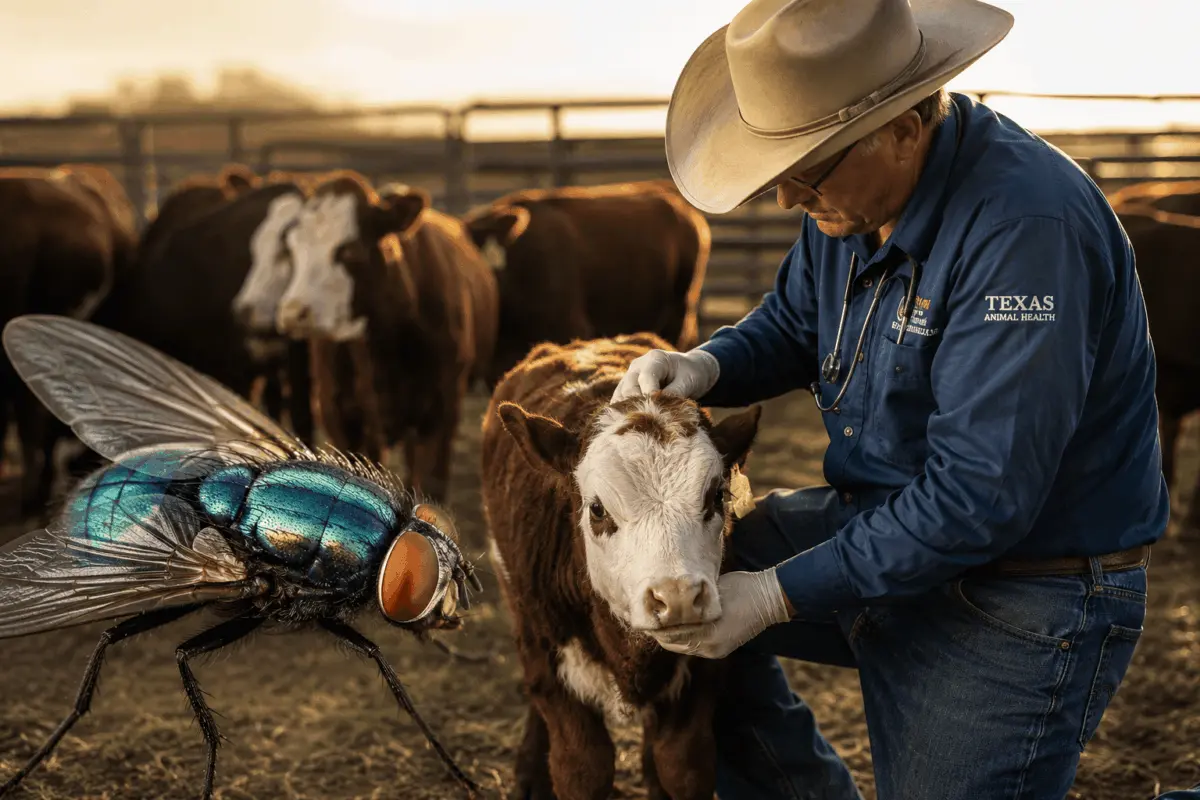

WASHINGTON / AUSTIN — In a critical development for American agriculture and livestock biosecurity, the U.S. Department of Agriculture’s (USDA) Animal and Plant Health Inspection Service (APHIS), in close coordination with the Texas Animal Health Commission (TAHC) and Texas State Veterinarian Dr. Bud Dinges, has officially approved the release of additional New World Screwworm (NWS)—infested zones in Texas.
The announcement marks a significant operational milestone in what federal and state authorities describe as an aggressive, multi-layered containment strategy. While the release of these zones signals measurable progress in suppressing the parasite’s active footprint, agricultural regulators emphasize that continued vigilance remains paramount to safeguarding the nation’s multi-billion-dollar livestock industry, wildlife populations, and animal welfare infrastructure.
Executive Overview
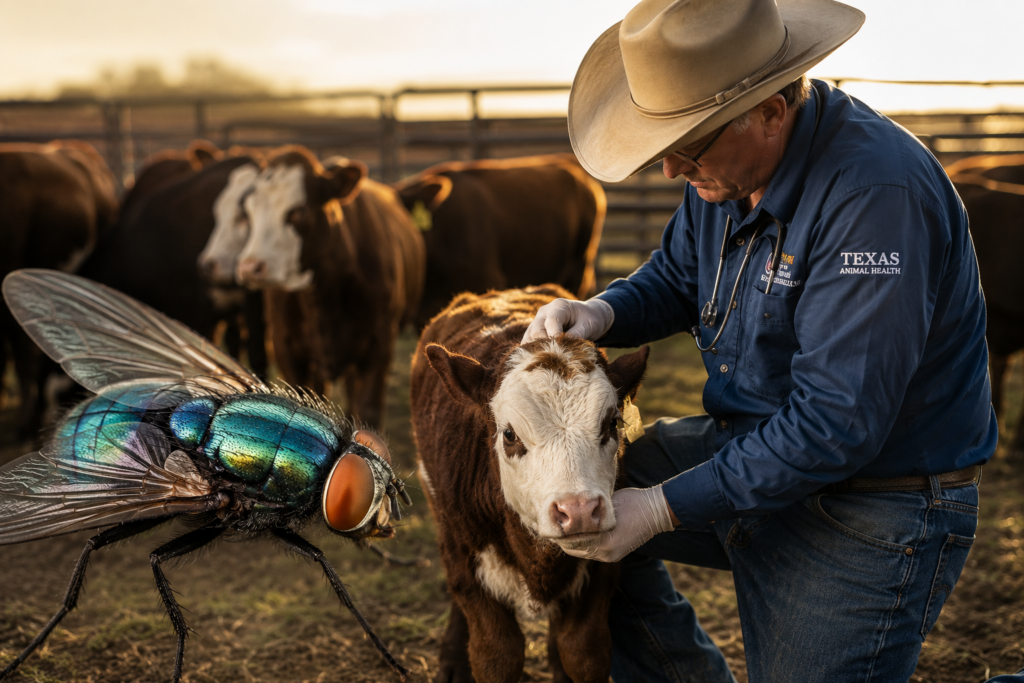
The New World Screwworm (Cochliomyia hominivorax) is widely recognized as one of the most destructive insect pests affecting warm-blooded animals. Unlike common blowflies, which feed on dead tissue, female screwworm flies are obligate parasites that deposit their eggs inside open wounds or mucous membranes of living animals. Once hatched, the voracious larvae burrow deep into living flesh, causing severe tissue damage, systemic infection, and—if left untreated—virtually certain mortality for the host.
Historically eradicated from the United States in the mid-20th century through the groundbreaking Sterile Insect Technique (SIT), the resurgence of NWS remains a persistent threat due to potential re-introductions from endemic regions in Central and South America. The recent detections in Texas triggered an immediate, high-stakes response from federal and state agencies designed to ring-fence the outbreak, eradicate localized populations, and prevent a broader epizootic spread across the Southern Plains and the broader U.S. livestock belt.
The latest clearance of infested zones reflects a successful operational phase driven by rapid surveillance, rigorous movement controls, and unprecedented cooperation between USDA leadership and Texas agricultural authorities.
Detailed Chronology: Response, Containment, and Zone Management
The path toward releasing the designated NWS-infested zones has been defined by swift epidemiological tracking and meticulous field operations.
Phase 1: Detection and Emergency Declaration
Upon the initial laboratory confirmation of New World Screwworm within Texas, APHIS and the TAHC activated emergency response protocols. Incident command structures were established to map the spatial distribution of the pest, identify exposed herds, and implement strict quarantine perimeters. Veterinary diagnostic teams fanned out across the impact zone, examining livestock, companion animals, and local wildlife for signs of infestation.
Phase 2: Inter-Agency Coordination and Strategic Deployment
Controlling an NWS outbreak requires absolute synchronization between federal oversight and local agricultural infrastructure. Under the leadership of Texas State Veterinarian Dr. Bud Dinges, state inspection teams established localized checkpoints, traced animal movements, and provided real-time education to ranchers and livestock auction markets. Simultaneously, USDA specialists deployed specialized surveillance traps and prepared sterile insect release mechanisms to saturate target areas and disrupt the reproductive cycle of the wild population.
Phase 3: Gradual De-escalation and Zone Releases
As weeks of intensive surveillance yielded consecutive rounds of negative diagnostic results within specific quarantined sectors, federal and state epidemiologists began evaluating criteria for zone deregulation. Meeting these stringent benchmarks required proving the absence of active screwworm activity through rigorous inspection protocols and negative trap catches over established biological cycles. The recent joint approval by APHIS and TAHC marks the formal transition of these specific sectors back to standard regulatory status, restoring business continuity for regional producers while maintaining defensive buffers around remaining areas of concern.
Supporting Context & Metrics: The High Stakes of Screwworm Control
To fully understand the gravity of the USDA and TAHC’s actions in Texas, one must examine the profound economic and biological implications of a potential New World Screwworm epidemic in North America.
Economic Vulnerability of the Livestock Sector
The United States cattle, sheep, and goat industries represent a foundational pillar of the national agricultural economy, generating tens of billions of dollars annually. An uncontrolled NWS outbreak would instantaneously disrupt domestic and international trade, trigger devastating livestock mortality, and impose crushing labor and treatment costs on producers.
- Direct Production Losses: Untreated infestations lead to rapid animal depreciation, decreased feed efficiency, weight loss, and hide damage.
- Veterinary and Labor Burdens: Ranchers would be forced to increase handling frequency, apply frequent larvicides, and closely monitor every animal in their herds for minor cuts, tick bites, or branding wounds.
- Trade Disruptions: Trading partners depend on stringent animal health guarantees. A widespread NWS presence could trigger immediate import bans on U.S. livestock and genetic materials, costing the industry billions in lost export revenue.
Ecological and Wildlife Impact
Unlike confined livestock, wild populations of white-tailed deer, feral swine, elk, and exotic game are exceptionally difficult to treat individually. A widespread screwworm incursion threatens native wildlife populations, creating a sylvatic reservoir that can continually re-infect domestic herds. Protecting Texas’s rich biodiversity ecosystem is therefore an inseparable component of the broader agricultural containment strategy.
The Science of Suppression: The Sterile Insect Technique (SIT)
The cornerstone of modern NWS eradication is the Sterile Insect Technique, pioneered decades ago to push the pest’s frontier south of the Panama Canal. By mass-rearing millions of male screwworm flies, sterilizing them via irradiation, and releasing them over affected regions, authorities induce sterile matings with wild female flies. Because female screwworms mate only once in their lifetime, these sterile unions result in unfertilized egg masses, precipitating a rapid collapse of the local wild population. The precision deployment of SIT, coupled with environmental tracking, forms the backbone of the USDA’s long-term defense posture.
Official Statements and Inter-Agency Partnership
The success of the containment and zone-release initiative has been widely attributed to seamless collaboration between federal regulators and state-level agricultural authorities.
Weighing in on the milestone, USDA Under Secretary for Marketing and Regulatory Programs Dudley Hoskins offered high praise for the state’s leadership:
"The Texas Animal Health Commission has been an outstanding partner throughout our response to New World screwworm. Their vigilance, on-the-ground expertise, and unwavering commitment to protecting livestock and wildlife have been essential to our shared success."
Hoskins further emphasized the broader national significance of the cooperative model deployed in Texas:
"Thanks to this strong federal-state partnership, we’ve been able to identify cases early, respond aggressively, and slow the spread of New World screwworm across affected areas. Today’s milestone demonstrates the power of coordinated action, showing producers, communities, and the nation that when we work together, we can protect animal health and maintain continuity of business even in challenging situations."
State agricultural leaders and veterinary officers echoed these sentiments, noting that the transparency and speed of information-sharing between private ranchers, state inspectors, and federal laboratories set a new benchmark for foreign animal disease response.
Future Outlook: Sustaining Vigilance and Long-Term Biosecurity
While the release of additional infested zones is a cause for cautious optimism, agricultural authorities are unified in their message that the battle against the New World Screwworm is far from over.
The Threat of Re-Importation
Because NWS remains endemic in parts of South America and the Caribbean—and poses a constant migratory or transport-related threat across the southern border—the United States can never lower its guard. Continuous surveillance, robust import inspection protocols, and maintenance of readiness facilities remain vital national security imperatives for American agriculture.
Recommendations for Producers and Veterinarians
The USDA-APHIS and the TAHC continue to urge livestock producers, veterinarians, and animal owners across the region to maintain high-level herd management practices:
- Inspect Regularly: Routinely examine livestock, working animals, and pets for any signs of wounds, unusual skin lesions, or flystrike activity.
- Report Suspicious Cases: Immediately report any suspected screwworm infestations to state or federal animal health authorities. Prompt sample collection and laboratory identification are critical to stopping localized outbreaks before they expand.
- Practice Responsible Movement: Adhere strictly to regional movement advisories, quarantine boundaries, and certification protocols when transporting livestock across county or state lines.
As research continues into advanced diagnostic tools and enhanced sterile fly dispersal methods, the collaborative framework forged between the USDA and the Texas Animal Health Commission serves as a resilient model for defending North American agriculture against foreign animal disease threats.

0 Comments