

Executive Overview
As the unrelenting heat of late summer stretches across the American landscape, even the most steadfast bourbon purists find themselves pausing before reaching for a high-proof pour neat or on the rocks. The ambient thermometer often demands a radical pivot in libations—one that trades the cozy, warming qualities of aged whiskey for something frostier, brighter, and immediately cooling. Enter the high-end adult slushie: a culinary intersection where serious craft distilling meets the nostalgic, carefree joy of childhood frozen treats.
Far from being a novelty relegated to beach shacks or spring break dive bars, the frozen bourbon cocktail is undergoing a sophisticated renaissance. Spearheaded by innovative mixologists like Rachel Ramirez, bar program director at Nashville’s historic Nelson’s Green Brier Distillery, the blender is being reclaimed as a legitimate tool of culinary artistry. By leveraging the caramel, oak, and spice notes inherent to quality whiskey and tempering them with vibrant citrus, seasonal fruits, and precise ice manipulation, contemporary bartenders are crafting frozen libations that satisfy both the uninitiated novice and the discerning palate of the craft cocktail aficionado.
This report explores the cultural and technical shift behind the late-summer frozen whiskey trend, examining how historic distilleries are adapting their portfolios for warm-weather consumption, the psychology of nostalgia in modern drinking culture, and the precise mixology required to keep bourbon at the forefront of a heavily chilled glass.
Detailed Chronology: The Evolution of the Bourbon Slushie
To understand how the bourbon slushie migrated from a backyard Southern tailgate staple into the cocktail menu of an award-winning distillery, it is necessary to trace the convergence of weather, whiskey production, and American drinking habits over the past several decades.
The Antecedents: From Sweet Tea to Southern Slush
For generations, the American South coped with oppressive August humidity through variations of iced tea, mint juleps, and sweet fruit punches spiked with local spirits. In the mid-to-late 20th century, the advent of reliable household electric blenders introduced the "whiskey slush"—typically a potent, freezer-stored mixture of strong black tea, frozen citrus juice concentrate, sugar, and a heavy hand of blended or bourbon whiskey. Kept at a semi-frozen consistency in a chest freezer, these batches were scooped out at neighborhood cookouts and porch gatherings.
However, for a long time, these concoctions were looked down upon by the emerging craft cocktail movement of the 2000s and 2010s. The prevailing dogma of the cocktail renaissance dictated that bourbon—an artisanal product requiring years of patient barrel aging—should be treated with reverence, served neat, on a single large ice cube, or in meticulously stirred classics like the Old Fashioned and Manhattan. Blenders were often dismissed as tools for masking the flavors of cheap, low-grade alcohol with mountains of crushed ice and artificial syrups.
The Modern Craft Awakening
The turning point arrived as craft distilleries proliferated across Tennessee, Kentucky, and beyond. Producers like Nelson’s Green Brier Distillery—reviving a historic pre-Prohibition Nashville brand—began experimenting not just with traditional straight bourbons, but with experimental finishes, secondary cask maturation (such as white wine and sherry barrels), and lighter, more fruit-forward flavor profiles designed to appeal to a broader, more diverse demographic of spirit drinkers.
By the mid-2020s, progressive bartenders realized that outright rejection of the blender was an unnecessary limitation. As global temperatures soared to record highs during consecutive late-summer heatwaves, consumer demand shifted dramatically toward refreshments that offered immediate thermoregulatory relief without sacrificing flavor complexity.
"Frozen bourbon cocktails are also perfect for summertime because of the nostalgia," explains Rachel Ramirez of Nelson’s Green Brier Distillery. "We all remember enjoying frozen treats during this time of year, and blending up bourbon slushies is a fun way to recapture that magic."
Rather than masking the whiskey, modern mixologists began utilizing high-proof, flavorful bourbons that could punch through the chilling effects of the blend, ensuring the grain, wood, and ester characteristics remained distinct even at sub-zero temperatures.
Supporting Context & Metrics: The Science of Freezing Whiskey
Crafting a successful frozen whiskey cocktail is not as simple as dumping a bottle of bourbon and a tray of ice cubes into a blender. It requires an understanding of thermodynamics, alcohol chemistry, and sensory perception.
The Physics of Cold and Tastebud Numbing
Human taste receptors are notoriously sensitive to temperature changes. When a liquid is chilled to near-freezing or completely frozen into a slush, our perception of sweetness, bitterness, and alcohol burn shifts dramatically:
- The Sweetness Suppression: Extremely cold temperatures suppress our perception of sweetness. A cocktail that tastes perfectly balanced at room temperature can taste overly tart or astringent when frozen unless the sugar content is subtly elevated to compensate.
- The Ethanol Anesthesia: Cold temperatures temporarily numb the tongue’s pain receptors, which normally register the harsh "bite" of high-proof alcohol. This allows bartenders to use higher-proof, more complex bourbons (often between 90 and 100 proof) in frozen drinks without overwhelming the drinker with ethanol heat.
- Dilution Control: In a standard shaken or stirred cocktail, melting ice provides the necessary dilution to open up the whiskey’s aromatic compounds. In a blender, over-dilution is the primary enemy; if the ice melts too quickly, the drink turns watery and separates. Professional bartenders manage this by utilizing pre-chilled ingredients, commercial-grade high-powered blenders that pulverize ice instantly rather than melting it, and precise ratios of solid to liquid mass.
Market Trends: The Rise of Year-Round Whiskey Versatility
According to recent market data from the distilled spirits council, consumer demographics for American whiskey have broadened significantly. While traditional demographics skewed older and male, contemporary whiskey consumers include a rapidly growing percentage of women and younger adults (ages 25–44) who prefer approachable, dynamic flavor profiles.
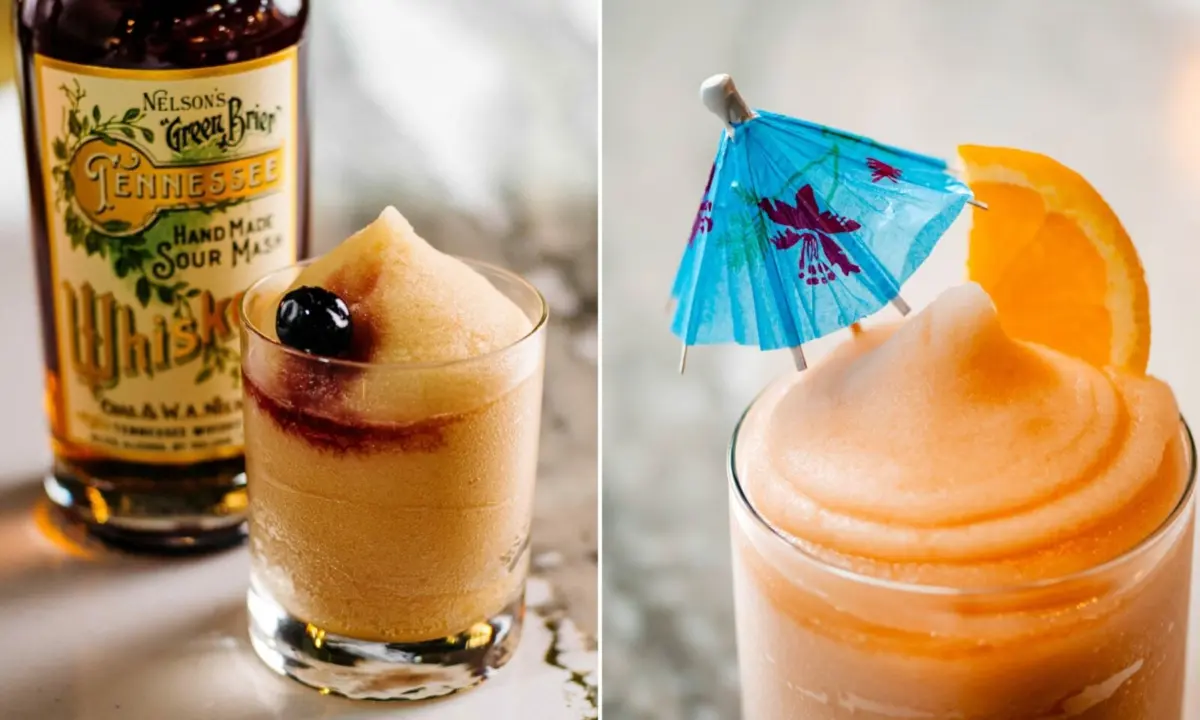
Distilleries responding to this shift have reported surges in summer tourism and tasting-room cocktail sales. Venues that once saw steep drops in whiskey sales during July and August have inverted the trend by introducing innovative, seasonal cocktail menus featuring high-end frozen drinks. At Nelson’s Green Brier, menu items like the Cold Fashioned and the Catalina Wine Mixer serve a dual purpose: they demystify bourbon for newcomers while providing an inventive, palate-cleansing experience for seasoned enthusiasts looking to escape the relentless afternoon heat.
Official Statements & Expert Perspectives
The transition of the whiskey slush from backyard folklore to high-end cocktail bar staple is validated by those working on the front lines of modern mixology.
Rachel Ramirez on Bridging the Gap
Rachel Ramirez, whose expertise guides the acclaimed bar program at Nelson’s Green Brier Distillery in Nashville, emphasizes that approachability should never come at the expense of craft integrity.
"While slushies can serve as an approachable entry point for folks who may be newer to bourbon, we still aim for a balance of ingredients and flavors that satisfy imbibers used to the work of creative mixologists," Ramirez notes.
This philosophy is brilliantly executed in the distillery’s current warm-weather menu offerings. The Cold Fashioned reimagines the ultimate whiskey classic, giving the historic drink a brain-freeze twist while ensuring that the rich, oak-driven profile of the bourbon remains the unquestioned focal point of the glass.
Conversely, the Catalina Wine Mixer—playfully named after the fictional, extravagant event immortalized in the comedy film Step Brothers—utilizes an innovative base: bourbon finished in white wine barrels.
"It’s bright, tart, and perfect for the still-scorching August weather," Ramirez says, describing how the subtle fruit and acidity of the wine cask interacts with the natural sweetness of the corn-and-rye mash bill to create a refreshing, complex summer profile.
The Industry Perspective on Seasonal Adaptability
Industry consultants and master distillers across the American whiskey trail have increasingly recognized that rigid adherence to traditional drinking rituals can alienate consumers during periods of extreme weather. By embracing the blender, distilleries are effectively extending their operating seasons, turning what was once a sluggish mid-summer sales period into a vibrant showcase of culinary creativity.
"The cocktail bar is a laboratory of hospitality," notes one veteran beverage director. "If a guest walks in when it’s 98 degrees outside with 90 percent humidity, telling them to enjoy a 115-proof barrel-proof bourbon neat is bad hospitality. Giving them a meticulously crafted, ice-cold whiskey slushie that respects the spirit while cooling their core temperature—that is peak hospitality."
Future Outlook: Where the Frozen Whiskey Trend Is Headed
As culinary boundaries continue to dissolve, the future of the frozen whiskey cocktail looks exceptionally bright, driven by several emerging trends in mixology and consumer behavior:
- Advanced Cask-Finished Bourbons: Expect to see more distilleries experimenting with secondary maturation specifically tailored for cold and frozen applications. Bourbons finished in rum casks, Madeira barrels, and crisp white wine or cider casks provide natural flavor pairings that shine when blended.
- Technological Innovations in Home Mixology: As high-speed consumer blenders become more sophisticated—capable of achieving commercial-grade textures at home—enthusiasts are no longer relying on gritty, unevenly crushed ice. Smooth, velvety micro-shaved ice textures allow for superior mouthfeel and presentation, elevating the home bartending experience.
- Sustainable, Locally Sourced Mix-ins: Future iterations of the bourbon slushie will likely lean deeper into hyper-local, seasonal agriculture. Infusing frozen whiskey drinks with late-summer heirloom peaches, blackberries, local herbs like lemon verbena and tarragon, and house-made syrups will continue to elevate the category far beyond the artificial concentrates of the past.
Ultimately, the marriage of whiskey and the blender represents a maturation of American drinking culture. It demonstrates that tradition and playfulness are not mutually exclusive. By treating the frozen cocktail with the same technical precision, ingredient respect, and creative vision traditionally reserved for stirred and shaken classics, modern mixologists have successfully conquered the dog days of summer—ensuring that bourbon remains the undisputed king of the glass, no matter how high the thermometer climbs.

0 Comments