For over a century, the glittering lineage of American gemology has maintained a profound, if often overlooked, connection to the rugged terrain of Arkansas. Now, that relationship is taking center stage in a landmark cultural exhibition that bridges the gap between raw geological wonder and high-end artistic design.
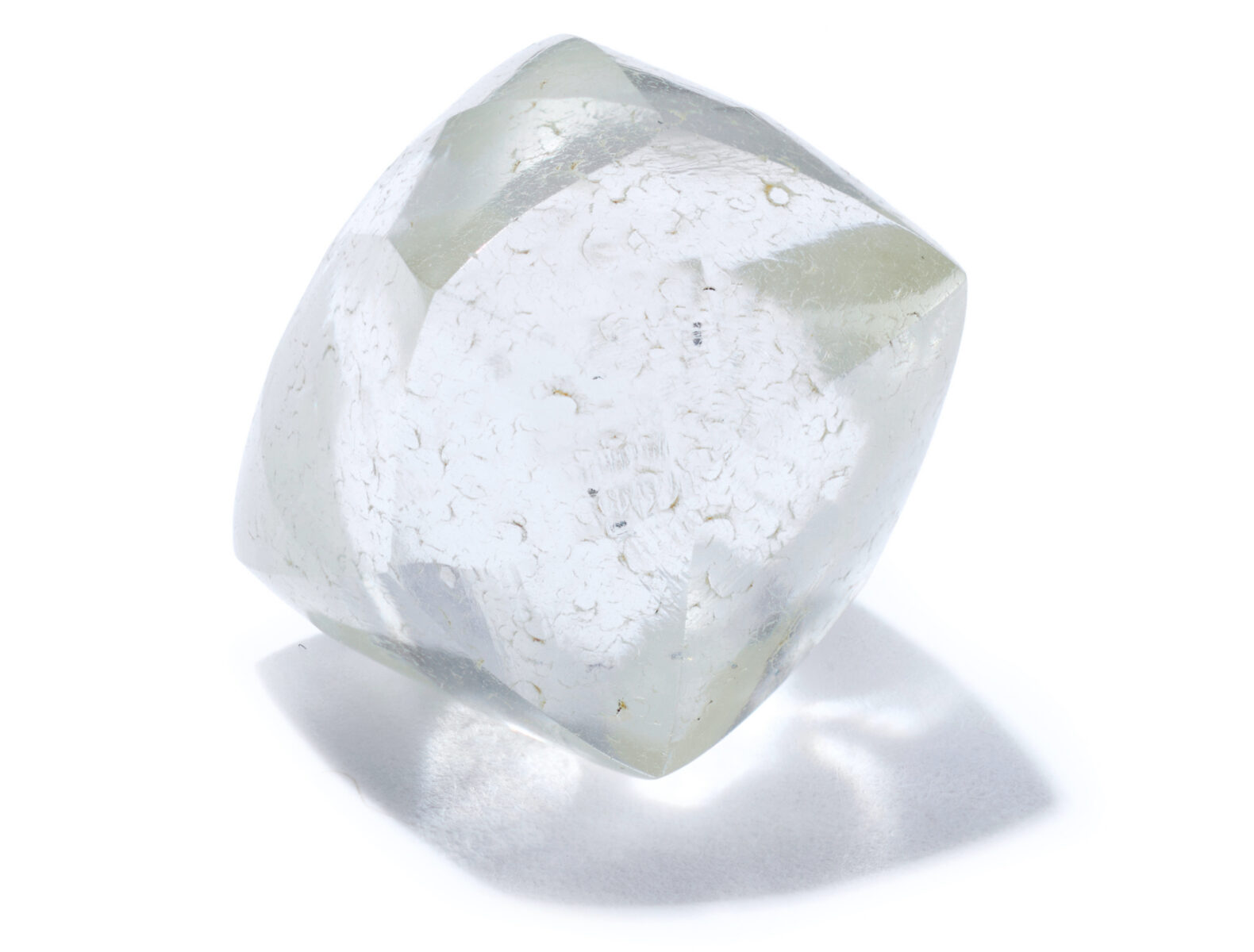
Opening this week at the Crystal Bridges Museum of American Art in Bentonville, Arkansas, a new exhibition titled Nature Adorned: The Artistry of Tiffany & Co. and the American Imagination brings home one of the most historically significant gemstones ever discovered on United States soil: the legendary 27.21-carat "Arkansas Diamond."
For decades, this colossal stone has resided quietly within the prestigious Tiffany Archives in New York City, far from the volcanic craters where it was forged millions of years ago. Its temporary homecoming marks the cornerstone of an ambitious, multidisciplinary exhibition running through March 29, 2027. By pairing rare archival Tiffany jewels—including legendary creations by Jean Schlumberger and George Paulding Farnham—with masterworks of American painting, sculpture, and raw minerals from Crystal Bridges’ permanent collection, the exhibition offers an unprecedented exploration of how the natural world has continuously inspired human ingenuity across generations.
Detailed Chronology: From Volcanic Upheaval to the Tiffany Archives
To understand the weight of the Arkansas Diamond’s return, one must look back deep into the geological timeline of the Natural State, as well as the dramatic turn-of-the-century events that thrust Arkansas onto the global gemological map.
1. The Prehistoric Genesis (~100 Million Years Ago)
Long before human history took root in North America, a violent subterranean event shaped the geological destiny of central Arkansas. Approximately 100 million years ago, a deep-seated volcanic pipe brought a mantle-derived magma known as lamproite to the Earth’s surface near present-day Murfreesboro. Contained within this molten matrix were untold thousands of rough diamonds, crystallized under immense pressure deep within the earth. Over millennia, weathering and erosion exposed these sparkling treasures, setting the stage for one of the most fascinating treasure hunts in American history.
2. The 1906 Discovery
The modern era of American diamond mining officially began in August 1906. An unsuspecting farmer named John Huddleston discovered the first sparkling stones on his farm near Murfreesboro. Huddleston’s find quickly sparked a minor gold-rush-style frenzy, turning the peaceful Arkansas countryside into a destination for prospectors and gem enthusiasts hoping to strike it rich in the only active diamond mine in North America.
3. The 1926 Find of the Century
Twenty years after Huddleston’s historic discovery, lightning struck twice in the Natural State. In Searcy, Arkansas, an eleven-year-old girl unearthed a diamond of staggering proportions. Weighing an astonishing 27.21 carats, the stone instantly commanded national attention. Recognized as one of the largest and most flawless gem-quality diamonds ever discovered within the borders of the United States, it caught the eye of the premier luxury house of the era. Tiffany & Co. swiftly acquired the colossal rough stone, had it cut and polished, and inducted it into the official Tiffany Archives in New York City, where it has remained sequestered as an American treasure for a century.
4. The 2026 Homecoming
Now, exactly one hundred years after an 11-year-old girl changed American gem history in Searcy, the Arkansas Diamond has made a triumphant return to its home state. Accompanied by two other notable diamonds discovered at Arkansas’s Crater of Diamonds State Park, the stone anchors Nature Adorned, serving as a tangible link between the earth’s raw materials and the pinnacle of human artistic expression.
Supporting Context & Metrics: The Intersection of Art, Nature, and Gemology
Nature Adorned is much more than a display of expensive baubles; it is a meticulously curated dialogue between fine art and haute joaillerie. The exhibition leverages Crystal Bridges’ expansive galleries to juxtapose botanical paintings, abstract sculptures, and decorative arts with iconic Tiffany masterworks that mimic or interpret organic forms.
Key Exhibited Works and Pairings
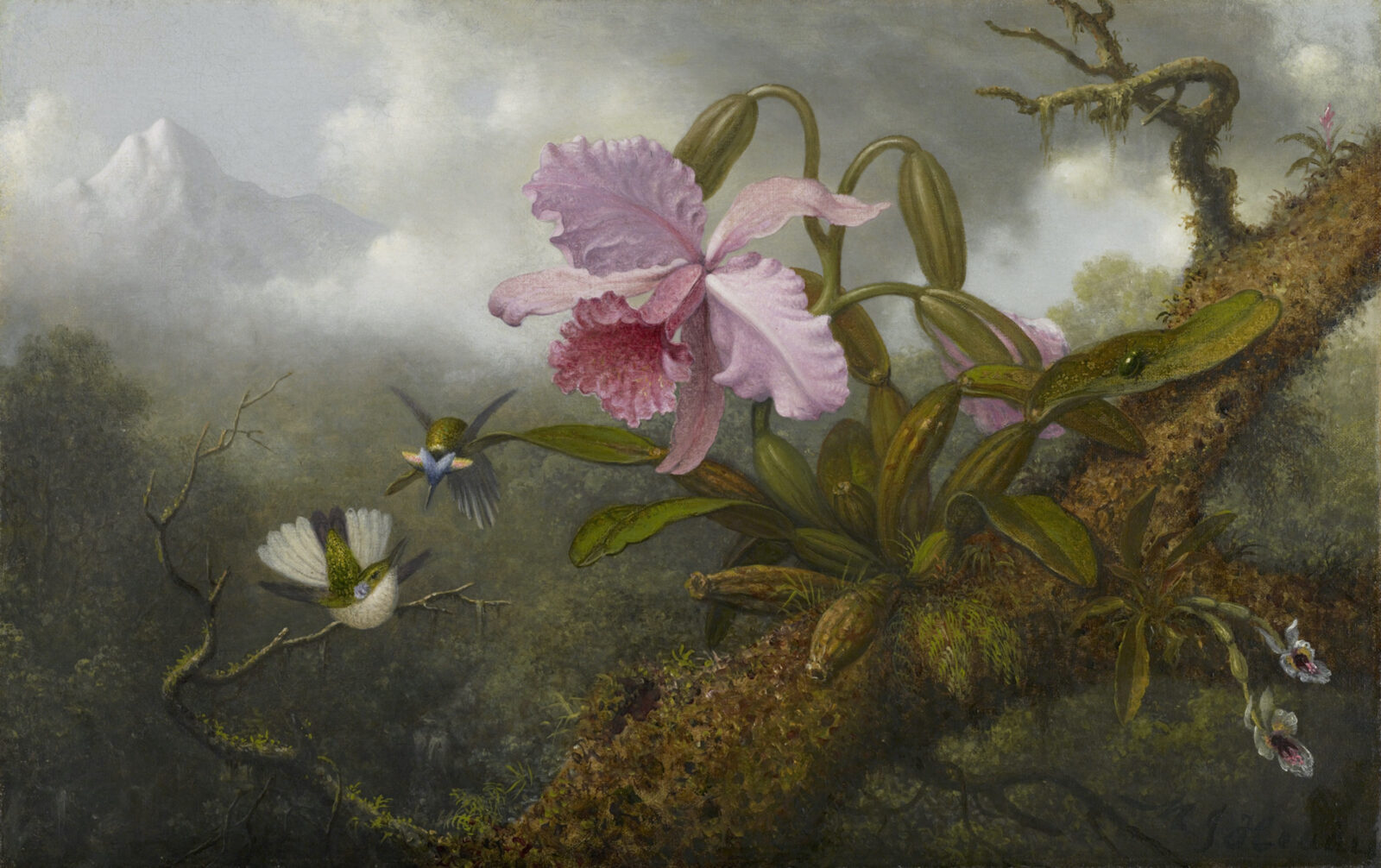
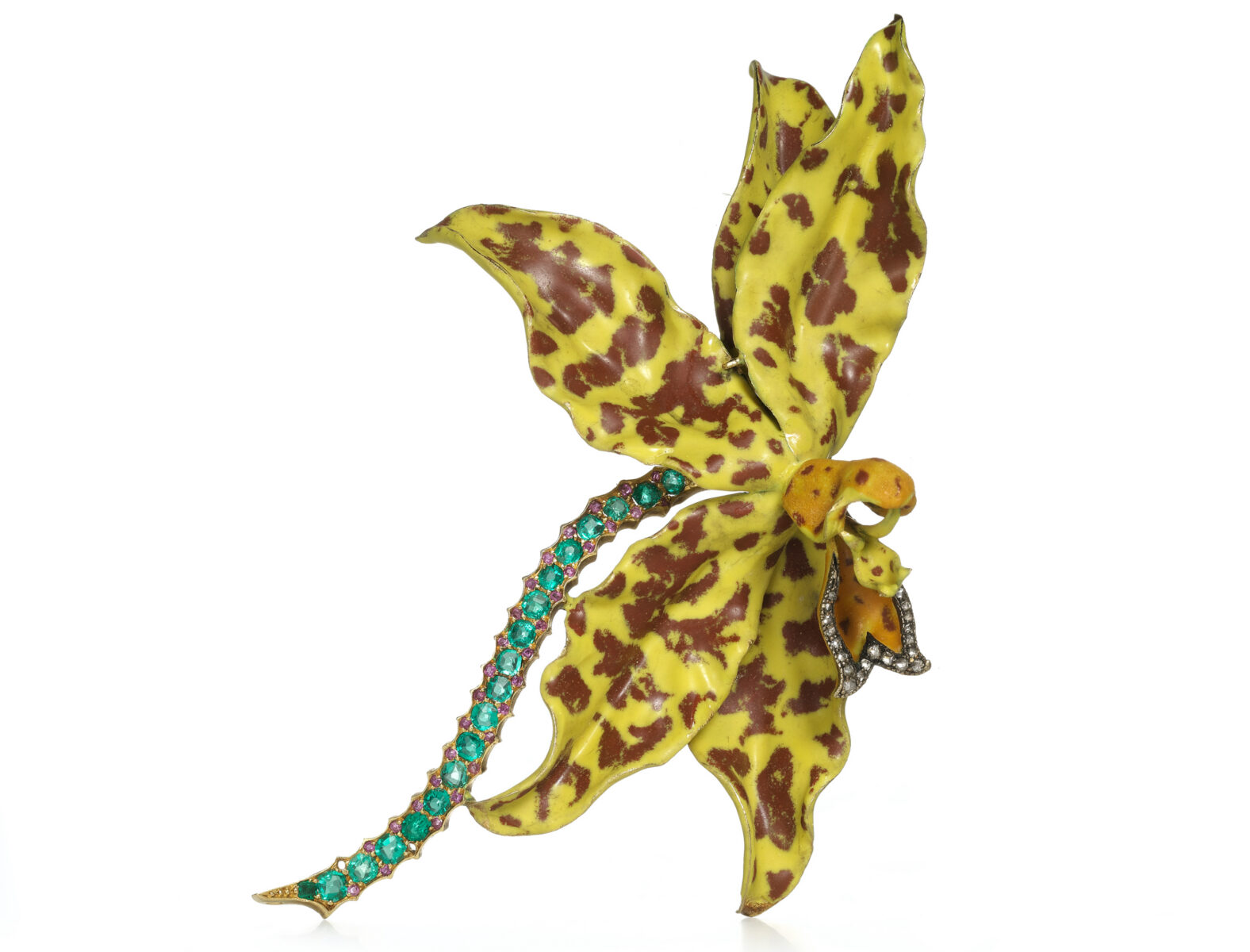
The Tiger Orchid Brooch & Martin Johnson Heade: Designed by George Paulding Farnham for Tiffany & Co. in the late 1800s, this jaw-dropping brooch features a tiger orchid rendered in sterling silver, diamonds, emeralds, pink sapphires, and enamel. Nearby, the exhibition features Martin Johnson Heade’s late-19th-century masterpiece, Cattleya Orchid, Two Hummingbirds and a Beetle, illustrating how both jeweler and painter sought to capture the exotic splendor of the natural world through different mediums.
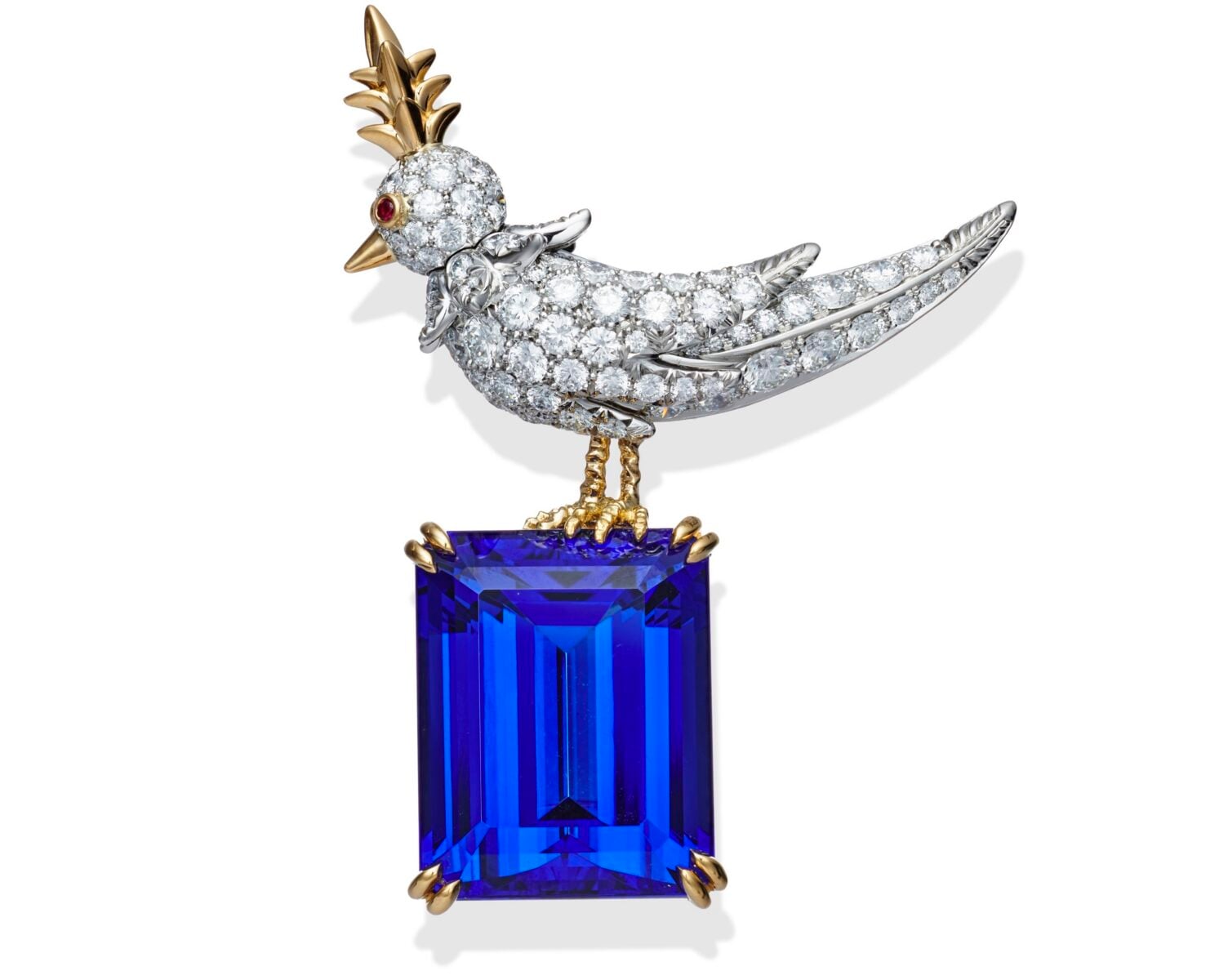
Jean Schlumberger’s Bird on a Rock & Hope Gangloff: French designer Jean Schlumberger’s whimsical Bird on a Rock brooch—a legendary Tiffany creation—is displayed alongside Hope Gangloff’s contemporary figurative painting, Queen Jane Approximately. This pairing examines how modern and contemporary artists play with organic forms, color saturation, and structural texture.
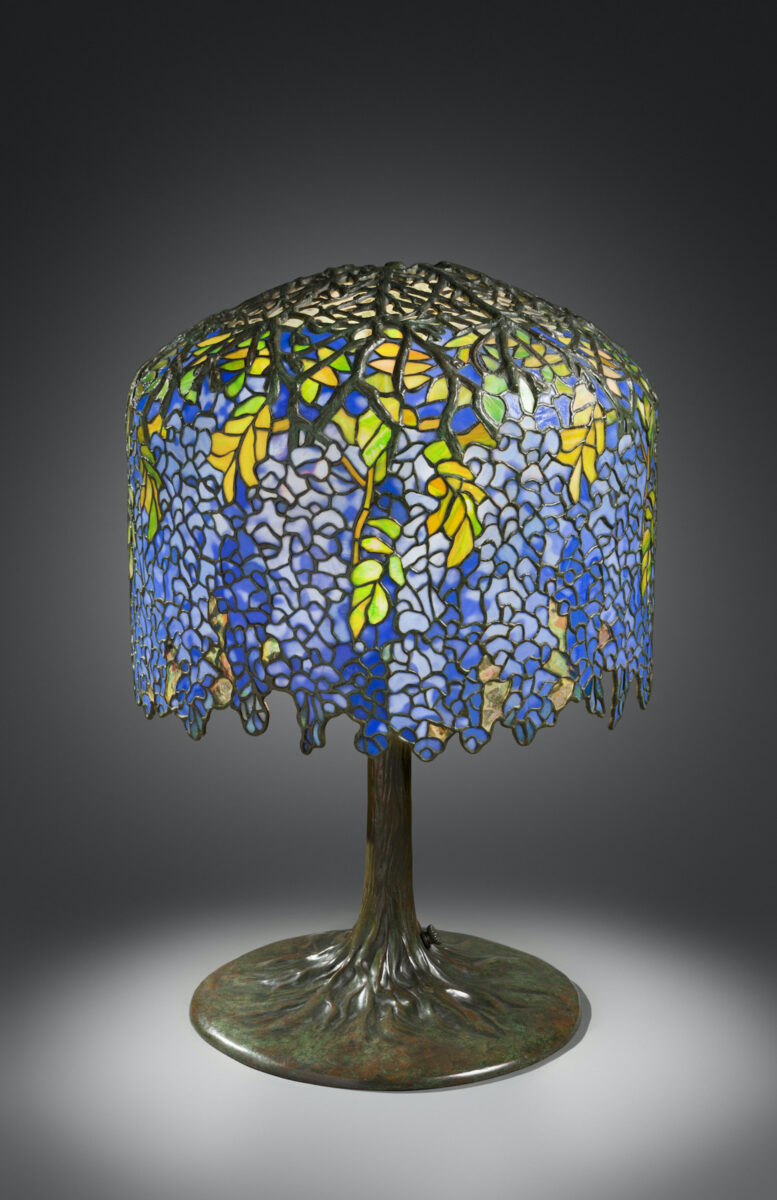
Clara Driscoll’s Wisteria Table Lamp & George Inness: Representing the pinnacle of the Art Nouveau movement, the iconic Wisteria Table Lamp (circa 1905–1906) was designed by Clara Driscoll while she led the pioneering "Tiffany Girls" glass-cutting department at Tiffany Studios. The lamp’s cascading, tree-like imagery is placed in direct conversation with George Inness’s 1867 atmospheric painting, Sunset on a River, exploring how light and shadow are manipulated in both stained glass and landscape painting.
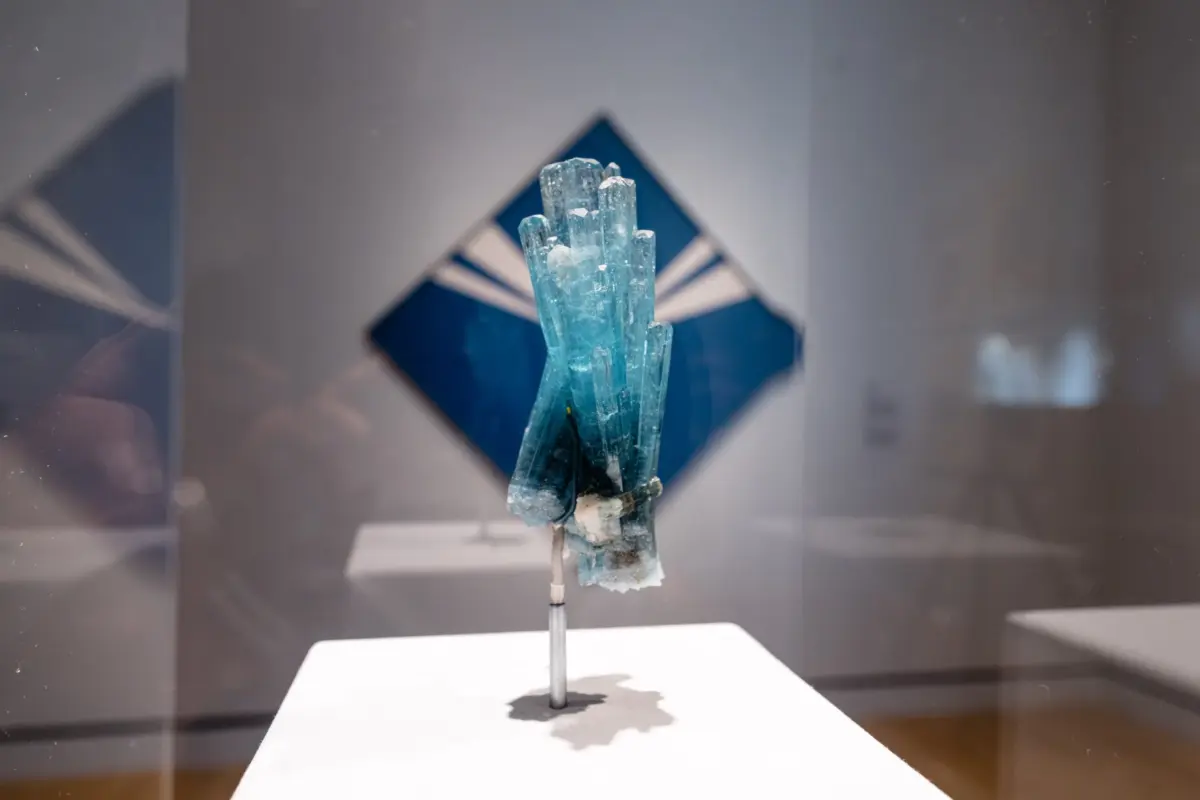
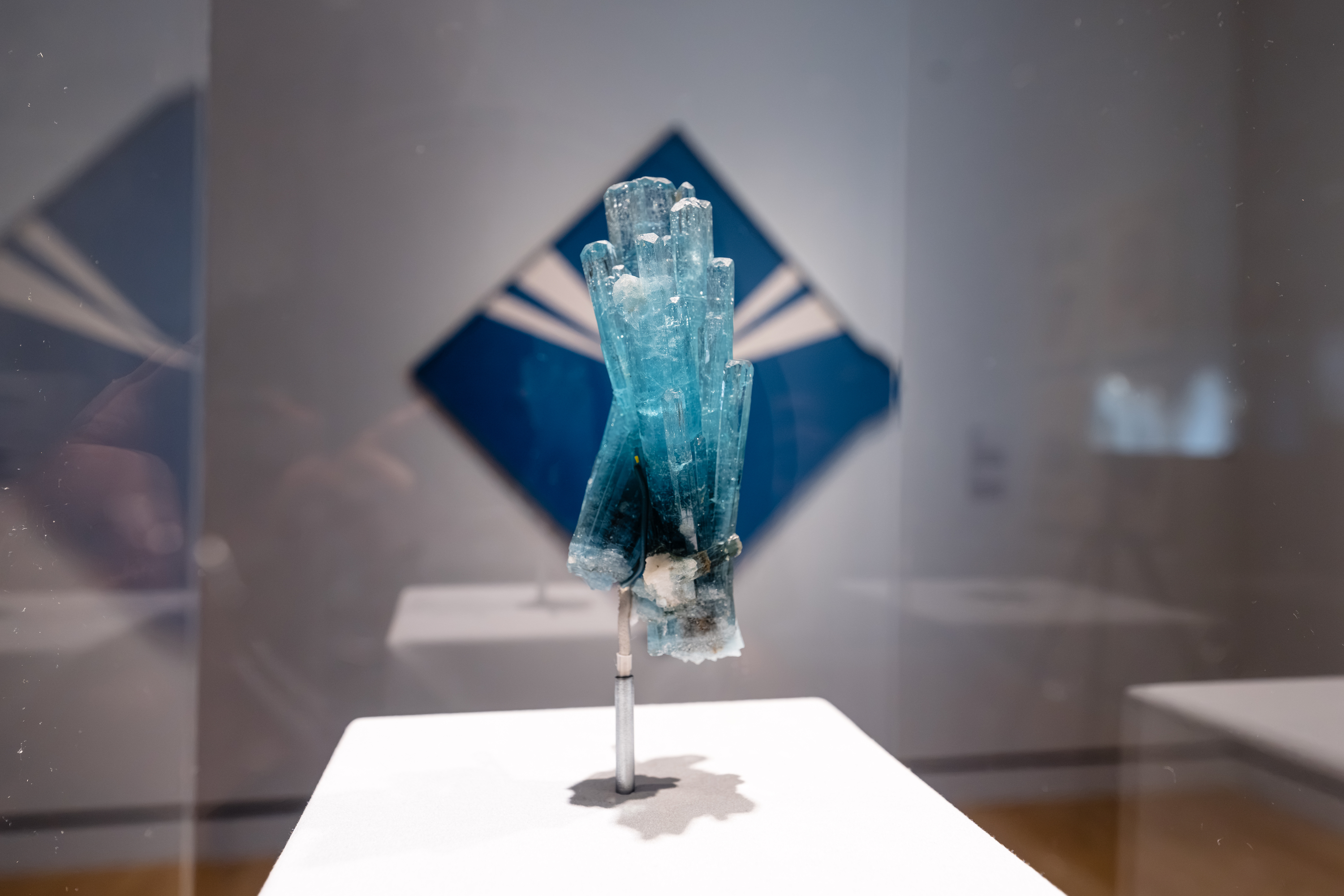
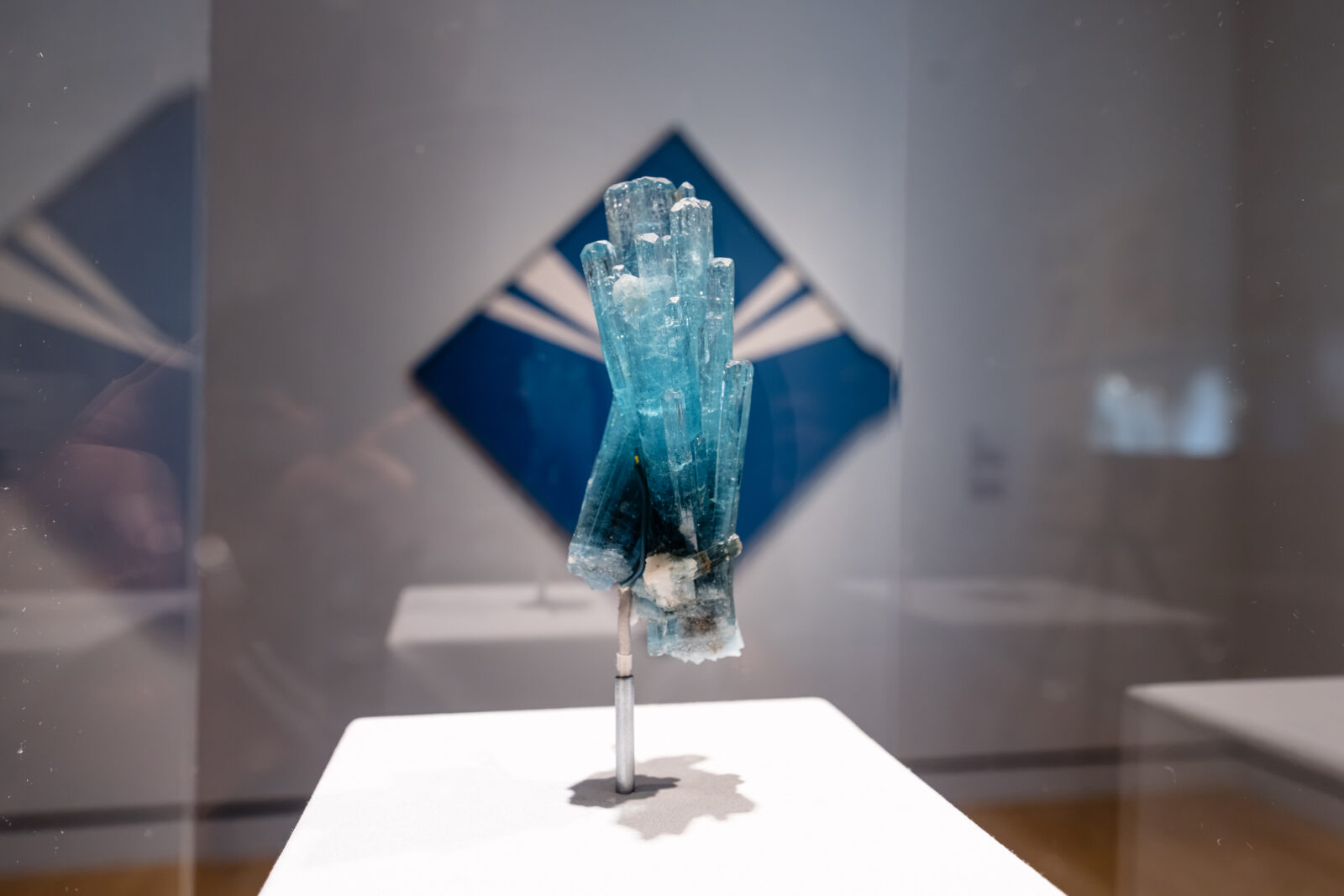
Carmen Herrera’s Cerulean & Raw Minerals: To ground the exhibition in pure geology, visitors are greeted by striking, raw mineral specimens from the Crystal Bridges collection, including a nearly four-foot-tall quartz crystal and a vibrant blue beryl colored by iron traces. These geological specimens are juxtaposed against Carmen Herrera’s crisp, geometric 1965 abstract painting, Cerulean, which ingeniously transforms a familiar square canvas into a diamond shape through calculated cuts in space.
Official Statements and Curatorial Vision
The intellectual framework of the exhibition rests heavily on the shoulders of its curator, Jen Padgett, whose vision connects the dots between regional pride and international design history.
"Having the diamonds here allows us to highlight Arkansas’s natural resources and bring attention to the state’s unique place in the story of American gems," notes Padgett.
By bringing archival treasures out of New York and placing them alongside regional geological specimens and American masterworks, the museum aims to challenge traditional boundaries between "fine art" and "decorative craft."
"The pairings across the Tiffany Archives and Crystal Bridges help us to see both collections in a new light," Padgett explains. "Comparing how artists draw inspiration from nature—whether depicting an orchid in a painting or transforming its form into a brooch—allows us to appreciate their ingenuity and imagination."
Furthermore, the exhibition underscores Arkansas’s ongoing legacy as an accessible frontier for gem enthusiasts. Arkansas remains the only place in the United States where amateur prospectors can search for diamonds and legally keep whatever they find, courtesy of the public-access diamond field at Crater of Diamonds State Park in Murfreesboro.
Future Outlook
As Nature Adorned: The Artistry of Tiffany & Co. and the American Imagination settles into its multi-month run at Crystal Bridges through March 2027, its cultural impact is already rippling across the art historical community.
Museum directors anticipate high attendance figures, drawing not only traditional art lovers and high-jewelry aficionados, but also families, students, and geology enthusiasts eager to witness a rare piece of state and national history. By honoring the raw, unpolished beauty of Arkansas’s volcanic past alongside the refined, glittering heights of Tiffany & Co.’s golden age, Crystal Bridges has crafted a deeply resonant narrative about the environment that surrounds us and the enduring human compulsion to capture its magic.
For visitors stepping into the galleries over the coming months, the exhibition offers a powerful reminder: the line separating a humble stone in a muddy Arkansas field from a priceless masterwork in a Manhattan archive is bridged entirely by human imagination.




0 Comments