By Editorial Staff | Special to Arts & Culture Published October 2026
Executive Overview
In the rugged landscapes of the American South, geological history and human artistry have long shared a subterranean dialogue. Roughly one hundred million years ago, deep-seated volcanic activity thrust ancient diamond-bearing kimberlite pipes to the surface of what is now Arkansas, irrevocably establishing the state as a unique geological anomaly in North America. Today, that fiery subterranean past is stepping into the refined, contemplative light of the museum gallery.
At the vanguard of this cultural convergence is Nature Adorned: The Artistry of Tiffany & Co. and the American Imagination, a landmark exhibition currently on view at the Crystal Bridges Museum of American Art in Bentonville, Arkansas. Running through March 29, 2027, the exhibition serves as a sweeping exploration of the intimate relationship between fine art, high jewelry, and the natural world.
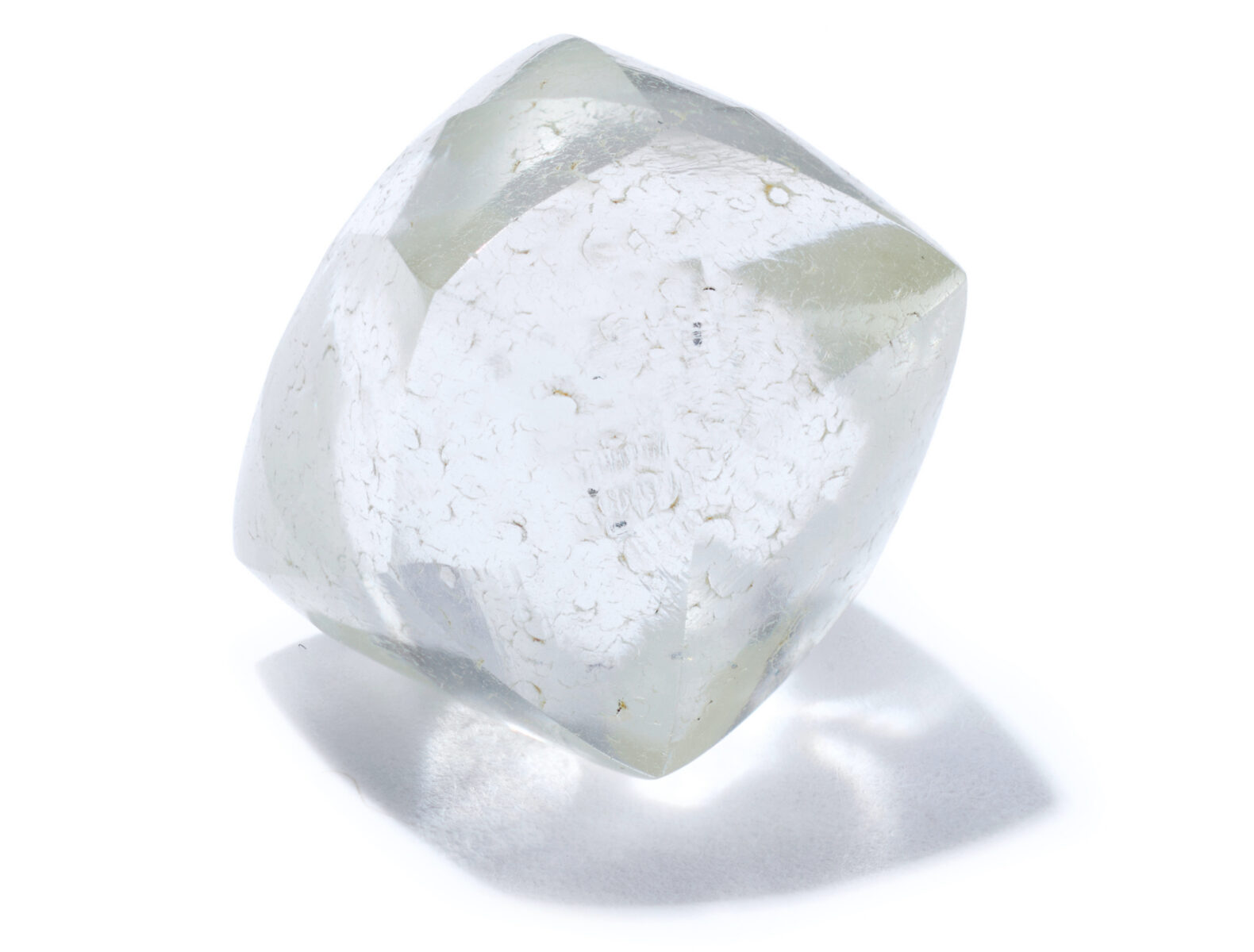
The crown jewel of this homecoming is the legendary Arkansas Diamond—a staggering 27.21-carat behemoth discovered by an eleven-year-old girl in Searcy, Arkansas, a century ago. Purchased shortly after its discovery by the prestigious firm Tiffany & Co., the stone has spent the past several decades securely housed within the corporate archives in New York City. Now, accompanied by two other notable diamonds unearthed in the Natural State, this historic gem has returned to its geographic roots.
By juxtaposing these geological marvels against iconic Tiffany creations, historic American landscape paintings, and contemporary abstract works, Nature Adorned challenges curators, art historians, and visitors alike to reconsider how human creators across disciplines translate the organic architecture of the natural world into enduring works of fine art.
Detailed Chronology: From Volcanic Upheaval to Museum Gallery
The journey of the Arkansas Diamond and the broader narrative of American gemology spans millions of years, unfolding across several distinct historical milestones:
Cretaceous Period (~100 Million Years Ago): Deep volcanic forces propel diamond-bearing magma through the Earth’s crust in southwestern Arkansas, depositing the precious stones in what would eventually become Pike County and surrounding regions.
March 1906: An unsuspecting farmer in Arkansas uncovers the very first diamond in the state, sparking a localized prospecting rush and drawing national attention to the Natural State’s hidden subterranean wealth.
1926: An eleven-year-old girl makes a historic discovery in Searcy, Arkansas, unearthing a flawless, 27.21-carat diamond. It stands as one of the largest gem-quality diamonds ever discovered within the borders of the United States. Shortly thereafter, the ultra-luxury jewelry house Tiffany & Co. acquires the stone, moving it to the Tiffany Archives in New York City, where it remains for decades.
Late 19th to Early 20th Century: Visionary designers like George Paulding Farnham and Jean Schlumberger, alongside pioneering artisans such as Clara Driscoll and the "Tiffany Girls" glass-cutting department, elevate American decorative arts. They draw heavy inspiration from botanical and zoological forms, pioneering the Art Nouveau aesthetic at Tiffany Studios.
October 2026: Crystal Bridges Museum of American Art officially opens Nature Adorned: The Artistry of Tiffany & Co. and the American Imagination. The exhibition successfully repatriates the 27.21-carat Arkansas Diamond alongside two other state-mined gems, placing them in direct conversation with masterworks from the museum’s permanent collection.
March 29, 2027: The scheduled closing date for the Nature Adorned exhibition in Bentonville, marking the conclusion of a rare multi-month viewing window for these historic artifacts.
Supporting Context & Metrics: The Intersection of Nature and Art
To fully appreciate the scope of Nature Adorned, one must examine the meticulous curation that connects raw geological specimens with high-fashion jewelry and canvas masterpieces. Curated by Jen Padgett, the exhibition deliberately breaks down traditional barriers between "fine art" and "applied arts," framing them as parallel expressions of human ingenuity.
The Geology of the Natural State
Arkansas holds a peerless position in North American gemology. It is home to the Crater of Diamonds State Park in Murfreesboro—the only diamond-producing site in the world where everyday amateur prospectors are legally permitted to search for diamonds and keep whatever gems they manage to unearth.
The exhibition leverages this unique civic identity by centering three monumental Arkansas diamonds. Among them, the 27.21-carat specimen acts as an anchor, demonstrating that the United States possesses a rich, native tradition of precious gemstone extraction that rivals traditional international mining hubs.
Juxtapositions and Dialogues in the Gallery
The exhibition layout relies on dynamic visual pairings to explore organic forms and environmental light:
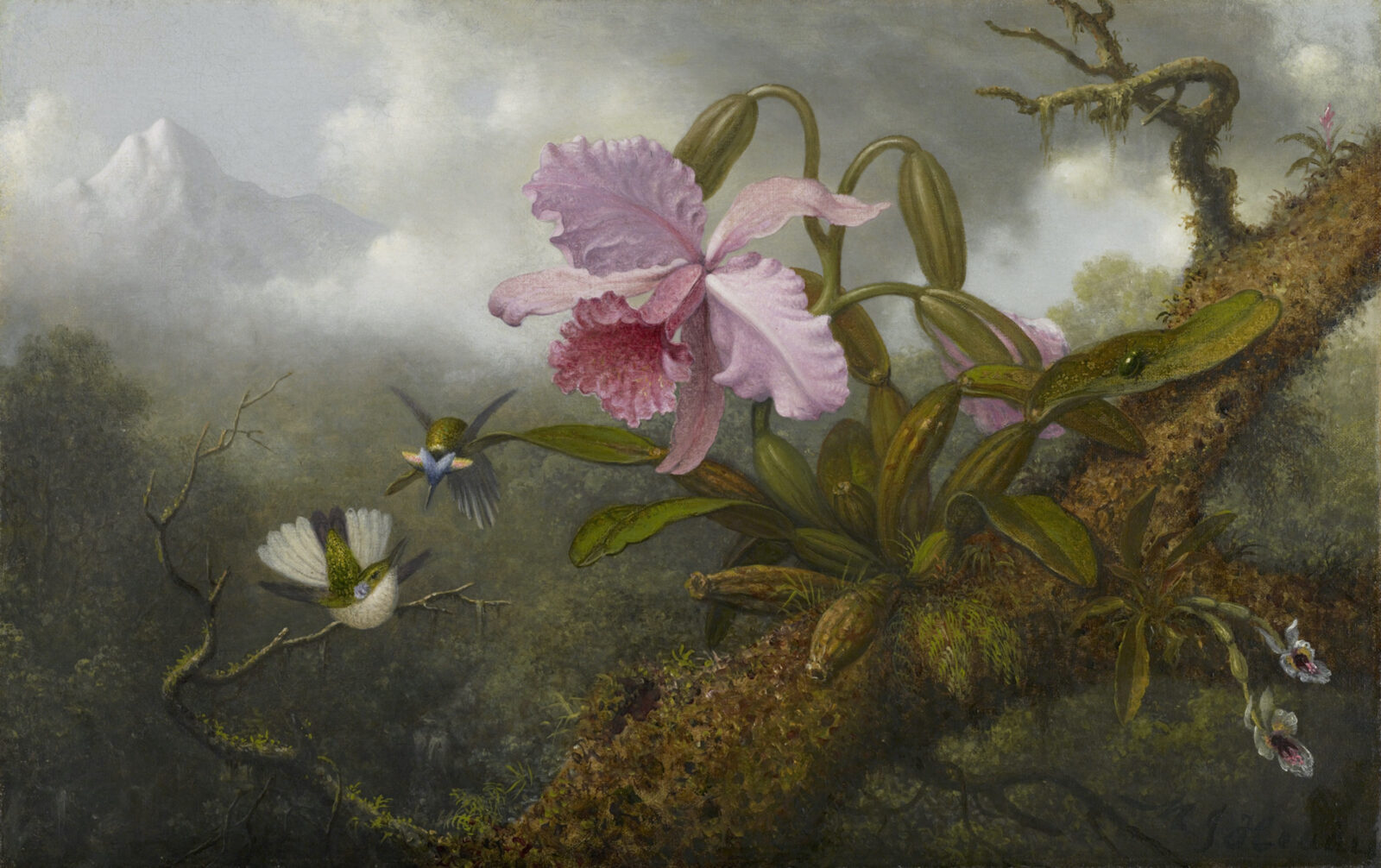
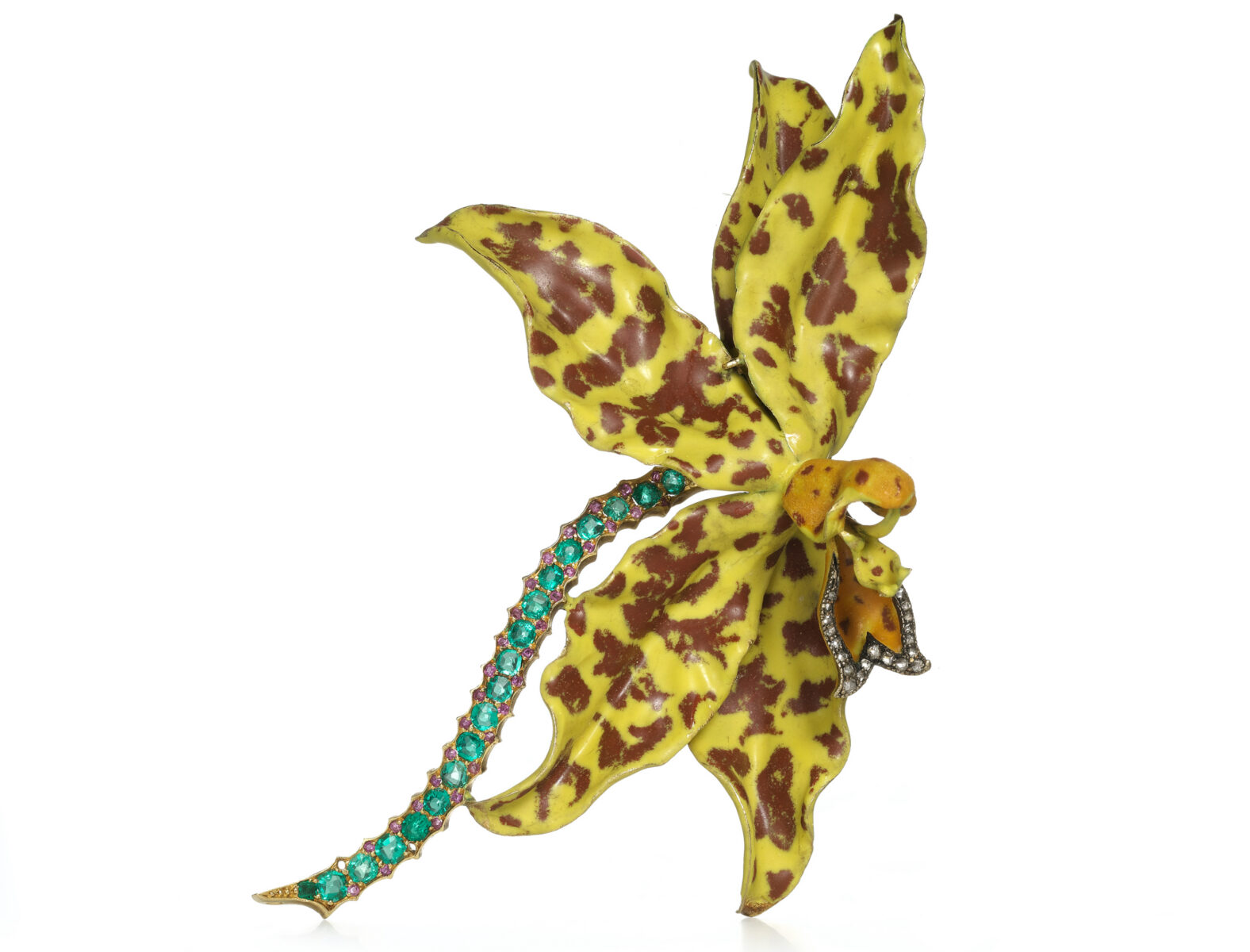
Orchids and Enamel: George Paulding Farnham’s late-19th-century Tiger Orchid Brooch—crafted meticulously for Tiffany & Co. from sterling silver, diamonds, emeralds, pink sapphires, and translucent enamel—is displayed in proximity to Martin Johnson Heade’s luminist masterpiece, Cattleya Orchid, Two Hummingbirds and a Beetle. Both works capture the haunting, exotic allure of the orchid with staggering botanical precision.
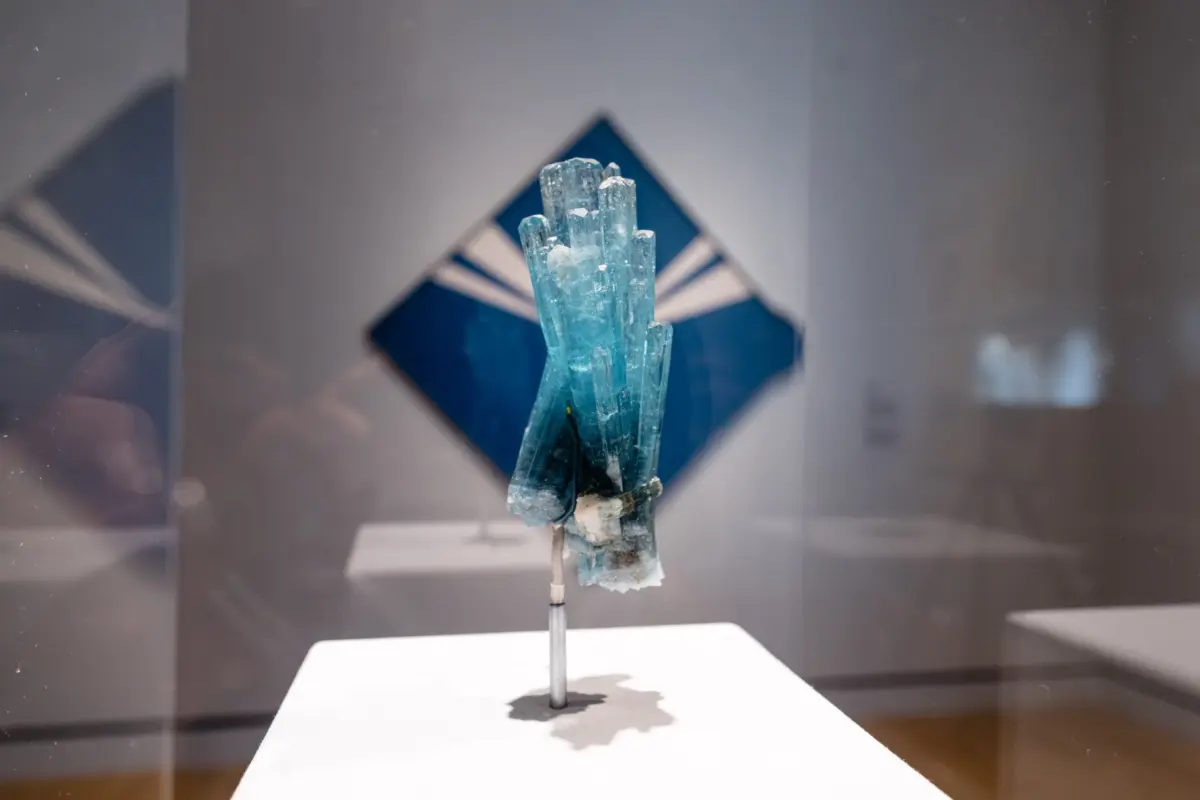
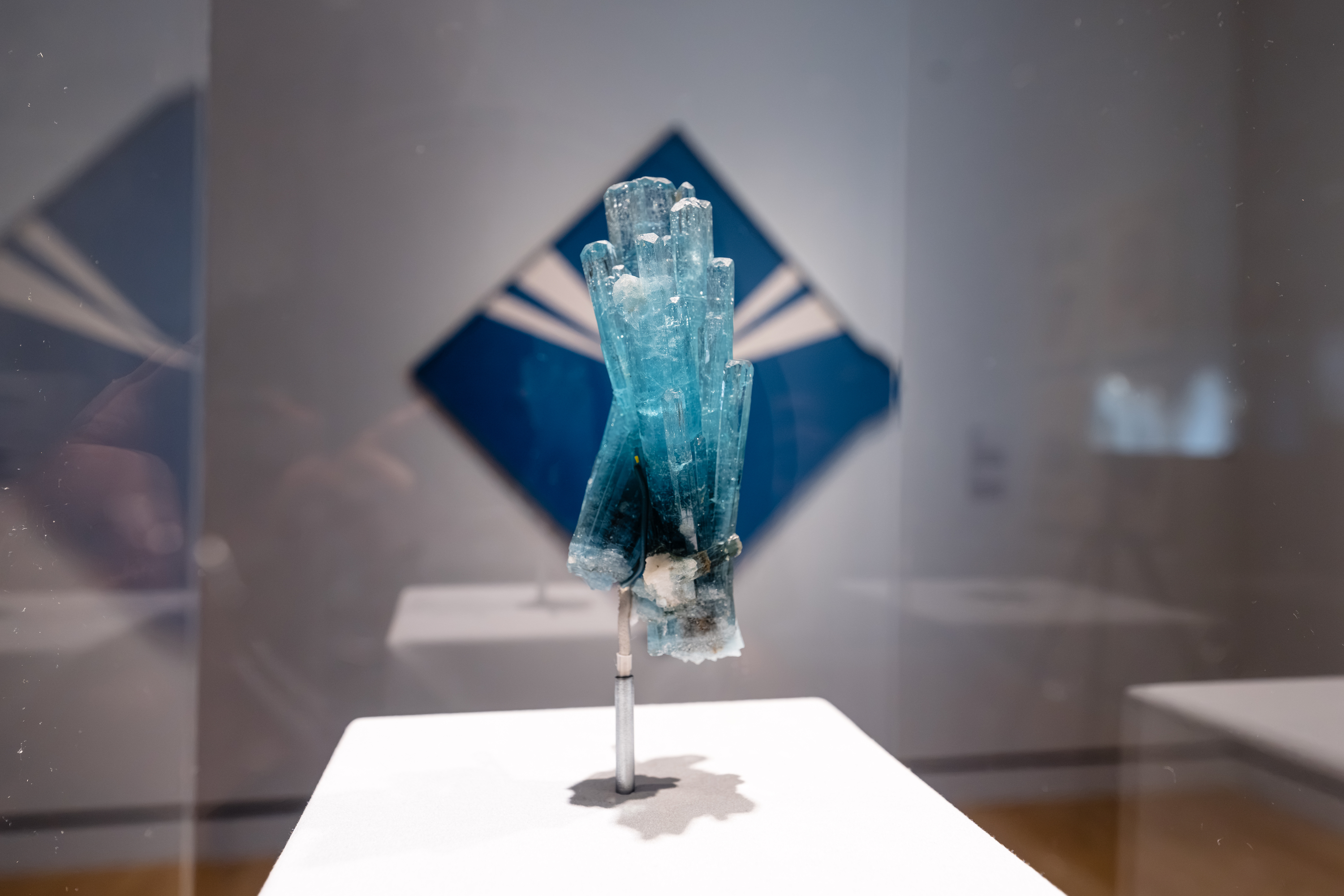
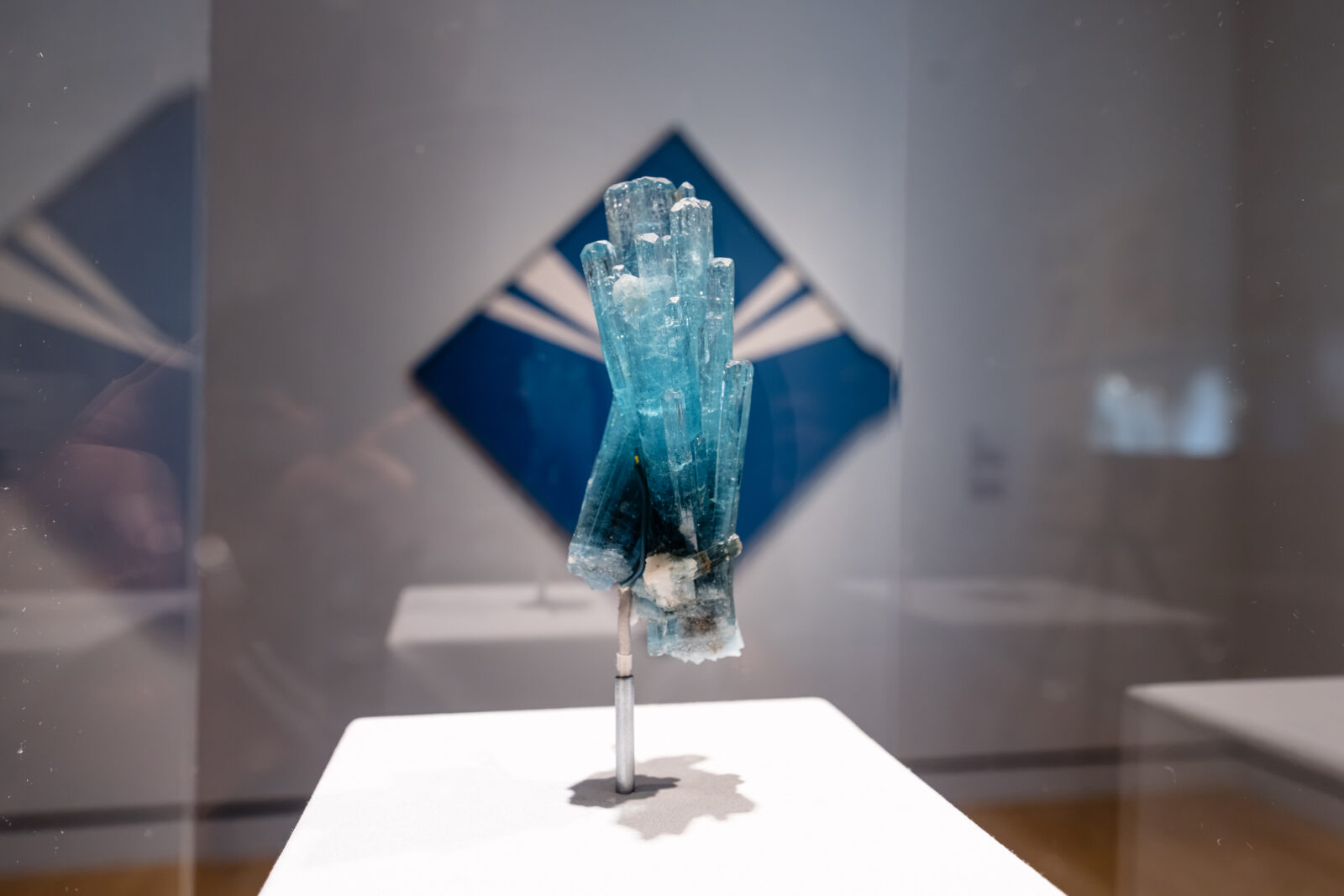
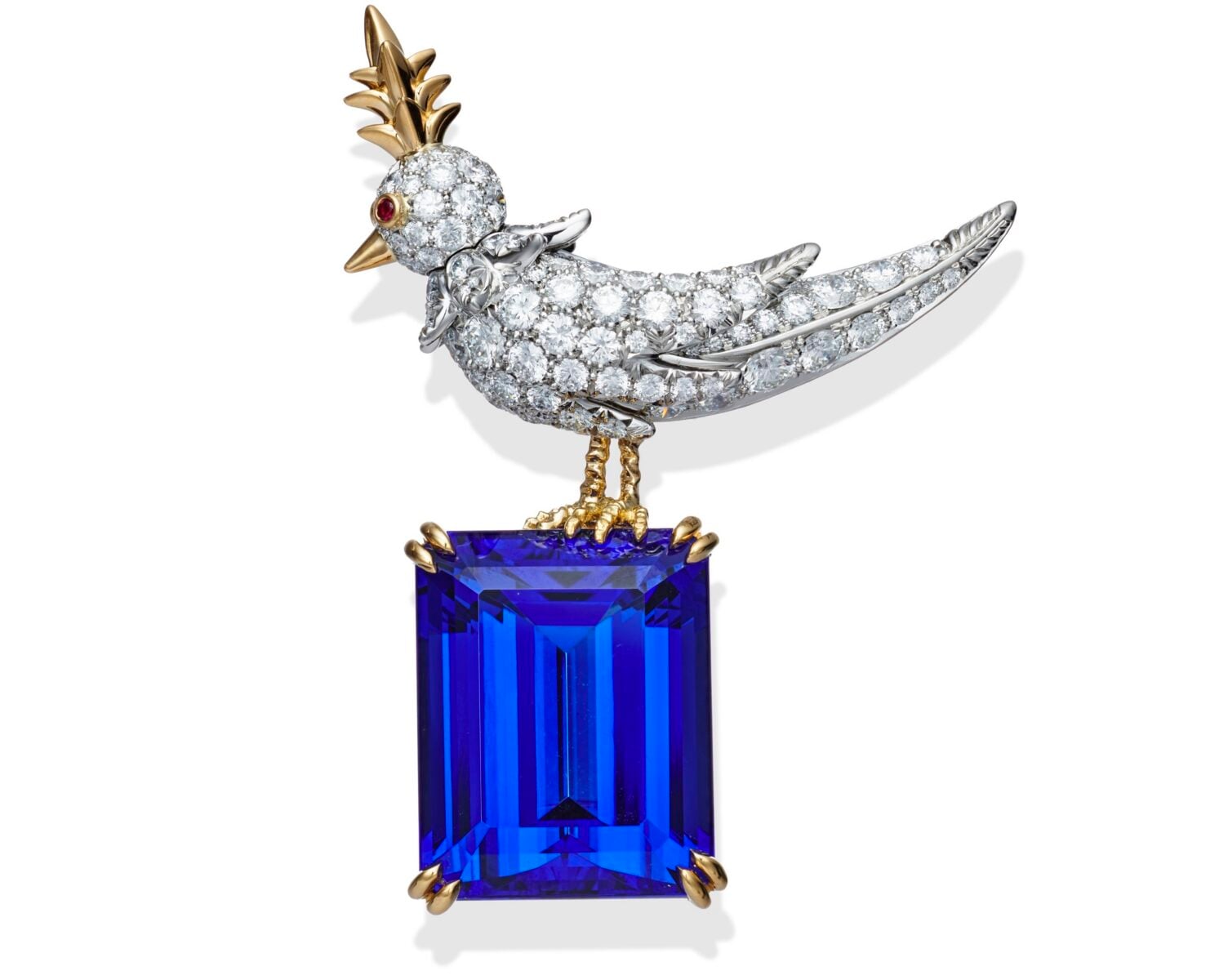
Organic Form and Abstract Geometry: French designer Jean Schlumberger’s whimsical Bird on a Rock brooch is exhibited alongside Hope Gangloff’s contemporary figurative painting, Queen Jane Approximately. Both pieces demonstrate an ongoing fascination with organic, flowing lines and the emotional resonance of color. Furthermore, raw mineral specimens—such as deep-blue iron-infused beryl and a towering, four-inch quartz crystal from the Crystal Bridges collection—are placed in direct dialogue with Carmen Herrera’s starkly geometric 1965 abstract painting, Cerulean, which utilizes clean spatial cuts to transform a standard square canvas into a diamond shape.
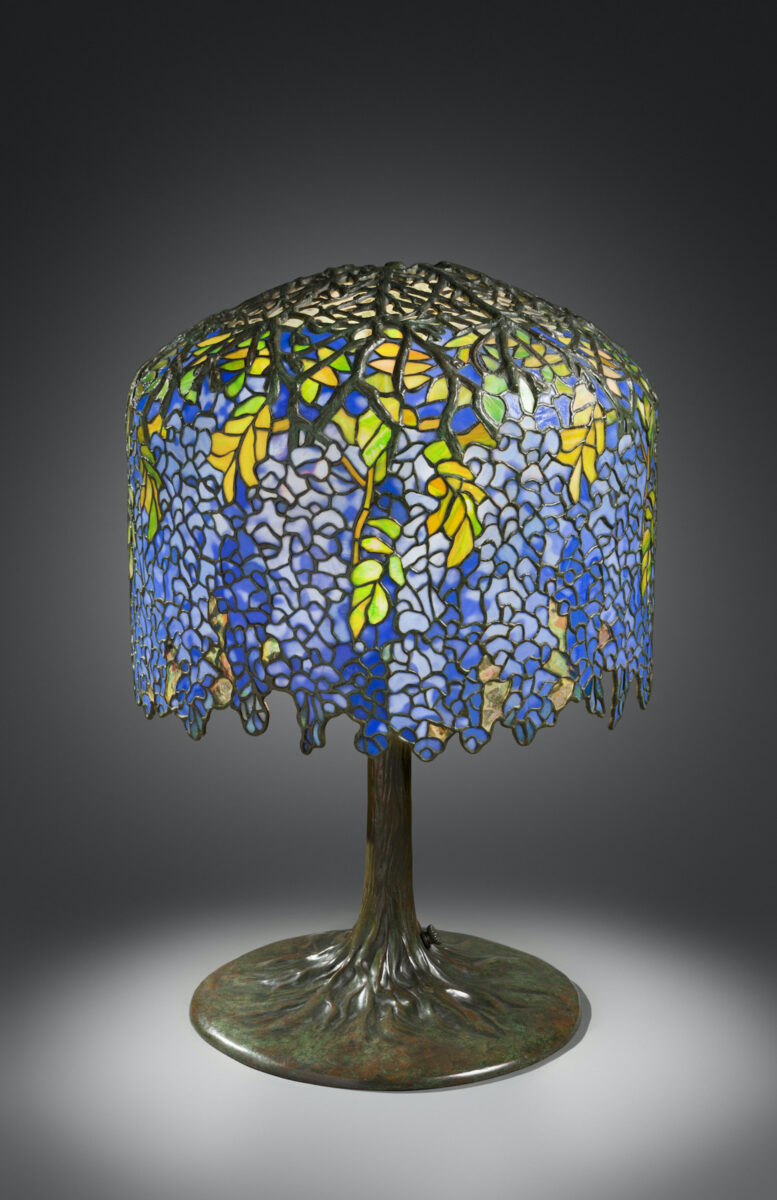
Light and Architecture: Clara Driscoll’s breathtaking Wisteria Table Lamp (circa 1905–1906), created while she led the legendary "Tiffany Girls" glass-cutting department at Tiffany Studios, showcases the translation of natural canopy lighting into leaded glass. It is displayed alongside George Inness’s 1867 atmospheric landscape, Sunset on a River, creating a shared meditation on luminosity, shadow, and organic structure.
Official Statements and Curatorial Insights
The intellectual weight of the exhibition rests on the meticulous framework established by its curators, who sought to re-contextualize regional identity within a national artistic framework.
"The pairings across the Tiffany Archives and Crystal Bridges help us to see both collections in a new light," explains Jen Padgett, curator of the exhibition. "Comparing how artists draw inspiration from nature—whether depicting an orchid in a painting or transforming its form into a brooch—allows us to appreciate their ingenuity and imagination."
Padgett emphasizes that the logistical feat of bringing the historic diamonds back to Arkansas serves a vital educational and cultural purpose for the region.
"Having the diamonds here allows us to highlight Arkansas’s natural resources," Padgett notes, "and bring attention to the state’s unique place in the story of American gems."
By pulling these artifacts out of metropolitan archives and embedding them within the lush, architecture-integrated galleries of Crystal Bridges—designed by architect Moshe Safdie amidst the Ozark forest—the museum creates a seamless feedback loop between the natural environment outside the glass walls and the human-crafted treasures inside.
Future Outlook
As Nature Adorned: The Artistry of Tiffany & Co. and the American Imagination continues its run through March 2027, its broader implications for regional museums and cultural tourism are already becoming clear. The exhibition signals a growing appetite for interdisciplinary curation—one that refuses to segregate decorative arts, fashion, jewelry, and fine painting into airtight compartments.
For Crystal Bridges, hosting the 27.21-carat Arkansas Diamond underscores the institution’s rising stature as a world-class cultural destination capable of securing high-profile loans from elite corporate vaults like the Tiffany Archives in New York. More importantly, it serves as a powerful reminder to the local community and visitors from across the globe: the beauty celebrated in high art and luxury design is frequently drawn directly from the dirt, stone, and flora of the American landscape.
As the exhibition doors remain open through the winter months, visitors stepping out of the gallery and into the surrounding Ozark woods will undoubtedly look at the natural world with a renewed sense of wonder—viewing every leaf, mineral, and ray of light not merely as part of the ecosystem, but as an enduring masterpiece in its own right.




0 Comments