

Executive Overview
LAS VEGAS — What should have been a simple, heartwarming afternoon between a mother and her daughter transformed into an unspeakable tragedy on August 12, 2026. Karla Abarca, an innocent mother, was fatally struck by a stray bullet while waiting at a routine red light in East Las Vegas. Abarca and her young daughter, Lisa, were sitting inside a Ford F-150 pickup truck, enjoying ice cream after a quick errand to pick up a prescription at a local CVS. They were simply passing the time, sharing a quiet moment, when violence abruptly pierced their world.
According to comprehensive police documents and arrest reports obtained from the Las Vegas Metropolitan Police Department (LVMPD), Abarca’s death was the result of a brazen crossfire shootout. The altercation was allegedly initiated by a motorist who was driving under the influence of nitrous oxide—commonly known recreationally as "whippets." The suspect, identified as Francisco Chairez-Hernandez, engaged in a confrontation with a pedestrian over a mistaken identity related to a prior vehicle burglary.
The ensuing exchange of gunfire claimed the life of a blameless bystander, leaving a young girl without her mother and a community grappling with the terrifying randomness of urban violence fueled by impairment and illicit firearms. Following an intensive multi-day investigation utilizing advanced surveillance technology, automated license plate readers, and undercover surveillance, LVMPD detectives successfully apprehended Chairez-Hernandez. He now faces a slate of severe felony charges, including open murder with a deadly weapon, as the community prepares for initial court proceedings.
Detailed Chronology of Events
To understand how a routine afternoon errand escalated into a fatal shooting, investigators have pieced together a precise timeline of events spanning the afternoon of August 12, 2026. The sequence highlights how rapid-fire decisions, compounded by substance impairment, converged at a busy Las Vegas intersection.
The Lead-Up: Inhalation and Impairment
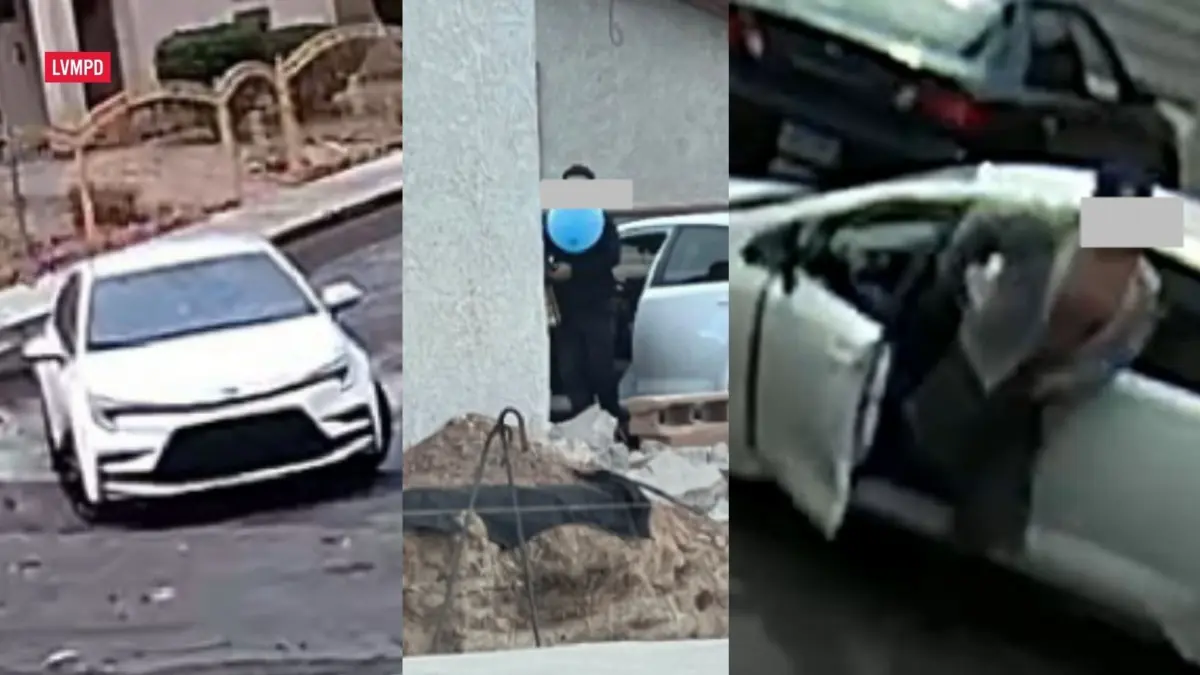
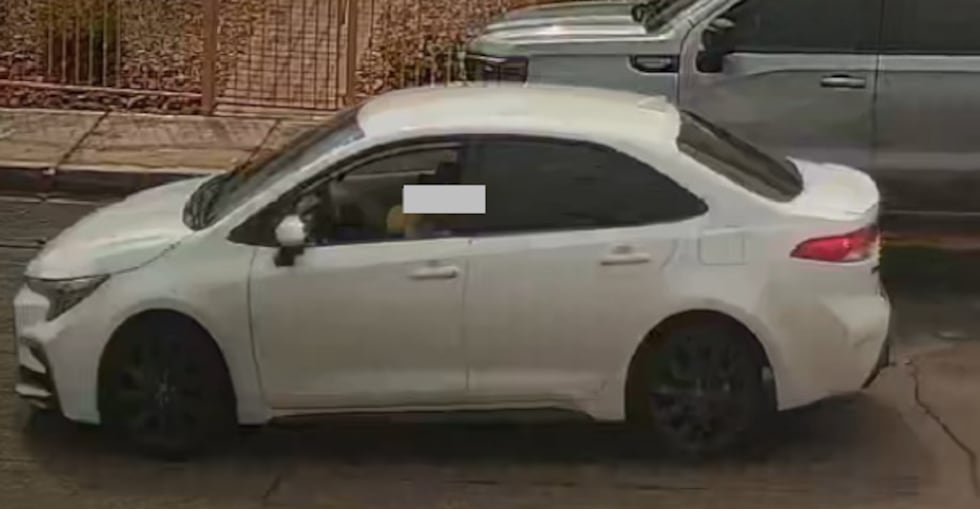
Surveillance footage and police records indicate that the chain of events began shortly before 3:15 p.m. Francisco Chairez-Hernandez was operating a white Toyota Corolla through the streets of Las Vegas. Investigators reviewing traffic and commercial cameras noted alarming behavior: just four minutes prior to the deadly gunfire, Chairez-Hernandez was captured driving while actively holding a large yellow balloon filled with nitrous oxide.
Inhaling nitrous oxide—colloquially referred to as taking "whippets"—causes rapid, short-lived euphoria accompanied by dizziness, disorientation, and impaired motor coordination. Operating a motor vehicle under such an influence severely degrades a driver’s reaction time, situational awareness, and emotional regulation.
As Chairez-Hernandez navigated near the intersection of East Bonanza Road and North Lamb Boulevard, he pulled into a local parking lot. There, he spotted a man waiting at a nearby bus stop: Brad Serrano-Gutierrez.
Mistaken Identity and Confrontation
According to his statements to law enforcement, Chairez-Hernandez believed that Serrano-Gutierrez bore a striking resemblance to a masked individual who had burglarized his car in Las Vegas’s Chinatown district approximately two weeks prior. Driven by a volatile mix of paranoia, suspected nitrous oxide intoxication, and perceived vigilantism, Chairez-Hernandez decided to confront the stranger.
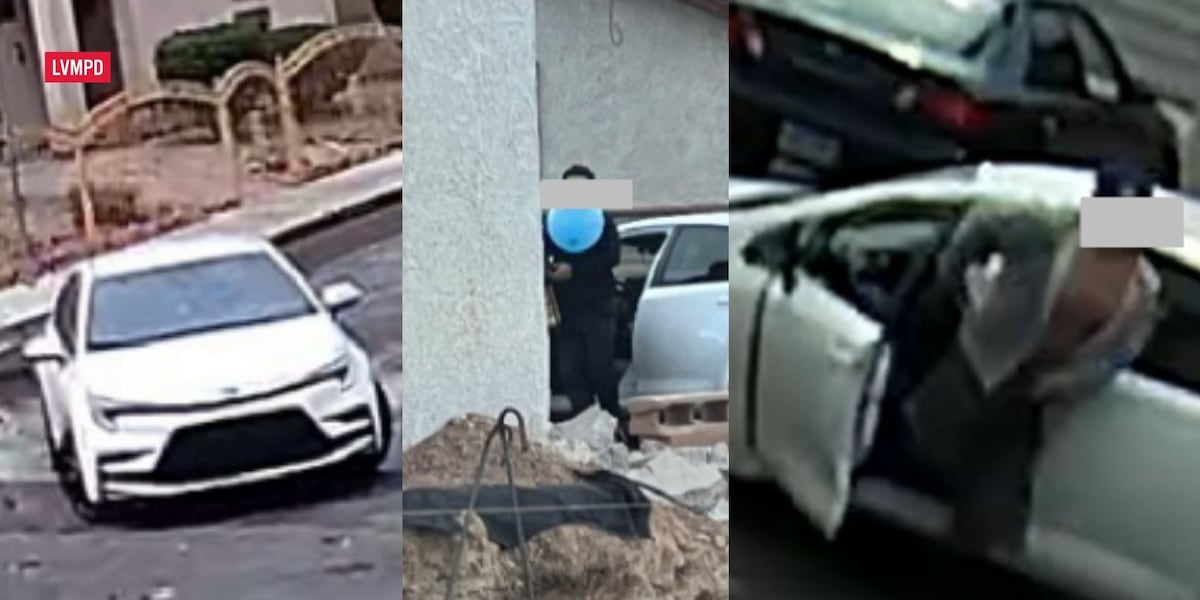
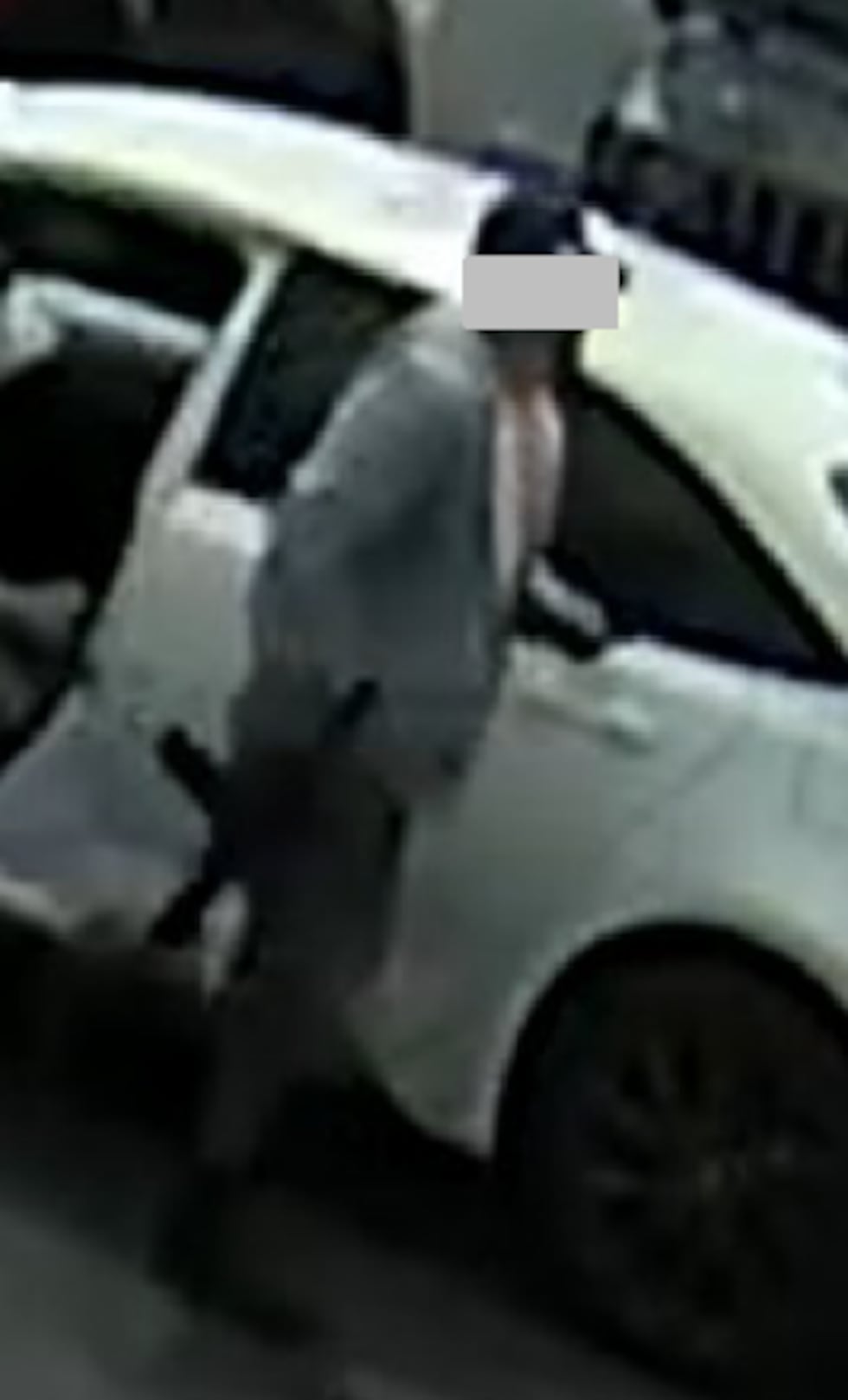
Instead of contacting local law enforcement to report his suspicions, Chairez-Hernandez pulled his vehicle to a stop, grabbed his cellular phone to record the encounter, and armed himself with a heavy-duty .300 Blackout AR-style rifle. Emerging from his vehicle with his phone in one hand and a military-style semi-automatic rifle in the other, he marched aggressively toward the bus stop.
Serrano-Gutierrez, suddenly facing an armed, aggressive individual advancing directly toward him in broad daylight, told police he feared for his immediate safety and life. As Chairez-Hernandez closed the distance, Serrano-Gutierrez elected to defend himself. He retreated while pulling a concealed revolver from his backpack, discharging two to three warning shots in the direction of his pursuer.
The Deadly Crossfire
The sound of gunfire shattered the ambient afternoon traffic noise at the bustling intersection. Surprised by the return fire, Chairez-Hernandez momentarily ducked behind a nearby parked vehicle to seek cover.
However, rather than disengaging or fleeing the scene, the armed suspect stood back up, leveled his AR-style rifle, and fired approximately three rapid rounds back at the fleeing man. While none of Chairez-Hernandez’s rifle rounds struck Serrano-Gutierrez, the chaotic urban environment proved fatal for an entirely unrelated party.
Just yards away, at a red light on East Bonanza Road and North Lamb Boulevard, Karla Abarca and her daughter Lisa were sitting peacefully in their Ford F-150. They were savoring their ice cream treats, completely oblivious to the personal vendetta playing out nearby. A stray bullet fired from Chairez-Hernandez’s rifle pierced the truck’s windshield, striking Karla Abarca directly in the head.
Emergency responders rushed Abarca to Sunrise Hospital and Medical Center in critical condition, but medical staff were ultimately unable to save her life. She succumbed to her catastrophic injuries, leaving her daughter as a direct witness to the unimaginable tragedy.
The Bizarre Return to the Crime Scene
In a chilling demonstration of the suspect’s alleged psychological state and disorientation following the shooting, surveillance cameras captured a bizarre epilogue to the immediate violence. Just five minutes after fleeing the scene of the shooting, Chairez-Hernandez actually drove his white Toyota Corolla back to the active crime scene.
Backing his vehicle neatly into a parking space, he stepped out and began frantically searching the pavement. Detectives later questioned Chairez-Hernandez regarding this bizarre maneuver. According to the arrest report, the suspect confessed to returning because his ring had slipped off his finger due to the violent recoil and sudden physical exertion of pulling the trigger on his AR-style rifle. Having failed to recover the piece of jewelry, he fled the area a second time before police secured the perimeter.
Supporting Context & Metrics: Technology and Crime in Las Vegas
The swift identification and apprehension of Francisco Chairez-Hernandez underscore the growing role of advanced law enforcement technology in modern metropolitan policing, particularly the deployment of automated license plate reading systems.
Flock Safety Cameras and Tactical Tracking
Following the shooting, local witnesses and emerging surveillance video provided detectives with a description of the suspect vehicle—a white Toyota Corolla distinguished by a custom rear bumper and black emblems. Rather than relying solely on traditional eyewitness accounts or delayed tips, LVMPD investigators leveraged the region’s network of automated license plate reader (ALPR) cameras, specifically systems managed by Flock Safety.
The technology tracks vehicle movements across municipal corridors by capturing high-resolution images of license plates and vehicle characteristics, logging timestamps and GPS coordinates. Within moments of querying the system, detectives located a match for the Corolla traveling just 1.3 miles south of the crime scene shortly after the shots were fired.
This technological breadcrumb enabled the department’s specialized units to transition from a wide-scale manhunt to targeted, tactical surveillance within less than 48 hours.
Undercover Surveillance and Arrest
On August 15, three days after the fatal shooting, undercover LVMPD officers established stationary and mobile surveillance on Chairez-Hernandez’s residence and vehicle. Over the course of the operation, officers observed the suspect operating his vehicle erratically—consistent with ongoing substance abuse. Investigators documented him continuing to inhale nitrous oxide ("whippets") while behind the wheel, demonstrating a persistent and dangerous disregard for public safety.
Later that evening, as Chairez-Hernandez arrived at his residence, tactical units moved in to effect a safe arrest without further incident. A subsequent search warrant executed on his bedroom yielded critical physical evidence: the black .300 Blackout AR-style rifle used in the shooting. Ballistics and firearms examiners later matched cartridge casings recovered from the Bonanza Road intersection to the seized weapon, solidifying the physical case against the suspect.
The Broader Public Safety Crisis: Nitrous Oxide Abuse
Law enforcement officials and public health advocates have increasingly voiced alarm over the recreational accessibility and normalization of nitrous oxide abuse, particularly among younger demographics and motorists. Frequently marketed as culinary whipped cream chargers or industrial propellants, these metal cylinders (widely known as "whippets") are easily purchased online or at local convenience stores.
When inhaled, nitrous oxide deprives the brain of oxygen, inducing severe cognitive impairment, delayed motor responses, and hallucinations. While driving under the influence of alcohol and traditional narcotics has long been targeted by stringent laws and checkpoints, driving while actively inhaling compressed gas represents an evolving legislative and enforcement challenge for metropolitan areas like Las Vegas.
Official Statements and Legal Proceedings
The gravity of the charges has drawn significant attention from local authorities, prosecutors, and community advocates demanding accountability and justice for the Abarca family.
Law Enforcement and Prosecution Stance
The Las Vegas Metropolitan Police Department released detailed arrest documentation outlining the sequence of events, emphasizing the reckless disregard for human life exhibited during the daylight altercation. Investigators highlighted that neither Abarca nor Serrano-Gutierrez—beyond the initial verbal and physical confrontation—played any role in provoking the indiscriminate gunfire that penetrated an occupied vehicle.
The Clark County District Attorney’s Office has formally charged Francisco Chairez-Hernandez with a comprehensive array of serious felonies designed to account for both the death of Karla Abarca and the endangerment of others at the scene. The docket includes:
- Open Murder with a Deadly Weapon: The primary charge reflecting the unlawful killing resulting from reckless and malicious actions.
- Attempted Murder with a Deadly Weapon: Pertaining to the exchange of gunfire directed at Brad Serrano-Gutierrez.
- Assault with a Deadly Weapon: Accounting for the aggressive advance with an AR-style rifle.
- Discharging a Gun at or into an Occupied Structure or Vehicle: Specifically addressing the stray bullet that penetrated the windshield of the victim’s Ford F-150.
Chairez-Hernandez is currently being held without bail at the Clark County Detention Center. He is scheduled to make his next mandatory appearance before a judge on the morning of September 2, 2026, where formal arraignment and preliminary hearing schedules will be established.
Future Outlook
As the legal proceedings against Francisco Chairez-Hernandez move toward the September court date, the community of Las Vegas continues to mourn the senseless loss of Karla Abarca. The tragedy has catalyzed difficult conversations regarding public safety, the proliferation of high-powered semi-automatic firearms in urban environments, and the alarming rise of substance-impaired driving involving volatile inhalants like nitrous oxide.
Legal analysts anticipate that the defense may attempt to raise questions surrounding the initial confrontation, self-defense claims, and the suspect’s mental state under the influence of nitrous oxide at the time of the shooting. However, prosecutors remain confident that the robust collection of surveillance footage, ALPR data, ballistics matches, and the suspect’s own recorded admissions to detectives provide an airtight case.
For the family of Karla Abarca—and particularly her daughter Lisa, who witnessed the harrowing final moments of her mother’s life—the upcoming judicial process represents the beginning of a long path toward accountability and closure. Community support networks and local victim advocacy groups have stepped forward to assist the family as they navigate the profound grief left in the wake of an ordinary afternoon turned upside down.

0 Comments