

Executive Overview
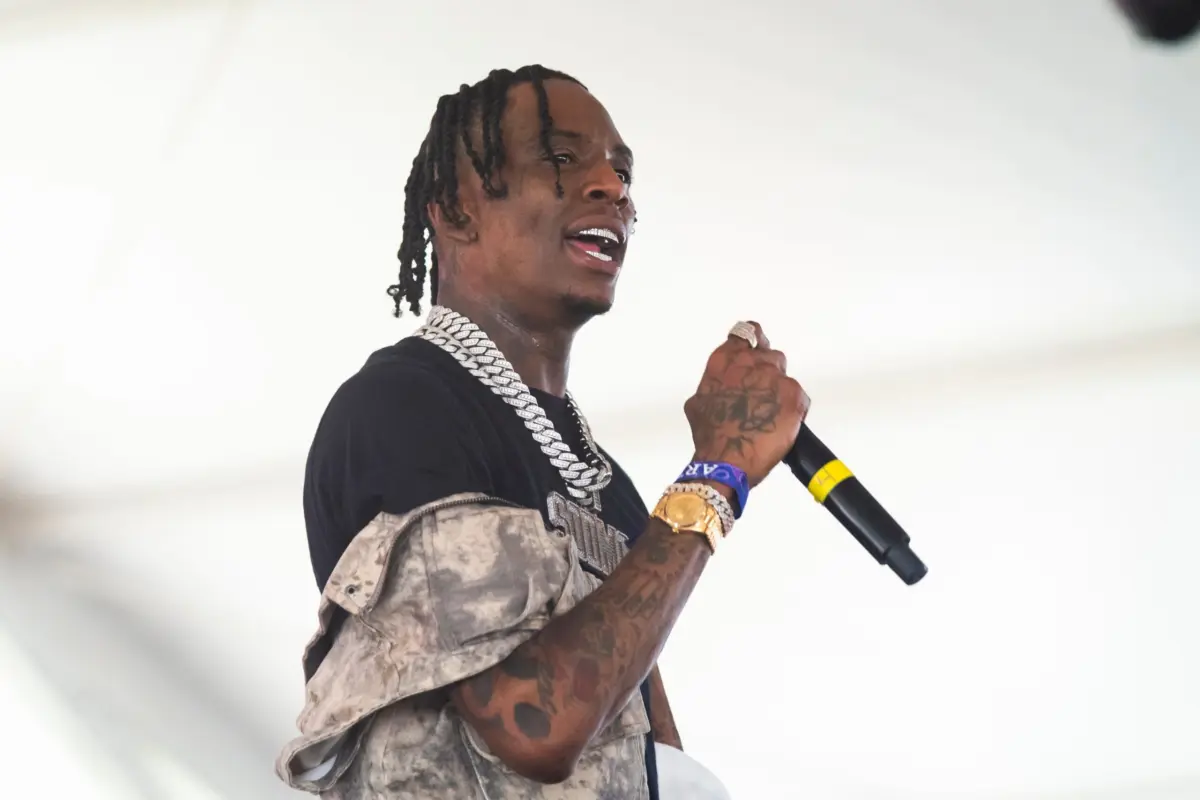
In an announcement that has simultaneously baffled political analysts and electrified social media, veteran rapper, entrepreneur, and digital pioneer Soulja Boy—born DeAndre Cortez Way—has officially teased a run for the White House in the 2028 United States presidential election. Taking to Instagram on a Saturday, the multi-platinum artist shared a manifesto framed around what he describes as "a new chapter," "a bigger vision," and "a commitment to creating opportunities for the next generation."
While celebrity involvement in American politics is far from a novel phenomenon—ranging from Ronald Reagan and Donald Trump to Kanye West’s chaotic 2020 campaign—Soulja Boy’s tentative entry into the 2028 conversation signals a unique intersection of early internet-era pop culture, modern influencer politics, and shifting voter engagement strategies. Way has laid out a four-pillar platform focusing on economic opportunity, criminal justice reform, education, and the future of technology and artificial intelligence (AI).
However, beneath the initial viral shockwave lies a sea of ambiguity. The rapper’s announcement lacked specific policy proposals, detailed campaign infrastructure, or clarification on whether he intends to run as an independent, a third-party candidate, or align with one of the two major political parties. As the political landscape looks ahead to the post-2026 midterm cycle and the ramp-up to 2028, this comprehensive report examines the announcement, contextualizes Way’s career trajectory from underground internet sensation to business mogul, evaluates the credibility of celebrity political bids, and analyzes what this "bigger vision" could mean for the future of American public service.
Detailed Chronology: From Viral Rapper to Presidential Hopeful
To understand the weight—or lack thereof—behind Soulja Boy’s 2028 presidential teaser, it is essential to trace the trajectory of DeAndre Cortez Way’s career. His journey from a teenage bedroom producer to a self-made entertainment mogul provides critical context for how he approaches unconventional career pivots.
The Rise of a Digital Pioneer (2007–2010)
Long before the era of TikTok virality and algorithmic music promotion, Soulja Boy effectively wrote the playbook for internet-era self-marketing. In 2007, at just 17 years old, Way uploaded his breakout track "Crank That (Soulja Boy)" to platforms like LimeWire, MySpace, and YouTube. Accompanied by a signature dance that quickly became a global phenomenon, the song soared to No. 1 on the Billboard Hot 100 and made him one of the youngest artists to ever write, produce, and perform a chart-topping hit independently.
Way’s early mastery of digital platforms demonstrated an intuitive understanding of audience engagement and community building. He utilized the nascent power of the internet to bypass traditional music industry gatekeepers, establishing a direct-to-consumer relationship with his fanbase that would later become standard operating procedure for modern artists and digital influencers.
Diversification and Business Ventures (2011–2020)
As the music industry evolved, Soulja Boy transitioned from a chart-topping teenager to a prolific independent businessman. Over the next decade, he expanded his brand far beyond the recording studio. He launched his own clothing lines, ventured into consumer electronics—most notably releasing a line of controversial emulation consoles—and became an early adopter of cryptocurrency and non-fungible tokens (NFTs) during the digital asset boom of the late 2010s and early 2020s.
Way’s business strategy has always been characterized by high risk, high visibility, and a relentless drive to diversify. Whether appearing on reality television shows like Love & Hip Hop: Hollywood or dominating social media timelines with viral interviews, Way has consistently managed to keep his name in the public consciousness, proving that he understands how to command attention in an increasingly crowded media ecosystem.
The 2028 Presidential Tease (2026)
The culmination of Way’s lifelong brand-building efforts manifested on a Saturday in early 2026, when he published his now-famous Instagram post. Complete with a bold declaration of "SOULJA BOY 2028," the post signaled a pivot from entertainment and commerce toward the highest office in the United States.
Following the initial social media drop, political commentators and pop culture observers alike scrambled to parse the statement. Way followed up his initial post with reflections on his career, noting, "From music to business to technology, I’ve always believed in thinking bigger and challenging what’s possible. Now I’m exploring what it means to bring that same vision to public service. The future starts with a conversation." While critics dismissed the move as a publicity stunt or a clever marketing ploy ahead of a new album or business venture, supporters argued that unconventional outsiders are precisely what a disillusioned electorate demands.
Supporting Context & Metrics: The Intersection of Culture and Politics
Soulja Boy’s 2028 teaser does not occur in a vacuum. It sits at the cross-section of several accelerating trends in American politics, media consumption, and demographic shifts.

The Celebrity-Politician Phenomenon
American politics has a long-standing romance with celebrity candidates. Ronald Reagan transitioned from Hollywood actor to Governor of California and President of the United States. Jesse "The Body" Ventura leveraged his fame as a professional wrestler to win the governorship of Minnesota. More recently, Donald Trump successfully bridged the gap between reality television stardom and the presidency, fundamentally altering the playbook for political campaigns.
However, independent and third-party bids by non-traditional figures often face severe structural hurdles. In the 2020 election, music icon Kanye West launched a heavily publicized presidential campaign under the "Birthday Party" banner. Despite spending millions of dollars and appearing on the ballot in a handful of states, West secured a mere 70,000 votes nationally. Political scientists point to a lack of local party infrastructure, the complexities of state-by-state ballot access laws, and the difficulty of converting social media clout into actual voter turnout as insurmountable barriers for celebrity candidates lacking established political machinery.
Soulja Boy’s Core Focus Areas
In his announcement, Soulja Boy deliberately steered away from hyper-partisan rhetoric, choosing instead to anchor his potential campaign to four broad, universally discussed policy areas:
- Economic Opportunity: Given his background as a self-made entrepreneur, Way’s focus on economic mobility centers on wealth creation, lowering barriers to small business ownership, and fostering financial literacy in underserved communities.
- Criminal Justice Reform: As a prominent cultural figure who has witnessed firsthand the systemic issues plaguing the American legal system, criminal justice reform represents a plank aimed at addressing mass incarceration, sentencing disparities, and rehabilitation.
- Education: Way has historically emphasized the importance of self-education and adaptability. His educational focus aims to modernize school curricula to better reflect the demands of a rapidly changing global economy.
- The Future of Technology and AI: Perhaps his most distinct platform pillar, Way’s focus on tech and artificial intelligence aligns with his lifelong positioning as an early adopter of digital innovation. He aims to address the societal impacts of AI automation, data privacy, and the digital divide.
| Platform Pillar | Stated Focus | Potential Voter Appeal | Key Challenges |
|---|---|---|---|
| Economic Opportunity | Small business creation, wealth-building, financial literacy | Working-class entrepreneurs, Gen Z & Millennial workers | Lack of detailed tax or monetary policy proposals |
| Criminal Justice Reform | Addressing sentencing, rehabilitation, systemic equity | Civil rights advocates, reform-minded voters | Navigating complex federal vs. state legal jurisdictions |
| Education | Modernizing curricula, adapting to the modern economy | Parents, educators, young professionals | Funding mechanisms and federal oversight limits |
| Technology & AI | AI automation management, digital access, tech innovation | Tech workers, digital natives, futurists | Translating broad tech interest into legislative frameworks |
Official Statements and Public Reaction
The reaction to Soulja Boy’s presidential tease was swift, polarized, and spread rapidly across digital platforms, drawing responses from fans, pundits, and internet commentators.
Inside the Artist’s Statement
Way’s camp has maintained that the announcement is an authentic exploration of public service, framing it as the logical next step for an individual who has spent nearly two decades disrupting traditional industries.
"I’ve always believed in thinking bigger and challenging what’s possible," Way reiterated in subsequent statements. "When you look at the political landscape, people are tired of the same old routines. They want leaders who understand where the world is going, not just where it’s been. Technology, AI, the digital economy—these are things traditional politicians barely understand, let alone know how to govern."
Public and Media Reception
On social media platforms like X (formerly Twitter), Instagram, and TikTok, reactions ranged from enthusiastic memes to deep skepticism.
- The Skeptics: Many political analysts and veteran journalists pointed out the severe logistical hurdles facing any independent candidate aiming for 2028. Critics noted that a lack of political experience, combined with the absence of a detailed policy platform, makes it difficult to evaluate the bid as anything more than a viral moment.
- The Supporters: Conversely, younger voters and fans expressed enthusiasm, arguing that the current political establishment is out of touch with the digital generation. Supporters highlighted Way’s entrepreneurial tenacity as proof of his ability to navigate complex systems and achieve results against the odds.
- The Internet Culture: Predictably, the announcement sparked an explosion of internet humor, with users combining lyrics from his classic hits with mock presidential campaign slogans, turning the news into a dominant weekend trending topic.
Future Outlook: Will "Soulja Boy 2028" Become a Reality?
As the dust settles on the initial announcement, the central question remains: Is Soulja Boy’s 2028 presidential bid a serious political undertaking, or is it a brilliantly executed branding exercise?
The Road to 2028: What Needs to Happen
For Way to transition from an Instagram post to a viable candidate on the national debate stage, several monumental steps must occur:
- Policy Development: Broad concepts regarding economic opportunity and AI governance must be translated into rigorous, well-researched policy proposals capable of withstanding scrutiny from economists, legal scholars, and political opponents.
- Campaign Infrastructure: A national campaign requires millions of dollars, a massive legal team to navigate state-by-state ballot access deadlines, and a ground game capable of organizing volunteers across all 50 states.
- Media Strategy: Way will need to pivot from viral social media announcements to substantive, long-form interviews that demonstrate a deep grasp of foreign policy, domestic governance, and constitutional law.
Conclusion
Whether DeAndre Cortez Way ultimately appears on a presidential ballot in November 2028 or quietly lets the campaign fade into the annals of internet history, his announcement underscores a profound truth about modern American politics: the traditional boundaries separating entertainment, digital culture, and governance continue to dissolve.
Soulja Boy’s foray into the national conversation serves as a reflection of a restless electorate searching for novelty, technological fluency, and leadership that speaks the language of the digital age. Whether that vision can successfully translate from the recording studio and corporate boardroom to the Oval Office remains one of the most fascinating speculative questions of the decade.

0 Comments