

Executive Overview
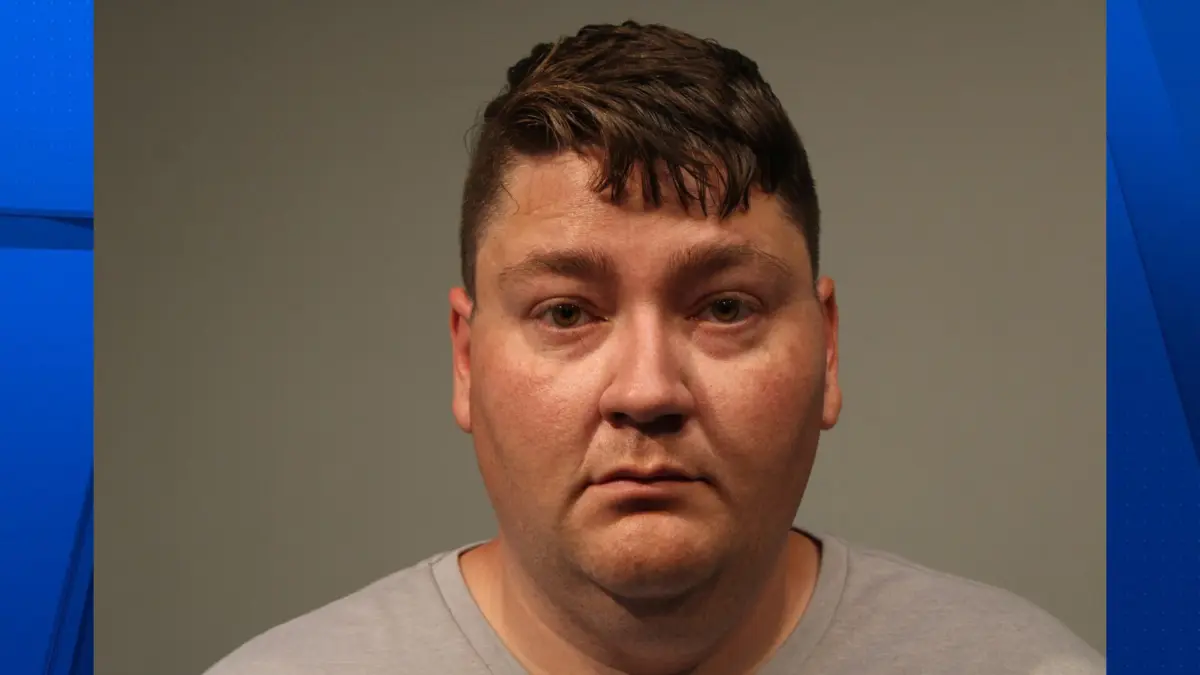
COTTONWOOD, Ariz. — The scope of a criminal investigation into a northern Arizona elementary school teacher has widened dramatically, uncovering a disturbing pattern of alleged exploitation within the very institution entrusted with student safety. Chester Cox, a 31-year-old educator at Dr. Daniel Bright Elementary School in Cottonwood, Arizona, now faces an array of severe new felony charges following the discovery of clandestine recording devices installed in his classroom and its adjoining private bathroom.
Initially taken into custody in June 2026 stemming from historical allegations of child molestation, Cox’s legal jeopardy escalated significantly when Yavapai County Sheriff’s Office (YCSO) investigators executed forensic examinations of his seized electronic devices. According to law enforcement officials, the digital forensic sweep revealed covertly captured video footage of multiple elementary school students recorded without their knowledge or consent inside the school facilities.
The unfolding case has sent shockwaves through the local community, prompting urgent reviews of institutional oversight, school safety protocols, and the background vetting processes utilized within the Cottonwood-Oak Creek School District. While the initial arrest of Cox was predicated on accusations of historical abuse occurring off-campus during his tenure as a youth sports coach, the latest disclosures tie the suspect directly to the campus where he spent nearly a decade molding young minds.
Currently held without bond at a Yavapai County detention facility, Cox faces additional charges including surreptitious videotaping and the sexual exploitation of a minor. As federal, state, and local investigators continue to parse through seized digital artifacts, affected families have been provided with crisis resources and comprehensive victim-rights information. This investigative report provides a detailed examination of the timeline of events, the systemic implications for child protection in educational environments, the official response from law enforcement, and the legal trajectory ahead.
Detailed Chronology of the Investigation
The legal proceedings against Chester Cox represent a complex matrix of overlapping investigations spanning multiple years, geographical locations, and institutional settings. Piecing together the timeline reveals how an initial disclosure by a survivor of historical abuse catalyzed a broader forensic sweep that exposed institutional vulnerabilities.
The Initial Disclosure and June 2026 Arrest
The criminal investigation into Cox officially commenced in June 2026, when the Yavapai County Sheriff’s Office received a formal report from a concerned mother. The reporting party alleged that Cox had systematically molested her son several years prior, when the victim was approximately 11 or 12 years old.
According to investigative findings released by YCSO, the alleged historical abuse did not take place on school grounds, but rather at a residential location. At the time the historical offenses allegedly occurred, Cox was operating in the capacity of a youth coach, affording him access to children outside of traditional academic structures. The survivor’s courage in coming forward served as the primary catalyst for law enforcement intervention.
Armed with statements from the victim and corroborating accounts, detectives secured a warrant and placed Cox under arrest. He was initially booked into the Yavapai County jail on grave felony counts, including sexual conduct with a minor and child molestation.
Execution of Digital Search Warrants
Following Cox’s initial apprehension, investigators routinely executed search warrants on his personal electronic hardware, including computers, external hard drives, and mobile communication devices, to gather evidence related to the active case.
Digital forensic examiners at the Yavapai County Sheriff’s Office undertook a meticulous extraction and analysis of the digital data. It was during this technical review that technicians uncovered a hidden digital repository containing video files inconsistent with standard personal media. Upon deeper analysis, investigators realized the files depicted minor children being secretly recorded inside a private bathroom and an instructional classroom at Dr. Daniel Bright Elementary School.
The Expansion of Charges: August 2026
The discovery of the hidden camera footage prompted an immediate expansion of the criminal probe. On Friday, August 21, 2026, the Yavapai County Sheriff’s Office formally announced that Cox was being served with an upgraded and expanded slate of criminal charges.
The newly filed charges—specifically surreptitious videotaping and sexual exploitation of a minor—directly implicate Cox in the violation of his students’ privacy within a school zone. Deputies confirmed that the newly identified victims are elementary-aged children who attended Dr. Daniel Bright Elementary School and were recorded without their knowledge or consent while utilizing the facilities within Cox’s assigned classroom workspace.
Supporting Context & Metrics: Institutional Impact and Background
The revelations surrounding Chester Cox have forced civic leaders, school administrators, and community members in Cottonwood to confront difficult questions regarding teacher screening, campus monitoring, and child safety measures.
Professional and Residential Background
According to biographical details released by the Yavapai County Sheriff’s Office, Cox is not a lifelong resident of Arizona. Prior to relocating to the Southwest, Cox resided in the state of Missouri, where formative aspects of his early adult life and potential professional history took place.
Upon arriving in Cottonwood, Arizona, Cox established deep roots within the community, maintaining a residency in the area for approximately eight to nine years. The vast majority of his time in the local area was spent embedded within the educational ecosystem of the Cottonwood-Oak Creek School District. Public records and district information indicate that Cox was employed as a teacher at Dr. Daniel Bright Elementary School for roughly seven of those years, marking a substantial tenure within a single campus environment where he interacted with hundreds of impressionable children.
Scope of the Digital Evidence and Distribution Analysis
A central concern for both parents and investigators following the discovery of hidden cameras in a school setting is the potential dissemination of illicit media. In the digital age, the illicit recording of minors frequently sparks fears regarding online distribution, dark web trading rings, or peer-to-peer sharing networks.
Addressing these immediate public safety concerns, the Yavapai County Sheriff’s Office issued a preliminary assessment regarding the dissemination of the recovered media. Based on the digital forensics conducted thus far, investigators stated they found no evidence indicating that the illicit footage had been shared, distributed, or uploaded to external networks or online platforms. However, forensic analysis of electronic media remains an ongoing, highly technical process, and federal partners often assist local jurisdictions in ensuring comprehensive data auditing across cloud storage accounts and encrypted applications.
Vulnerability of Educational and Youth-Centric Facilities
The case underscores a persistent challenge in child protection: the exploitation of positions of trust. Educators, youth coaches, and mentors occupy roles designed to foster psychological safety and learning. When individuals within these positions subvert their mandate, the psychological toll on victims and the institutional betrayal felt by the broader community are profound.
Dr. Daniel Bright Elementary School, serving children in the formative stages of their education, has found itself at the epicenter of a crisis that highlights the necessity of rigorous physical security audits. Educational facilities are traditionally designed to balance accessibility and openness with safety; however, the integration of private restrooms within instructional spaces has increasingly drawn scrutiny from security professionals advocating for enhanced oversight and regular environmental sweeps for unauthorized surveillance technology.
Official Statements and Law Enforcement Response
The handling of the Cox investigation has involved coordinated efforts across municipal, county, and potentially federal channels, prioritizing both the rigorous prosecution of the accused and the compassionate care of the victims.
Yavapai County Sheriff’s Office Protocols
Law enforcement officials have maintained a posture of transparency balanced with the imperative to protect the privacy and identities of the minor victims involved. In their public briefings, YCSO representatives emphasized that the rapid identification of additional victims necessitated a multi-pronged approach combining digital forensics with victim-centered advocacy.
In the wake of the August 21 announcement, the sheriff’s office confirmed that specialized victim advocates had been deployed to work directly with affected families. Deputies have actively provided comprehensive resource packages, counseling referrals, and detailed information regarding victims’ rights under Arizona state law to ensure that families receive immediate psychological and legal support.
Community and District Fallout
As news of the expanded charges reverberated through Yavapai County, administrators with the Cottonwood-Oak Creek School District faced mounting pressure to explain how unauthorized recording devices could remain undetected within a classroom environment. School districts across the state have faced heightened scrutiny regarding facility inspections, interior design compliance, and the tightening of teacher-student boundaries.
While school district officials have cooperated fully with the Yavapai County Sheriff’s Office throughout the duration of the inquiry, the broader implications for administrative oversight remain a dominant topic of discussion among local parents, school board members, and education advocates.
Future Outlook and Legal Proceedings
As the legal system prepares for the prosecution of Chester Cox, numerous critical phases lie ahead, shaping the trajectory of justice for the victims and accountability for the institutions involved.
Judicial Status and Pre-Trial Proceedings
Chester Cox remains incarcerated at the Yavapai County detention facility, held without the option of posting bond due to the severity of the charges, the flight risk, and the perceived danger he poses to the community.
In the coming weeks, the Yavapai County Attorney’s Office is expected to present the totality of the evidence—including the historical molestation allegations, the digital forensic extractions, and the new counts of surreptitious videotaping and child exploitation—to a grand jury for formal indictment. Following indictment, the case will transition into the pre-trial phase, where defense counsel and prosecutors will litigate discovery motions, evidentiary parameters, and potential plea negotiations.
Ongoing Forensic Investigations
Law enforcement has underscored that the investigation remains active and open. Digital forensic experts continue to examine secondary data structures, encrypted communication applications, and cloud backups associated with Cox’s electronic profile. Authorities have encouraged anyone with additional information regarding Cox’s conduct—whether during his tenure as a teacher at Dr. Daniel Bright Elementary, his past residency in Missouri, or his activities as a youth sports coach—to contact the Yavapai County Sheriff’s Office or local law enforcement agencies immediately.
Long-Term Implications for School Safety
The case of Chester Cox is likely to serve as a watershed moment for policy discussions regarding physical safety infrastructure in Arizona schools. Educational policymakers are anticipated to review existing mandates concerning private staff and student facilities, pushing for standardized protocols that eliminate blind spots and restrict unvetted electronic installations within classrooms.
For the community of Cottonwood, the journey toward healing will be long, requiring sustained support for the survivors, vigilant institutional oversight, and an unwavering commitment to ensuring that the spaces designated for children’s education remain unequivocally secure.

0 Comments