

Executive Overview
HERMOSILLO, Sonora — At daybreak in the searing desert of northern Mexico, rancher Martín Alfonso Ibarra embraces a familiar routine. Capitalizing on the cooler morning hours, he oversees the milking of his dairy cows and carefully tends to 16 prized calves. Soon, if all goes according to plan, these animals will embark on a journey north to the United States. For Ibarra, this movement represents a long-awaited financial lifeline after a devastating, yearlong embargo on Mexican cattle imports.
The suspension of cross-border livestock trade, triggered by the detection of the New World screwworm fly—a virulent, flesh-eating parasite—sent shockwaves through the agricultural supply chains of both nations. While the ban was instituted to protect American livestock from an invasive biological threat, it crippled a vital sector of the Mexican economy and exacerbated an ongoing livestock shortage in the United States. The consequences were profound: Mexican producers saw their revenues plummet as they flooded the domestic market at heavily discounted rates, while American consumers grappled with record-high beef prices that strained household budgets and squeezed meat-processing plants.
Now, after months of intense diplomatic negotiations, scientific assessments, and veterinary overhauls, the United States is officially set to resume livestock imports from Mexico beginning August 24, 2026. The initial phased reopening will take place at the Douglas, Arizona, border crossing, adjacent to Agua Prieta in Mexico’s northern state of Sonora.
However, this long-awaited resumption is far from a return to business as usual. The reopening will be governed by stringent new U.S. biosecurity protocols designed to prevent the parasite from gaining a wider foothold in North America—especially as authorities continue to battle isolated screwworm cases in Texas and New Mexico. These heightened restrictions, which include strict daily caps, radio-frequency identification (RFID) tracking, and rigorous canine inspections, are expected to slow the flow of cross-border trade. While officials on both sides celebrate the pragmatic step toward normalization, local producers and agricultural analysts alike remain cautiously optimistic, warning that the road to full economic and epidemiological recovery will be long and arduous.
Detailed Chronology: The Anatomy of a Trade Crisis
The crisis that led to the yearlong border closure began not with a sudden economic shock, but with a quiet, creeping biological threat that had long been considered eradicated from North America.
November 2024: The Initial Detection
The first alarms were sounded in November 2024, when Mexican veterinary authorities detected the presence of the New World screwworm (Cochliomyia hominivorax) within the country. The parasitic fly, whose larvae actively burrow into the open wounds of warm-blooded animals, poses a catastrophic risk to livestock, wildlife, and even humans. Historically a scourge of the Americas, the pest had previously been pushed south through decades of coordinated U.S.-Mexico eradication programs, establishing a biological barrier in Central America. Its resurgence in Mexico threatened to undo generations of sanitary progress.
As the parasite spread rapidly, infiltrating 30 of Mexico’s 32 states over the following months, international alarm grew. The crisis hit a critical tipping point in May 2025, when Washington invoked strict emergency sanitary measures and suspended all live cattle imports from Mexico. The decision triggered immediate diplomatic friction, testing the administrative relationship between Mexican leadership and U.S. trade officials.
The Domestic Fallout in Mexico
For Mexican ranchers, the sudden loss of their primary export market was catastrophic. Prior to the embargo, Mexico exported approximately 1.2 million head of cattle annually to the United States, generating a staggering $1.2 billion for the national economy. With the U.S. border sealed, northern states like Sonora, Chihuahua, and Durango found themselves facing an unprecedented logistical and financial bottleneck.
Unable to ship their livestock north, ranchers were forced to redirect their cattle to the domestic market. The sudden oversupply caused domestic beef and cattle prices to plummet by nearly 40% compared to previous export valuations. For producers like Martín Alfonso Ibarra, whose income dropped by 40% in a single year, the financial squeeze forced painful sacrifices. Many ranchers were compelled to liquidate portions of their herds simply to cover basic operational overhead, while others slashed investments in infrastructure, feed, and veterinary care.
The Spread to Sonora and Ongoing Containment
Compounding the economic misery, the epidemiological threat continued to march northward. In August 2026, just days before the scheduled border reopening, Sonora reported its first official screwworm case in the community of Munihuasa, near the volatile borders with Chihuahua and Sinaloa.
Despite this setback, Mexican agricultural authorities have emphasized that broader containment efforts are showing measurable progress. To date, Mexico has recorded 1,969 active screwworm cases nationwide—representing less than half of the infection levels reported at the peak a year prior. Federal and state veterinary agencies have deployed aggressive treatment campaigns, applying larvicides, distributing educational materials to rural cooperatives, and deploying sterile insect technique (SIT) releases to suppress the wild fly population. Nevertheless, the discovery in Sonora served as a sobering reminder that the parasite remains an active and persistent threat.
Supporting Context & Metrics: Economic and Biological Realities
The closure of the U.S.-Mexico border laid bare the deep interdependence of North America’s agricultural supply chain. When trade halts, the economic shockwaves are felt acutely by producers, processors, and consumers alike.
The U.S. Beef Crisis and Consumer Pain
While Mexican ranchers bore the brunt of the initial income loss, the macroeconomic impact was felt heavily in the United States, where the livestock sector was already grappling with prolonged drought conditions and a historic herd inventory shortage.
According to agricultural consulting firm Grupo Consultor de Mercados Agrícolas, American ranchers and feedlot operators were entirely unable to bridge the supply shortfall left by the absence of Mexican feeder cattle. This deficit reverberated down the line, forcing several regional meat-processing plants to scale back operations or face temporary closures due to underutilization.
For the average American consumer, the supply constriction manifested at the grocery store checkout counter. Record-high beef prices for staples like steak and ground beef persisted throughout late 2025 and 2026, prompting widespread consumer pushback and a noticeable reduction in household meat consumption. Juan Carlos Anaya, general director of the consulting firm, noted that the restriction of cross-border trade severely constrained the North American protein market, proving that protectionist measures—even when implemented for valid sanitary reasons—carry heavy economic collateral damage.
Understanding the Enemy: The New World Screwworm
To fully grasp the caution exercised by the U.S. Department of Agriculture (USDA), one must understand the biological mechanics of the pest. The New World screwworm fly is not a biting insect in the traditional sense; rather, it is an obligate parasite. Adult female flies are attracted to any existing wound, scratch, or mucous membrane on a warm-blooded animal—ranging from livestock and domestic pets to native wildlife and, on rare occasions, humans.
The female deposits her eggs at the edge of the wound. Upon hatching, the larvae (maggots) use mouth hooks to actively burrow—or "screw"—deeply into the living tissue of the host. This feeding process causes severe tissue destruction, secondary bacterial infections, systemic shock, and, if left untreated, eventual death. The economic damage to the livestock industry stems not only from mortality rates, but also from significant weight loss, decreased milk production, and the intensive labor required for constant herd inspections and wound treatments.
Official Statements and Protocols: Balancing Safety and Commerce
As the August 24 reopening date approaches, the mechanics of cross-border trade are being rewritten. The U.S. Department of Agriculture and Mexico’s agricultural ministry have agreed upon a strict, phased protocol designed to gradually reintroduce Mexican cattle while maintaining an impenetrable sanitary defense against the parasite.
Phased Volume Caps
Rather than flinging open the gates to pre-ban trade volumes, the reopening will be heavily throttled. According to Arturo Ruiz, the official responsible for animal health for the state of Sonora, the rollout will follow a strict volumetric schedule:
- Week 1: A maximum limit of 700 cattle per day will be permitted to cross the border at Douglas, Arizona.
- Week 2: The cap will increase incrementally to 900 cattle per day.
- Subsequent Weeks: Volumes will continue to scale upward gradually until reaching a stabilized target of 1,300 cattle per day.
If this initial phase proceeds without any biosecurity breaches, the USDA has indicated it may consider opening additional ports of entry along the border. However, every shipment will remain subject to intensive oversight.
Technological and Veterinary Hurdles
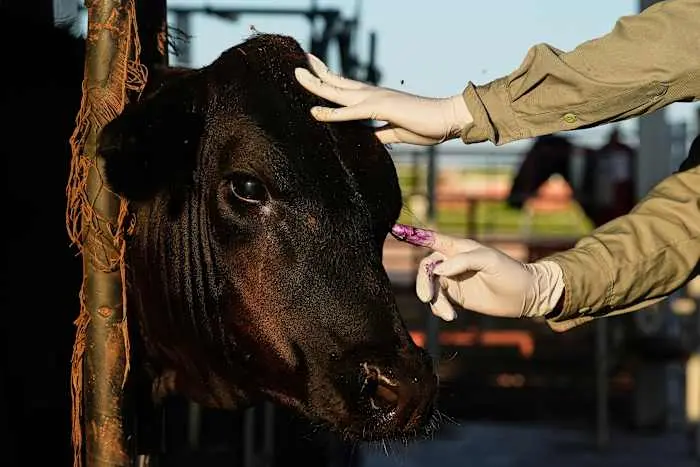
The new regulatory framework introduces advanced tracking and screening requirements. Every head of cattle destined for export must now be fitted with a high-frequency radio-frequency identification (RFID) tag in its ear. Upon arrival at the border, these tags will be scanned by electronic readers, and the animals will undergo thorough physical inspections conducted directly by USDA officials stationed at the crossing. Furthermore, specialized canine units—trained to detect the scent of screwworm infestations or larval presence—will actively inspect incoming herds.
While Mexican federal authorities have formally accepted these protocols, the restrictions have sparked frustration among local livestock unions, who argue that the measures are overly bureaucratic and politically motivated.
"We are at a complicated moment when we need authorities to think less politically and more technically and reasonably," said Juan Carlos Ochoa, president of the Regional Livestock Union of Sonora. Ochoa expressed deep concern that the daily volume caps and slow ramp-up schedule will artificially restrict shipments, delaying the recovery of regional supply chains at a time when both nations desperately need increased cattle flows to stabilize market prices.
Future Outlook: Cautious Optimism in the Sonoran Desert
Back in Hermosillo, amidst the suffocating heat of late August, rancher Martín Alfonso Ibarra maintains a pragmatic outlook. While he is relieved that the export channel is finally reopening, his enthusiasm is tempered by the hard lessons of the past year.
Ibarra is holding off on making any definitive financial projections until October. By then, he calculates, his 16 calves will have gained sufficient weight on local forage, the initial border bottlenecks will have hopefully smoothed out, and actual sales transactions can be safely finalized.
"This is not over yet," Ibarra remarked, reflecting on the lingering threat of the parasite and the friction of the new regulatory environment. In a sentiment echoed by thousands of his peers across northern Mexico, he added, "There’s no need to get too excited."
The path forward for the North American cattle industry will require a delicate balancing act. Veterinary authorities must remain eternally vigilant against a resilient biological adversary that has already demonstrated its capacity to breach international borders. Simultaneously, trade regulators must listen to the practical insights of producers on the ground, ensuring that sanitary safeguards do not strangle the economic vitality of the borderlands. Until full herd immunity is restored and regional eradication is certified, the livestock trade between the United States and Mexico will proceed step-by-careful-step—bound by the lessons of a crisis that neither side can afford to repeat.

0 Comments