

WASHINGTON (Gray DC) — As Capitol Hill remains dormant during a scheduled congressional recess, the Trump administration has aggressively shifted its operations outside the Beltway. High-ranking officials are fanning out across the United States this week in a coordinated nationwide campaign designed to build political momentum, shore up strategic alliances, and energize key industrial and voter bases ahead of the fiercely contested midterm elections.
While Vice President JD Vance and Secretary of War Pete Hegseth hit the road to champion the nation’s defense manufacturing capabilities in New England and the Midwest, President Donald Trump prepares for a high-profile trip to Texas to honor America’s space pioneers. Simultaneously, the nation’s capital and the National Mall are bracing for major demonstrations as civil rights leaders mark a historic anniversary against the backdrop of recent, highly controversial judicial rulings regarding voting rights.
Executive Overview
The strategic dispersion of the executive branch this week highlights the dual-track approach defining the current political landscape: an administration-led offensive aimed at economic revitalization, industrial might, and technological prestige, countered by a galvanized civil rights movement pushing back against systemic legislative and judicial shifts.
The White House’s primary objective this week is clear: project strength, competence, and forward momentum. By utilizing the official machinery of the federal government—ranging from defense manufacturing sites and military command centers to NASA’s premier human spaceflight facility—administration officials are engaging directly with working-class communities and industrial powerhouses. These regions are expected to serve as crucial electoral battlegrounds in the upcoming midterms.
Conversely, civil society and advocacy groups are leveraging historical milestones to mobilize their constituents. The convergence of administration travel with major demonstrations on the National Mall creates a charged political atmosphere, underscoring the deep ideological divisions shaping the national discourse as the midterm cycle accelerates.
Detailed Chronology: A Week of High-Stakes Travel and Civil Mobilization
The week’s itinerary features a packed schedule of crisscrossing travel itineraries and significant public events, mapping out a busy few days for the executive branch and activist networks alike.
Monday: Industrial Focus in Maine, Nebraska, and Wisconsin
The administration’s week kicked off with a concerted focus on the nation’s defense and manufacturing backbone.
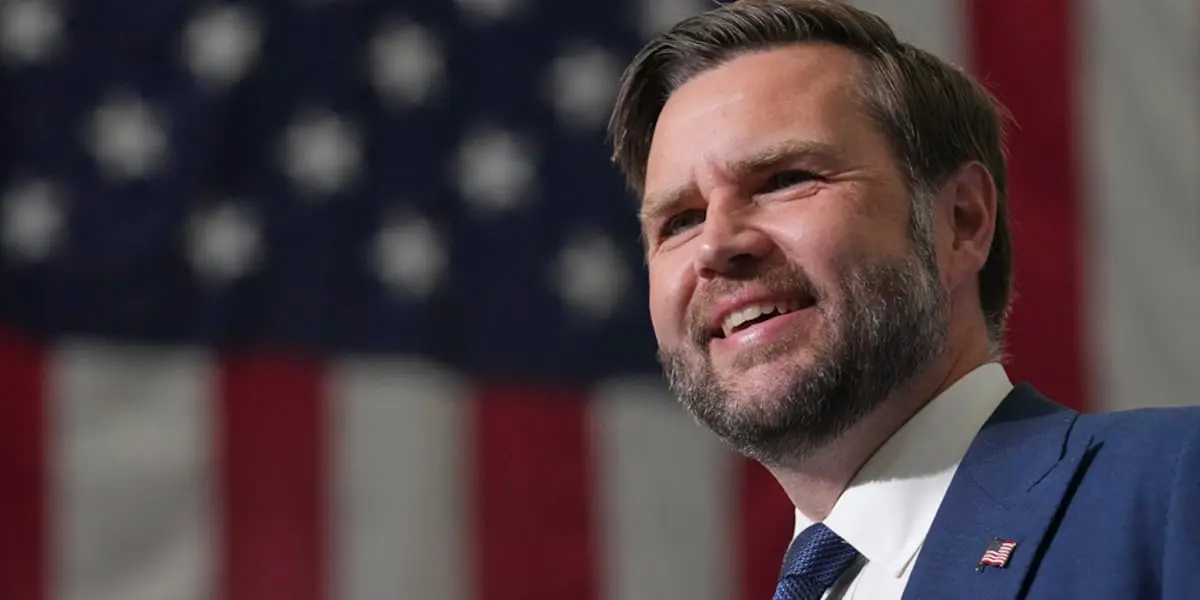
- Vice President JD Vance in Brewer, Maine: Vice President Vance traveled to Brewer on Monday to deliver remarks at a prominent defense technology manufacturer. This visit marks Vance’s second trip to the Pine Tree State in recent months, signaling a deliberate effort by the White House to court voters in northern New England—a region historically characterized by independent political leanings and critical manufacturing supply chains.
- Secretary of War Pete Hegseth’s "Arsenal of Freedom" Tour: Concurrently, Secretary of War Pete Hegseth launched the latest leg of his high-profile “Arsenal of Freedom” tour, making strategic stops in Nebraska and Wisconsin. The tour is specifically aimed at energizing the nation’s defense industrial base, streamlining production capabilities, and reinforcing ties between the Pentagon and regional manufacturers. As part of his itinerary, Hegseth scheduled a high-level briefing at the Strategic Command (STRATCOM) headquarters located just outside Omaha, emphasizing nuclear deterrence and global readiness.
Friday: Presidential Space Honors and Civil Rights Mobilization
The latter half of the week shifts the spotlight toward scientific achievement in the American South and civil rights advocacy in the nation’s capital.
- President Donald Trump in Houston, Texas: President Trump is scheduled to travel to Houston on Friday for a ceremonial event at NASA’s Lyndon B. Johnson Space Center. There, the President will formally present the prestigious Space Medal of Honor to the members of the Artemis II crew, celebrating American leadership in space exploration and the forthcoming return of human deep-space missions.
- The 63rd Anniversary of the March on Washington: Friday also marks the solemn 63rd anniversary of Dr. Martin Luther King Jr.’s historic 1963 March on Washington. To commemorate the milestone and address contemporary civil rights challenges, the Reverend Al Sharpton’s National Action Network (NAN) has organized a major mass rally on the National Mall, focusing heavily on the defense and expansion of voting rights.
Supporting Context & Metrics: Defense Infrastructure, Space Prestige, and Judicial Shifts
To fully understand the weight of this week’s events, one must examine the broader geopolitical, economic, and judicial contexts underpinning them.
The Defense Industrial Base and the "Arsenal of Freedom"
Secretary Hegseth’s tour comes at a critical juncture for U.S. national security. In recent years, policymakers from both sides of the aisle have raised concerns regarding the resilience and capacity of the American defense industrial base. Supply chain bottlenecks, skilled labor shortages, and fluctuating defense budgets have strained the production of critical munitions and advanced technologies.
- Economic Footprint: The defense manufacturing sector accounts for hundreds of thousands of high-paying jobs across Midwestern and Northeastern states like Wisconsin, Nebraska, and Maine.
- Strategic Imperatives: Initiatives like the "Arsenal of Freedom" tour are designed to bridge the gap between military leadership and private-sector contractors, accelerating innovation cycles in fields ranging from aerospace components to advanced cybersecurity and autonomous defense tech.
NASA’s Artemis II and the New Space Race
President Trump’s visit to the Johnson Space Center underscores the enduring bipartisan appeal of space exploration, coupled with renewed international competition.
- The Artemis II Mission: As NASA prepares the Artemis II crew for humanity’s return to the lunar vicinity, the mission represents a technological milestone and a potent symbol of American prestige.
- Economic and Scientific Impact: The aerospace cluster in Houston, anchored by the Johnson Space Center, generates billions of dollars in economic activity and supports a massive ecosystem of aerospace contractors, research institutions, and high-tech startups.
Voting Rights in the Wake of Supreme Court Scrutiny
Friday’s rally on the National Mall by the National Action Network is not merely a historical commemoration; it is a direct response to a rapidly shifting legal landscape regarding American democracy.
The demonstration arrives months after a landmark Supreme Court decision that significantly limited the scope and application of the Voting Rights Act.
- Redistricting Implications: The ruling granted state legislatures expanded latitude and discretion in drawing congressional district lines. Critics and civil rights organizations argue that these new legal parameters have enabled gerrymandering practices that systematically dilute minority voting power and marginalize communities of color.
- Midterm Implications: Voting rights advocates are working urgently to register voters, challenge redistricting maps in lower courts, and mobilize grassroots support ahead of the midterms, framing ballot access as the central civil rights battle of the decade.
Official Statements and Political Reactions
The competing narratives of the week have sparked sharp commentary from administration officials, congressional leaders, and civil rights advocates alike.
Administration defenders emphasize that the executive branch’s regional outreach is proof of a government actively delivering results for American workers.
"While Congress remains stalled in Washington, this administration is taking the case directly to the American people," said a senior White House official speaking on background. "Whether we are strengthening our defense posture in the industrial heartland, honoring our space heroes in Houston, or driving economic growth, our focus remains unyielding on security, prosperity, and American leadership."
Conversely, civil rights leaders and opposition lawmakers have sharply criticized the administration’s priorities, arguing that high-flying ceremonial trips do little to address the pressing domestic concerns facing ordinary citizens, particularly the erosion of democratic safeguards.
Reverend Al Sharpton, speaking ahead of Friday’s National Mall rally, issued a stern warning regarding the state of voting rights in post-Supreme Court America.
"Sixty-three years after Dr. King called us to fulfill the true meaning of our creed, the fundamental right to vote is under a more coordinated, sophisticated assault than at any point in modern history," Sharpton stated. "We are marching not just to remember the past, but to demand legislative and judicial protection for every American citizen whose voice the powerful are trying to silence."
Meanwhile, defense sector analysts have offered mixed reviews of the administration’s industrial tours. While trade associations have welcomed increased executive attention and potential investments in manufacturing hubs, watchdog groups have questioned whether these high-profile visits translate into meaningful, long-term structural reforms within the Pentagon’s notoriously complex procurement processes.
Future Outlook: Implications for the Midterms and Beyond
As the congressional recess draws to a close and the political calendar accelerates toward the midterms, the events of this week serve as a microcosm of the forces that will define the upcoming election cycle.
- The Economy and Industrial Security: The Trump administration is clearly betting that highlighting industrial jobs, defense readiness, and technological prowess will resonate strongly with working-class voters in pivotal swing states. How these communities perceive their economic security and local job growth will heavily influence congressional outcomes in regions like the industrial Midwest and northern New England.
- The Mobilization of the Electorate: On the other hand, the legal battles surrounding the Voting Rights Act and the passionate mobilization of civil rights organizations indicate that social justice issues will serve as a powerful counter-mobilizer. Turnout among minority voters, particularly in southern and suburban districts affected by recent redistricting, could prove decisive in determining the balance of power in Congress.
- The Intersecting Crises of Governance: Ultimately, the juxtaposition of defense tours, space honors, and civil rights protests underscores the complex, multifaceted challenges facing the United States. As voters prepare to head to the polls, the debate over who controls the legislative agenda will hinge not only on national security and economic prosperity, but also on the foundational question of equal access to the democratic process.
With the stakes exceptionally high, both sides are locking in their strategies. The remainder of the year promises to be a high-stakes crucible where executive branch campaigning, judicial fallout, and grassroots activism collide on the national stage.

0 Comments