

Executive Overview
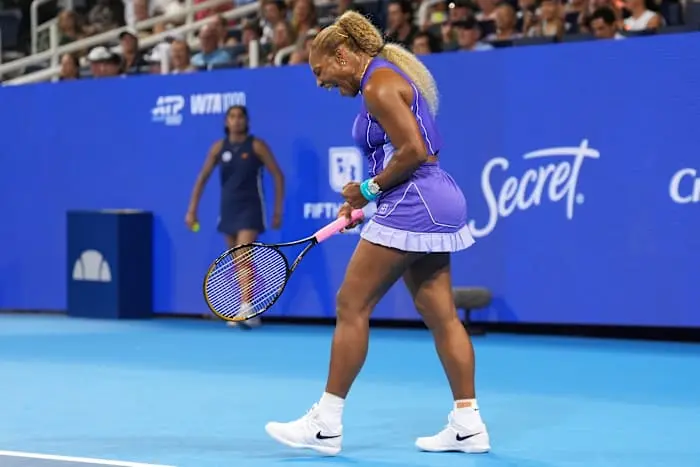
NEW YORK — The global tennis universe is bracing for an electrifying fortnight at Flushing Meadows as the United States Tennis Association (USTA) prepares to launch its newly reformatted, high-stakes mixed doubles championship. Headlining this year’s marquee event is a generational dream-team pairing: 23-time Grand Slam singles champion Serena Williams, making her highly anticipated return to the tournament for the first time since her emotional 2022 farewell, and two-time U.S. Open men’s singles champion Carlos Alcaraz.
The duo, granted a coveted wild-card entry into the 16-team elite field, currently awaits the conclusion of a fierce eight-team qualifying tournament to discover their first-round opponents. While Williams and Alcaraz command the lion’s share of global media attention, the tournament boasts a heavily stacked draw featuring some of the sport’s biggest names, couples, and elite tactical specialists.
The revised format, designed to balance blockbuster star power with competitive integrity, features a condensed schedule—with the opening rounds and quarterfinals slated for Tuesday, followed swiftly by the semifinals and the championship showdown on Wednesday. At stake is an unprecedented $1 million winner-take-all prize purse, ensuring that the competition will be fierce from the very first serve.
However, the road to the title is fraught with challenges. The star-studded field includes defending women’s champion Aryna Sabalenka partnering with 24-time Grand Slam king Novak Djokovic as the tournament’s No. 1 seeds, alongside formidable tandems like Jessica Pegula and Taylor Fritz. Furthermore, the introduction of a dedicated qualifying tournament for doubles specialists has added a layer of depth and grit to the draw, ensuring that Williams, Alcaraz, and the rest of the tennis elite will be tested by players whose livelihoods depend on doubles mastery.
Detailed Chronology: From Wild Cards to the Road Ahead
The genesis of the Williams-Alcaraz partnership caught the tennis world by surprise when tournament organizers officially awarded them a wild card late Saturday afternoon. Williams, who stepped away from professional singles competition following a legendary run at the 2022 U.S. Open, has kept fans guessing regarding a potential competitive return. Though she recently appeared at the Cincinnati Open in a warm-up women’s doubles match alongside Marta Kostyuk against Peyton Stearns—signaling her intent to shake off the rust—stepping onto the hard courts of Flushing Meadows alongside modern phenom Alcaraz represents an entirely new plateau of competitive theater.
The timeline leading up to the main draw has been a whirlwind of administrative adjustments and last-minute roster adjustments:
- Sunday: The official tournament draw took place, revealing that Williams and Alcaraz would bypass the direct-entry criteria and be slated against one of the teams emerging from the qualifying tournament.
- Monday: An intense, eight-team qualifying tournament commenced in Mason, Ohio, and at the USTA Billie Jean King National Tennis Center. This preliminary bracket was explicitly designed to appease professional doubles specialists who felt sidelined by previous iterations of the tournament, which favored singles rankings.
- Tuesday (Upcoming): The pressure cooker reaches its boiling point. The tournament organizers have scheduled both the first round and the quarterfinals to be played on a single, high-intensity day.
- Wednesday (Upcoming): The tournament culminates with the semifinals and the lucrative championship match, where the surviving pair will walk away with the lion’s share of the historic $1 million prize pool.
The path for the rest of the field is equally perilous. Top seeds Novak Djokovic and Aryna Sabalenka—combining for an astronomical number of major singles titles—earned the No. 1 ranking based on having the lowest combined singles ranking among direct entrants. They will square off against the explosive pairing of Leylah Fernandez and Frances Tiafoe.
Meanwhile, the No. 2 seeds, American favorites Jessica Pegula and Taylor Fritz, must navigate a tricky opener against Diana Shnaider and Casper Ruud. The latter match experienced significant behind-the-scenes drama: Ruud was initially slated to defend his strong partnership chemistry with Iga Swiatek after their runner-up finish in 2025. However, Swiatek’s late withdrawal forced a shuffle, leaving Shnaider in need of a partner after her initial teammate, Daniil Medvedev, pulled out due to scheduling conflicts.
Other marquee first-round matchups finalized during Sunday’s draw include:
- Tennis power couple Elina Svitolina and Gael Monfils taking on the dynamic tandem of Alex Eala and Felix Auger-Aliassime.
- Belinda Bencic and Flavio Cobolli battling Taylor Townsend and Alexander Zverev.
- Karolina Muchova and Jakub Mensik facing off against the second qualifier advancing from Monday’s preliminary bracket.
- Emma Navarro and Tommy Paul locking horns with Amanda Anisimova and Learner Tien.
- Mirra Andreeva and Andrey Rublev challenging two-time defending champions Sara Errani and Andrea Vavassori.
Supporting Context & Metrics: The Evolution of U.S. Open Mixed Doubles
To fully understand the gravity of this year’s mixed doubles tournament, one must examine the structural shifts implemented by the United States Tennis Association (USTA) over the past twenty-four months.
Historically, mixed doubles at Grand Slam events was viewed as a secondary exhibition—a fun, low-pressure sideshow where singles players could hone their volleys and doubles specialists could earn supplementary income and prestige. However, declining television ratings and shifting sports consumption habits prompted tournament executives to rethink the product.
Last year, the USTA instituted a radical overhaul. In a deliberate bid to capture mainstream media attention and drive ticket sales, entry criteria were strictly tethered to players’ singles rankings. While the strategy successfully injected blockbuster names into the tournament, it effectively locked out professional doubles specialists—athletes who dedicate their entire careers to the nuanced art of court positioning, net play, and tactical coordination in pairs.
The backlash from the tennis community was swift. Critics argued that sidelining career doubles players undermined the integrity of the discipline. In response, tournament directors introduced the eight-team qualifying tournament for the 2026 edition—a hybrid model attempting to bridge the gap between commercial star power and sporting meritocracy.
Financial Stakes and Metrics
- The $1 Million Prize: The introduction of a $1 million payout for the winning mixed doubles team places the discipline on financial footing comparable to mid-tier singles tournaments. This unprecedented purse is a direct response to the commercial demand generated by pairings like Williams-Alcaraz and Djokovic-Sabalenka.
- Combined Rankings: The seeding committee utilized an algorithmic approach based on combined singles rankings to determine the top slots. Djokovic and Sabalenka seized the No. 1 seed due to their nearly uninterrupted dominance at the top of the ATP and WTA tours over the past decade.
- Age and Era Convergence: Williams, whose career spans multiple eras of tennis dominance, now shares a court with Alcaraz, the vanguard of the modern men’s game. This bridges a generational divide that has captivated sports analysts worldwide.
Official Statements and Industry Reactions
The announcement of Williams and Alcaraz joining forces has elicited reactions from across the sports landscape, highlighting the cultural significance of the pairing.
Tournament Director Stacey Allaster emphasized the deliberate steps taken to elevate the mixed doubles profile while respecting the broader tennis ecosystem:
"We listened to our fans, our broadcasters, and our athletes. The inclusion of the qualifying tournament allows us to honor the incredible talent of our dedicated doubles specialists, while wild cards like Serena Williams and Carlos Alcaraz elevate the showcase to a historic level of global sports entertainment. This is tennis at its most thrilling and accessible."
Carlos Alcaraz spoke candidly during a pre-tournament press conference about the surreal nature of sharing a side of the court with a childhood icon:
"Growing up, watching Serena dominate every single court she stepped on was the inspiration for so many of us. To be on the same side of the net, communicating strategy, fighting for a title together—it’s something I never could have imagined. I’m just trying to make sure I don’t let her down out there."
Tennis analysts have also weighed in on the tactical dynamics of the tournament. Former Grand Slam champion and commentator John McEnroe noted the unique pressures facing the star pairings:
"Everyone loves the romance of Serena coming back to play with Alcaraz, but let’s not kid ourselves: the teams coming out of that qualifying tournament on Monday are going to be sharp, match-tough, and hungry. Doubles is a completely different geometry than singles. If Serena and Carlos aren’t clicking on their service returns and net coverage by the second game, those qualifying specialists will ruthlessly expose them."
Future Outlook: What to Watch as Flushing Meadows Opens Its Gates
As the dust settles on the draw and the qualifiers battle for the final two coveted spots in the main bracket, all eyes turn toward the practice courts of Flushing Meadows.
The immediate test for Williams and Alcaraz will be the adaptation phase. Williams has spent the last four years away from the chaotic cadence of professional tour matches, and while her tennis IQ and competitive fire remain unmatched, integrating her game with Alcaraz’s explosive, high-octane baseline power and lightning-fast court coverage will require immediate chemistry.
Furthermore, the physical toll of the condensed schedule cannot be understated. Playing opening rounds, quarterfinals, and potentially pushing through to the semifinals and finals across a 48-hour window will demand peak physical conditioning from veterans and young stars alike. For Novak Djokovic and Aryna Sabalenka, managing energy expenditure while balancing their primary singles commitments will be a masterclass in tactical pacing.
Ultimately, the 2026 U.S. Open mixed doubles championship is no longer a footnote on the tournament schedule—it has transformed into the must-watch event of the North American hard-court swing. Whether the fairy-tale run of Williams and Alcaraz culminates in a historic $1 million hoisting of the trophy, or whether seasoned doubles specialists and top-tier singles pairs manage to spoil the party, tennis fans are guaranteed an unforgettable display of athleticism, legacy, and competitive fire.

0 Comments