

Executive Overview
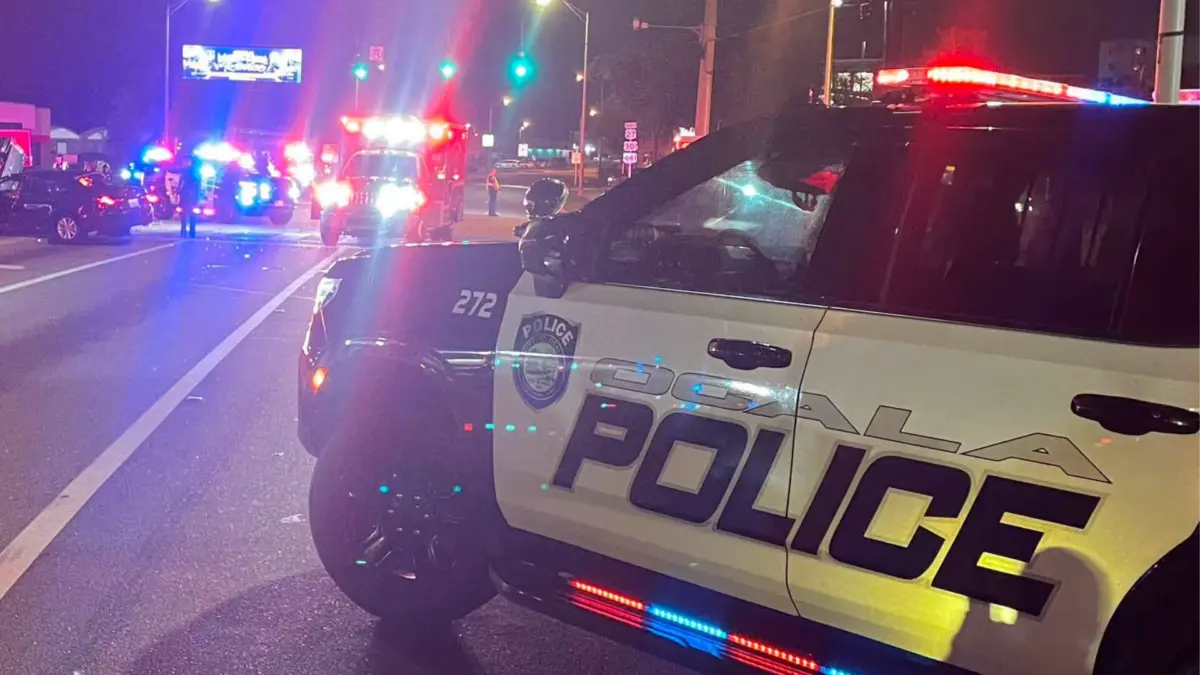
OCALA, Fla. — A severe multi-vehicle collision late Sunday evening at one of Marion County’s most heavily trafficked commercial intersections has triggered a substantial emergency response and brought regional transit to a temporary standstill. The incident, which occurred at the intersection of South Pine Avenue and Southeast 17th Street, involved several passenger vehicles and has necessitated localized road closures, emergency triage, and extensive clearance operations by the Ocala Police Department (OPD) and Marion County Fire Rescue.
The crash, first logged by municipal dispatchers at approximately 11:14 p.m. on August 23, 2026, instantly disrupted the flow of traffic along the major north-south commercial artery of South Pine Avenue (U.S. Route 441). As emergency personnel flooded the scene, municipal authorities immediately issued public safety advisories warning motorists to avoid the surrounding corridor. The incident underscores ongoing vulnerabilities regarding vehicular safety, intersection design, and nighttime driving hazards along central Florida’s rapidly expanding urbanized commercial routes.
While preliminary investigations are ongoing, the exact sequence of events leading up to the collision remains under active review by specialized traffic homicide and reconstruction units within the Ocala Police Department. First responders faced the immediate challenge of securing a chaotic scene marked by significant vehicular debris, fluid spills, and potential structural hazards to surrounding infrastructure. This report provides an exhaustive examination of the incident, integrating a detailed chronology of the emergency response, broader infrastructural and traffic safety metrics for the Ocala region, official statements from municipal authorities, and a forward-looking analysis of the measures required to mitigate similar high-impact roadway incidents in the future.
Detailed Chronology of the Incident and Emergency Response
The unfolding of events on the night of August 23, 2026, highlights the rapid deployment protocols characteristic of Ocala’s emergency services network.
Initial Impact and Automated Alerts (11:00 PM – 11:14 PM)
At approximately 11:05 PM, automated collision-notification systems and multiple 911 calls from motorists converged on the Marion County Public Safety Communications center. Callers reported a high-impact collision involving multiple vehicles positioned squarely within the intersection of South Pine Avenue and Southeast 17th Street. Due to the kinetic force of the impact, several of the vehicles sustained heavy structural damage, disabling them and leaving them strewn across multiple northbound and southbound lanes.
Debris field analysis suggests the collision occurred at a moderate to high rate of speed, a factor typical of late-night transit incidents when traffic volumes diminish, occasionally encouraging drivers to exceed posted speed limits along the expansive corridors of U.S. 441.
First Responder Dispatch and Arrival (11:14 PM – 11:30 PM)
At 11:14 PM, the Ocala Police Department officially published its initial public warning, signaling that a major traffic-impacting event was underway. Within minutes, multiple patrol units, traffic control officers, and emergency medical services (EMS) from Marion County Fire Rescue arrived at the scene.
Upon arrival, first responders established a secure perimeter, deploying emergency vehicle lighting and flares to divert oncoming traffic away from the hazard zone. The immediate priority shifted to life-safety assessments, checking occupants for acute trauma, and securing the vehicles against secondary hazards such as fuel leaks, electrical shorts, and battery fires. Traffic control officers immediately implemented sweeping road closures, restricting access to South Pine Avenue from adjacent side streets and funneling residual traffic onto alternate detours.
Scene Mitigation and Investigation (11:30 PM – 2:00 AM)
As towing operations and environmental remediation crews were called to the scene, investigators began the meticulous process of documenting skid marks, vehicle resting positions, and point-of-impact debris. The presence of multiple vehicles necessitated a staggered removal process to ensure that forensic evidence was not prematurely disturbed.
Crews utilized specialized absorbent materials to neutralize automotive fluids—including engine oil, transmission fluid, and radiator coolant—that had pooled on the asphalt, mitigating the risk of secondary slip-and-fall or skid hazards for subsequent motorists. By the early hours of the morning, public works teams were finalizing the clearance of shattered glass and warped body panels from the asphalt, preparing the roadway for a phased reopening ahead of the Monday morning commuter rush.
Supporting Context & Metrics: Urban Mobility and Safety in Ocala
To fully understand the significance of the collision at South Pine Avenue and Southeast 17th Street, one must examine the broader infrastructural, demographic, and traffic safety landscape of Ocala and Marion County.
The Anatomy of South Pine Avenue
South Pine Avenue (historically and commercially designated as a primary segment of U.S. Route 441) functions as the structural backbone of Ocala’s retail, commercial, and commuter transit ecosystem. Characterized by wide multi-lane configurations, numerous commercial ingress and egress points, and high concentrations of traffic control signals, the corridor experiences heavy utilization twenty-four hours a day.
According to regional transportation planning data from the Ocala/Marion TPO (Transportation Planning Organization), South Pine Avenue regularly accommodates tens of thousands of vehicles daily. The intersection at Southeast 17th Street is particularly complex, serving as a vital nexus connecting residential neighborhoods to commercial shopping centers, medical facilities, and major regional highways. The convergence of turning lanes, pedestrian crosswalks, and high-speed through-traffic creates an environment where driver attentiveness is paramount.
Nighttime Traffic Dynamics and Risk Factors
Traffic safety analyses consistently indicate that late-night and overnight driving presents distinct statistical hazards compared to daytime travel. While traffic volume decreases significantly after 10:00 PM, the severity of accidents often increases disproportionately. Contributing factors frequently include:
- Elevated Speeds: Reduced congestion often correlates with higher average vehicular speeds, significantly increasing the kinetic energy involved in any potential collision.
- Driver Fatigue: Late-night transit involves a higher percentage of fatigued drivers, shift workers, and individuals experiencing diminished reaction times.
- Impairment: Statistically, incidents occurring during late-night and early-morning hours carry a higher probability of involving substance impairment, though municipal authorities have not yet released toxicology or causation findings regarding this specific crash.
Comparative Municipal Safety Metrics
Ocala, while benefiting from proactive municipal management and targeted law enforcement traffic initiatives, mirrors national trends concerning urban corridor safety. According to the Florida Department of Highway Safety and Motor Vehicles (FLHSMV), Marion County records thousands of traffic crashes annually, with a notable concentration occurring along major state roads traversing municipal boundaries. Intersections like South Pine and Southeast 17th frequently rank among high-focus zones for municipal traffic safety engineers seeking to optimize signal timing, improve lighting, and evaluate the feasibility of advanced traffic management technologies.
Official Statements and Municipal Response
As the investigation into the multi-vehicle crash continues, municipal officials have maintained a measured communication stance, prioritizing public safety, transparency, and operational clarity.
The Ocala Police Department Statement
In its official advisory released via municipal information channels and local media partners, the Ocala Police Department emphasized the immediate operational impacts of the wreck:
"Ocala police are warning of a crash impacting traffic in the area. Several vehicles are involved in a wreck at South Pine Avenue and Southeast 17th Street. Drivers in the area are asked to watch for first responders on the road."
While initial updates provided immediate logistical warnings, law enforcement spokespersons underscored that comprehensive investigative findings would be released only after the conclusion of preliminary forensic assessments. As of the latest updates, official reports have not yet disclosed definitive details regarding the exact number of occupants injured, the severity of any sustained traumas, or the specific vehicular movements that precipitated the crash.
Emergency Medical Services and Fire Rescue Coordination
Marion County Fire Rescue personnel operating at the scene coordinated closely with municipal police units to ensure rapid patient assessment and transport protocols were executed without delay. Emergency medical dispatchers prioritized resources to ensure that any individuals requiring advanced medical intervention were swiftly routed to regional trauma centers. Fire suppression units stood by with specialized extrication equipment (commonly referred to as the "Jaws of Life"), though structural intrusions into the passenger cabins of the involved vehicles ultimately did not require heavy mechanical dismantling to free trapped occupants.
Future Outlook: Infrastructure, Safety, and Mitigation
Incidents of this magnitude invariably prompt rigorous reviews among city planners, traffic engineers, and local law enforcement agencies. As Ocala continues to experience sustained population growth and commercial expansion, the demand for resilient, adaptive infrastructure becomes increasingly critical.
Infrastructure Enhancements and Smart City Integration
To mitigate future incidents along high-density corridors like South Pine Avenue, transportation authorities are increasingly turning to intelligent transportation systems (ITS). Future-proofing Ocala’s roadways involves several targeted strategies:
- Adaptive Traffic Control Systems: Implementing AI-driven traffic signals that dynamically adjust timing based on real-time traffic density and speed analytics rather than fixed cycles.
- Enhanced Lighting and Visibility: Upgrading intersection illumination using high-efficiency LED arrays to improve nighttime visibility for drivers navigating complex turning movements.
- Advanced Clear-Zone Management: Ensuring that commercial signages, utility poles, and landscaping do not impede sightlines for motorists executing left-hand or right-hand turns at major intersections.
Public Awareness and Enforcement Initiatives
Beyond structural engineering, the Ocala Police Department and regional safety coalitions continue to advocate for proactive behavioral modifications among motorists. Public awareness campaigns focusing on defensive driving, adherence to posted speed limits, and heightened vigilance during nighttime hours remain cornerstones of municipal safety strategy. Furthermore, targeted traffic enforcement details along high-incident corridors serve as a visual deterrent against reckless driving and excessive speeding.
Conclusion
The multi-vehicle collision at South Pine Avenue and Southeast 17th Street serves as a sobering reminder of the inherent unpredictability and risks associated with modern urban transit. While the immediate logistical challenges—clearing debris, treating the injured, and restoring normal traffic flow—have been systematically managed by Ocala’s emergency services, the ripple effects of the incident highlight the ongoing imperative for vigilance among motorists and continued investment in roadway safety by municipal leaders. As the official investigation progresses, the findings will undoubtedly inform future policy, engineering, and enforcement decisions designed to protect the citizens and visitors of Ocala, Florida.

0 Comments