

Executive Overview
For over seven decades, Dolly Parton has transcended the confines of the country music genre to become a global cultural touchstone. While mainstream consciousness rightly celebrates monumental anthems like “Jolene,” “9 to 5,” and “Coat of Many Colors,” these pop-culture juggernauts represent only the visible peak of a staggering creative mountain. Parton has authored more than 3,000 songs over her legendary career—an output characterized by fierce narrative precision, psychological depth, and unflinching emotional honesty.
To reduce Parton to a caricature of rhinestones, wigs, and self-deprecating wit is to fundamentally misunderstand one of America’s most profound literary and musical voices. Her catalogue touches upon hardscrabble Appalachian poverty, female empowerment, systemic double standards, and profound, crushing heartbreak.
Writing, as Parton famously described it to The New York Times, is as natural as waking up and cooking breakfast. It is an internal fire that follows her onto tour buses, airplane cabins, and quiet domestic spaces. This report takes a deep, critical dive into Parton’s lesser-celebrated masterworks—curating a specialized playlist that reveals the marrow of her artistry. By examining these overlooked tracks, listeners can appreciate the full scope of a songwriter who writes about the human condition with unmatched empathy, grit, and grace.
Detailed Chronology & Track Analysis: The Hidden Gems
While hits pay the bills and build theme parks, Parton’s deeper cuts reveal the raw nerve of her songwriting. Spanning from her late-1960s solo breakthroughs to her celebrated acoustic and bluegrass revivals of the late 20th and early 21st centuries, these twelve tracks map out an extraordinary emotional topography.
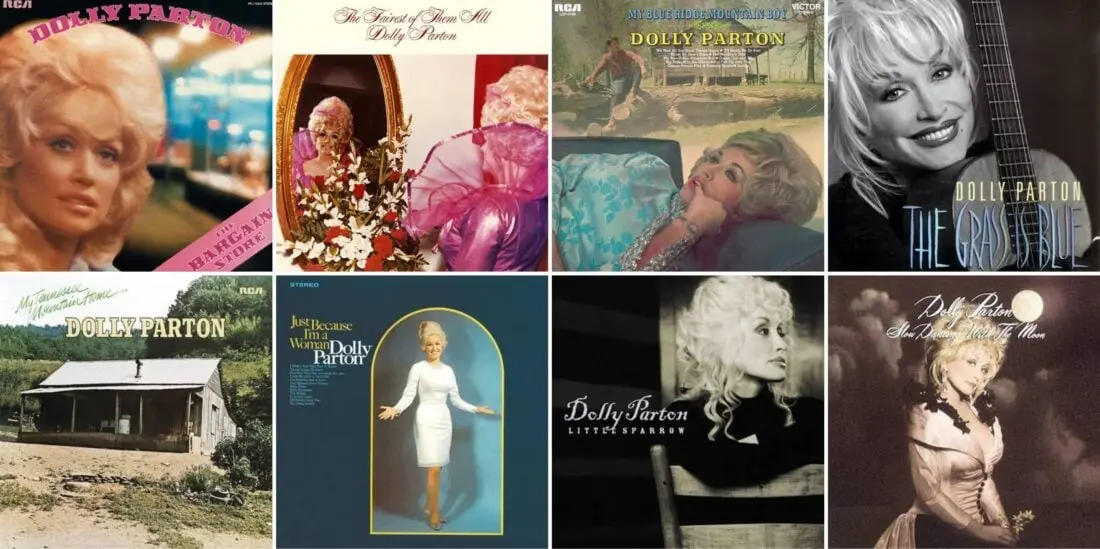
1. "Just Because I’m a Woman" (1968)
Long before the contemporary cultural reckoning over gender inequality and societal double standards, Parton cut straight to the core of patriarchal hypocrisy. Written in response to her husband, Carl Dean, questioning her past relationships early in their romance and struggling to hide his disappointment, Parton turned her real-life marital tension into a manifesto.
- The Lyric: “My mistakes are no worse than yours / Just because I’m a woman.”
- The Impact: Released at a time when country music radio preferred women to sing subserviently or suffer silently, Parton’s track stood as a resolute, uncompromising challenge to the status quo.
2. "In the Good Old Days (When Times Were Bad)" (1968)
Nostalgia can often paint the past in pastel shades of romance, but Parton refused to romanticize her impoverished upbringing in the Smoky Mountains. This track offers the clear-eyed flipside to cozy cabin tropes, insisting that there was nothing noble or "good" about being freezing cold and desperately hungry. It is a masterclass in resisting the urge to sanitize trauma for commercial consumption.
3. "My Blue Ridge Mountain Boy" (1969)
On the surface, this composition plays like a standard country love song, but beneath the melody lies a profound, aching homesickness. The track captures a specific kind of geographical and cultural displacement—a mountain longing that serves as the lifeblood of Parton’s early work. Her vocal phrasing breathes actual geography into the arrangement, anchoring the listener firmly in the hills of East Tennessee.
4. "Gypsy, Joe and Me" (1969)
A devastating three-act tragedy compressed into a few minutes of music, this song follows a drifter, the man she loves, and a stray dog as they wander through a relentless, unforgiving existence. Without ever raising her voice or reaching for melodramatic vocal gymnastics, Parton pulls the floor out from under the listener with a sudden, devastating final verse.
5. "Down from Dover" (1970)
Perhaps one of the bravest recordings of Parton’s career, "Down from Dover" tells the harrowing story of a pregnant young woman cast out by her family, left waiting in vain for a lover who will never return. When the baby arrives stillborn, the emotional weight of the song drops out entirely. The concept was born while Parton was staring out the window of her tour bus while passing through Dover, Tennessee. In 1970, country radio programmers balked at touching a record addressing unwed pregnancy; Parton cut it regardless, prioritizing truth over comfort.
6. "Down on Music Row" (1973)
Acting as the thematic origin story sitting quietly beneath her entire discography, this song traces the journey of a young, wide-eyed woman stepping off a bus in Nashville, only to have doors slammed in her face by the very industry that would later grovel for her compositions. Parton performs the track with a wry, knowing distance, fully aware of the triumphant irony built into her own trajectory.
7. "The Bargain Store" (1975)
Metaphor as social commentary reaches its zenith in "The Bargain Store." Parton recasts herself as a secondhand shop stocked with worn, damaged goods, quietly daring a prospective lover to enter and purchase what remains of her emotional psyche. The metaphor proved too sharp for some radio programmers, who misread the lyrics as a reference to prostitution and pulled the record—even as it marched steadily to the No. 1 spot on the charts.
8. "Endless Stream of Tears" (1999)
Marking her triumphant return to acoustic roots on the landmark album The Grass Is Blue, this heartbroken bluegrass number unleashes a top-tier acoustic band while Parton’s vocals soar and ache right over the top. Though frequently overshadowed by bigger album tracks, it stands as a towering achievement in modern bluegrass writing.
9. "The Grass Is Blue" (1999)
Written during a frantic, thirty-minute lunch break on a film set, the title track to her Grammy-winning bluegrass record finds a narrator unmoored by a breakup. To cope with the rejection, the narrator insists the entire physical universe has inverted—the sky has turned green, the grass blue, and rivers are running backward—as a psychological defense mechanism against abandonment. Parton has routinely cited it as among the finest pieces of lyricism she ever committed to paper.
10. "Little Sparrow" (2001)
A mountain-modal lament warning young women against the perils of trusting men, "Little Sparrow" features Parton singing in a high, keening register that feels ancient, echoing centuries of Appalachian folklore. With her voice left entirely exposed at the forefront of the mix, it stands as one of the most naked, vulnerable vocal performances ever recorded.
11. "Marry Me" (2001)
A breathless, banjo-propelled rush of pure adrenaline, this track captures a young woman nearly overwhelmed by the thrill of matrimony. Closing out Parton’s celebrated early-2000s acoustic trilogy, it serves as an electrifying reminder of how vibrant, stripped-down, and unguarded her musical instincts remained decades into her career.
12. "Slow Dancing with the Moon" (1993)
Penned by the legendary Mac Davis, this closing track is a sweeping love song dedicated to the very concept of a life lived fully. A particularly poignant lyric encapsulates Parton’s eternal, luminous optimism—an outlook that has never felt out of touch with a frequently cruel world:
“I’ve lived my life like a lovesick clown in a bittersweet cartoon / Just a dreamy-eyed kid slow dancing with the moon.”
Supporting Context & Metrics: The Architecture of an Empire
To contextualize the scale of Dolly Parton’s songwriting empire, the numbers themselves tell an astonishing story of industry dominance, artistic independence, and longevity:
- Songwriting Output: Over 3,000 registered compositions, making her one of the most prolific songwriters in the history of recorded music.
- Chart Dominance: 25 RIAA-certified Gold, Platinum, and Multi-Platinum albums and singles; 25 Billboard Country No. 1 hits.
- Cross-Genre Legacy: Her compositions have defined multiple genres, scaling the pop, country, bluegrass, adult contemporary, and gospel charts across seven distinct decades (from the 1960s through the 2020s).
- Literary Independence: Uniquely among major pop icons, Parton retained ownership of her publishing catalog early on (famously turning over Elvis Presley’s request for "I Will Always Love You" because Colonel Tom Parker demanded half her publishing rights—a decision that yielded staggering financial and artistic dividends when Whitney Houston later covered the track).
Official Statements and Cultural Perspective
Parton’s approach to her craft has always been defined by a blue-collar work ethic combined with divine inspiration. Speaking on her compulsive need to write, she once articulated the physical and spiritual necessity of her art:
"Writing’s just as natural to me as getting up and cooking breakfast. I ain’t never far away from a pencil and paper or a tape recorder. I write every day, even when I’m on a plane, in the tub or on the bus. It burns in me."
Music historians and critics frequently point to her versatility as her greatest asset. Unlike many contemporaries who relied heavily on Nashville’s famed "Music Row" hit factories, Parton functioned as a solitary narrative architect. Whether examining the grim reality of rural poverty or dissecting the intricate mechanics of female heartbreak, her catalog operates as an oral history of twentieth-century working-class America.
Future Outlook: Preserving a Legacy
As the music industry continues to evolve in the digital streaming era, the preservation and re-examination of catalog legacies become increasingly vital. Playlists and deep-dive retrospectives—such as this curated journey through her overlooked cuts—ensure that Parton’s less commercial compositions are not swallowed up by the monolithic cultural footprint of "Jolene" or "9 to 5."
Following the passing of her beloved husband of 57 years, Carl Dean, in 2025, the cultural lens has shifted slightly to acknowledge the profound private life behind the public persona. As Parton navigates her eighth decade of life and artistic output, her body of work stands fully secured. The future of Dolly Parton studies will undoubtedly focus less on her celebrity status and increasingly on her status as a towering American poet—one who used three-chord country configurations to map the infinite complexities of the human soul.

0 Comments