
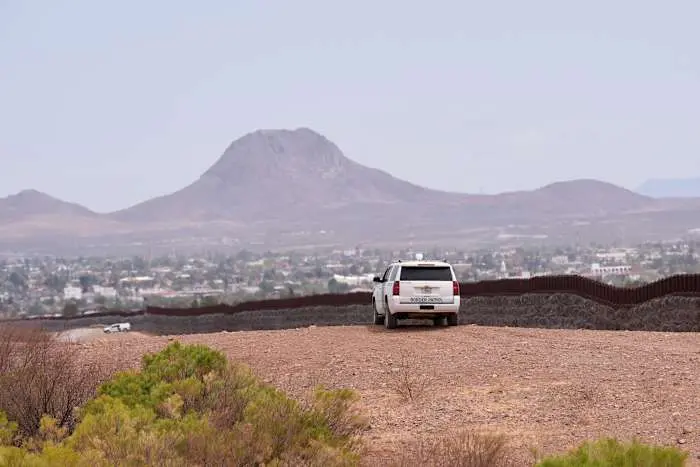

WASHINGTON — In a significant legal development that has temporarily stymied one of the most contentious infrastructure projects along the U.S.–Mexico boundary, the federal government agreed in a San Antonio federal courtroom on Friday to extend a temporary pause on border-related construction activities within Big Bend National Park. The moratorium will remain in effect until mid-September, offering a momentary reprieve to conservationists, local stakeholders, and Indigenous groups who have fiercely challenged the initiative.
The agreement marks a pivotal moment in an escalating legal and political showdown over the scope of executive authority, environmental stewardship, and Indigenous rights. While the pause offers a temporary victory to those seeking to halt the project, the underlying legal battle exposes deep divisions over how the United States balances national security priorities with the preservation of its most treasured natural and cultural landscapes.
Executive Overview
The unfolding controversy centers on federal plans to install advanced surveillance technology, new access roads, and vehicular barriers within the pristine boundaries of Big Bend National Park in far-south Texas. The work is part of a massive, multi-billion-dollar initiative championed by the Trump administration to secure the entire 2,000-mile U.S.–Mexico border from the Pacific Ocean to the Gulf of Mexico.
When heavy machinery and bulldozers first appeared in the park, sparking sudden environmental outrage, the Department of Homeland Security (DHS) initially insisted that the activity did not constitute full-scale construction, but rather preliminary design and survey work. However, the subsequent public outcry and legal pressure forced a reassessment.
Following a personal site visit by Customs and Border Protection (CBP) Commissioner Rodney Scott to consult with local officials, federal authorities initially enacted a brief halt. Friday’s court-ordered agreement formalizes and extends that suspension through mid-September. U.S. District Judge Orlando L. Garcia expressed hope that the extended timeline would provide both litigants with a genuine opportunity to negotiate a compromise. Despite the temporary relief, the fundamental ideological and legal chasm separating the federal government from the plaintiffs remains wide, ensuring that the legal battle will likely set a major precedent for border infrastructure development on federal public lands.
Detailed Chronology of Events
The road to Friday’s courtroom agreement in San Antonio has been marked by rapid developments, swift escalations, and sudden tactical shifts by both federal agencies and local opponents.
- Early April 2025: Heavy machinery and bulldozers are mobilized within Big Bend National Park in far-south Texas, marking the sudden commencement of ground-disturbing activities. The sight of heavy equipment plowing through federally protected parkland triggers immediate alarm among conservationists, visitors, and local residents.
- Mid-April 2025: In response to mounting public pressure and inquiries, the Department of Homeland Security issues statements clarifying that the bulldozers are not engaging in full-scale wall construction, but are instead performing preliminary design work and geographical surveys.
- Late April 2025: CBP Commissioner Rodney Scott travels to Big Bend National Park to inspect the area firsthand and consult with local officials and stakeholders. Prompted by these consultations, CBP voluntarily institutes an initial, short-term pause on activity within the park, which was originally scheduled to expire on a Monday.
- Friday (Current Proceedings): Attorneys representing the federal government and plaintiffs appear before U.S. District Judge Orlando L. Garcia in San Antonio. During the hearing, the Justice Department formally agrees to extend the construction pause until mid-September. Judge Garcia urges both parties to utilize the window to address mutual concerns, while a federal attorney clarifies that the moratorium extends across both the national park and a section of land located upriver and west of the park.
Supporting Context & Metrics
To fully understand the gravity of the litigation surrounding Big Bend National Park, it is necessary to examine the broader scope and scale of the federal border infrastructure strategy, as well as the unique ecological and cultural significance of the region under threat.
The Scale of the Border Initiative
The construction underway in Big Bend is just one component of an expansive, $46 billion federal blueprint designed to fortify the entirety of the 2,000-mile southern border. The overarching strategy relies on a layered defense matrix consisting of:
- Steel Bollard Walls: Towering structures reaching up to 30 feet in height designed to physically impede unauthorized crossings.
- Vehicle Barriers: Heavy-duty bollards and fencing specifically engineered to prevent unauthorized vehicular traffic from breaching remote border corridors.
- Detection Technology: An integrated network of ground sensors, thermal-imaging cameras, radar systems, and drone patrols designed to provide real-time situational awareness to Border Patrol agents.
The Significance of Big Bend National Park
Encompassing over 800,000 acres of rugged desert terrain, dramatic mountain ranges, and expansive river canyons, Big Bend National Park is one of the crown jewels of the National Park System. It is internationally recognized for its rich biodiversity, unique geological formations, and profound cultural heritage. Introducing industrial-scale infrastructure, permanent roads, and electronic surveillance towers into such a fragile ecosystem presents severe ecological challenges, threatening migratory pathways for local wildlife, disturbing delicate desert soils, and permanently altering the remote, pristine character of the wilderness.
Official Statements and Legal Arguments
The courtroom proceedings in San Antonio highlighted sharply contrasting interpretations of federal authority, legislative intent, and constitutional protections.
The Government’s Position
Attorneys for the federal government anchored their defense in the principle of statutory authorization, arguing that CBP is simply executing the clear mandates handed down by the legislative branch.
"Congress gave them the authority," argued government lawyer Pamela Amaechi during Friday’s hearing. "Congress has spoken."
The Department of Justice maintains that federal statutes grant CBP broad discretionary powers to construct border security infrastructure and, when necessary, waive environmental, conservation, and cultural regulations to ensure projects are executed expeditiously. Furthermore, government counsel argued that the plaintiffs have failed to substantiate claims that the limited construction plans will definitively restrict religious practices or cause irreparable harm.
The Plaintiffs’ Counter-Arguments
Conversely, the lawsuit brought by a coalition of landowners, environmental organizations, and Native American tribes contends that the federal government has drastically overstepped its legal boundaries. The plaintiffs argue that building militarized border infrastructure within a congressionally established national park violates the specific statutory protections governing public lands.
Furthermore, the legal challenge highlights severe infringements upon the religious freedoms and cultural traditions of Native American tribes. For these communities, unhindered access to ancestral burial sites and sacred terrain where traditional ceremonies are conducted is essential to the preservation of their heritage—rights they argue are directly threatened by ongoing and planned construction.
State-level political figures have also engaged directly in the fight. Texas State Senator Roland Gutierrez, a Democrat who participated in Friday’s legal arguments against the government, hailed the outcome as a significant tactical victory despite its temporary nature.
"Anything that slows the government down until midterm elections in November is a good thing," Gutierrez stated, voicing a strategic hope that a subsequent shift in the balance of power in Congress might compel a comprehensive legislative rethinking of the entire border wall strategy.
Future Outlook
As the legal teams return to their offices to contemplate potential compromises ahead of the mid-September deadline, the long-term future of Big Bend National Park hangs in the balance.
The extended moratorium provides a temporary shield for the park’s fragile ecosystems and cultural sites, but it does not resolve the foundational legal questions at the heart of the dispute. Should negotiations fail to produce a mutually agreeable resolution by September, Judge Garcia will likely be forced to issue a decisive ruling on the merits of the lawsuit—a decision that could establish a sweeping legal precedent regarding executive power, environmental regulations, and the protection of America’s public lands against federal security mandates.
For conservationists, tribal leaders, and border communities alike, the coming months will serve as a critical crucible determining whether the remote canyons and majestic vistas of Big Bend can be permanently safeguarded from the creeping footprint of industrial border fortification.

0 Comments