

Executive Overview
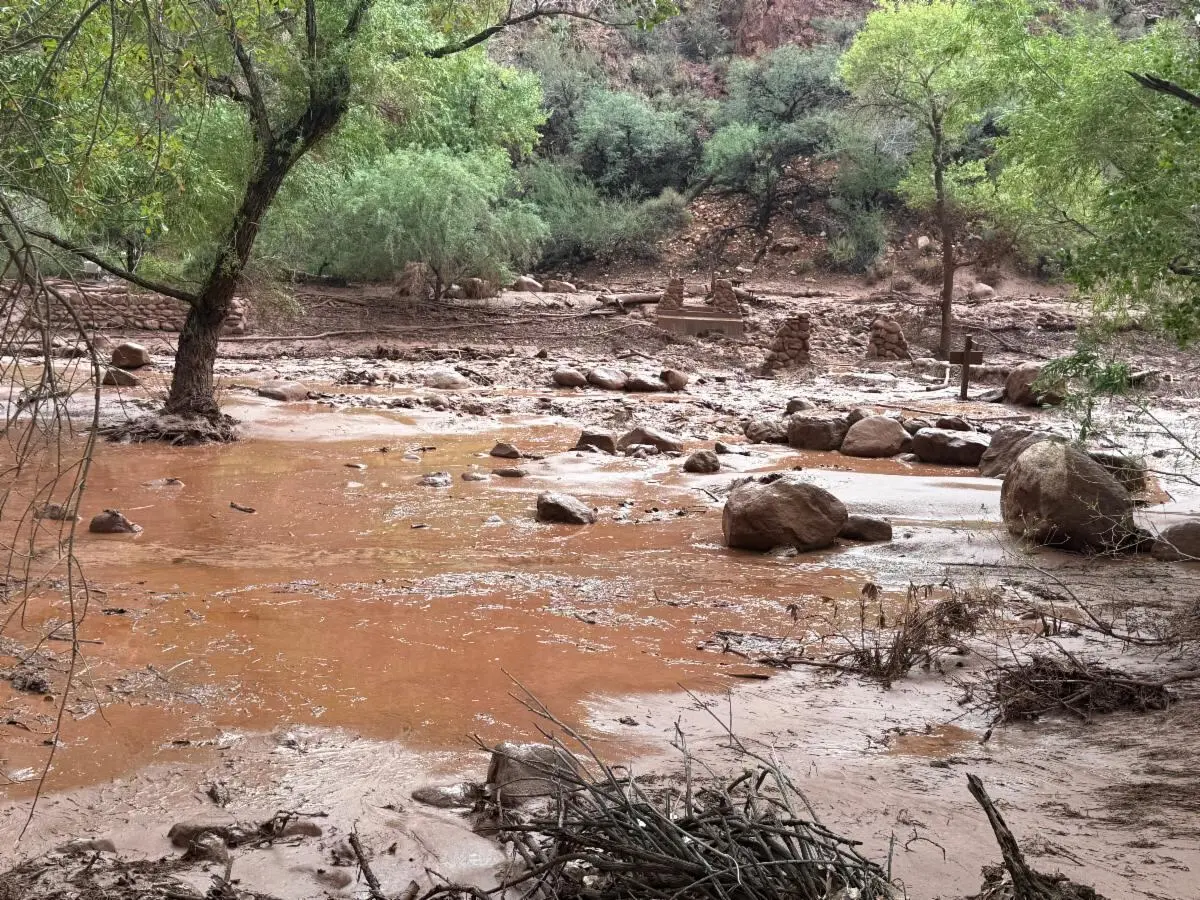
GRAND CANYON, Ariz. — A catastrophic flash flood tore through the inner depths of the Grand Canyon on Saturday afternoon, leaving a trail of destruction, displacing hundreds of tourists, and sparking a desperate multi-agency search-and-rescue operation. The violent surge of water, which struck without warning at approximately 2:30 p.m. on August 29, overwhelmed the Bright Angel Creek corridor, destroying vital footbridges, washing out critical utility pipelines, and stranding hikers across the rugged terrain.
National Park Service (NPS) officials confirmed that the body of a 46-year-old man was recovered Sunday along the turbulent waters of the Colorado River near Crystal Rapids. As search and rescue teams comb through the debris-choked ravines, approximately 15 people remain unaccounted for, down from an initial estimate of more than 20.
The disaster has crippled infrastructure across one of America’s most visited national parks. Sixty-two individuals have been successfully airlifted out of Phantom Ranch and the lower North Kaibab Trail in a coordinated effort involving the NPS and the Arizona Department of Public Safety (AZDPS). However, the human toll is matched by profound structural devastation. Nearly every footbridge spanning Bright Angel Creek has been obliterated, the major Transcanyon Waterline has been severely compromised, and the Colorado River has been closed indefinitely to all commercial and private river traffic due to dangerous debris accumulation.
The cascading effects of the disaster have forced park leadership to take unprecedented emergency measures. Effective Monday at noon, the South Rim will institute mandatory Stage 4 water restrictions and shutter all overnight hotel accommodations across the park. While day-use visitors will still be permitted, the park faces a daunting recovery timeline as engineers grapple with structural failures that threaten the water security of millions of annual visitors.
Detailed Chronology: How the Disaster Unfolded
The sequence of events on Saturday afternoon underscores the terrifying speed and unpredictable nature of desert flash flooding. Monsoonal moisture, common to the American Southwest during late summer, pooled over the high terrain surrounding the Grand Canyon before unleashing a torrential wall of water into the narrow canyons below.
Saturday, August 29: The Deluge
- 2:30 p.m. — A wall of water, fueled by heavy localized rainfall upstream, surges down the Bright Angel Creek corridor. The sudden torrent catches hikers, backpackers, and campers off guard. Within minutes, dry washes transform into raging, silt-heavy rivers capable of moving boulders and tearing heavy metal structures from their foundations.
- Late Afternoon / Evening — Distress calls begin filtering out of the inner canyon as trails are washed away and bridges collapse. The communications blackout inherent to the deep canyon hampers immediate response coordination, leaving stranded hikers to seek refuge on high ground. Park rangers mobilize emergency response protocols, assessing the scope of the damage as daylight wanes.
Sunday, August 30: The Search and Evacuation Begins
- Morning — Coordinated aerial operations commence at first light. Helicopters from the National Park Service and the Arizona Department of Public Safety begin plucking stranded hikers and staff from Phantom Ranch and the lower North Kaibab Trail.
- 10:00 a.m. — Rescuers recover the body of a 46-year-old male victim along the Colorado River near Crystal Rapids, marking the first confirmed fatality of the disaster.
- 3:00 p.m. — Park officials hold a press briefing to revise casualty and missing persons figures. The initial estimate of more than 20 missing individuals is refined to approximately 15 following the successful evacuation of dozens of stranded visitors.
- Throughout the Day — Airlifts continue, targeting remaining campers at Cottonwood Campground and Phantom Ranch. Evacuees are flown directly to the South Rim, where the American Red Cross has established a reception center inside the Maswik Lodge Cafeteria to provide food, medical evaluations, and temporary shelter.
Monday, August 31: Emergency Restrictions Take Effect
- 12:00 p.m. — Stage 4 water restrictions officially go into effect at the South Rim. Spigot access is shut off across the park, restricting visitors to dry camping only.
- Throughout the Day — All overnight hotel accommodations across the park are closed indefinitely. The sweeping closures impact facilities operated by Xanterra (including El Tovar, Bright Angel Lodge, Maswik Lodge, and Phantom Ranch) as well as Delaware North operations (Yavapai Lodge and Trailer Village).
Supporting Context & Metrics
The operational footprint of this disaster is massive, reflecting both the vast geographic scale of the Grand Canyon and the high density of tourists who frequent the inner canyon trails during the late summer season.
Rescue and Evacuation Metrics
- Total Rescued: 62 individuals airlifted by Sunday morning from Phantom Ranch and the lower North Kaibab Trail.
- Confirmed Fatalities: 1 (46-year-old male recovered near Crystal Rapids).
- Unaccounted For: Approximately 15 individuals as of Sunday evening, though authorities caution that this number remains fluid as investigators reconcile backcountry permit logs with reported survivors.
- Agencies Involved: National Park Service, Arizona Department of Public Safety, American Red Cross, and local emergency medical services.
Infrastructure Impacts
- Bridges Destroyed: Nearly all footbridges spanning Bright Angel Creek have been completely washed away, leaving monumental gaps in the inner canyon trail network. Stone bridge pylons remain as the only remnants of crossings that once linked major trail systems.
- Water Infrastructure: The Transcanyon Waterline—a vital pipeline system that pumps water across the canyon from Roaring Springs to the South Rim—has suffered critical damage, halting normal water delivery.
- River Closures: The Colorado River is closed to all commercial and private river trips from Lee’s Ferry downstream. Metal debris, washed-out structures, and floating hazards present an extreme navigational hazard to rafters and kayakers.
Public Appeal for Information
The National Park Service’s Investigative Services Branch (ISB) has launched an active inquiry to account for all individuals who were in the inner canyon during the storm. Authorities are urging anyone with information regarding hikers, backpackers, or independent river runners who were traversing the Bright Angel Creek corridor on Saturday, August 29, to step forward.
- Hotline: 888-653-0009
- Email: [email protected]
Official Statements and Administrative Responses
The severity of the damage has prompted a whole-of-government response from park superintendents, emergency management officials, and infrastructure engineers.
In an official park statement released Sunday, administrators outlined the grim reality facing park operations:
"The waterline is currently not operational, leaving the park with limited water reserves and requiring significant water conservation measures to ensure available supplies can be maintained."
Park officials emphasized that public safety remains their absolute priority, noting that reopening timelines for the inner canyon cannot be established until comprehensive geotechnical and structural assessments are completed.
"Officials have not given a reopening timeline and said additional inner-canyon closures may be necessary as hazardous conditions are evaluated across the trail and utility networks," the park service stated.
The American Red Cross, operating out of the Maswik Lodge Cafeteria, has praised the resilience of the evacuees while managing the logistical challenge of feeding and counseling hundreds of displaced travelers. Emergency personnel have highlighted that many of the rescued hikers lost all personal belongings, camping gear, and identification to the rushing waters, compounding the emotional trauma of the event.
Future Outlook: Recovery, Conservation, and Uncertainty
As the dust settles over Bright Angel Canyon, the Grand Canyon National Park faces one of the most complex recovery efforts in its modern history. The dual crises of missing persons investigations and crippled critical infrastructure present systemic challenges that will take weeks—if not months—to resolve.
The Water Crisis and Conservation Measures
The failure of the Transcanyon Waterline is arguably the most pressing administrative hurdle. Because the pipeline is the primary lifeline providing potable water to the millions of visitors who tour the South Rim each year, its failure forces the park into a precarious operational posture.
Under Stage 4 restrictions, the park must rely entirely on stored water reserves. By turning off spigot access and shifting the park exclusively to dry camping, administrators hope to stretch existing supplies. However, if repairs to the waterline are delayed by ongoing monsoon activity or treacherous canyon terrain, park officials may be forced to consider even stricter limitations on day-use visitation.
Economic and Tourism Fallout
The sudden cancellation of all overnight hotel reservations—affecting iconic institutions like El Tovar, Bright Angel Lodge, and Phantom Ranch—will send shockwaves through the local tourism economy surrounding Tusayan and northern Arizona. Thousands of travelers with advance bookings face canceled vacations, scrambling to alter travel itineraries during the height of the late-summer travel season.
Furthermore, the indefinite closure of the Colorado River to rafting expeditions halts a multi-million-dollar recreational industry that relies on uninterrupted access to the canyon’s legendary rapids. Outfitters and commercial river guides are currently coordinating with river operations rangers via the Grand Canyon River Alert system to manage parties already stranded or floating within the gorge, but future launch schedules remain completely suspended.
Climate Realities and Trail Safety
This disaster highlights the increasing vulnerability of public infrastructure to extreme weather events driven by shifting climatic patterns. Flash floods in the Grand Canyon are a historically documented hazard, but the intensity of modern monsoonal deluges continues to test the structural integrity of trails built decades ago.
When the inner canyon finally reopens, engineers and park planners will face fundamental questions about how to rebuild the destroyed footbridges and reinforce the Transcanyon Waterline against future catastrophic floods. For now, the focus remains singular: finding the 15 missing individuals, supporting the survivors, and securing the park against further loss of life.

0 Comments